 Ferndale Siding
 Why Fairhaven Homes Need a Different Approach to Siding
Fairhaven sits close enough to the water that its homes deal with a combination of stresses most inland Whatcom County properties never see. Salt-laden air off Bellingham Bay, long stretches of driving rain carried in off the Sound, and a shaded, damp season that lets moss and algae take hold on north-facing walls and rooflines — all of it adds up over the years. Siding that would hold up fine forty miles inland can start showing problems here well ahead of schedule if it wasn't built, or installed, with this kind of exposure in mind.
We're based in Ferndale and work throughout this corner of Whatcom County, including the Fairhaven area. That proximity matters more than it might seem — we're not estimating your job from a spreadsheet in another state, we're looking at the same weather patterns that hit our own crews' trucks every week.
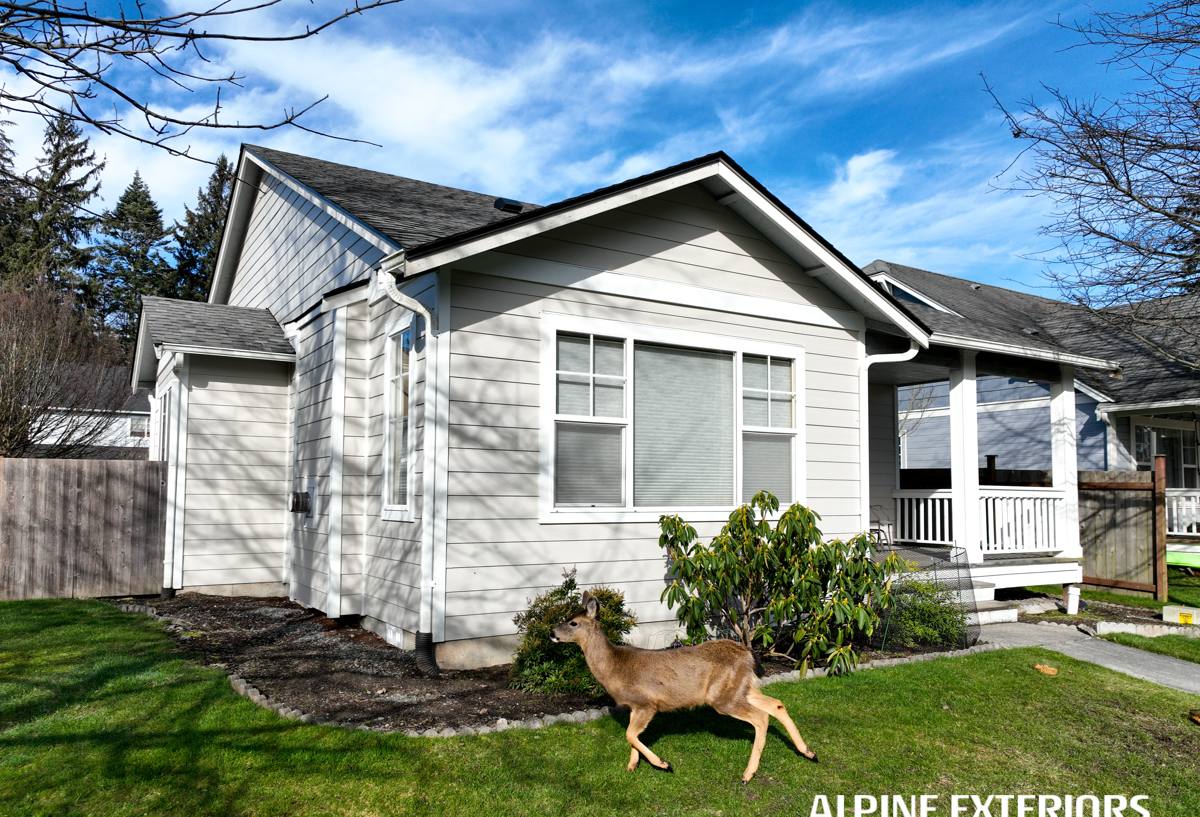
What Salt Air, Rain, and Moss Actually Do to Exterior Materials
Salt Air and Corrosion
Airborne salt doesn't just sit on the surface — it works into fasteners, flashing, and any exposed metal trim over time. Once corrosion starts at a nail head or a piece of exposed flashing, it creates a small point of failure that water finds. On siding systems with lower-grade fasteners or thin factory coatings, this shows up as rust streaking and eventually as loosened panels years before a homeowner expects to be dealing with it.
Wind-Driven Rain
Rain that falls straight down is one problem. Rain that gets pushed sideways into a wall by coastal wind is a different one entirely. It finds seams, laps, and butt joints that would stay dry in calmer weather, and it tests caulking and trim details in ways a spec sheet doesn't always account for. Homes with poor water management details — insufficient overlap, missing kick-out flashing, gaps at window and door trim — are the ones that end up with hidden moisture damage behind the siding, not just on top of it.
Moss and Algae Season
Shaded walls, north exposures, and areas under tree cover stay damp longer here than they do in drier parts of the state. That extended dampness is exactly what moss and algae need to establish themselves on siding and roofing surfaces. Beyond the cosmetic issue, sustained moisture against a wall surface is a slow but steady stress on paint, caulking, and the substrate underneath, especially on materials that absorb water rather than shed it.
Why We Install Only James Hardie Fiber Cement Siding
We made a decision early on to standardize on one siding system rather than offer a menu of options, and it's a decision driven directly by conditions like the ones described above. We don't install vinyl, LP SmartSide, Cemplank, Allura, or primed wood siding like spruce or cedar. Each of those products has legitimate uses and reasonable arguments in its favor — this isn't about calling any of them junk. It's about what we've chosen to stand behind on a coastal Whatcom County home.
Vinyl expands and contracts with temperature swings and can become brittle over time; it also isn't the product we'd choose for a home that needs to hold color and shape through decades of salt exposure. Engineered wood products like LP SmartSide perform well when detailing and maintenance stay on schedule, but they rely on an intact factory treatment and careful field sealing at every cut edge — a single missed detail near a wet coastal wall becomes a bigger liability than it would inland. Fiber cement alternatives to Hardie, like Cemplank or Allura, are similar products but come with different manufacturing consistency, color systems, and warranty backing than what we've decided to build our installation standards around. Primed wood siding needs the most ongoing homeowner maintenance of all — repainting, caulking, and moisture monitoring on a schedule that a lot of busy households simply don't keep up with, and that's before you factor in extended damp seasons like ours.
James Hardie fiber cement is non-combustible, doesn't expand and contract the way vinyl does, and comes from the factory with a ColorPlus finish baked on rather than field-painted — which matters when a wall is going to sit in intermittent rain and salt air for its entire service life. Hardie also engineers specific product lines (their HZ5 line, for example) for harsher climate zones, and backs installations with a strong transferable warranty when the work is done to their specification. That combination — the material itself, the factory finish, and the climate-specific engineering — is why it's the only siding system we put our name behind.
How a Hardie Siding Project Works
Every project starts with a walk-around of the home, not just a measurement of the walls. We're looking at existing moisture damage, trim and flashing condition, roofline interaction, and anywhere the current siding has clearly been fighting a losing battle against the weather. That inspection shapes the estimate — it's not just a square-footage number.
- On-site assessment of existing siding, trim, flashing, and any moisture-damaged sheathing
- Removal of old siding and repair of any compromised sheathing or framing found underneath
- Installation of a proper weather-resistive barrier and correctly lapped, sealed flashing at every penetration and transition
- James Hardie panel or lap installation to manufacturer spec — proper fastener type, spacing, and clearance from grade and roofing
- Trim, caulking, and touch-up detailing at cuts and seams
- Final walk-through with the homeowner
That middle step — what's underneath the old siding — is where a lot of coastal-area problems actually get found and fixed. A siding replacement done right is as much about the water management system behind the panels as it is about the panels themselves.
Roofing, Windows, and Decks for the Same Conditions
Siding doesn't work in isolation. A roof that's shedding granules or holding moss, windows with failed seals, or a deck that's absorbing standing water all put additional stress on the wall assembly next to them. We handle roofing, window replacement, and deck work alongside siding because on a coastal Fairhaven-area home, these systems interact — a leak at a roof-to-wall transition or a poorly flashed window can undermine even a well-installed siding job. Addressing them together, or at least with the same understanding of the site's exposure, tends to produce a longer-lasting result than treating each one as a separate project.
Comparing Siding Options in a Coastal Climate
| Material | Behavior in Salt Air & Rain | Typical Maintenance |
|---|---|---|
| James Hardie Fiber Cement | Non-combustible, factory ColorPlus finish, climate-engineered HZ lines, resists moisture-driven warping | Occasional rinse; caulk inspection over time |
| Vinyl | Can become brittle with age and temperature swings; color can fade unevenly with UV and salt exposure | Low, but limited repair options if damaged |
| Engineered Wood (e.g. LP SmartSide) | Performs well when factory treatment and field sealing stay intact; cut edges are a vulnerability near moisture | Regular inspection of seams and cut edges |
| Other Fiber Cement (Cemplank, Allura) | Similar base material to Hardie with different manufacturing and finish systems | Comparable to Hardie, warranty terms vary |
| Primed Wood (spruce, cedar) | Attractive but most exposed to moisture absorption, rot, and the extended damp season here | Highest — regular repainting and caulking |
What Affects the Cost of a Fairhaven-Area Siding Project
| Factor | Why It Matters |
|---|---|
| Home size and wall complexity | More corners, gables, and trim details mean more labor and material cuts |
| Condition of existing sheathing | Water-damaged sheathing found during tear-off adds repair scope before new siding goes on |
| Siding profile chosen | Lap, panel, and shingle-style Hardie products differ in material and install time |
| Trim and flashing scope | Proper coastal-grade flashing detailing takes more time than a minimal approach |
| Access and site conditions | Landscaping, slope, and structure height affect scaffolding and staging needs |
Because so much of the real cost driver is what's found once the old siding comes off, we don't give firm numbers over the phone — an in-person look is what makes an estimate accurate rather than a guess.
Signs Your Current Siding Needs Attention
- Visible moss or persistent green staining on shaded or north-facing walls
- Soft spots, bubbling, or warping, especially near the ground or under windows
- Rust streaking below nail heads or metal trim
- Caulking that's cracked, shrunk, or pulling away from trim and window edges
- Paint that's peeling or blistering in patches rather than fading evenly
- Visible gaps or separation at panel seams and corner boards
- A musty smell or discoloration on interior walls that back up to exterior siding
Any one of these on its own isn't necessarily an emergency, but several appearing together — particularly on a wall that takes direct weather — is usually a sign it's worth having someone look at what's happening behind the surface, not just on it.
Why a Local Ferndale Crew Matters for This Kind of Work
A lot of siding problems in this part of Whatcom County trace back to installation details that don't account for the actual weather the wall will face — flashing laps that are technically installed but not sized for wind-driven rain, or caulking used as a substitute for proper overlap instead of a backup to it. A crew that works this coastline regularly recognizes those failure points because they've opened up enough old walls to see where the water actually got in. That's the value of hiring locally rather than a crew passing through the area for a single job.
Ready for a Straightforward Estimate
If you're dealing with aging or failing siding in the Fairhaven area, or you're planning ahead before the next wet season sets in, we're happy to take a look and walk you through what we find — no pressure, no obligation. Use the form below to request a free estimate.