 Ferndale Siding
 Building a Deck That Can Actually Handle Fairhaven's Weather
A deck in the Fairhaven area lives a harder life than a deck built forty miles inland. The combination of salt-laden air off the water, wind-driven rain that comes in sideways during winter storms, and a moss season that can stretch from October well into April puts real, cumulative stress on wood, fasteners, and finishes. None of it is dramatic in the moment — nothing collapses in year one. What happens instead is slow: fasteners weep rust stains, boards cup and split at the ends, and a green film builds up on the walking surface faster than most homeowners expect. A deck built without that climate in mind will look fine for a season or two and then start showing its age all at once.
We build custom decks for homes in and around Ferndale and the Fairhaven area, and the difference between a deck that lasts fifteen years and one that lasts thirty almost always comes down to decisions nobody sees after the project wraps up — fastener grade, flashing details, board spacing, and how the structure handles water it can't avoid getting wet. This page walks through what actually matters for a deck built in this specific climate, and how we approach the work.
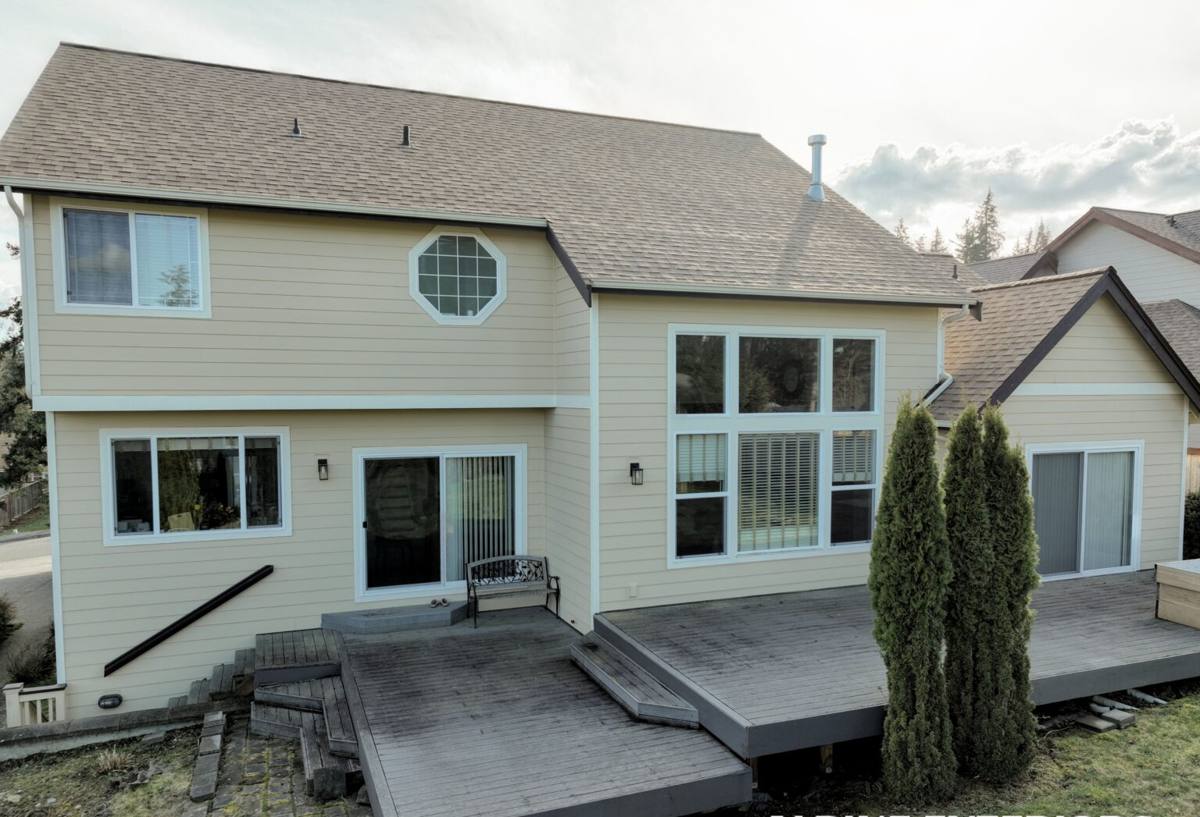
What Salt Air and Coastal Moisture Do to an Unprotected Deck
Corrosion Nobody Notices Until It's a Problem
Salt air accelerates corrosion on anything metal — screws, joist hangers, bolts, and structural connectors. On a standard build using contractor-grade coated fasteners, that corrosion can start showing as rust streaking on the decking within two or three years. The bigger issue is underneath, where hangers and structural screws are doing the real work holding the frame together. Corroded fasteners lose holding strength gradually, which is exactly the kind of failure that's easy to miss during a casual look at a deck.
Wood Movement From Constant Wet-Dry Cycling
Whatcom County's coastal weather means wood decking is rarely bone dry for long stretches. It absorbs moisture during our wet months, dries out some in summer, and repeats that cycle year after year. Untreated or poorly finished wood swells and shrinks with each cycle, which is what drives cupping, checking, and fastener pop-through over time. The fix isn't complicated, but it does require using the right materials and sealing end grain and cut edges — the parts of a board most builders skip.
Moss, Algae, and the Slip Hazard No One Talks About
A long moss season isn't just a cosmetic issue. Moss and algae hold moisture against the decking surface, which speeds up rot in wood boards and creates a genuinely slick walking surface — especially on shaded sections of a deck or areas that don't get much direct sun during the shorter winter days. A deck design that ignores airflow and drainage practically guarantees a green, slippery surface by the second winter.
Good deck design fights this before it starts:
- Proper gapping between boards so water sheds through instead of pooling on the surface
- Adequate clearance and airflow underneath the deck so the underside can dry out between rain events
- Grading and drainage at ground level so water doesn't collect and sit under low decks
- Surface texture or material choice that stays safer underfoot when damp
- Layout that accounts for shade patterns from trees or the house itself, since shaded areas hold moisture longer
None of this eliminates moss entirely — it's a genuine part of living here — but it turns an annual power-washing chore into a manageable one instead of a losing battle.
Decking Material Comparison for This Climate
There's no single "best" decking material for every home — it depends on budget, maintenance appetite, and how the deck will be used. Here's how the common options actually perform under salt air, driving rain, and a long moss season:
| Material | Moisture & Moss Resistance | Maintenance | Typical Lifespan Here |
|---|---|---|---|
| Pressure-treated wood | Good if properly sealed and re-sealed | Annual cleaning and re-sealing recommended | 15–20 years with upkeep |
| Cedar | Naturally moisture-resistant, but softer surface holds moss more readily | Regular cleaning, periodic oil or sealant | 15–20 years with upkeep |
| Composite decking | Very good — doesn't absorb water or rot | Occasional washing, no sealing needed | 25–30+ years |
| PVC decking | Excellent — fully impervious to moisture | Lowest maintenance of the group | 25–30+ years |
Composite and PVC decking cost more up front, but in a climate that punishes wood specifically through moisture cycling and moss growth, the reduced maintenance and longer service life often make sense for homeowners who want to spend weekends on the deck rather than maintaining it. That said, plenty of homeowners still prefer the look and feel of real wood, and a properly built, properly maintained wood deck can absolutely go the distance here too — it just asks more of the owner over time.
The Structural Details That Actually Matter Here
Fasteners and Hardware
We use stainless steel or hot-dip galvanized fasteners and structural connectors rated for coastal and ground-contact exposure, not the standard coated screws that are fine in drier inland climates but corrode faster here. It costs more in materials. It's not optional on a deck we're standing behind.
Ledger Board and Flashing
Where a deck attaches to the house, the ledger board and its flashing are the single most common point of long-term water damage on any deck, anywhere. Done wrong, water works its way behind the ledger and into the house framing — a slow, hidden problem that's expensive to fix once it's found. We flash this connection properly every time, with the layers overlapped correctly so water sheds away from the structure instead of into it.
Footings and Posts
Footings need to be set to the proper depth and the posts protected from standing water and direct ground contact where possible. In a region that sees as much sustained rain as ours, poor drainage around footings is a slow path to a wobbly, unsafe structure years down the road.
How We Build a Custom Deck for a Fairhaven-Area Home
Design and Site Visit
We start on-site, looking at how the house is oriented, where the sun and shade fall through the seasons, how water currently drains across the yard, and what the space needs to actually be used for — entertaining, grilling, a quiet spot with morning coffee, or all three. Custom means the layout, size, and material choices fit your home and your yard, not a template.
Permitting
Most deck projects in this area require a permit, and requirements can depend on the deck's height, size, and attachment to the house. We handle that process as part of the job so you're not chasing paperwork.
Construction
From footings to framing to decking and railings, we build to hold up against this specific climate — the fastener grades, flashing details, and drainage considerations covered above aren't upsells, they're how we build every deck we put our name on.
Final Walkthrough
Before we consider the job done, we walk the finished deck with you, cover basic maintenance for whatever material you chose, and make sure everything meets the standard we set out with.
Railings, Stairs, and Finishing Details
Railings and stairs face the same coastal exposure as the decking itself, so the same material and hardware logic applies — corrosion-resistant fasteners, materials suited to wet conditions, and connections built to stay tight over time. Composite, wood, and metal railing systems are all options depending on the look you're after and how much upkeep you want going forward. Built-in lighting, bench seating, and privacy screening can all be worked into a custom design if they fit how you'll use the space.
Keeping a Fairhaven Deck Healthy Year After Year
Even a well-built deck needs some seasonal attention in this climate. A short annual routine goes a long way:
- Clear leaves, needles, and debris from between boards before they trap moisture through the wet months
- Wash the surface at least once a year to knock back moss and algae before it gets established
- Check and re-seal wood decking on the manufacturer's recommended schedule, typically every one to two years
- Inspect the ledger board area and railings annually for any signs of loosening or water staining
- Keep gutters and downspouts near the deck clear so roof runoff isn't dumping extra water onto the structure
- Trim back overhanging branches that keep sections of the deck shaded and slow to dry
Why It Matters to Hire a Crew That Already Works This Area
A contractor who mostly builds in drier parts of the state can put together a structurally sound deck that still isn't right for the coast — wrong fastener grade, not enough attention to drainage, a design that ignores where moss will inevitably take hold. Working regularly on homes in and around Ferndale and Whatcom County's coastal communities means we're not guessing at what this climate does to a deck over time — we're building around it from the first footing.
If you're planning a new custom deck or replacing one that's showing its age, we're happy to come take a look and talk through what makes sense for your home. Reach out for a free, no-pressure estimate using the form below.