 Ferndale Siding
 Marietta's Exterior Challenge: Water on Three Sides
Marietta sits low against Bellingham Bay, tucked between tidal flats and the Nooksack River delta on the western edge of Whatcom County. Homes here don't just get rain — they get a steady dose of salt-laced air off the bay, humid ground moisture rising through the yard, and long stretches of gray, damp weather that never quite dries the siding out between storms. It's a beautiful place to live, but it is a hard place to keep a house looking and performing well for the long haul.
We've worked on enough homes in this corner of the county to know that Marietta's exterior problems aren't dramatic — they're slow. A little swelling at a butt joint. A shadow of green creeping up the north wall. Paint that needs redoing every few years instead of every ten. None of it happens overnight, but all of it adds up, and it's exactly why the products and installation details we use here matter more than they would somewhere drier.
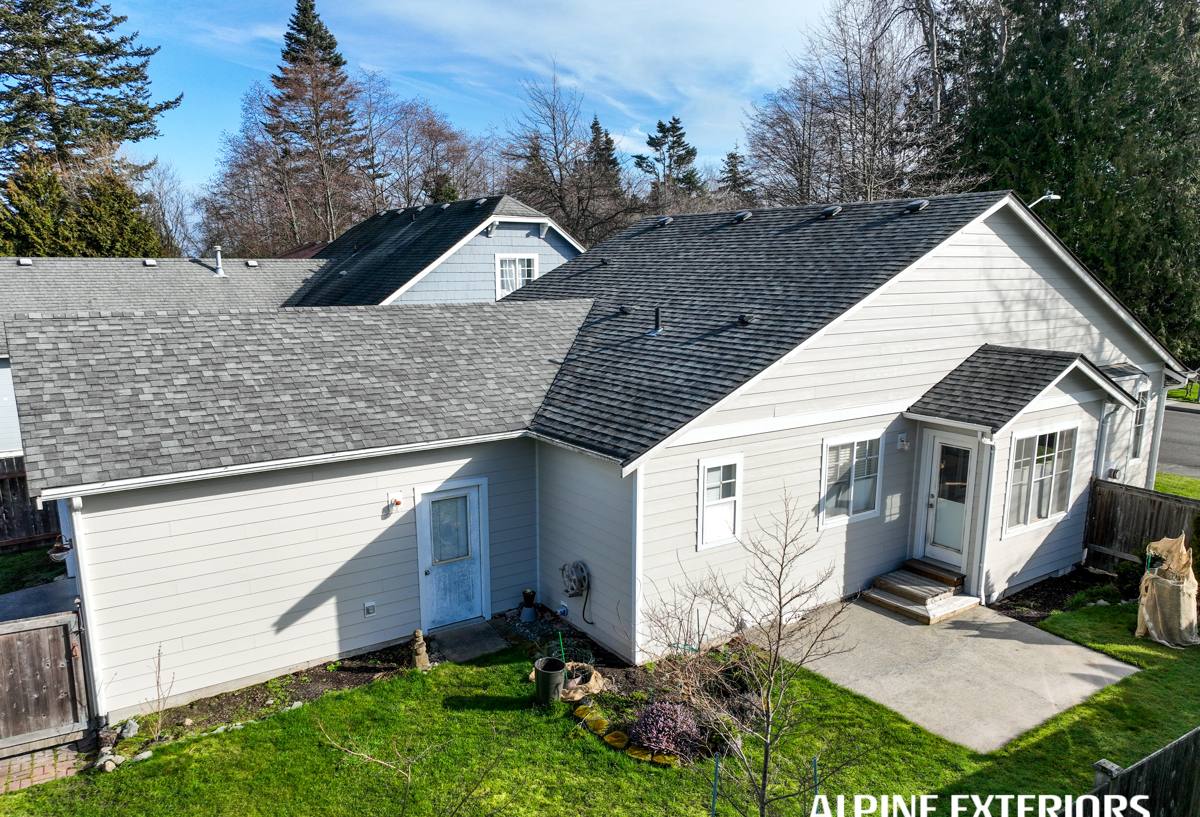
What Salt Air and Driving Rain Actually Do to a House
Salt Air
Airborne salt is corrosive and hygroscopic — it pulls moisture out of the air and holds it against whatever surface it lands on. Over years, that means fasteners, flashing, and any exposed wood edge stay damp longer than they would a few miles inland. Paint films break down faster. Caulk joints get brittle sooner. It's a slow chemical and physical wearing-down process that favors materials that don't feed on moisture in the first place.
Driving Rain
Marietta's exposure to wind off the water means rain doesn't just fall straight down — it gets pushed sideways into wall assemblies, lap joints, and window trim. Siding systems that rely on perfect caulk lines and paint films to stay watertight are the ones that struggle here first, because wind-driven rain finds every gap a calm rain would never reach.
Moss and Algae Season
Western Whatcom County effectively has a moss season that runs most of the year. Shaded, north-facing walls and anything under tree cover stay damp for days at a stretch, which is exactly what moss, algae, and mildew need to take hold. On absorbent or organic siding materials, that surface growth can work its way into the material itself, not just sit on top of it.
Why We Only Install James Hardie Fiber Cement
We made a deliberate decision as a company to install James Hardie fiber cement siding exclusively. We don't install LP SmartSide, vinyl, Cemplank, Allura, or primed spruce or cedar siding — not because those products have no merit, but because after years of doing exterior work in this exact climate, we standardized on the one material that consistently holds up the best against salt air, sustained moisture, and moss without demanding constant upkeep from the homeowner.
Where Other Products Fall Short Here
- Vinyl siding expands and contracts significantly with temperature swings, and its seams and J-channels rely on lap-fit rather than a rigid, paintable surface — in wind-driven rain, water can work behind panels over time.
- LP SmartSide and other engineered wood products are wood-based (strand or OSB core), which means the failure point is almost always moisture intrusion at a cut edge or fastener — a real risk in a climate where surfaces rarely get a long, uninterrupted dry stretch.
- Primed spruce or cedar is real wood, and real wood swells, cups, and eventually rots when it stays wet as often as it does near the bay, no matter how well it's painted initially.
- Cemplank and Allura are also fiber cement, and they're reasonable products — but we don't have the manufacturer-specific installation training, warranty relationships, or long-term local track record with them that we do with Hardie, so we don't install them.
James Hardie fiber cement is non-combustible, dimensionally stable, and doesn't feed mold, moss, or rot the way wood-based products can. It takes a factory-baked ColorPlus finish that resists fading and chipping far longer than field-applied paint, which matters enormously in a climate that's hard on paint films to begin with.
The Hardie HZ5 Line and Why the Zone Rating Matters
James Hardie engineers its siding in different formulations for different climate zones, labeled HZ5 and HZ10. Western Washington, including Ferndale and Marietta, falls into the HZ5 zone — the formulation engineered for damp, moderate-temperature, moisture-heavy climates rather than freeze-thaw extremes. Installing the correct zone product isn't a marketing detail; it affects how the material handles the specific moisture load our weather puts on it. We install the zone-correct product for this region as standard practice, not an upgrade.
Product Lines We Work With
- HardiePlank lap siding — the most common choice, available in several exposure widths and both smooth and cedar-textured finishes.
- HardieShingle — for homes wanting a shingle-style look without the moisture vulnerability of real wood shingles.
- HardiePanel — vertical panel siding, often used for accent sections, gables, or modern designs.
- HardieTrim — matching trim boards for corners, window and door surrounds, and fascia, so the whole envelope is fiber cement rather than mixing in wood trim that ages differently than the field siding.
ColorPlus Factory Finish
ColorPlus finish is baked onto the boards at the factory in multiple coats, rather than sprayed or rolled on-site after installation. In a climate where field-applied paint has to fight humidity and limited dry windows to cure properly, a factory finish that's already fully cured before it arrives on the truck is a real practical advantage, not just a convenience.
Moss and Algae Management on Shaded Walls
Even with the right siding material, north-facing and tree-shaded walls in Marietta need occasional attention. Fiber cement doesn't feed mold or moss the way wood-based products can, but surface growth can still take hold on any exterior material if it stays damp long enough. Good design choices at installation — proper clearance from grade, correct flashing above windows and trim, and rainscreen detailing where appropriate — reduce how often a wall stays wet, which is the single biggest factor in how much moss you'll see over the years.
Beyond Siding: Roofing, Windows, and Decks
Siding is only one part of a home's defense against Marietta's weather. We also handle roofing, window replacement, and deck construction, because a house's exterior only performs as well as its weakest connected system.
Roofing
A roof that's shedding wind-driven rain properly protects the top course of siding and the fascia from the moisture load that causes the most damage. Roofing and siding work often go hand in hand on older homes in this area, since both systems tend to reach the end of their service life around the same time.
Windows
Window flashing and integration with the siding plane is one of the most common failure points we see on homes near the water. When we replace siding around existing windows, or install new windows as part of a project, getting that flashing detail right is what actually keeps wind-driven rain out — the window unit itself is only half the equation.
Decks
Outdoor living structures near the bay face the same salt-air and moisture exposure as siding, just at ground level where drainage and ventilation matter even more. We build decks with materials and detailing suited to that same damp, salt-touched environment.
Comparing Common Siding Materials for This Climate
| Material | Moisture Behavior Near the Bay | Finish Durability | Long-Term Upkeep |
|---|---|---|---|
| James Hardie Fiber Cement | Non-organic, doesn't swell or feed rot | Factory-baked ColorPlus finish | Low — periodic wash, minimal repainting |
| Vinyl | Panels can trap moisture behind them at seams | Color molded in, but fades and can become brittle | Low-moderate — watch for warping/seam gaps |
| LP SmartSide / Engineered Wood | Wood-based core vulnerable at cut edges and fasteners | Factory primer, needs field topcoat maintenance | Moderate — edge sealing and paint upkeep matter |
| Cedar / Primed Spruce | Real wood, swells and can rot with sustained moisture | Field-applied paint, breaks down faster in salt air | High — regular repainting and moisture monitoring |
What a Project Typically Involves
Every home is different, but a siding project in Marietta generally follows a similar sequence:
- On-site assessment of existing siding, trim, flashing, and any moisture damage already present
- Discussion of siding profile, exposure width, texture, and color options in the Hardie line
- Removal of old siding and inspection of the sheathing underneath for hidden rot or damage
- Repair of any damaged sheathing or framing before new siding goes on
- Installation of house wrap, flashing details, and fiber cement siding to manufacturer specification
- Trim, caulking at appropriate joints only, and final cleanup
That sheathing inspection step matters more here than it might elsewhere. Once old siding comes off a Marietta home, it's common to find some degree of moisture staining or soft spots near ground level or around old window flashing — catching that now, before new siding goes on top of it, is far cheaper than dealing with it later.
Cost Factors Homeowners Should Understand
| Factor | Why It Affects Price |
|---|---|
| Amount of sheathing repair needed | Hidden rot found after tear-off adds labor and material |
| Siding profile and texture | Shingle-style and certain textures cost more than standard lap |
| Trim and detail work | Corner boards, window surrounds, and fascia add material and labor |
| Home size and story count | Taller homes require more scaffolding/staging time |
| Color | Standard ColorPlus colors vs. premium or custom color options |
A Checklist Before You Commit to Any Siding Project
- Ask what siding material and specific product line is being proposed, and why
- Confirm whether the climate zone-rated version of the product will be used
- Ask how sheathing damage, if found, will be handled and priced
- Get the manufacturer warranty terms in writing, not just verbally described
- Ask about flashing details around windows and doors specifically
- Check that the contractor is licensed and insured in Washington State
- Ask for a written scope of work before any deposit changes hands
Why a Local Crew Matters in a Place Like Marietta
Whatcom County's coastal microclimates aren't uniform — a home a mile from the water can face a meaningfully different moisture load than one further inland. A crew that works this specific area regularly knows which walls tend to hold moss, which flashing details actually matter near the bay, and which corners never to cut on a house that has to stand up to salt air and driving rain year after year. That local, repeated experience is worth more than a generic install crew that treats every job the same regardless of where the house sits.
If you're weighing a siding, roofing, window, or deck project for a home in Marietta, we're happy to take a look and talk through what your specific house needs — no pressure, no obligation. Fill out the form below to schedule a free estimate.