 Ferndale Siding
 Decking Built for the Fairhaven Coastline
Homes along the Fairhaven side of Whatcom County face a different set of conditions than decks built twenty miles inland. Salt-laden air off the water, driving rain that comes in sideways more often than straight down, and a moss season that can stretch from October through May all put real stress on an outdoor deck. Our Ferndale crew works this stretch of coastline regularly, and composite decking has become the material we recommend most often for homeowners who want a deck that still looks and performs well five, ten, and fifteen years out.
This page is focused specifically on composite decking for the Fairhaven area — not a general rundown of every decking material we install. If you're weighing whether composite is the right call for your property, or you already know you want composite and just want to understand what a correct install looks like here, this is written for you.
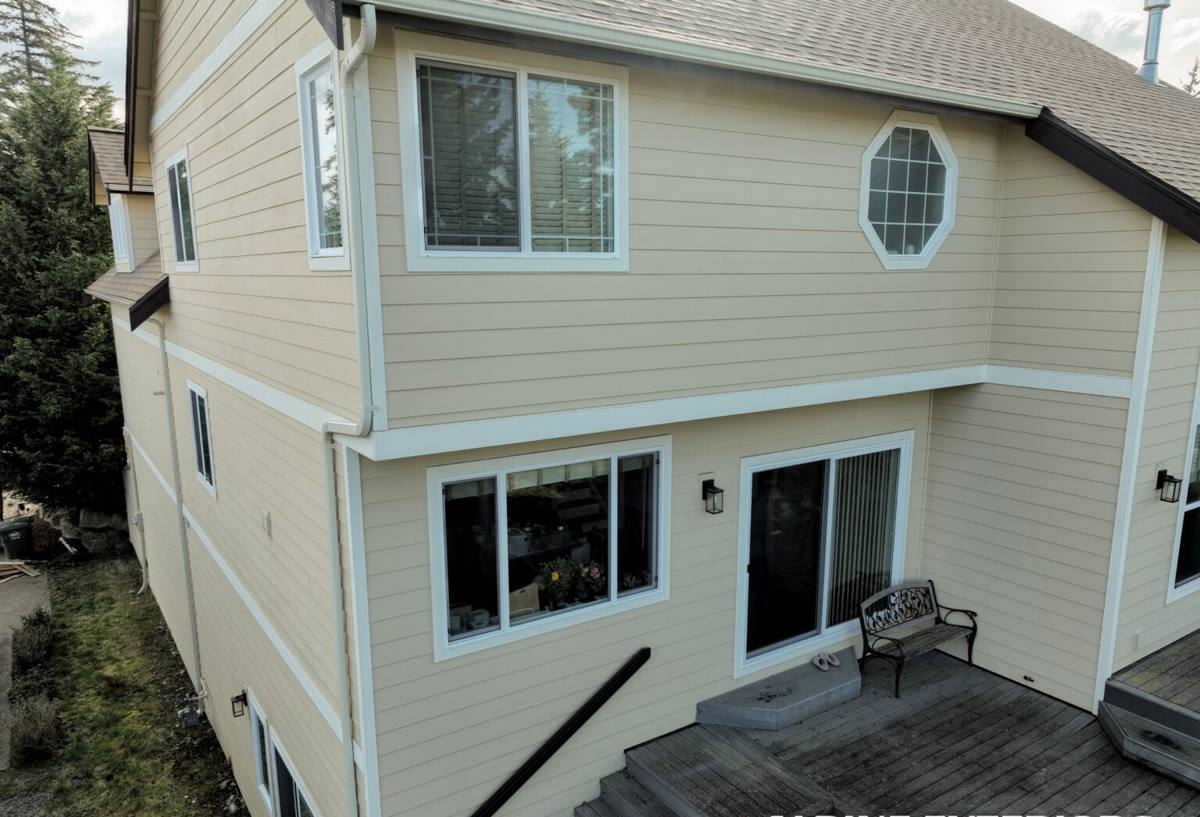
Why the Local Climate Changes the Decking Equation
Salt Air and Metal Fasteners
Proximity to salt water accelerates corrosion on anything metal — fasteners, brackets, ledger board hardware, railing connectors. A deck built with the wrong grade of screws or joist hangers can develop rust streaks and weakened connections years before the decking itself shows any wear. Any composite deck we build near the water uses stainless steel or coated fasteners rated for coastal exposure, not the standard-grade hardware that's fine for an inland yard.
Driving Rain and Moisture Intrusion
Rain that comes in at an angle finds its way into gaps that vertical rain never would — under railing posts, behind fascia boards, into end-grain cuts that weren't sealed. Composite boards themselves don't absorb water the way wood does, but the framing underneath and the cut ends of the boards still need to be protected correctly, or moisture works its way into places it shouldn't.
Moss and Constant Shade
Whatcom County's long wet season means moss and algae aren't an occasional nuisance — they're a standing condition for a good chunk of the year, especially on decks with any shade cover from trees, fences, or the house itself. Moss holds moisture against the deck surface and, on the wrong material or the wrong board orientation, can turn slick and genuinely hazardous underfoot.
What a Correct Composite Deck Install Actually Involves
Composite decking has a reputation as a "low-maintenance" product, and it is — but that reputation only holds if the install underneath it is done right. A lot of the problems homeowners run into with composite decks trace back to shortcuts in the framing and fastening, not the decking material itself.
- Framing spacing: Composite boards flex differently than wood and generally call for tighter joist spacing than a traditional wood deck, especially on diagonal layouts.
- Ventilation underneath: Low-clearance decks near grade need enough airflow beneath the boards to keep moisture from sitting against the underside of the decking and the framing.
- Board gapping: Correct gap spacing accounts for the wet Pacific Northwest climate and lets water drain through rather than pool on the surface.
- Hidden fastener systems: Most composite lines use a hidden clip system rather than face-screwing, which keeps water from sitting in screw heads and gives a cleaner surface for shedding rain.
- Flashing at the ledger board: Where the deck ties into the house, proper flashing keeps water from working behind the siding — this is one of the most common points of failure we find on older decks we're asked to replace.
- Picture-framed or finished edges: Cut ends of composite board are more vulnerable to moisture wicking than the factory-capped face, so exposed ends need to be finished, not left raw.
Our Process, Start to Finish
1. On-Site Assessment
We walk the property, look at drainage, sun/shade exposure, existing structure if it's a replacement, and talk through what you actually want the deck to do — entertaining space, quiet sitting area, hot tub support, whatever it is.
2. Design and Material Selection
We help you pick a composite line and color that fits your home and budget, and we're upfront about the tradeoffs between different tiers of composite product — this is covered in the comparison table below.
3. Permitting
Deck projects above certain heights or attached to the home typically require a permit through the county or city. We handle that process rather than leaving it on your plate.
4. Demo and Framing
If it's a replacement, we tear out the old decking and inspect the substructure underneath — this is often where we find the real problems, especially rot or corrosion hidden under boards that looked fine from the top. Framing gets built or repaired to spec before a single composite board goes down.
5. Installation
Boards go down with hidden fasteners, correct gapping, and finished edges. Railings, stairs, and any picture-framing details are built out to match.
6. Final Walkthrough
We walk the finished deck with you, cover basic care, and answer questions before we consider the job done.
Composite vs. Wood vs. PVC: What Actually Matters Here
Every decking material has tradeoffs. For a Fairhaven-area deck exposed to salt air and near-constant moisture for half the year, here's how the common options stack up on the factors that matter most:
| Factor | Wood (Cedar/Pressure-Treated) | Composite | PVC/Vinyl |
|---|---|---|---|
| Moisture resistance | Requires regular sealing to resist rot | Resists rot and moisture absorption well | Fully moisture-resistant |
| Moss/algae resistance | Porous surface holds moisture, prone to moss | Capped boards shed moisture, easier to clean | Very smooth surface, easiest to keep clear |
| Upfront cost | Lowest | Mid-range | Highest |
| Long-term maintenance | Annual sealing/staining recommended | Occasional washing, no sealing needed | Minimal, occasional cleaning |
| Appearance | Natural wood grain, fades over time | Wood-look, color-stable | Solid color, less wood-like texture |
| Typical lifespan | 10-15 years with upkeep | 25-30 years | 25+ years |
We don't install every product on the market, and that's a deliberate call, not a knock on any specific brand. We stick to composite and decking lines with a track record of holding up to sustained coastal moisture and honoring their warranty terms, because a deck near the water gets tested harder than one in a dry inland yard.
Managing Moss Season on a Composite Deck
Even a good composite deck will get some moss and surface grime during the wet months here — no exterior surface in Whatcom County is fully immune to it. The difference with composite is how easy it is to deal with:
- A regular rinse with a garden hose keeps light buildup from becoming a real problem.
- A soft-bristle brush and mild soap and water handles most moss and algae without damaging the board's cap layer.
- Avoid pressure washers on high settings directly against composite boards — it can strip or scar the surface layer over time.
- Keep gutters and downspouts clear so runoff isn't dumping directly onto one section of the deck all winter.
- Trim back overhanging branches where possible — shade and standing leaf litter are the biggest drivers of moss growth on any deck surface.
Simple Seasonal Maintenance Checklist
- Sweep debris off the deck surface regularly through fall
- Rinse and brush down surface grime once moss season sets in
- Check railing and stair connections annually for looseness
- Inspect ledger board flashing at the house connection for gaps
- Confirm under-deck ventilation gaps aren't blocked by storage or debris
Why a Local Crew Matters for This Job
A deck built for Fairhaven's coastal conditions isn't the same job as a deck built on the dry side of the state, and it isn't quite the same job as a deck built a few miles further inland from the water either. Fastener grade, framing ventilation, flashing detail, and even which composite lines are worth the money all shift based on how much salt air and standing moisture a deck is going to see. A crew that already works this specific stretch of Whatcom County has already worked through those decisions on other decks nearby — they're not guessing at what holds up here, they've seen what does and doesn't.
That local track record also matters when something needs attention down the road. A crew based in Ferndale and familiar with the Fairhaven area is a lot easier to get back out to your property for a warranty question or a small repair than a company that only passes through the area occasionally.
Get a Straight Answer on Your Deck
If you're planning a new composite deck or replacing an aging one near Fairhaven, we're happy to come take a look, walk the site, and give you a straightforward assessment of what it'll take — no pressure, no upsell script. Use the form below to request a free estimate and we'll get back to you to schedule a time.