 Ferndale Siding
 Bellingham's Exterior Sits Between the Bay and the Rain
Bellingham homes sit close enough to the water that salt air is a real factor in how an exterior ages, and close enough to the Cascade foothills that rainfall totals stack up fast every fall and winter. Add in the long stretch of overcast, damp months that Whatcom County gets between October and April, and you have a climate that's genuinely tough on siding, roofing, windows, and decks alike. We're based in Ferndale, a short drive north, and we've worked on homes throughout Bellingham long enough to know which sides of a house take the worst of it and which materials actually hold up.
None of this is exotic weather. It's not hurricane country and it's not desert heat. But steady moisture, low winter sun angles, and salt-laced air moving in off Bellingham Bay add up over years in ways that a lot of exterior products simply weren't built to handle.
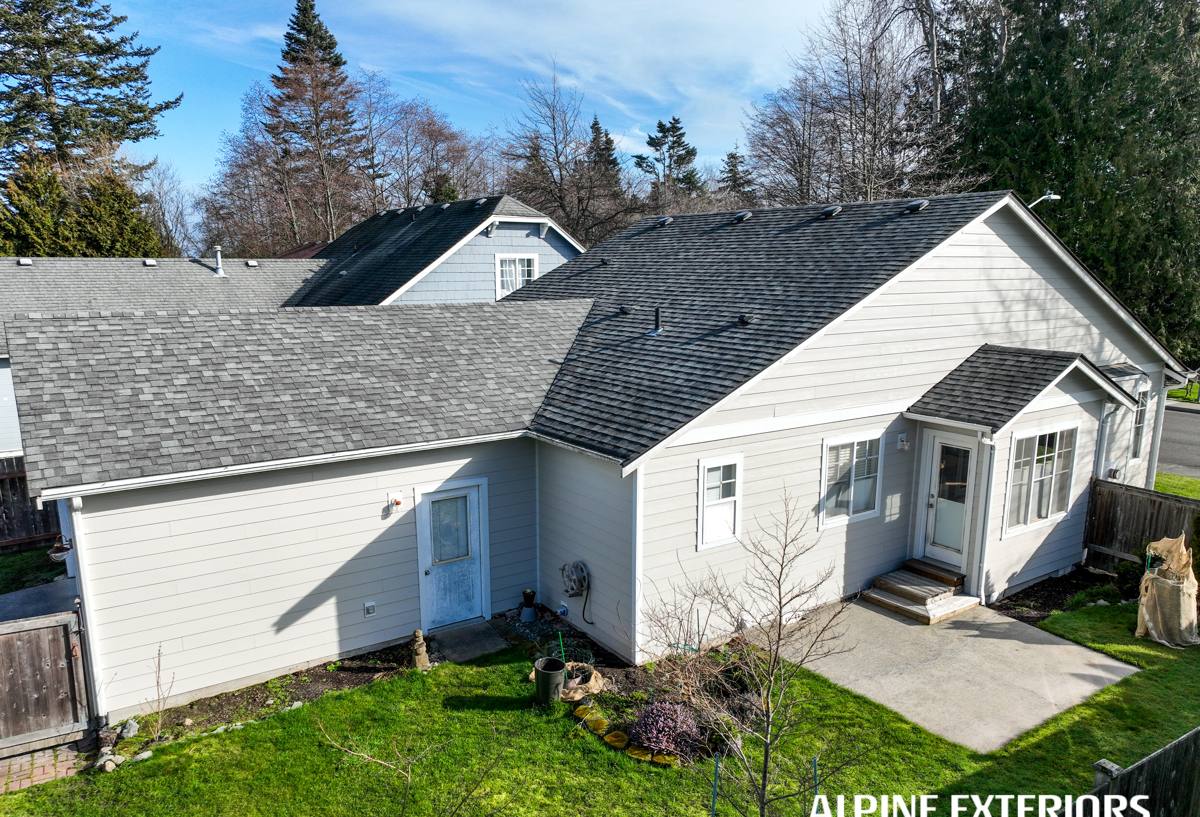
What Driving Rain and Salt Air Actually Do to a House
Moisture That Doesn't Let Up
Whatcom County doesn't get short, hard downpours as much as it gets long stretches of steady, wind-driven rain. That matters for siding because driving rain pushes water sideways into laps, seams, and fastener points — the places where a lesser product's weaknesses show up first. Wood-based and OSB-core siding products are especially vulnerable here: once moisture works past the surface finish, the substrate can swell, delaminate, or soften from the inside out, often before there's any visible sign on the face of the board.
Salt Air's Slow Corrosion
Being close to Bellingham Bay means airborne salt is part of the environment, especially for homes on higher ground or with more direct water exposure. Salt air accelerates corrosion on fasteners, flashing, and any metal trim that isn't properly rated or protected. It also speeds up the breakdown of lower-grade paint and coatings, which is one reason we care so much about factory-applied, baked-on finishes rather than field-applied paint that has to fight the elements from day one.
Moss: The Slow, Quiet Damage
The long moss season here is less dramatic than storm damage but arguably more damaging over time. Moss and algae thrive in the shaded, north-facing, and tree-covered spots common in Bellingham's older, tree-lined neighborhoods. Where moss gets a foothold on siding or roofing, it holds moisture against the surface for months at a stretch, which is exactly the condition that causes rot, coating failure, and premature aging in materials that aren't built to shed water and dry out quickly.
Why We Only Install James Hardie Siding
We made a deliberate decision years ago to install James Hardie fiber cement exclusively, and Bellingham's climate is a big part of why that decision holds up. Hardie's fiber cement is non-combustible and dimensionally stable — it doesn't absorb water and swell the way wood-based or OSB-core products can, which matters directly in a place where sideways rain and moss-holding moisture are a fact of life.
ColorPlus Technology
Hardie's ColorPlus finish is baked on in a factory-controlled process rather than applied on site, which gives it far better resistance to fading, chipping, and the kind of coating breakdown that salt air accelerates. That's a meaningful difference from field-applied paint, which starts weathering the moment it goes on and needs more frequent attention in a marine climate.
HZ5 Climate Engineering
James Hardie engineers its product lines for different climate zones, and the HZ5 formulation is built for regions with more freeze-thaw cycling and moisture exposure — a good match for Whatcom County's wet, cool winters. It's also backed by a strong, transferable limited warranty, which gives homeowners real recourse rather than vague assurances.
We don't install LP SmartSide, vinyl, Cemplank, Allura, or primed wood products, because in our experience they each carry trade-offs — whether it's moisture sensitivity, seam and expansion behavior, installation forgiveness, or long-term appearance — that we're not willing to put our name behind on a Bellingham home. That's a professional standard we hold, not a knock on any specific homeowner's existing siding; plenty of those products are reasonable choices elsewhere. We just choose not to install them.
How Hardie Compares to Common Alternatives
| Factor | James Hardie Fiber Cement | Vinyl | Wood / OSB-Core Products |
|---|---|---|---|
| Moisture behavior | Doesn't swell or rot; sheds water well | Doesn't rot but can warp; traps moisture behind panels | Vulnerable to swelling and rot if moisture penetrates |
| Finish durability | Factory-baked ColorPlus finish, long fade resistance | Color molded through, but can chalk and fade | Field-applied paint or stain, needs regular upkeep |
| Fire performance | Non-combustible | Combustible | Combustible |
| Typical lifespan when properly installed | Multiple decades | Decades, but seams and fasteners can fail sooner | Shorter in wet climates without diligent maintenance |
Roofing, Windows, and Decks Face the Same Climate
Siding isn't the only exterior surface fighting Bellingham's weather, and we handle roofing, windows, and decks with the same climate in mind.
Roofing
Roofs take the brunt of moss growth, especially on the shaded, north-facing slopes common on wooded Bellingham lots. Proper underlayment, flashing detail, and ventilation matter more here than in drier climates, because a roof that traps moisture underneath its surface will fail from the inside before it looks bad on top.
Windows
Window flashing and sealing are where a lot of quiet water intrusion problems start. Wind-driven rain finds gaps around poorly flashed windows over time, and salt-laden air can accelerate the breakdown of cheaper sealants and hardware. Correct flashing integration with the siding system is one of the most important — and most often overlooked — details in exterior work here.
Decks
Decks in Bellingham deal with near-constant seasonal dampness, plus moss and algae on any shaded or low-airflow sections. Proper drainage, board spacing, and structural fasteners rated for a coastal, wet climate all matter more than they might in a drier region.
Why a Local Crew Matters
Working out of Ferndale, we're familiar with how Bellingham's microclimates vary block to block — homes closer to the water deal with more salt exposure, while homes tucked under mature tree canopy deal more with shade, moss, and slower drying times. That local familiarity shapes real decisions: where extra flashing attention pays off, which sides of a house typically need more frequent inspection, and how to sequence a project around the region's wetter months.
A crew that's only worked in drier or more inland climates won't necessarily think about these details by default. It's not about salesmanship — it's about having actually stood on Bellingham roofs and torn old siding off Bellingham walls.
What to Expect From a Project
Every project starts with an on-site inspection of your home's current exterior condition, including a look at any moisture damage, moss buildup, or trim and flashing issues that might not be obvious from the ground. From there we walk through material options, realistic timelines, and how the work will be sequenced around weather.
Typical Process Steps
- On-site assessment of existing siding, roofing, windows, or decking condition
- Identification of moisture, moss, or corrosion problem areas
- Written estimate with product and scope details
- Removal of old material and inspection of the sheathing underneath
- Installation of new material with proper flashing, fastening, and drainage detailing
- Final walkthrough and warranty documentation
Cost Factors Homeowners Should Understand
Costs for siding, roofing, window, and deck work vary widely based on the size and complexity of the home, so we won't quote specific numbers without seeing the project. That said, a few factors consistently drive cost up or down.
| Factor | Effect on Cost |
|---|---|
| Extent of existing moisture or moss damage | More repair work behind old siding or roofing raises cost |
| Home size and number of stories | More surface area and access complexity increase labor |
| Trim, window, and detail complexity | More cutting, flashing, and finish work adds time |
| Material selection | Product line and color choice affect material cost |
| Site access and staging | Tight lots, tree cover, or steep grades can add labor time |
Simple Maintenance That Extends the Life of Your Exterior
Whatever material is currently on your home, a few habits go a long way in a climate like this one.
- Keep gutters clear so water isn't overflowing onto siding or trim
- Trim back tree limbs and vegetation to reduce shade and improve airflow against exterior walls
- Rinse visible moss or algae buildup before it spreads, especially on north-facing sections
- Check window and door flashing periodically for gaps or failed sealant
- Walk your deck each spring to check for soft spots, loose fasteners, or standing water
- Have your siding and roofing inspected every few years, even if nothing looks obviously wrong
Get a Straightforward Look at Your Home's Exterior
If you're in Bellingham and dealing with aging siding, roof moss, drafty windows, or a deck that's seen better days, we're happy to come take a look and give you an honest read on what's going on and what your options are. There's no pressure and no obligation — just a straightforward assessment from a crew that knows this climate. Use the form below to request a free estimate.