 Ferndale Siding
 Siding in Custer: A Different Set of Demands Than Town
Custer sits in the rural stretch of Whatcom County between Ferndale and the Canadian border, close enough to Birch Bay and the Strait of Georgia that salt-laden air is a regular visitor, and far enough out that homes tend to sit on larger, more exposed lots with fewer windbreaks than you'd find in a denser neighborhood. That combination changes what a house needs from its exterior. Wide-open farmland and shoreline-adjacent air move differently than a sheltered in-town lot, and siding that performs fine three miles away can wear faster out here.
We work throughout the Ferndale service area, and Custer comes up often enough that we've gotten a feel for the pattern: homes facing prevailing weather off the water tend to show moisture and finish wear on their windward sides years before the rest of the house does. That's not a knock on any particular product — it's just what happens when salt air, driving rain, and a long damp season all land on the same wall for a couple of decades.
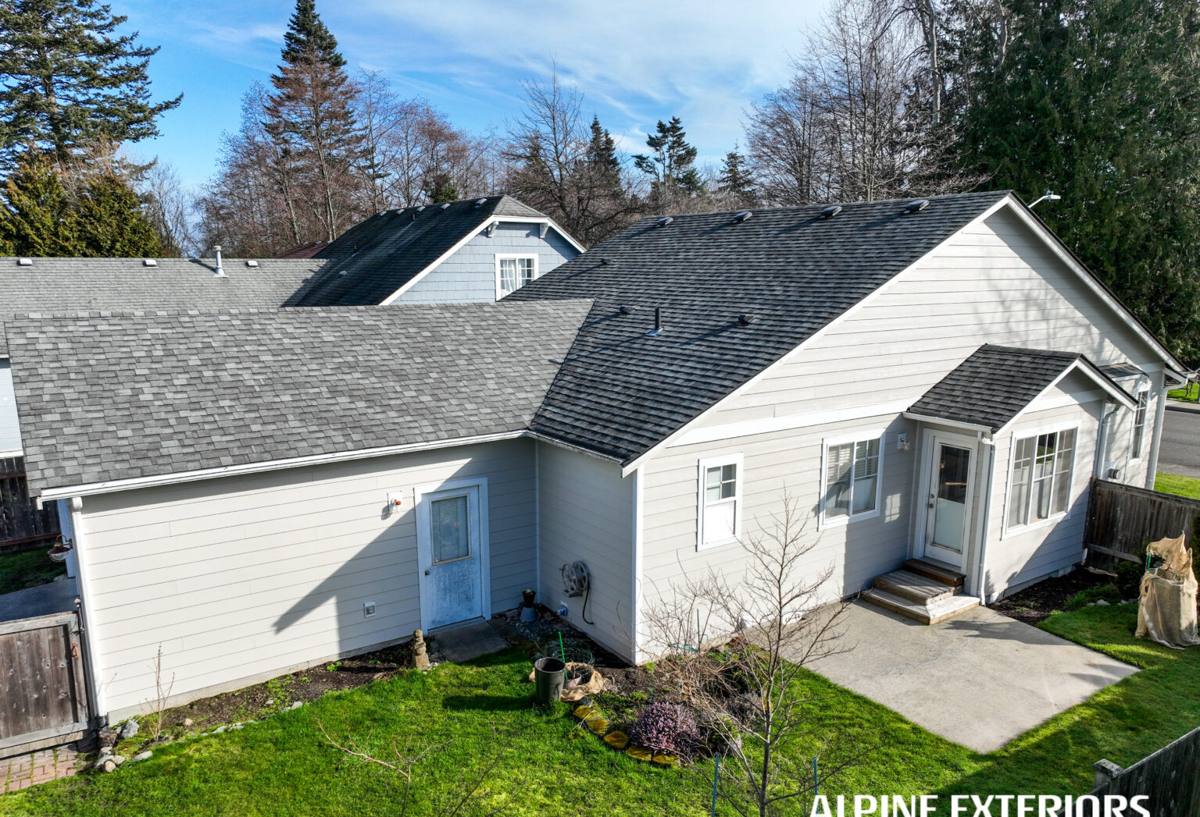
What the Local Climate Actually Does to Siding
Salt Air
Whatcom County isn't a heavy salt-fog environment the way the immediate Pacific coast is, but Custer's proximity to Birch Bay and the Strait puts it close enough that airborne salt is a real factor, especially on west- and northwest-facing walls. Salt accelerates corrosion on fasteners and metal trim, and it can work into small gaps or checks in a painted or coated surface faster than plain rainwater would.
Driving Rain
Western Washington's rain isn't just frequent — a good portion of it in this area comes in sideways during fall and winter storms, driven by wind off the water and across open fields. Driving rain finds every weak point in a wall: unsealed laps, poor flashing, caulk that's given out. Siding that only has to shed water straight down performs very differently than siding that has to resist wind-driven moisture hitting it at an angle for hours at a time.
Moss and Extended Dampness
Custer's tree cover, farmland humidity, and long stretch of overcast, wet months from fall through spring give moss and algae a long runway to establish themselves on north-facing and shaded walls. Once organic growth takes hold on a siding surface, it holds moisture against that surface even longer, which compounds the problem. A material that resists moisture absorption and doesn't feed mold growth has a real, measurable advantage here — this isn't a cosmetic issue, it's a durability one.
Why We Only Install James Hardie Fiber Cement
We made a decision a while back to standardize on James Hardie fiber cement siding for every job we do, including everything in the Custer and greater Ferndale area. We don't install vinyl, LP SmartSide, primed spruce, cedar, or other fiber cement brands. That's a deliberate professional standard, not a sales pitch, and it's worth explaining why.
Fiber cement as a category resists the specific things that wear siding out fastest in this climate: it doesn't rot, it's not a food source for mold or moss the way wood-based products are, and it holds up to sustained moisture exposure far better than vinyl, which can warp, fade, and become brittle with age. Within fiber cement, we chose James Hardie specifically because of how the product is engineered and finished, not just the base material.
What Sets James Hardie Apart
- Climate-engineered product lines — Hardie makes HZ5 and HZ10 formulations engineered for different moisture and freeze-thaw conditions, so the board itself is matched to Pacific Northwest weather rather than being a generic one-size-fits-all product.
- ColorPlus factory finish — a baked-on finish applied under controlled factory conditions holds color and resists fading, chalking, and moisture intrusion at the finish layer far more consistently than field-applied paint.
- Non-combustible material — fiber cement doesn't contribute fuel to a fire the way wood-based siding can, which matters for both safety and, in many cases, insurance.
- A strong transferable warranty — backed by a large, established manufacturer, which matters if you ever sell the home.
- Proven long-term performance — Hardie has decades of real-world installations in wet coastal climates, not just lab testing.
None of that means other products are junk. Vinyl is inexpensive and low-maintenance in mild climates. Cedar has genuine natural appeal. LP SmartSide and other fiber cement brands have their own engineering and price points. But when we weigh moisture behavior, long-term maintenance burden, and how a product holds up specifically against salt air, driving rain, and moss over 20-plus years in this part of Whatcom County, James Hardie is what we're willing to put our name behind and back with our own installation.
Comparing Common Siding Options for a Custer Property
| Material | Moisture Resistance | Moss/Algae Resistance | Finish Durability | Typical Lifespan |
|---|---|---|---|---|
| James Hardie Fiber Cement | Excellent — engineered HZ formulations | Strong — not an organic food source | Factory ColorPlus, long fade resistance | 30+ years, often longer with maintenance |
| Vinyl | Fair — can trap moisture behind panels | Moderate — surface growth possible | Color molded in, but fades and can chalk | 20-30 years, shorter in harsh exposure |
| Cedar | Poor without diligent upkeep | Poor — organic material, prone to rot/moss | Requires regular refinishing | 15-25 years with heavy maintenance |
| LP SmartSide / other fiber cement | Good, varies by brand engineering | Good, but finish systems vary | Varies by manufacturer and finish process | 25-30 years typical |
How This Plays Out for a Custer Home Specifically
A typical Custer property — whether it's an acreage home, a farmhouse, or a newer build on a larger lot — usually has more exposed wall area facing open weather than a tightly-packed in-town lot would. That means more square footage taking the brunt of wind-driven rain, more shaded or tree-lined walls where moss gets a foothold, and in some cases longer driveways and setbacks that make a home's exterior condition less visible day-to-day until a problem has already progressed.
When we look at a Custer-area home, we're paying attention to which walls take the worst of the weather, how the roofline and gutters are directing water around the siding, where trim and window flashing meet the siding field, and whether previous work — additions, repairs, replaced sections — was done to a standard that will hold up long-term. Fiber cement's rigidity and factory finish help across all of those conditions, but installation detail still matters enormously: proper flashing, correct gapping and fastening, and sound water management at every penetration are what actually keep water out, regardless of the siding material.
Roofing, Windows, and Decks: The Same Climate Logic Applies
We don't just handle siding — we do roofing, windows, and decks as well, and the same Whatcom County weather that drives our siding standard shapes how we approach those trades too. A roof with worn or poorly flashed penetrations sends water straight down into siding and trim below it. Windows with failed seals or old flashing let moisture into the wall assembly behind the siding, which no amount of good exterior material can fully compensate for. Decks facing the same driving rain and damp shade deal with their own moisture and moss issues.
Because we handle all four trades, we can look at a Custer home as one connected system rather than four separate projects. A siding job that ignores a leaking roof valve above it, or a deck ledger that's trapping moisture against the house, isn't really solving the underlying problem. Addressing water management holistically — roof, walls, windows, and decks together — is usually what actually extends a home's life out here.
Why a Local Crew Matters in an Area Like Custer
Custer isn't downtown Ferndale, and a crew that only knows how to install siding to a generic spec misses details that matter on a more exposed, rural property. Local experience means knowing which orientations in this specific pocket of Whatcom County take the worst of the wind and rain, understanding how moss establishes differently on a tree-lined lot versus an open field, and having actually driven the roads and seen how homes out here age over the seasons. It also means being reachable for follow-up, warranty questions, or a maintenance check without a homeowner having to chase down a company from out of the area.
We treat every Custer job with that same local-first mindset: we're going to be in this county for the long haul, and we'd rather install a product and a job we're confident will hold up than one that looks fine on install day and creates problems five years later.
What to Look For When Comparing Contractors
- Ask specifically what siding material and manufacturer they install, and why — vague answers are a red flag.
- Confirm they carry current Washington contractor licensing and insurance, and ask to see it.
- Ask how they handle flashing and water management at windows, doors, and roof-to-wall transitions, not just the siding panels themselves.
- Get a clear, written scope — material, fastening method, trim details, and warranty terms (both manufacturer and labor).
- Ask whether the crew doing the physical installation is employed by the company or subcontracted, and who stands behind the workmanship.
- Be cautious of bids that are dramatically lower than others — it often means a corner is being cut somewhere, whether in material, prep, or labor.
Getting Started
If you're in Custer and thinking about siding, roofing, windows, or a deck, we're happy to come take a look, walk the exposed sides of your property with you, and talk through what we're actually seeing — no pressure, no generic sales script. Reach out for a free estimate and we'll give you an honest read on your home's condition and what it would take to get it standing up to another few decades of Whatcom County weather.