 Ferndale Siding
 Building on the Water at Semiahmoo
Semiahmoo sits about as close to the water as a Whatcom County home can get. Whether a property looks out over the spit itself or sits back in the surrounding shoreline neighborhoods, homes here share a common set of challenges that inland houses in Bellingham or Lynden simply don't face to the same degree. Salt-laden air moves off the water and settles on every exterior surface. Wind-driven rain comes in sideways during winter storms instead of falling straight down. And the long, damp Pacific Northwest shoulder seasons give moss and algae months at a time to get established on anything that stays wet.
We're a Ferndale-based exterior contractor, and Semiahmoo is part of the territory we know well. That matters more than it might sound like — a crew that mostly works inland projects doesn't always think about salt exposure, marine-grade fasteners, or how far wind-driven rain can push water up a wall assembly. We do, because we see it on every job out here.
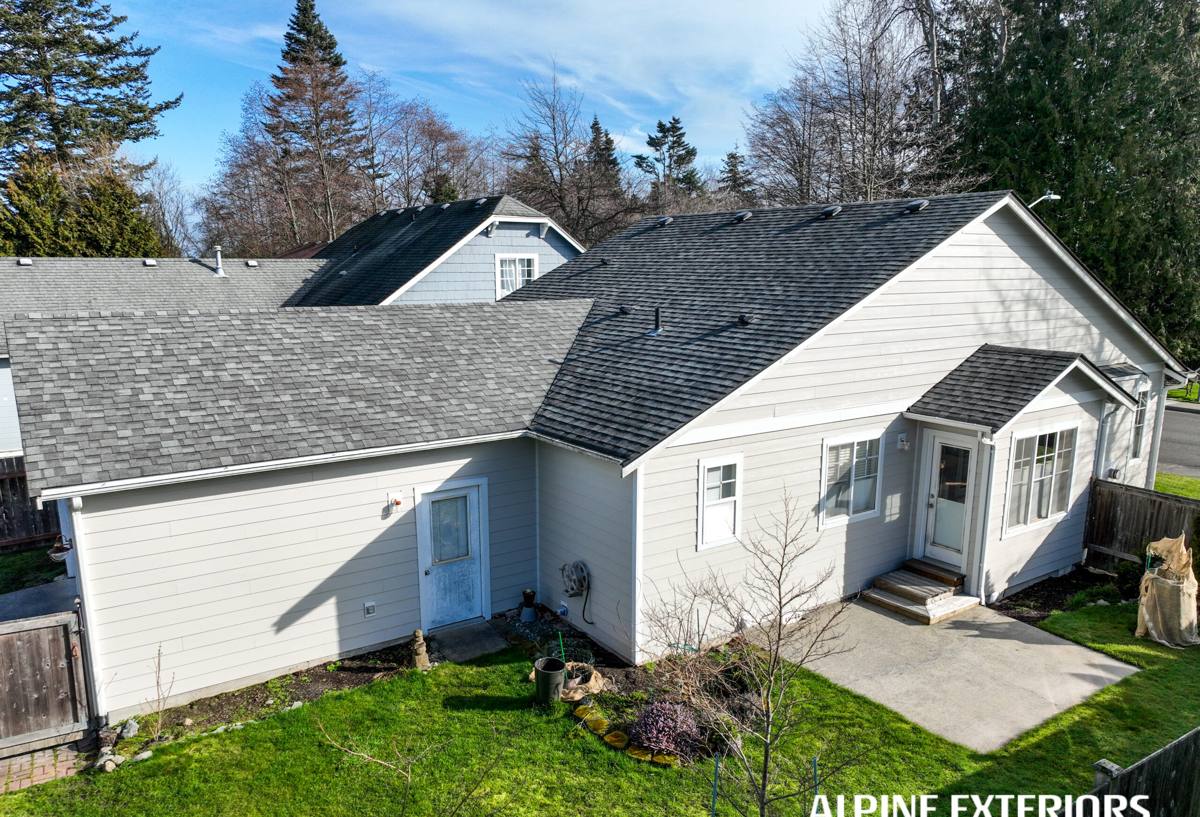
What Coastal Exposure Actually Does to a House
Salt Air and Corrosion
Salt in the air isn't just a coastal curiosity — it's an active corrosive agent. It settles into fasteners, flashing, hardware, and any exposed metal, and it accelerates rust and pitting far faster than the same materials would experience even a few miles inland. Over years, corroding fasteners can loosen siding panels, and failing flashing around windows and rooflines is one of the most common paths water takes into a wall or roof assembly. This is why fastener choice and flashing detail matter more here than almost anywhere else in the county.
Wind-Driven Rain
Semiahmoo's exposure to open water means storms don't just drop rain straight down — they push it horizontally into siding, window frames, and door assemblies. A house that would stay dry in a calm, straight-down rain can still take on water when that same rainfall arrives sideways at 30-40 mph. That's a water-management problem, not just a material problem. It's why the house wrap, flashing tape, window pan flashing, and siding overlap all have to be installed correctly and in the right sequence — the siding is the visible layer, but it's the last line of defense, not the only one.
Moss, Algae, and Prolonged Dampness
Western Whatcom County gets long stretches of overcast, damp weather, and waterfront properties tend to stay shaded and moist longer than homes in more open, sun-exposed settings. Moss and algae don't just look bad — sustained moisture against a wall or roof surface is what eventually causes rot, coating failure, and trim decay. Surfaces that dry out quickly after rain hold up dramatically better over a 20- or 30-year span than surfaces that stay damp for days.
Why We Install Only James Hardie Fiber Cement Siding
We made a deliberate decision as a company: we install James Hardie fiber cement siding, and we don't install vinyl, LP SmartSide, or other engineered wood or composite products. On a property like the ones around Semiahmoo, that decision isn't marketing — it's a direct response to what salt air and driving rain do to exterior materials over time.
Why Not Vinyl
Vinyl siding is affordable and low-maintenance in mild, inland settings, but it has real limitations near open water. It can become brittle over time with UV and temperature cycling, its seams and panel laps are more vulnerable to wind-driven rain intrusion than a properly lapped fiber cement system, and high wind events on exposed waterfront lots can stress vinyl panels more than a sheltered inland home would ever experience. It's not a bad product everywhere — it's just not the product we're willing to warranty on a site with this kind of exposure.
Why Not Engineered Wood (LP SmartSide) or Other Composites
Engineered wood siding relies on factory-applied coatings and careful field sealing of every cut edge to keep moisture out of its wood-strand core. That's a demanding standard to hit consistently, and in a high-moisture, high-humidity coastal environment, any gap in that seal — a missed cut edge, a caulk joint that fails a few years down the road — gives moisture a path into a material that doesn't tolerate sustained wetness well. Given how much wet weather Semiahmoo sees, we don't think that's the right long-term bet for homeowners here.
Why James Hardie
James Hardie fiber cement is a cement, sand, and cellulose fiber composite. It doesn't have an organic wood core to rot, it's non-combustible, and its ColorPlus factory-applied finish is baked on and engineered to resist fading and moisture-related coating failure far better than field-applied paint. Hardie also makes climate-engineered HZ product lines specifically formulated for wetter, harsher climates like ours. Installed correctly — proper clearances, correct fastening, sealed and flashed penetrations — it's a system built to hold up against exactly the conditions Semiahmoo delivers.
Our Siding Process for Coastal Properties
- On-site assessment. We look at sun/shade exposure, prevailing wind and rain direction, existing moisture damage, and current flashing conditions before recommending anything.
- Water management first. House wrap, flashing tape, and window/door flashing get addressed before a single piece of siding goes up. This is the layer that actually keeps water out.
- Correct Hardie installation. Manufacturer-specified fastener spacing, clearances from grade and roof lines, and joint treatment — all details that matter more in a coastal wind-and-rain environment than in a sheltered inland yard.
- Trim and penetration sealing. Every vent, light fixture, and utility penetration is a potential entry point; each gets properly flashed and sealed.
- Final walkthrough. We go over the finished work with the homeowner and explain basic care going forward.
Roofing, Windows, and Decks in the Same Coastal Context
Roofing
A roof facing open water deals with the same wind-driven rain and salt exposure as the walls below it. Flashing around chimneys, vents, and valleys is where most coastal roof leaks start, and moss growth on north-facing or shaded roof slopes is a near-constant maintenance issue in this part of Whatcom County. We pay close attention to underlayment quality and flashing detail on every coastal roofing job, not just shingle selection.
Windows
Windows are one of the most common leak points on a wind-exposed home, because they combine a lot of seams, flashing, and moving parts in one assembly. Correct pan flashing beneath the window and proper integration with the house wrap are what keep wind-driven rain from tracking behind the frame — details that matter more here than on a sheltered inland lot.
Decks
Decks on waterfront or near-waterfront properties take a beating from both moisture and salt air on fasteners, connectors, and ledger boards. We pay particular attention to ledger flashing (where a deck attaches to the house — a common source of hidden rot if done poorly) and to using fasteners and hardware rated for exposed, corrosive conditions.
Comparing Siding Options for a Coastal Property
| Factor | Vinyl | Engineered Wood | James Hardie Fiber Cement |
|---|---|---|---|
| Salt air / corrosion resistance | Moderate; can become brittle over time | Depends on coating and seal integrity | Strong; cement-based, non-organic |
| Wind-driven rain tolerance | Seam-dependent | Vulnerable if edges/seals fail | Strong when installed to spec |
| Moss/algae resistance | Surface growth possible | Surface growth possible | Surface growth possible, but no rot risk from moisture |
| Fire resistance | Combustible | Combustible (wood-based) | Non-combustible |
| Finish durability | Color can fade/chalk | Field-applied or factory coatings vary | ColorPlus factory finish, engineered for fade resistance |
| Typical lifespan when properly installed | 20-30 years | 20-30 years | 30-50+ years |
No product is immune to the coast entirely — every exterior material needs proper installation and periodic care. This table reflects our professional experience with how each category tends to perform under sustained coastal exposure, not a claim that any one product is flawless.
Maintenance Realities for Semiahmoo Homeowners
- Rinse salt residue and airborne grime off exterior surfaces periodically, especially after storm events.
- Check caulking around windows, doors, and trim annually — sealant is a wear item everywhere, but more so in salt air.
- Keep gutters and downspouts clear so water is actively carried away from the wall assembly, not pooling at the base.
- Watch shaded, north-facing surfaces for early moss or algae growth and address it before it spreads.
- Inspect flashing at roof penetrations, deck ledgers, and window heads every year or two — small gaps are far cheaper to fix early than after water has gotten behind the surface.
- Trim back vegetation that keeps siding or roof surfaces shaded and damp longer than necessary.
Why a Local Crew Matters
Anyone can install siding on a calm, sheltered lot inland. Building correctly on an exposed waterfront property in Whatcom County means understanding how wind, rain direction, and salt exposure actually behave here — not in a generic training manual, but on this stretch of coastline specifically. We work throughout Ferndale and the surrounding Whatcom County communities, including Semiahmoo, and that regional familiarity shapes real decisions on every job: where extra flashing attention goes, which details get reinforced, and what a homeowner should realistically expect for long-term maintenance in this climate.
Get a Free, No-Pressure Estimate
If you own a home in or near Semiahmoo and you're dealing with aging siding, roof issues, drafty windows, or a deck that's showing its age, we're happy to take a look and give you an honest assessment — no pressure, no obligation. Fill out the form below to schedule a free estimate.