 Ferndale Siding
 An Honest Answer to a Question We Get a Lot
Homeowners in Ferndale ask us this constantly, usually while comparing bids: "Why don't you just install vinyl? It's cheaper, and the other guy quoted it." It's a fair question, and it deserves a straight answer instead of a sales pitch. We don't refuse to install vinyl siding because it's a bad product in every context. We refuse because after years of working on homes throughout Whatcom County, we've watched how vinyl actually performs against our specific climate, and we decided we'd rather install one product well than install several products with mixed results.
This page explains what vinyl does right, where it tends to struggle here, and why we standardized on James Hardie fiber cement instead. No scare tactics, no invented failure statistics — just the trade-offs as we see them after doing this work locally.
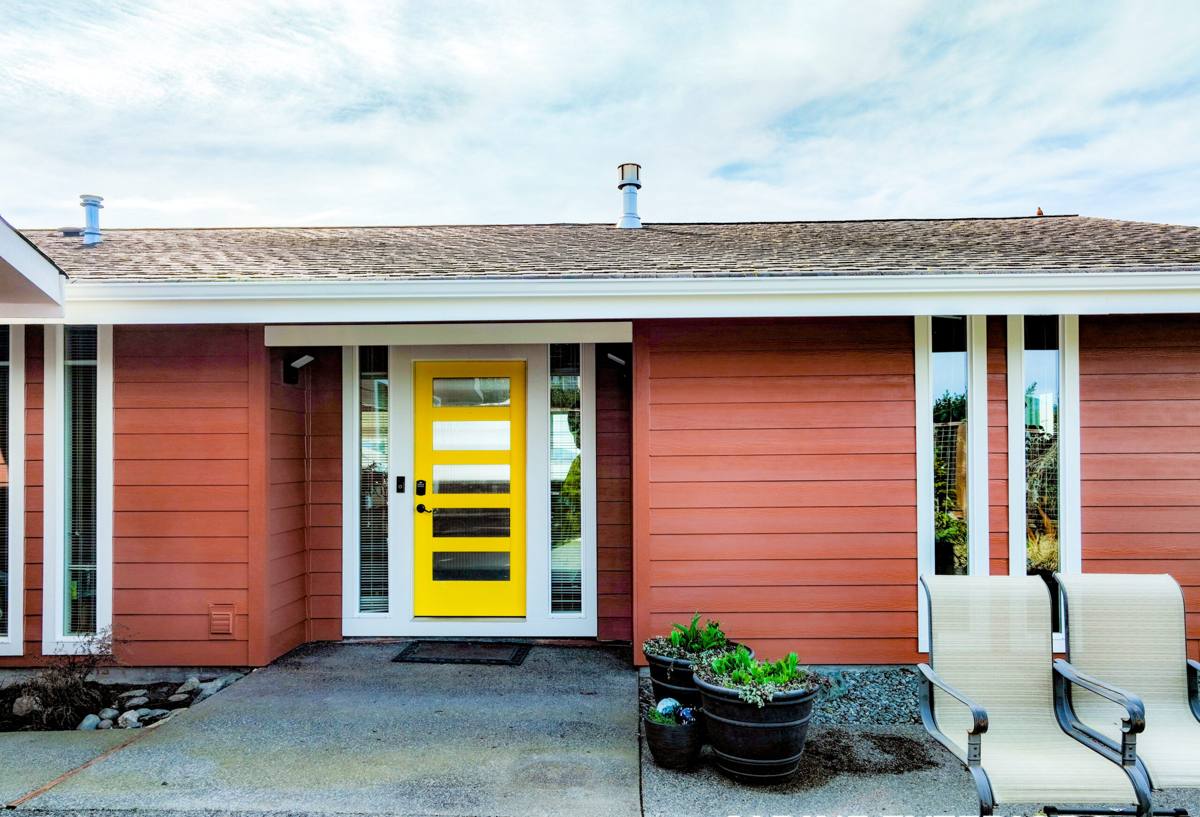
What Vinyl Siding Actually Gets Right
Vinyl earned its market share honestly. It's worth naming what it does well before getting into why we don't install it:
- Lower upfront material and labor cost than most alternatives
- No painting required — color is molded through the panel
- Lightweight, which speeds up installation on straightforward wall sections
- Widely available in a range of colors and profiles
- Reasonably low maintenance when installed correctly on a simple, well-ventilated wall
For a lot of homes, in a lot of climates, that's a perfectly reasonable set of trade-offs. Our issue isn't with vinyl as a category — it's with how those trade-offs play out on homes exposed to what Whatcom County throws at a wall over a few decades.
Where Vinyl Struggles in a Marine, Moss-Prone Climate
Salt Air and UV Exposure
Ferndale sits close enough to the Salish Sea and Bellingham Bay that homes here get a steady low dose of salt-laden air, especially on west- and south-facing elevations. Vinyl is a petroleum-based plastic, and its color comes from pigment mixed into the resin rather than a separate finish coat. Over years of salt exposure combined with UV, that pigment fades and the surface can chalk or become brittle, particularly on darker colors that absorb more heat and degrade faster. Once vinyl fades or chalks unevenly, there's no practical way to refinish it — the only fix is replacement panels, and matching an older color run is often impossible.
Driving Rain and Moisture Behind the Panel
Vinyl siding is engineered to be a rainscreen, not a watertight barrier — water is expected to get behind the panels, and a functioning drainage plane and weather-resistive barrier are supposed to manage it. That design works fine in a light-rain climate. Whatcom County isn't one. Wind-driven rain off the water pushes moisture sideways and upward, not just straight down, and that's exactly the condition vinyl's lap-and-lock system handles poorly. When rain gets forced upward past the laps, or when a panel isn't fastened with the correct expansion clearance, water can sit behind the siding against the sheathing longer than it should, especially on walls that don't get much sun or wind to dry them out.
Moss and Biological Growth
This region has a long moss season, and it's not limited to roofs. Vinyl's slightly textured, wood-grain embossed surface, combined with the shaded, damp conditions common on north-facing walls and under deep eaves, gives moss, algae, and mildew a place to take hold. Vinyl doesn't rot, but a green or black-streaked film on a wall isn't a cosmetic problem you can just paint over — cleaning it without damaging the panels or the caulked seams takes real care, and it tends to come back if the underlying shade and moisture conditions haven't changed.
Installation Sensitivity Most Homeowners Never See
Vinyl siding has to be installed loose enough to expand and contract with temperature swings, using a specific nailing pattern, fastener spacing, and a hanging technique rather than a tight, flush nail. Get any of that wrong — over-driven nails, panels face-nailed instead of hung, wrong starter strip alignment — and the siding will buckle, oil-can, or rattle in wind within a year or two, even though the product itself wasn't defective. We've been called out to look at vinyl jobs where the material was fine but the installation wasn't forgiving of shortcuts, and by the time it shows up as visible waviness, the fix is usually a re-installation, not a patch. That sensitivity to installation quality is part of why we'd rather not offer a product where the margin for error is that thin.
Impact Resistance and Longevity
Vinyl is a thin plastic shell, typically well under a tenth of an inch thick. It handles routine weather fine but has limited resistance to impact from hail, thrown debris in windstorms, ladders, or an errant baseball — it cracks or punches through rather than denting. Once a panel cracks, the repair is a full panel swap, and finding an exact color match years later is a coin flip since manufacturers retire colors and dye lots shift over time. Fiber cement, by contrast, is a rigid, dense material that resists impact damage and doesn't develop the same brittle-with-age behavior vinyl can show after a couple of decades of UV exposure.
Fire Performance
This one is straightforward: vinyl siding is a combustible plastic product. It's not typically the primary fuel source in a house fire, but it can soften, melt, and contribute to fire spread along a wall in a way that non-combustible materials don't. Fiber cement siding is made primarily of sand, cement, and cellulose fiber, and it does not burn. For homeowners weighing wildfire exposure, insurance considerations, or simply wanting one less combustible material on the exterior of their home, that's a meaningful and factual difference, not a marketing claim.
Vinyl vs. James Hardie Fiber Cement, Side by Side
| Factor | Vinyl Siding | James Hardie Fiber Cement |
|---|---|---|
| Core material | PVC plastic resin | Sand, cement, cellulose fiber |
| Combustibility | Combustible | Non-combustible |
| Color/finish | Color molded through panel; fades and chalks over time | ColorPlus factory-baked finish, warranted against fading and peeling |
| Impact resistance | Cracks or punctures on impact | Rigid, resists dents and impact damage |
| Moisture behavior | Rainscreen design; relies heavily on correct drainage detailing | Engineered HZ product lines rated for wet climates |
| Repair/color matching | Difficult to match after color runs are discontinued | Consistent factory color batches; touch-up product available |
| Typical upfront cost | Lower | Moderate to higher |
| Warranty structure | Prorated after early years, in most cases | Non-prorated, transferable limited warranty |
None of this means vinyl is unsafe or that every vinyl-sided home in Whatcom County will fail. It means that, product for product, fiber cement is the better match for the specific combination of salt air, driving rain, and moss we deal with here — and once we saw that pattern repeat across enough homes, it didn't make sense to keep offering both.
Why We Standardized on James Hardie Instead
We made a deliberate choice to install one siding system rather than several, and James Hardie fiber cement is what we chose. A few reasons that decision holds up job after job:
Built for This Climate
Hardie's HZ5 product line is engineered specifically for regions with harsher moisture and freeze-thaw cycling, which fits the Pacific Northwest better than a general-purpose product line.
A Finish That Doesn't Rely on Field Paint
ColorPlus technology bakes on multiple coats of finish at the factory under controlled conditions, which holds color and resists peeling far longer than field-applied paint — and better than a pigment that's simply mixed into a plastic panel.
A Warranty That Means Something
Hardie backs its siding with a non-prorated, transferable limited warranty. That transferability matters to homeowners who plan to sell within the warranty period — it's a real asset at closing, not just a brochure line.
One Product, Done Right
Specializing in a single system means our crews install it the same correct way every time — proper fastener placement, clearances, flashing, and joint treatment — instead of switching techniques between materials and increasing the odds of a mistake.
Questions Worth Asking Before You Choose a Siding Material
- How does this product handle sustained wind-driven rain, not just average annual rainfall?
- What happens to the finish after 15-20 years of UV and salt air exposure?
- Is the warranty prorated, and does it transfer if I sell the house?
- How forgiving is this material of small installation errors?
- Is the product combustible, and does that affect my insurance?
- Can damaged sections be replaced later with a reasonably close color match?
Let's Talk About Your Home
Every home and every wall exposure in Ferndale is a little different — a shaded north wall under Douglas fir cover behaves differently than an open south-facing wall catching salt air off the water, and that's worth walking through in person rather than guessing from a brochure. If you'd like a straightforward look at what your home needs and a no-pressure estimate for James Hardie siding, fill out the form below and we'll get back to you.