 Ferndale Siding
 Roofing Built for the Fairhaven Coastline, Not a Catalog Climate
Homes along the Fairhaven side of Whatcom County sit close enough to the water that the air itself works against a roof. Salt-laden moisture rides in on the wind, settles into fasteners and flashing, and starts corrosion long before a shingle ever shows visible wear. Add in driving, sideways rain during fall and winter storms and a moss season that can run eight or nine months out of the year in shaded, north-facing sections of a roof, and you have a climate that punishes generic roofing work. A new roof installed here needs to be detailed differently than the same roof installed twenty miles inland.
We install new roofs for homes in and around Ferndale and the Fairhaven area regularly, which means we're not guessing at how this climate behaves on a roof deck. We're watching it play out on real houses, year after year, and building our installation standards around what actually holds up.
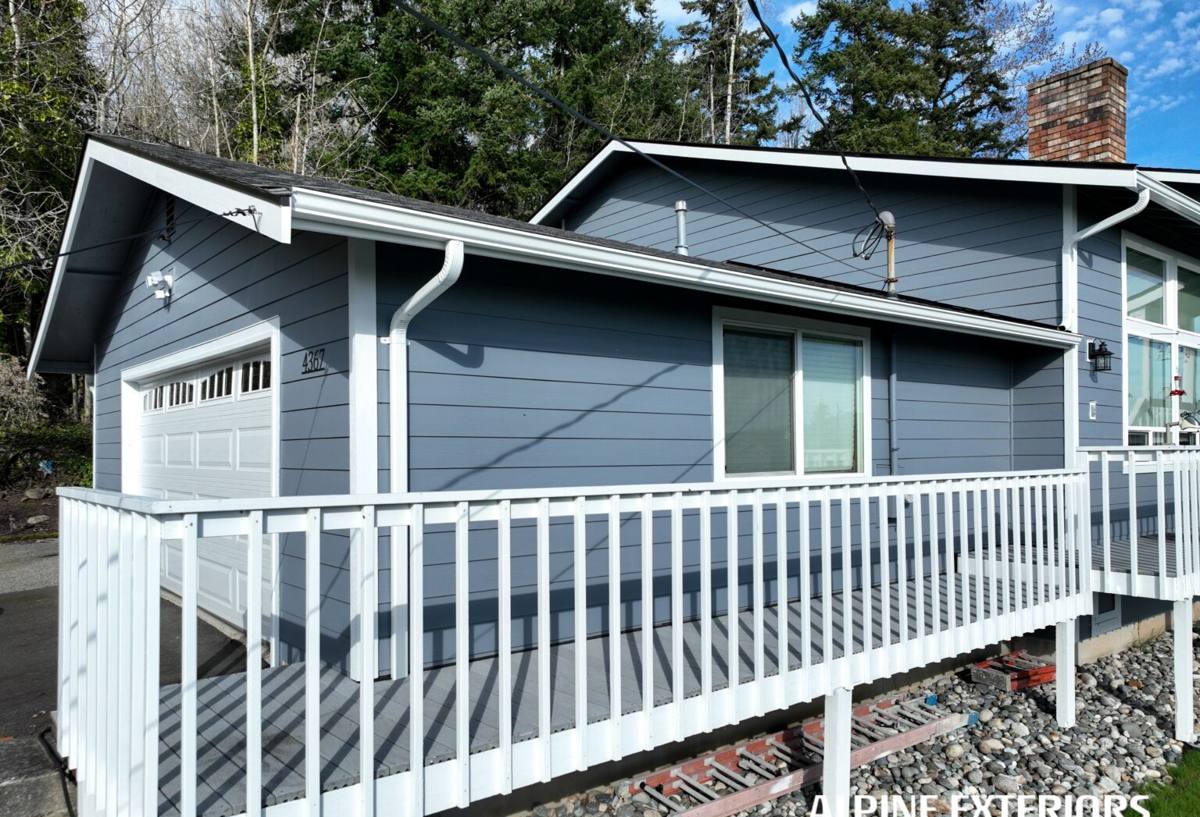
What "Correct" Actually Means for a New Roof Here
A new roof installation is more than nailing down shingles. In this climate, the parts you don't see are what determine whether the roof lasts 15 years or 30.
Underlayment That Handles Wind-Driven Rain
Standard felt underlayment can work fine in a mild, straight-down rain climate. It's a weaker choice here, where wind pushes rain sideways and under shingle edges during winter storms coming off the water. We use synthetic underlayment as our baseline and add self-adhered membrane at the eaves, valleys, and any low-slope transitions — the spots where wind-driven water actually gets in.
Flashing Details, Not Just Flashing
Every roof has flashing. Not every roof has flashing installed correctly. Step flashing at wall intersections, counter-flashing at chimneys, and proper valley metal are where the vast majority of roof leaks actually originate — not in the field of the shingles themselves. We treat these details as the part of the job that determines whether you call us back in three years with a leak.
Ventilation That Matches a Wet Climate
A roof deck that can't breathe traps moisture underneath the shingles, which accelerates rot in the sheathing and shortens the life of the roofing material from below — a problem you won't see from the ground. Balanced intake and exhaust ventilation matters more here than in a dry climate, and it's routinely skipped or under-sized on budget installs.
Material Choices: What Holds Up in Salt Air and Moss Conditions
There's no single "best" roofing material for every home — the right choice depends on your roof's slope, sun exposure, budget, and how much shade the tree canopy throws on it. Here's how the common options actually perform in this specific climate.
| Material | Salt Air / Corrosion | Moss Resistance | Relative Cost | Typical Lifespan Here |
|---|---|---|---|---|
| Architectural asphalt shingle | Good with stainless/coated fasteners | Moderate; needs algae-resistant granules | $ | 20-30 years |
| Standing seam metal | Excellent with marine-grade fasteners and coatings | Very good; sheds moisture fast | $$$ | 40-50+ years |
| Synthetic/composite shake | Good; check manufacturer fastener specs | Good on well-ventilated roofs | $$ | 30-40 years |
| Cedar shake | Fair; needs regular maintenance | Poor without diligent upkeep | $$-$$$ | 20-25 years with maintenance |
We steer most Fairhaven-area homeowners toward algae-resistant architectural shingles or standing seam metal, specifically because both handle the combination of salt exposure and persistent shade-driven moisture better than untreated wood products, which demand a maintenance schedule most homeowners don't keep up with. That's a trade-off we'll walk through honestly based on your roof, not a one-size answer.
Moss Season Is a Design Problem, Not Just a Cleaning Problem
Moss doesn't grow on a roof because the roof is old — it grows because a section of roof stays damp and shaded longer than it can dry out between rain events. In a climate where that shaded, damp window can run most of the year, a new roof installation is your chance to design moss resistance in from the start rather than fighting it forever after.
- Algae-resistant shingles with copper or zinc granule strips along the ridge, which release trace metal ions that discourage moss and algae growth as rain washes over them
- Proper attic and roof deck ventilation so the underside of the roof dries out instead of feeding moisture back up into the shingles
- Attention to valleys and low-slope areas, where debris collects and moss gets its first foothold
- Keeping overhanging branches trimmed back where we can flag it, since shade is the single biggest driver of moss growth on an otherwise sound roof
None of this eliminates the need for occasional roof cleaning down the road. It does significantly reduce how often and how aggressively that cleaning needs to happen.
Salt Air and the Parts That Fail First
The failure point on a coastal-climate roof is rarely the shingle itself — it's the metal. Standard galvanized fasteners, cheap flashing, and uncoated roofing nails corrode faster this close to the water, and once a fastener starts to go, it stops doing its job of holding the roofing material down and sealed against wind uplift.
We spec corrosion-resistant fasteners and flashing as standard on installs in this area — it costs a little more upfront and it's the difference between a roof that's still tight in year 20 and one that starts showing rust streaks and loose shingles in year 8. This is a professional standard we hold ourselves to here, not an upsell.
Our New Roof Installation Process
1. Inspection and Honest Assessment
We start on the roof and in the attic, not just with a drive-by look. We check the deck, existing ventilation, flashing condition, and how the current roof has actually performed — that tells us what the new one needs to do differently.
2. Tear-Off and Deck Evaluation
A full tear-off lets us see the sheathing underneath, which a re-roof over old material never does. Any soft, rotted, or delaminated decking gets replaced before anything new goes down — installing a new roof over a compromised deck just guarantees an early failure.
3. Underlayment and Flashing First
This is where the roof's actual waterproofing lives. We install synthetic underlayment, ice-and-water membrane at vulnerable areas, and all new flashing before a single shingle or metal panel goes on.
4. Installation to Manufacturer Spec
Correct nailing patterns, exposure, and fastener count aren't optional details — they're what your material's warranty is actually based on. We install to the manufacturer's spec, not a faster shortcut version of it.
5. Cleanup and Final Walkthrough
Magnetic sweep for stray fasteners, full site cleanup, and a walkthrough where we show you the finished work and answer questions before we consider the job done.
Signs Your Fairhaven-Area Roof May Need Replacement, Not Repair
- Granule loss showing up in gutters or at the base of downspouts
- Shingles that are curling, cupping, or cracking, especially on the sun- and wind-exposed slopes
- Persistent moss or dark streaking that returns quickly after cleaning
- Soft spots or sagging visible from the ground or in the attic decking
- Daylight visible through the roof deck from inside the attic
- A roof approaching or past 20-25 years old, regardless of how it looks from the street
- Multiple recurring leaks in different spots rather than one isolated repair area
If you're only seeing one or two of these, a targeted repair may still make sense. A cluster of them usually means the roof system as a whole is past the point where repairs are the economical choice.
Why a Crew That Already Works Fairhaven Matters
Roofing crews that mostly work drier, inland climates tend to default to standard-spec materials and skip the coastal-specific details — not out of carelessness, but because it's not what they see every day. A crew working the Ferndale and Fairhaven area regularly already knows which fastener grade holds up, which flashing details actually stop wind-driven leaks, and which roof orientations are going to fight moss the hardest. That local pattern recognition shows up in fewer callbacks and a roof that's still doing its job well past the point a generic install would be failing.
We also know the practical side: permitting expectations in Whatcom County, typical weather windows for scheduling tear-offs without leaving a roof exposed overnight, and how to sequence a job around this region's rain patterns rather than fighting them.
Get a Straightforward, No-Pressure Estimate
If your roof is showing its age or you're planning ahead rather than reacting to a leak, we're glad to take a look and give you an honest read on where it stands. Use the form below to request a free estimate for new roof installation in the Fairhaven and Ferndale area — no pressure, just a clear assessment and straight answers about what your roof actually needs.