 Ferndale Siding
 Siding Built for Lynden's Nooksack Valley Climate
Lynden sits inland from the coast, tucked into the Nooksack River valley near the Canadian border, and that location gives it a slightly different exterior challenge than the towns right on Bellingham Bay. The marine air off the Salish Sea still pushes through Whatcom County and drops its moisture here, but Lynden also deals with the humidity and fog that settle into the valley overnight, especially in the fall and winter months. Add in the driving rain that comes through on winter storm systems and the long stretch of overcast, damp weather that runs from October into April, and you've got a climate that is hard on any exterior surface that can't shed water and resist moisture absorption over decades, not just years.
Homes around Lynden's farmland and residential neighborhoods see a lot of shade from mature trees and long moss seasons on roofs, gutters, and lower siding courses that don't get direct sun. That combination of standing moisture and organic growth is exactly the kind of environment where the wrong siding choice shows problems early: swelling at seams, paint failure, soft spots at the bottom courses, and moss or algae staining that never fully washes off. We've built our whole business around installing one product that's engineered to hold up here, and we want to walk through why.
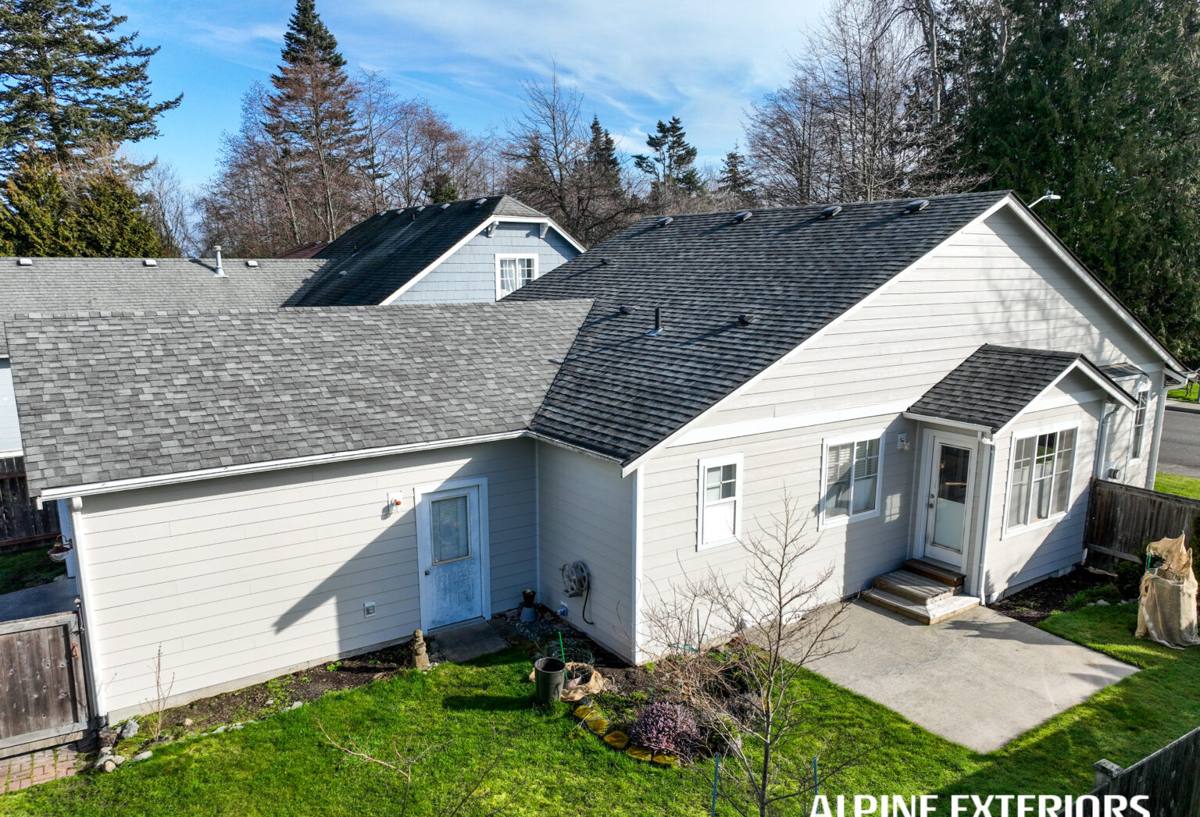
Why We Only Install James Hardie Fiber Cement
Ferndale Siding Companies installs James Hardie fiber cement siding exclusively. We don't install vinyl, LP SmartSide, Cemplank, Allura, or primed wood products like spruce or cedar lap siding. That's not a marketing position — it's a decision we made after years of servicing exteriors around Whatcom County and seeing which products actually held up to this specific climate and which ones needed constant attention or premature replacement.
Fiber cement is a mix of cement, sand, and cellulose fiber, which means it doesn't absorb water the way wood-based products do, and it won't soften or delaminate the way some engineered wood siding can if a seam or cut edge gets exposed to moisture over time. It's also non-combustible, which matters more each year as wildfire smoke and dry summer stretches become part of the Pacific Northwest's normal weather pattern. For a valley town like Lynden that swings between soggy winters and dry, warm summers, a siding material that doesn't care much about either extreme is worth the investment.
What We're Choosing Not to Install, and Why
- Vinyl siding: Low upfront cost, but it can warp or fade with UV and temperature swings, and it doesn't hold paint if a homeowner ever wants to update the color.
- LP SmartSide and similar engineered wood: A wood-strand product with a resin coating — performs fine when installation details (caulking, flashing, ground clearance) are followed exactly, but any breach in that coating opens the door to moisture wicking into the wood fiber, and repairs are harder to blend in.
- Cemplank and Allura: Both are fiber cement competitors to Hardie, and reasonable products, but they don't offer the same factory finish warranty depth or regional product engineering that Hardie has built specifically for wet marine climates like ours.
- Primed cedar or spruce lap siding: Beautiful when new, but real wood requires ongoing repainting and caulk maintenance, and in a moss-heavy, shaded valley environment it's the highest-maintenance option on the list.
The James Hardie Product Line for This Climate
James Hardie makes region-specific formulations, and the HZ5 product line is engineered for the kind of freeze-thaw and heavy moisture cycling that Whatcom County sees. We install Hardie's lap siding, board-and-batten panels, and shingle-style siding depending on the home's architecture, all finished with the factory-applied ColorPlus coating rather than field-applied paint.
The reason ColorPlus matters here specifically: field-applied paint on any siding material is only as good as the weather conditions during application and the quality of the prep work. In a place like Lynden where you might get a two-week dry window in spring or early fall to paint an entire house, a factory finish cured under controlled conditions and baked on before the product ever reaches the job site is a meaningfully more durable option, and it comes with its own finish warranty separate from the substrate warranty.
Color and Style Considerations for Lynden Homes
Lynden has a mix of older farmhouses, newer developments, and homes on larger rural lots, so we don't push one look. Board-and-batten and traditional lap profiles both show up a lot in this area, and Hardie's color palette is designed with the muted, natural tones that read well against the region's evergreen tree lines and overcast sky most of the year. Darker colors do show pollen and moss streaking faster in shaded, tree-heavy lots, so we'll talk through sun exposure on your specific lot before locking in a color.
What Correct Installation Actually Involves
Fiber cement siding is only as good as its installation. Hardie's own warranty terms are tied to installation following their published specifications, and the details that get skipped on a rushed job are exactly the details that cause callbacks two or three years later.
| Installation Detail | Why It Matters in This Climate |
|---|---|
| Proper ground clearance and flashing | Keeps bottom courses from sitting in splash-back moisture during heavy rain events |
| Correct fastener type and placement | Prevents corrosion streaking and loosened boards over freeze-thaw cycles |
| Weather-resistive barrier and rain screen gap | Lets any moisture that gets behind the siding drain and dry instead of trapping against sheathing |
| Caulking only where Hardie specifies | Over-caulking can trap moisture instead of shedding it; under-caulking leaves gaps open to wind-driven rain |
| Butt joint and seam treatment | Reduces the visible seam lines and moisture entry points that show up fastest in humid, shaded areas |
Roofing, Windows, and Decks Alongside Your Siding
Siding doesn't work in isolation. We also handle roofing, windows, and decks because a home's exterior envelope has to work together — a solid siding job with a roof that's shedding water wrong, or windows that aren't flashed properly, just moves the moisture problem to a different spot on the wall. When we're on-site for a siding estimate in Lynden, we'll usually take a look at roof condition, flashing details around windows, and any deck ledger connections while we're there, since those are common points where water finds its way into a wall system.
Decks in particular take a beating from the same moss and moisture cycle that affects siding — north-facing and shaded decks around Lynden's tree-lined lots often need more frequent attention than siding does. If you're already planning an exterior project, it's worth having all of it looked at at once rather than addressing each system separately over several years.
Why a Local Crew Matters
Whatcom County's weather isn't dramatic in the way a hurricane-prone region is, but it's relentless — the sheer number of wet days per year and the specific way moisture behaves in shaded river valley lots is something you learn from working here, not from a manual. A crew that installs siding in a dry climate and then comes here for a job will make different assumptions about drying time, moisture barriers, and seasonal scheduling than a crew that works Lynden and the surrounding valley year-round.
We also know the practical side of working in this area: permitting through Whatcom County, scheduling around the wetter months so installation happens during a stretch of workable weather, and understanding which parts of town see more shade, more moss, and more moisture retention than others. That local knowledge shapes decisions on your job that a national installer working off a generic spec sheet wouldn't necessarily make.
What to Look For When Hiring an Exterior Contractor
- Washington state contractor registration and proof of insurance
- Manufacturer training or certification specific to the siding product being installed
- A written scope of work that specifies fastener type, flashing details, and rain screen approach
- Local references or a track record of jobs in Whatcom County specifically
- A clear warranty structure — both the manufacturer's product warranty and the contractor's labor warranty
What the Process Looks Like
An exterior project on a Lynden home typically starts with an on-site walk-through where we look at your current siding condition, any moisture or moss issues, and the roofline and window flashing while we're there. From there we put together a scope that covers the specific Hardie products, colors, and any roofing, window, or deck work you want bundled in. Every project is different depending on home size, current siding condition, and how much prep work is needed, so we don't quote generic per-square-foot numbers without seeing the house first — but we're upfront about cost factors as we go.
Ready to Talk About Your Home
If your Lynden home is showing moss staining, soft or swelling siding, paint that won't hold, or you're just planning ahead for a replacement, we're happy to come take a look. There's no pressure and no obligation — just a straight assessment of what your exterior actually needs and what it would take to do it right. Use the form below to request a free estimate.