 Ferndale Siding
 Why Fairhaven Decks Wear Out Faster Than You'd Expect
If you own a home in Fairhaven, you already know your deck doesn't age the way a deck in a drier inland town would. Whatcom County's coastal climate is a mixed blessing — beautiful views, but tough on exterior wood and hardware. Salt-laden air off the water accelerates corrosion on fasteners and metal connectors. Driving rain, common through fall and winter, finds its way into every seam, screw hole, and board gap that isn't properly sealed. And the long moss season that stretches from late fall well into spring keeps deck surfaces damp for weeks at a time, which is exactly the environment wood rot and slippery algae need to take hold.
None of that means your deck is doomed. It means deck repair here has to account for conditions a generic repair job elsewhere wouldn't. That's the difference between a fix that lasts one season and one that lasts a decade.
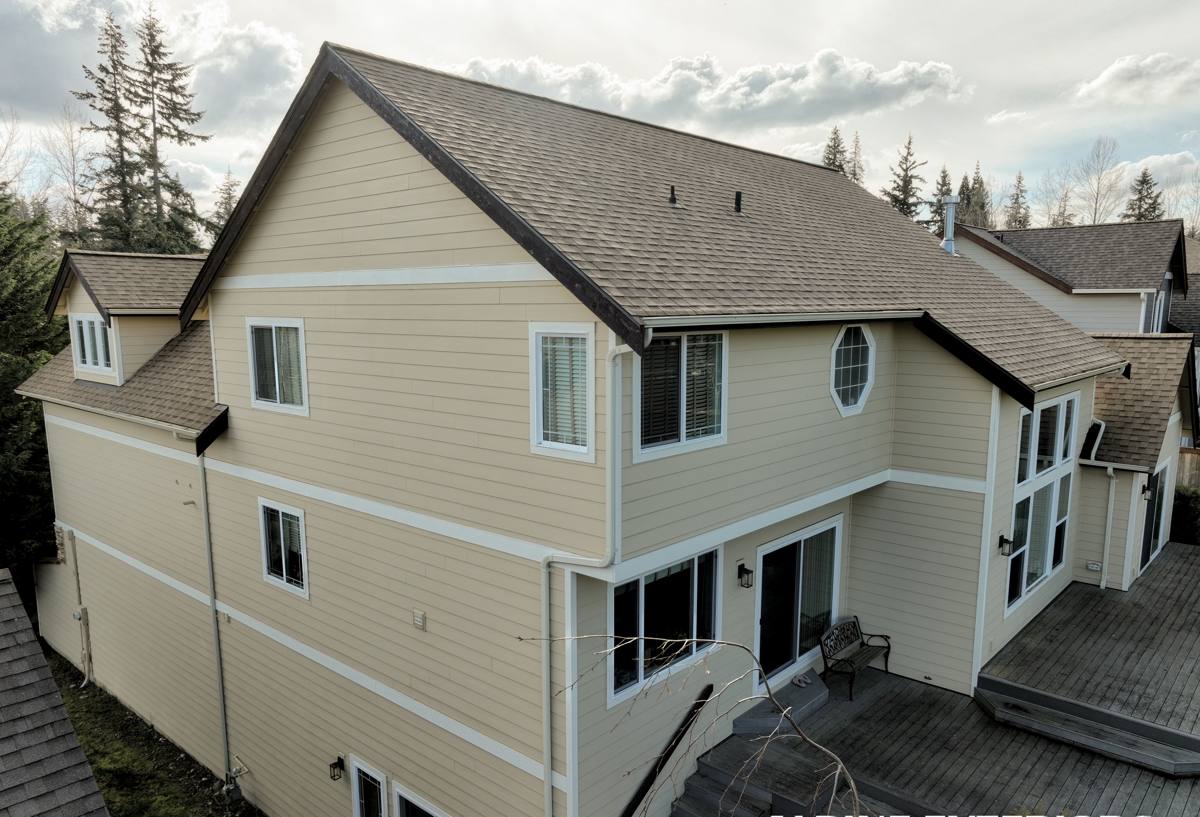
Signs Your Fairhaven Deck Needs Repair
Deck problems rarely show up all at once — they start small and get expensive if ignored. Here's what we look for, and what you can check yourself before calling anyone out:
- Soft, spongy, or discolored decking boards, especially near the house or in shaded corners that don't dry out
- Rust streaks below screws or nail heads, or fasteners that have started to back out
- Green or black moss and algae buildup on the deck surface, particularly on the north side or under overhangs
- Gaps opening up between the deck and the ledger board where it attaches to the house
- Wobbly or loose railings and posts
- Visible cracking, splitting, or checking in structural framing members you can see from underneath
- A musty smell coming from underneath the deck, which often points to trapped moisture and early rot
If you're seeing more than one of these, it's worth having someone look at the structure — not just the surface.
What a Correct Deck Repair Actually Involves
It's Not Just About the Boards You Can See
A lot of deck repair calls come in because a homeowner noticed a soft board or peeling finish on the decking itself. That's the visible symptom, but it's rarely the whole story. A correct repair starts underneath — checking the ledger board attachment to the house, the condition of the joists, the posts, and the footings. Salt air speeds up corrosion on the metal hardware holding all of this together, and a deck can look fine on top while its connectors are quietly failing underneath.
Structural First, Cosmetic Second
We always address structural issues before cosmetic ones. There's no point replacing decking boards over a joist that's rotting, or repainting a railing whose posts are loose at the base. Getting the order right is what separates a repair that holds up through another wet Whatcom County winter from one that needs redoing in two years.
Repair, Resurface, or Rebuild — How to Decide
Not every deck problem calls for the same solution. Here's how we generally think through it, and roughly what factors into the cost at each level:
| Option | Best For | What's Involved | Typical Cost Factor |
|---|---|---|---|
| Spot Repair | Isolated rot, a few bad boards, one loose railing section | Replace damaged boards, sister or reinforce affected framing, re-fasten with corrosion-resistant hardware | Lowest — limited to material and labor for the specific area |
| Resurface | Sound framing but worn, weathered, or moss-stained decking across the whole deck | Remove and replace all decking and railings, inspect and repair framing as needed, upgrade fasteners | Moderate — driven mostly by square footage and material choice |
| Full Rebuild | Widespread rot in framing, undersized or failing footings, structural issues affecting safety | Demo to the posts or footings, rebuild framing to current code, new decking and railings | Highest — scales with structural scope, permits, and size |
An honest inspection tells us which category a given deck actually falls into. It's common for homeowners to assume they need a full rebuild when the framing is actually sound and the issue is limited to the decking surface — and it's just as common to find hidden rot that makes a "simple" resurface not the right call.
Our Deck Repair Process
1. On-Site Inspection
We start underneath the deck, not on top of it. That means checking the ledger connection, joists, beams, posts, and footings for rot, corrosion, and movement. We probe suspect wood rather than just looking at it — soft wood can hide under a finish that still looks fine.
2. Scope and Options
Once we know what's actually going on, we walk you through what needs to happen and why, including whether a spot repair is realistic or whether you're better served resurfacing or rebuilding a section. We're not going to sell you a full rebuild when a targeted repair will hold up fine, and we're not going to patch something that's structurally unsound just because it's the cheaper quote.
3. Structural Repairs
Any compromised framing, ledger flashing, or footing issues get addressed first, using fasteners and hardware suited to a salt-air environment.
4. Decking, Railing, and Finish Work
With the structure sound, we replace or repair decking boards and railings, making sure board spacing and slope allow water to shed properly instead of pooling — which matters more here than in drier climates, given how much rain the deck will see over a typical Whatcom County winter.
5. Walkthrough
We go over the finished repair with you, including what maintenance will help it last, before we consider the job done.
Materials and Fasteners That Actually Hold Up Near Salt Air
Proximity to the water changes what "good enough" hardware looks like. Standard galvanized fasteners can corrode faster near salt air than they would further inland, which is why we favor stainless steel or high-grade coated fasteners rated for coastal exposure on repair work in and around Fairhaven. The same goes for joist hangers and structural connectors — the extra upfront cost is minor compared to redoing a repair because the hardware failed early.
On decking material, we'll give you a straight comparison of the trade-offs rather than pushing one product:
- Pressure-treated lumber is cost-effective and easy to repair in sections later, but it needs regular sealing and cleaning to resist moss and moisture in this climate.
- Cedar has natural rot resistance and a look many homeowners prefer, but it's softer and benefits from consistent maintenance near the coast.
- Composite decking resists rot and doesn't need staining, but it requires correct installation — spacing, ventilation underneath, and manufacturer-specified fasteners — to avoid moisture and mold issues on its surface, and repairs to damaged sections can be more involved than with wood.
The right choice depends on your budget, how the deck is used, and how much maintenance you want to do going forward — we'll talk through that honestly rather than defaulting to whatever's easiest for us to install.
Permits, Codes, and Structural Safety
Deck repairs that touch structural elements — ledger attachment, framing, posts, footings, or railings — typically fall under Whatcom County or local permitting requirements, especially where guardrail height and baluster spacing are concerned. This isn't paperwork for its own sake; ledger attachment and railing failures are among the most common causes of serious deck injuries nationally, and code requirements exist because of that. We handle the permitting process on structural repairs so you're not left guessing whether a repair meets current safety standards.
Maintenance That Extends the Life of a Repair
A good repair job can be undone by neglect just as easily as it was caused by it in the first place. A few habits make a real difference here:
- Clean moss and algae off the deck surface at least once a year, ideally before the wet season sets in
- Keep gutters and downspouts clear so runoff isn't dumping extra water onto or near the deck
- Reseal or restain wood decking on the schedule the product calls for — don't wait until it's visibly weathered
- Check underneath the deck occasionally for standing water, soft framing, or new rust on hardware
- Trim back vegetation that's shading the deck and keeping it damp longer than it needs to be
Why Hiring a Crew That Already Works Fairhaven Matters
Deck repair isn't identical everywhere, and a crew that works this area regularly already knows what to expect: how fast moss builds back up on a north-facing deck near the water, which fasteners actually hold up under salt air exposure year after year, and how to plan work around Whatcom County's wet season instead of getting caught mid-project by it. That local experience shows up in the quality of the repair — the right materials, the right sequencing, and a realistic sense of what a deck in this specific environment actually needs to last.
If your deck in Fairhaven is showing signs of wear, soft spots, corrosion, or moss buildup, we're happy to take a look and give you an honest read on what it needs. There's no obligation — just a straightforward assessment and a free estimate using the form below.