 Ferndale Siding
 Living on the Water Comes With a Maintenance Bill
Sandy Point sits right up against the Strait of Georgia, and that waterfront location is exactly why people choose to live there — and exactly why the exteriors on those homes take more punishment than a house a few miles inland in Ferndale or Bellingham. Salt-laden air moves off the water and settles on every exterior surface: siding, trim, window frames, roof edges, deck railings. Add Whatcom County's long wet season, driving rain that comes in sideways off the water, and a moss season that can stretch from fall through spring, and you've got a climate that's genuinely harder on a home's exterior than most of the county experiences.
None of this means a home in Sandy Point can't hold up for decades. It means the materials and installation details matter more here than they do elsewhere, and that's the lens we bring to every project in this neighborhood.
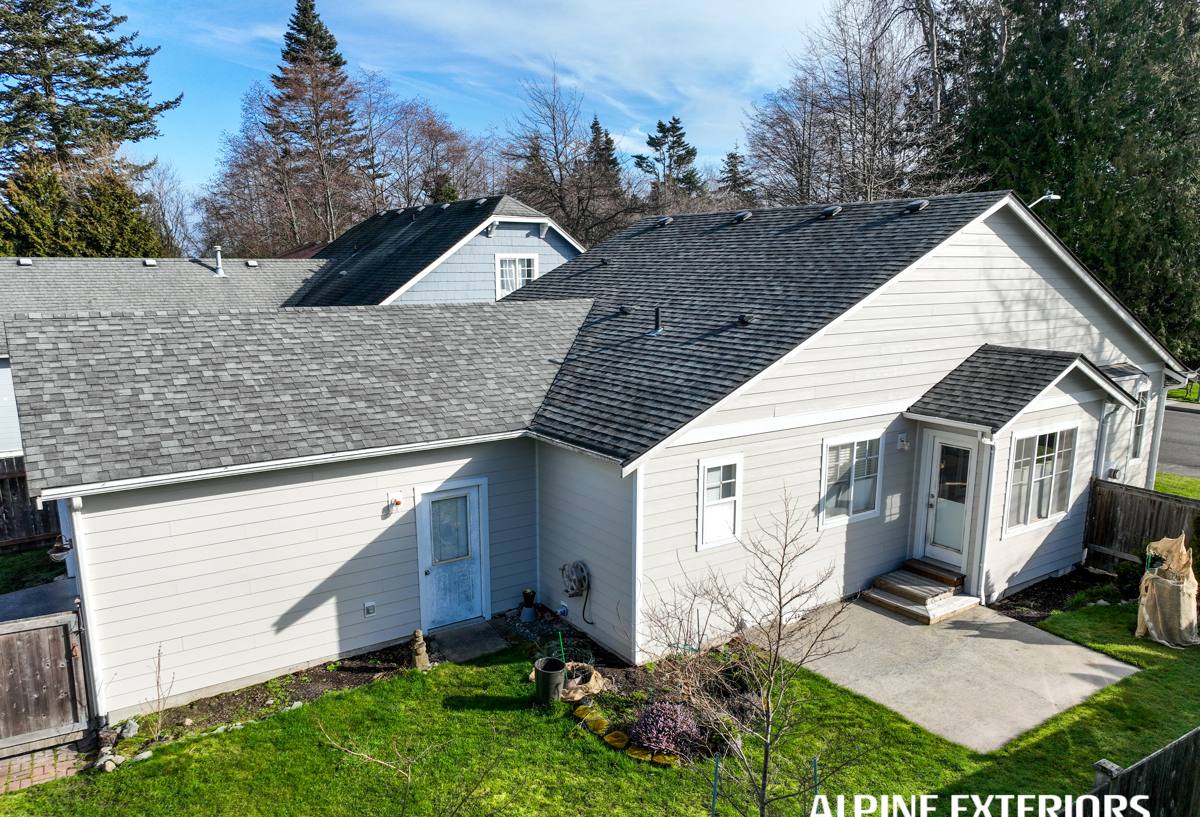
What Salt Air Actually Does to a House
Salt air isn't just "humid air." Airborne salt is corrosive and hygroscopic — it pulls moisture out of the atmosphere and holds it against whatever surface it lands on. Over years, that has a few predictable effects on a home's exterior:
- Fasteners, flashing, and hardware corrode faster if they aren't rated for coastal exposure
- Paint and finishes chalk, fade, and break down sooner than the same product would inland
- Wood-based siding and trim absorb moisture more readily and take longer to dry between rain events
- Caulk and sealant joints degrade faster, opening small paths for water intrusion
- Metal roofing and gutter components need corrosion-resistant coatings and fasteners, not standard-grade hardware
Individually, none of these are dramatic. Compounded over ten or fifteen years, they're the difference between a home that still looks tight and a home that needs a full exterior overhaul well ahead of schedule.
Driving Rain and Wind-Driven Water Intrusion
Sandy Point's exposure means rain doesn't just fall on this neighborhood, it's frequently pushed sideways by wind coming off the water. That matters because most exterior systems are designed and tested assuming rain falls more or less straight down. Wind-driven rain finds its way into laps, seams, and penetrations that would stay dry in a more sheltered location.
That's why the details around windows, doors, and siding transitions carry more weight on a home like this than the field material itself. Proper flashing, correctly lapped house wrap, and siding installed with the right reveal and fastening pattern are what actually keep water out — not just the brand of siding on the wall. A crew that treats those details as optional, or rushes them to save labor time, is setting a Sandy Point home up for problems that won't show up for a few years but will be expensive when they do.
Moss and Sustained Moisture
The long wet season in this part of Whatcom County means north-facing walls, shaded rooflines, and anything under tree cover stay damp for extended stretches. That's ideal growing conditions for moss and algae. On roofing, moss holds moisture against shingles and can work its way under the tab edges over time. On siding, sustained dampness is what breaks down wood fiber and wood-based composite products, and it's what causes paint films to fail early. A siding material that handles repeated wet-dry cycling without swelling or softening is worth more here than in a drier inland town.
Why We Install James Hardie and Nothing Else
We standardized on James Hardie fiber cement siding company-wide, and in a place like Sandy Point that decision matters more than almost anywhere else we work. Fiber cement is non-combustible and dimensionally stable — it doesn't swell, warp, or rot the way wood and wood-based products can when they're exposed to repeated wet-dry cycling and salt-laden moisture. The ColorPlus factory finish is baked on under controlled conditions rather than field-applied, which gives it better fade and chip resistance than a job-site paint job, and Hardie backs it with a real, transferable finish warranty.
We get asked why we don't install other common siding products, and it's a fair question — each has legitimate uses, just not ones we think hold up to our standard in this climate:
- Vinyl siding is inexpensive and low-maintenance, but it's a thin material that can warp in heat and become brittle in cold, its seams and laps rely on the material's flexibility rather than a rigid, factory-finished surface, and its color is molded through rather than a durable applied finish — meaning fading is permanent and not something you can spot-touch.
- LP SmartSide and other engineered wood products perform reasonably well when installation and maintenance are followed exactly, but they're wood-based, and wood-based siding is inherently more sensitive to sustained moisture exposure than fiber cement — a real consideration in a marine-air, high-rainfall neighborhood.
- Primed spruce and cedar are traditional, attractive choices, but they require ongoing refinishing to stay protected, and that maintenance burden is significant on a home facing this much salt air and rain.
We'd rather put one product on every home, install it correctly to spec, and stand behind it — than juggle multiple product lines with different maintenance expectations and warranty structures.
Siding Material Comparison for Coastal Exposure
| Factor | James Hardie Fiber Cement | Vinyl | Wood / Engineered Wood |
|---|---|---|---|
| Moisture behavior | Dimensionally stable, doesn't swell or rot | Doesn't absorb water, but seams can allow intrusion | Absorbs moisture, prone to swelling and decay over time |
| Salt air resistance | Strong; factory finish holds up well | Moderate; can chalk and become brittle | Weaker; finish and substrate both degrade faster |
| Finish durability | Factory-baked ColorPlus finish, long fade resistance | Color molded through but can fade unevenly | Field-applied paint/stain, needs periodic recoating |
| Fire performance | Non-combustible | Combustible | Combustible |
| Typical maintenance | Occasional wash, minimal upkeep | Occasional wash, panel replacement if damaged | Regular inspection, recoating, moisture monitoring |
Roofing, Windows, and Decks in the Same Climate
Siding is only part of what a coastal-adjacent home like this needs. We handle roofing, windows, and decks as well, because a home's exterior only performs as a system — a great siding job can still leak if the roof-to-wall flashing is wrong, or if window units aren't sealed to match.
Roofing
Roofs in this area deal with the same moss and sustained-moisture pressure as siding, plus more direct UV and wind exposure. Proper ventilation, ice-and-water protection at vulnerable transitions, and corrosion-resistant flashing and fasteners all matter more here than in a sheltered inland lot.
Windows
Older or poorly sealed windows are one of the most common sources of water intrusion we find on coastal-exposed homes. Correct flashing integration between the window unit and the siding system is what keeps wind-driven rain out — it's a detail that's easy to get wrong and expensive to fix after the fact.
Decks
Decks facing the water take direct sun, salt spray, and rain with little to shield them. Fastener selection, board spacing for drainage, and ledger flashing all need to account for that exposure rather than following a generic inland spec.
What a Local Crew Actually Adds
A crew based near Ferndale and working regularly in Whatcom County isn't just a convenience for scheduling. It means we're familiar with local permitting requirements, we've seen how homes in this specific microclimate age over time, and we're not learning coastal detailing for the first time on your project. We're also close enough to come back for warranty work or a follow-up question without it being a special trip — that matters on a home exposed to conditions that reward attentive, ongoing care rather than a one-and-done installation.
What Affects Project Cost
| Cost Factor | Why It Matters |
|---|---|
| Full tear-off vs. re-side over existing material | Removing old siding adds labor but allows inspection and repair of the sheathing and water barrier underneath |
| Home access and site conditions | Waterfront lots and tight setbacks can affect staging, scaffolding, and material delivery |
| Exposure level of each elevation | Water-facing walls may warrant extra attention to flashing and fastening detail versus more sheltered sides |
| Trim, color, and detail complexity | Multiple colors, extensive trim work, or custom details add labor beyond a straightforward panel install |
| Underlying repairs found during tear-off | Rot or moisture damage discovered once old siding comes off needs to be addressed before new siding goes on |
A Practical Maintenance Checklist for Sandy Point Homes
- Rinse siding and trim periodically to remove salt residue buildup
- Inspect caulk joints around windows and doors annually and re-seal as needed
- Keep gutters clear, especially heading into the wet season, to prevent water backing up under roof edges
- Remove moss from roofing and shaded siding areas promptly rather than letting it establish
- Check deck fasteners and hardware yearly for early corrosion signs
- Walk the exterior after major wind-driven storms to spot loose trim, damaged flashing, or new gaps
Getting Started
If you're weighing a siding, roofing, window, or deck project for a home in Sandy Point, we're happy to take a look and talk through what your specific exposure and existing materials actually need — no pressure, no generic sales pitch. Reach out for a free estimate and we'll walk the property with you and give you a straight answer about what will hold up here.