 Ferndale Siding
 Homeowners in Ferndale sometimes ask why we don't offer a lineup of siding options the way some contractors do. The honest answer is that we used to install more than one product, and stopped. After years of tear-offs, warranty headaches, and callbacks tied almost entirely to certain materials, we made a decision: every siding job we take on in Whatcom County goes up in James Hardie fiber cement, or we don't take the job. This page explains the reasoning, not the marketing pitch, behind that standard.
Our Standard, and Why We Set It
A siding contractor's reputation is built on what happens to a house five, ten, and twenty years after installation, not on what it looks like the day the crew leaves. We got tired of watching product choices made on price alone come back to bite homeowners in the form of soft, swollen panels, cracked caulk lines, or fading that no amount of touch-up paint could fix. Standardizing on one manufacturer also lets our crews specialize. Every installer on our team trains on Hardie's fastening patterns, flashing details, and clearance requirements specifically, instead of switching between five different manufacturers' spec sheets from one job to the next. That specialization is where most of the actual quality difference between a good siding job and a mediocre one comes from.
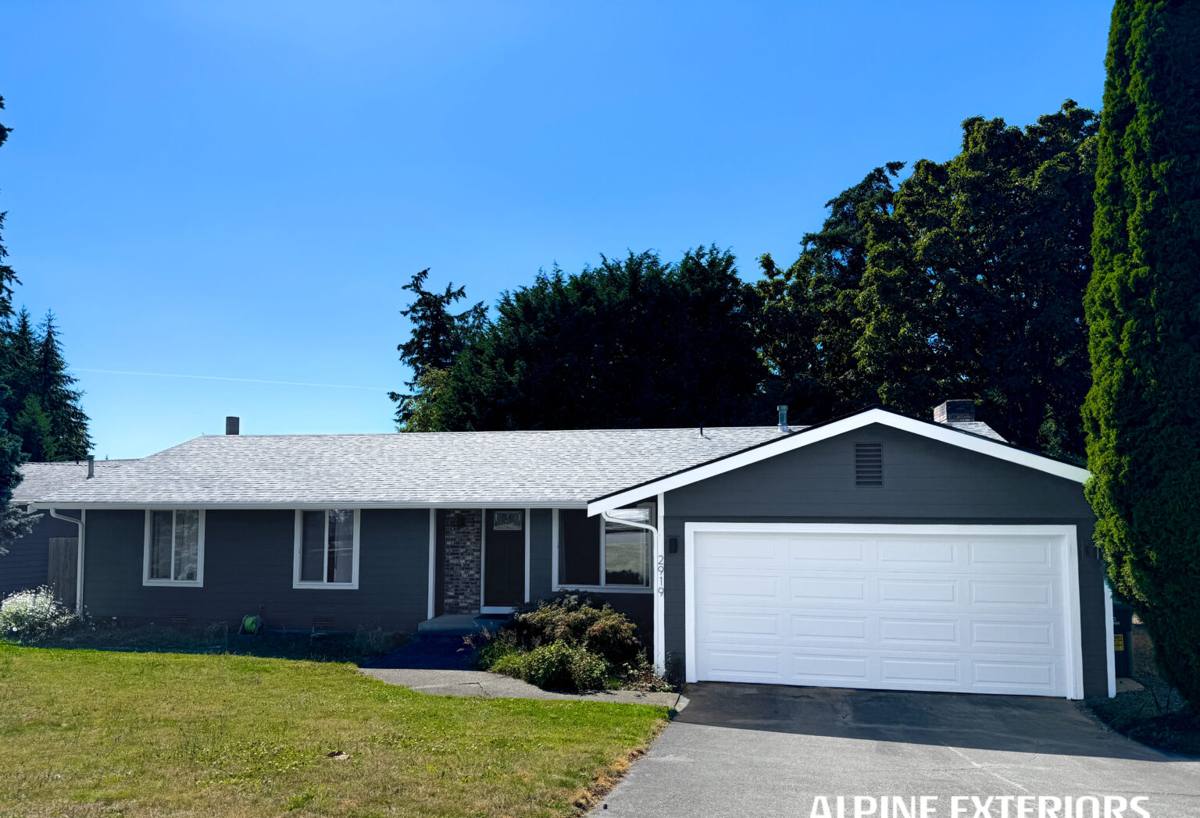
What Whatcom County Weather Does to Siding
Ferndale sits close enough to Bellingham Bay and the Salish Sea that salt-laden air is a real factor on window frames, fasteners, and exposed wood trim, especially on homes closer to the water or exposed to prevailing westerly winds. Add in the driving rain that comes through Whatcom County from fall through spring, and a siding product's water management becomes the single most important thing about it, more important than color or texture.
Then there's moss and mildew. This region holds enough moisture in the air for large parts of the year that any siding with a porous or wood-based surface starts hosting organic growth within a few seasons if it doesn't get regular cleaning. Homeowners in Ferndale already deal with this on roofs, fences, and decking. We don't want to hand them a wall assembly that adds another surface to that fight.
None of this is unique to one brand of siding, and we're not claiming otherwise. It's simply the baseline every product has to survive here, and it's why the material choice matters more in Whatcom County than it would in a dry climate.
What James Hardie Fiber Cement Actually Is
James Hardie siding is a fiber cement product made from a mix of Portland cement, sand, and cellulose fiber, cured under pressure. It is not a plastic product like vinyl, and it is not wood or a wood-fiber composite like LP SmartSide or similar engineered wood siding. That distinction matters for three reasons homeowners care about:
- It doesn't burn. Fiber cement is non-combustible, which matters for insurance conversations and for peace of mind, especially with wildfire smoke and dry-season risk becoming a bigger part of Pacific Northwest summers.
- It doesn't rot. There's no wood fiber for moisture to break down over time, which removes the single biggest long-term failure mode we see in wood-based siding products in this climate.
- It holds its shape. Fiber cement doesn't expand and contract with humidity the way wood-based products do, so paint lines, caulk joints, and butt seams stay tighter for longer.
It is heavier and more brittle to cut than wood-based sidings, which is part of why installation technique matters so much — more on that below.
Built for This Climate: HZ5 Product Lines
James Hardie engineers different versions of its siding for different climate zones, and the Pacific Northwest falls into their HZ5 zone, which accounts for prolonged moisture exposure, freeze-thaw cycling, and coastal air. HZ5 products use a formulation and moisture-barrier system built for exactly the conditions Ferndale sees for half the year. That's a meaningful difference from a one-size-fits-all siding product marketed the same way whether it's going on a house in Arizona or a house three miles from Puget Sound.
The ColorPlus Factory Finish
Most of what fails first on painted siding isn't the substrate, it's the paint. Field-applied paint on any siding material is only as good as the weather conditions during application, the prep work, and the number of coats — all things that vary job to job. James Hardie's ColorPlus finish is baked on at the factory in a controlled environment, cured for durability, and backed by its own finish warranty separate from the product warranty. In a region where a fresh coat of field-applied paint can be compromised by rain within days of a crew leaving, a factory-cured finish removes a major point of failure before the siding ever reaches the truck.
ColorPlus finishes also resist the chalking and fading that UV and salt air cause over time, which keeps color-matched repairs actually matching years later, something that gets harder with field-mixed paint as pigments shift.
Comparing What We Considered and Ruled Out
We didn't standardize on Hardie by default. Over the years we've installed vinyl, engineered wood products, and other fiber cement brands, and we tracked what happened to those jobs over time. Here's the honest comparison, focused on how each material behaves specifically in a wet, salt-air, moss-prone climate like Whatcom County's rather than in general terms.
| Material | Behavior in Salt Air / Driving Rain | Moss & Mildew Resistance | Long-Term Finish |
|---|---|---|---|
| James Hardie fiber cement | Engineered HZ5 formulation for coastal/wet zones; dimensionally stable when wet | Non-organic surface resists sustained growth better than wood-based products | Factory-cured ColorPlus, warrantied separately from the panel |
| Vinyl siding | Can warp or buckle under heat cycling; seams are a common water entry point | Surface itself resists growth, but trapped moisture behind panels is a common issue | Color is through-body but fades and chalks with UV over time; cannot be repainted easily |
| Engineered wood (LP SmartSide and similar) | Wood-strand core is vulnerable if any moisture gets past the finish or caulk joints | Higher risk of edge swelling and organic growth if maintenance lapses | Field or factory finish, but any breach at cut edges exposes wood fiber |
| Cedar / primed spruce | Natural wood, most exposed to moisture absorption and rot without diligent upkeep | Highest maintenance burden in this climate; needs regular treatment | Requires ongoing refinishing on a multi-year cycle |
This table isn't meant to say the other products are bad at everything — vinyl is inexpensive and low-maintenance in dry climates, and cedar has a look some homeowners specifically want. It's meant to show why, for the specific combination of salt air, driving rain, and moss season that Ferndale gets, we stopped being comfortable putting our name behind installs that weren't fiber cement, and specifically Hardie's climate-zoned version of it.
Why Installation Quality Matters as Much as the Product
Fiber cement siding installed wrong performs worse than a lesser product installed right. This is the part most homeowners don't get told. James Hardie publishes detailed installation requirements, and skipping them is where almost all fiber cement failures actually come from — not the material itself.
- Correct fastener spacing and depth, not overdriven or underdriven nails that crack the board or leave it loose
- Proper clearance between the siding's bottom edge and the ground, roofline, or deck surface, typically at least 6 inches
- Correctly lapped and sealed house wrap or weather-resistant barrier behind the siding
- Flashing at every window, door, and roof-to-wall intersection, not just caulk
- Panel joints caulked with a high-quality, paintable, flexible sealant rated for the exposure
- Cut edges primed or sealed before installation, since factory finish doesn't extend to field cuts
- Correct nailing pattern for the wind and seismic zone the home is in
Every one of those details is something we build into our own install checklist and train crews on specifically for Hardie's requirements, which is part of why we don't want to also be relearning a different set of specs for a second or third product line.
The Warranty Difference
James Hardie backs its siding with a limited warranty that is transferable to a new owner if the home sells, which matters for resale in a market where buyers increasingly ask about siding age and condition. The ColorPlus finish carries its own separate finish warranty. Warranty terms and lengths vary by product line, and we'll walk through the specifics that apply to your home during an estimate rather than quote numbers here that could be out of date by the time you read this. The larger point is that a warranty is only as good as the installation behind it — most manufacturer warranties, Hardie included, require installation to their spec, which is another reason installation discipline isn't optional.
What This Means for Your Project
Because we only install one product line, our estimates don't involve a menu of material tiers designed to steer you toward an upsell. We measure your home, look at its current siding condition, exposure, and trim details, and give you a straightforward number for a Hardie installation done to spec. If your project also involves trim, soffit, or fascia work, we'll address those in the same visit rather than leaving gaps where water can get behind the new siding.
If you're weighing a full re-side against patch repairs on existing siding, that's worth a conversation too — sometimes targeted repair is the right call, and we'll tell you that instead of pushing a full replacement you don't need yet.
If you'd like to see how this applies to your specific house, we're happy to come take a look. The estimate is free, there's no pressure attached to it, and you'll get a straight answer about what your siding actually needs.