 Ferndale Siding
 Building for Birch Bay's Shoreline Climate
Birch Bay sits right on the water in Whatcom County, and that location shapes everything about how a house ages here. Homes along the bay and the neighborhoods that stretch back from it deal with a version of Pacific Northwest weather that's a notch more aggressive than what you'll find further inland — steady marine air carrying salt, wind-driven rain that hits siding sideways instead of just falling on the roof, and long stretches of gray, damp weather that keep exterior surfaces wet for days at a time. Add in the shade from mature evergreens on many lots, and you've got ideal conditions for moss, algae, and slow-building moisture damage.
None of that is unusual for this part of Washington. But it does mean the products and installation choices that hold up fine in a drier climate can fail early here. We work on homes throughout Ferndale and the surrounding Whatcom County coastline, and Birch Bay is one of the areas where we see the clearest difference between exteriors that were built to handle this environment and ones that weren't.
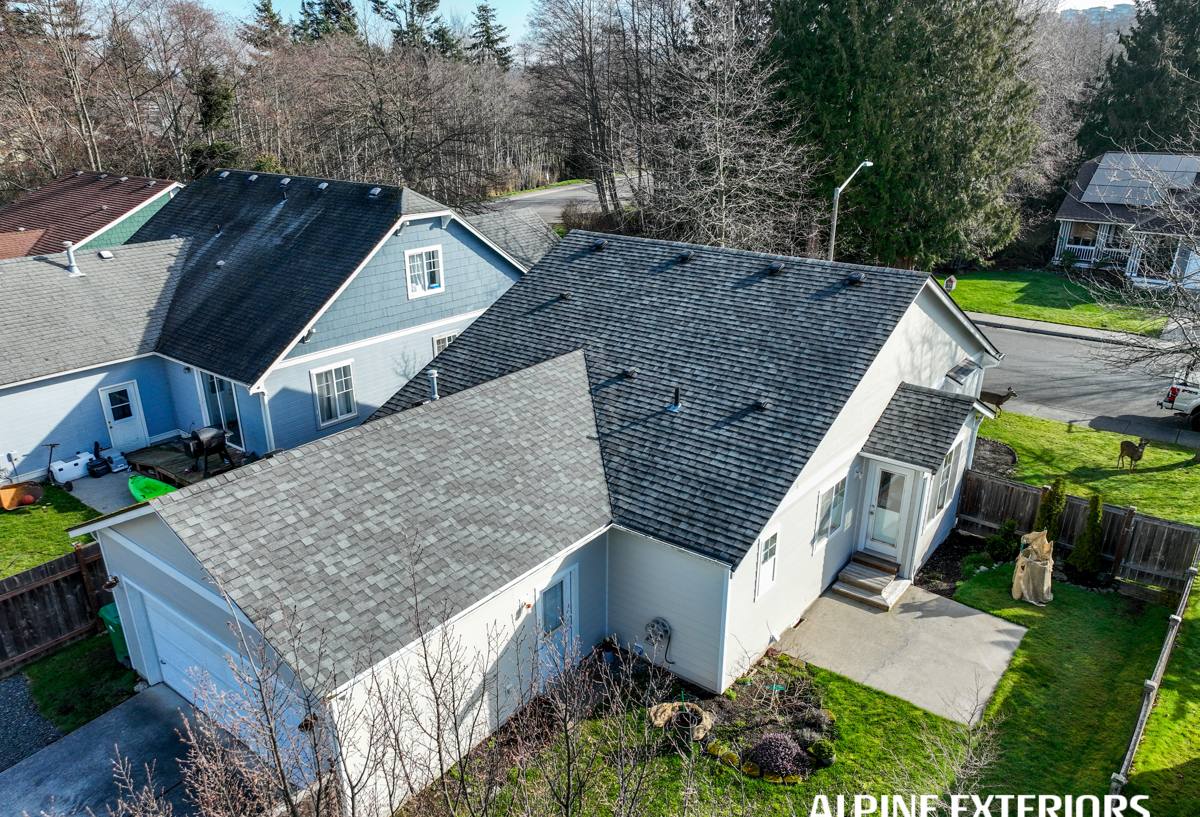
What Salt Air and Driving Rain Actually Do to a House
Salt Air
Airborne salt from the bay settles on every exterior surface — siding, trim, fasteners, window frames, deck hardware. It's a slow process, but salt is corrosive to unprotected metal and it accelerates the breakdown of finishes that aren't rated for marine exposure. Cheap or exposed fasteners rust and streak long before the rest of the material shows its age. Paint and coatings not designed for coastal use tend to chalk, fade, and fail sooner than their inland warranties would suggest.
Driving Rain
Wind off the water doesn't let rain just run down a wall — it pushes moisture sideways and up under laps, trim, and flashing. That means the details matter more here than they do in a sheltered inland lot: how siding courses are lapped, how flashing is integrated at windows and doors, how deck ledgers and roof penetrations are sealed. A house built to minimum code in a low-wind area can still leak here if those details weren't done right.
The Long Moss Season
Shaded, damp conditions for much of the year mean moss and algae get a real foothold on roofs, north-facing siding, and shaded decking. Beyond looking bad, sustained moss growth holds moisture against the surface underneath it, which is exactly the condition that leads to rot in wood-based materials and premature wear on lower-grade siding and roofing products.
Siding, Roofing, Windows, and Decks — One Crew, One Standard
We handle all four of the systems that make up a home's exterior envelope, and in a place like Birch Bay they're genuinely connected. Siding that isn't flashed correctly at window openings creates leaks the windows get blamed for. A roof that's shedding moss onto a deck below accelerates decking wear. Treating these as one integrated exterior — rather than four separate trades who never talk to each other — is a big part of how we prevent the callback problems coastal homes are prone to.
- Siding: Full removal of failing material, correction of any water damage found underneath, proper weather-resistive barrier and flashing detail, then installation of James Hardie fiber cement to manufacturer spec.
- Roofing: Roof replacement and repair with attention to the flashing, ventilation, and moss-resistant details that matter most in a shaded, damp coastal setting.
- Windows: Replacement windows installed with proper flashing integration into the siding system — the single most common source of leaks we find on older coastal homes.
- Decks: Deck construction and rebuilds using materials and hardware suited to sustained moisture and salt exposure, not just what's cheapest at the yard.
Why We Install Only James Hardie Fiber Cement Siding
We made a decision a long time ago to install one siding product, and only one: James Hardie fiber cement. We don't install vinyl, LP SmartSide, primed spruce, cedar, or other fiber cement brands like Cemplank or Allura. That's not a marketing gimmick — it's a standard we hold ourselves to because of what we've seen happen to other products in exactly this kind of climate.
Vinyl
Vinyl is affordable and low-maintenance in the sense that it doesn't need painting, but it's a thin plastic product that expands and contracts with temperature swings, can crack in impact or cold, and relies heavily on caulking and lapping to keep wind-driven rain out — the exact condition Birch Bay gets a lot of. It also simply doesn't offer the look or resale perception of a heavier, paintable material.
Wood-Based and Engineered Wood Siding (LP SmartSide, primed spruce, cedar)
Wood and engineered-wood products can perform well when maintenance is kept up perfectly, but they're organic materials at their core — vulnerable to moisture intrusion, rot, and insect damage if a coating fails or a seam opens up. In a climate with this much sustained dampness and moss pressure, that's a maintenance burden we don't think most homeowners want to sign up for.
Other Fiber Cement Brands
Products like Cemplank and Allura are also fiber cement and share some of Hardie's core advantages over vinyl and wood. Where we see the difference is in the factory-applied ColorPlus finish system, the climate-specific HZ5 engineering for the Pacific Northwest, and the depth of installer network and warranty backing behind James Hardie specifically. Standardizing on one product also means our crews install it the same correct way, every time, rather than switching systems and installation methods project to project.
James Hardie fiber cement is non-combustible, doesn't rot, holds paint and factory color far longer than wood, and is engineered in regional product lines specifically for wet, marine climates like ours. It carries a strong transferable warranty when installed to spec — and installing to spec, on every job, is the whole reason we limit ourselves to one product we know inside and out.
Comparing Siding Options for a Coastal Whatcom County Home
| Material | Moisture / Salt Air Performance | Maintenance | Longevity Expectation |
|---|---|---|---|
| Vinyl | Relies on tight seams and laps; can crack or warp | Low, but limited repair options | Moderate; fades and becomes brittle over time |
| Cedar / Primed Wood | Vulnerable if coating fails; absorbs moisture | High — regular painting and sealing | Shorter without diligent upkeep |
| LP SmartSide | Engineered wood; needs intact coating to resist moisture | Moderate to high | Depends heavily on installation and upkeep |
| Other Fiber Cement (Cemplank, Allura) | Good; non-combustible, moisture-resistant core | Low | Long, with correct installation |
| James Hardie Fiber Cement | Engineered (HZ5) for Pacific Northwest marine climate | Low | Long, with factory ColorPlus finish and strong transferable warranty |
This is a general comparison, not a claim that every product in a category fails — plenty of homes around the bay have vinyl or wood siding still doing its job. It's simply why, when we're the ones doing the installing, we've standardized on the product engineered for this exact environment.
What Correct Installation Looks Like on a Bay-Front Lot
Product choice only gets you halfway there. The other half is installation, and it's where a lot of coastal exterior problems actually start. On Birch Bay homes we pay particular attention to:
- Proper clearance between siding and grade, decking, and roof lines so water has somewhere to go.
- Correct flashing integration at every window, door, and penetration — not just caulk covering a gap.
- Manufacturer-specified fastening and lapping so wind-driven rain can't work its way behind the siding.
- Ventilation behind the cladding so any moisture that does get in can dry out instead of sitting.
- Use of fasteners and hardware rated for coastal, corrosion-prone environments.
Roofing and Windows: The Other Half of Keeping Water Out
A new roof in Birch Bay needs to account for the shade and moss pressure most lots deal with — that means attention to ventilation and moss-resistant details, not just shingle color. Roof-to-wall flashing is one of the most common leak points we find on older homes here, precisely because it's where wind-driven rain meets a transition in materials.
Windows are the same story. A well-built window can still leak if it isn't flashed into the siding correctly, and on a home exposed to the kind of sideways rain Birch Bay gets, that detail is not optional. When we replace windows alongside a siding project, we handle that integration as one continuous job rather than two separate trades working around each other.
Decks in a Salt-Air, Wet-Climate Environment
Decks near the water take a beating from the same forces as siding — moisture, salt, and shade-driven moss growth — plus the added stress of foot traffic and structural load. We build and rebuild decks with hardware and fastening suited to sustained coastal exposure, and we pay attention to ledger flashing and drainage, since a poorly flashed ledger board is one of the more serious failure points we see on older decks in this area.
Keeping an Exterior Healthy Year-Round: A Homeowner Checklist
- Walk the exterior after major windstorms and check for loose or damaged siding, trim, or flashing.
- Keep gutters and downspouts clear so water isn't dumping against the foundation or siding base.
- Watch for moss buildup on north-facing walls, roof slopes, and shaded decking, and address it before it thickens.
- Trim back vegetation that's keeping siding or roofing shaded and damp longer than it needs to be.
- Have caulking and sealant at windows, doors, and trim joints inspected every couple of years — this is where small gaps turn into real leaks.
- Have a professional check flashing at roof-to-wall transitions and deck ledgers periodically, since these areas are hard to inspect from the ground.
Why a Local Crew Matters in Birch Bay
Whatcom County's coastline isn't uniform — a lot facing open water gets different exposure than one set back and sheltered by trees, and moss pressure varies block to block depending on shade and drainage. A crew that works this specific area regularly gets a feel for which details matter most on a given lot, rather than applying a generic approach built for a drier or more sheltered market. We're a Ferndale-based crew that works Birch Bay and the rest of Whatcom County regularly, and that local familiarity shapes how we flash, fasten, and finish every job.
What to Ask Before Hiring an Exterior Contractor Here
Whether you hire us or someone else, a few questions will tell you a lot about whether a contractor is set up to do this work correctly in a coastal environment:
- Are they installing to the manufacturer's written specifications, including fastening, clearance, and flashing details — and can they explain what those are?
- Do they carry proper licensing and insurance for exterior work in Washington?
- Will they address any water damage or rot found underneath old siding before covering it back up, rather than installing over a hidden problem?
- Can they explain, in plain terms, why they use the products they use — not just recite a sales pitch?
If your Birch Bay home's siding, roofing, windows, or deck are showing wear from salt air, wind-driven rain, or a few too many moss seasons, we're happy to take a look and talk through what's actually going on — no pressure, no obligation. Fill out the form below and we'll set up a free estimate.