 Ferndale Siding
 Why Window Replacement Works Differently Near the Water
Fairhaven sits close enough to Bellingham Bay that homes here take on a different kind of weathering than houses further inland in Whatcom County. Salt-laden air corrodes hardware and finishes faster than dry-climate windows are built to handle. Driving rain off the water pushes moisture sideways into gaps that would stay dry in a calmer location. And the long, damp moss season that defines a Pacific Northwest fall through spring keeps wood sills, trim, and cladding wet for months at a time instead of days. None of this means a window replacement job here is impossible to get right — it means the details that get skipped elsewhere can't be skipped here.
A window that's installed correctly for a dry inland lot can still fail early on a home exposed to salt spray and sustained wind-driven rain. That's the gap we're closing on this page: what Fairhaven homes specifically need from a window replacement, what a correct installation actually involves, and why the crew doing the work matters as much as the window itself.
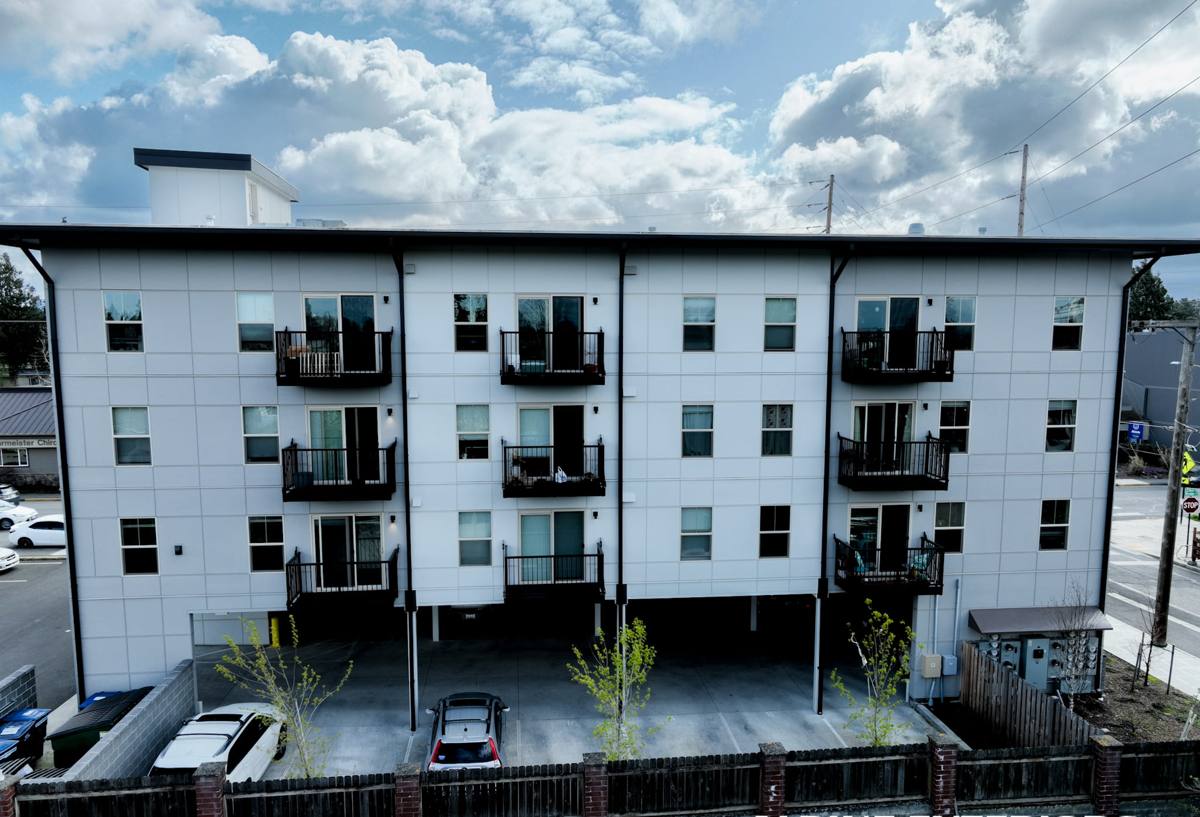
Signs a Fairhaven Home Needs New Windows
Most homeowners call us after noticing one or two symptoms, not because they set out to replace windows on a schedule. In this part of Whatcom County, the signs tend to show up in predictable places.
- Fogging or a permanent haze between glass panes — the seal has failed and the insulating gas has escaped
- Soft or discolored wood at the sill or lower frame corners, often from moss and mildew holding moisture against the material
- Visible rust or pitting on hinges, cranks, and locks from ongoing salt-air exposure
- Drafts or a noticeable temperature difference near the window even when it's fully closed and latched
- Difficulty opening, closing, or locking — frames that have swelled, warped, or shifted
- Condensation forming on the inside of the glass regularly, which points to poor insulating performance
- Paint or finish that keeps failing on the interior trim no matter how often it's touched up
Any one of these on its own might just need a repair. Several together, especially on windows over 15-20 years old, usually means replacement is the more cost-effective path than continuing to patch.
What a Correct Window Replacement Involves
It Starts Before the New Window Arrives
The window unit itself is only part of the job. The bigger factor in how long a replacement lasts near the water is what happens around the opening — the flashing, the water-resistive barrier, and the sealant details that keep wind-driven rain from finding a way behind the frame. We inspect the rough opening for hidden rot or moisture damage before anything new goes in, because installing a good window into a compromised opening just delays the same problem.
Flashing and Drainage Come First
In a climate that sees sustained driving rain, flashing isn't optional trim work — it's the primary defense. Proper installation means integrating flashing tape or metal flashing with the existing water-resistive barrier in the correct shingle-lap order (bottom first, sides next, top last) so water is always directed outward and down, never trapped behind the siding. Sill pans add a second layer of protection at the most vulnerable point of the opening, giving any water that does get past the primary seal somewhere to drain instead of pooling against the frame.
Air Sealing and Insulation
Once the window is set, plumb, level, and square, the gap between the frame and the rough opening gets sealed with low-expansion foam or backer rod and sealant — never packed tight with fiberglass insulation alone, which does little to stop air movement or moisture intrusion. This step is where a lot of drafts and condensation problems actually originate, even when the window itself is a quality product.
Exterior Trim and Caulking
The final exterior details — trim, brick mold, and caulk joints — get sealed with a caulk rated for exterior use and movement, applied over a backer rod where the gap is wide enough to need one. Skipping backer rod on a wide joint is a common shortcut that leads to cracked caulk and reopened gaps within a year or two, which is exactly the kind of failure point that shows up faster in a wet, salty environment.
Choosing Frame Materials for This Climate
Every frame material has trade-offs. Near the water, those trade-offs matter more than they would on a dry inland lot, because salt air and sustained moisture accelerate whatever weakness a material has.
| Frame Material | How It Handles Salt Air & Moisture | Maintenance |
|---|---|---|
| Vinyl | Doesn't corrode or rot; performs consistently in coastal conditions | Low — occasional cleaning, no painting or sealing |
| Fiberglass | Very stable in moisture and temperature swings; strong resistance to warping | Low — durable finish, minimal upkeep |
| Aluminum | Prone to corrosion and pitting over time in salt-air exposure unless well-coated | Moderate — finish needs monitoring for corrosion |
| Wood | Attractive but vulnerable to moss, mildew, and rot without diligent upkeep | High — regular painting, sealing, and moisture checks |
| Wood-clad (exterior-clad wood) | Cladding protects the wood core if the cladding seal stays intact | Moderate — interior wood still needs occasional attention |
We don't push one material on every homeowner. Wood windows can absolutely work in Fairhaven if they're maintained on a real schedule, and plenty of homes here carry that look intentionally. What we do is explain the maintenance burden honestly upfront, because a wood sill that gets ignored through one wet moss season can soften faster here than it would twenty miles inland.
Our Process, Start to Finish
- On-site assessment — we look at existing window condition, frame material, signs of moisture damage, and how each opening is exposed to wind and rain direction
- Honest recommendation — material and glass options that fit the home's exposure and your budget, without upselling features that don't add value for your situation
- Measurement and ordering — precise measurements for either new-construction or retrofit/pocket replacement, whichever suits the existing opening and siding condition
- Opening inspection at install — old window removed, opening checked for hidden rot before anything new goes in
- Flashing and sill pan installation — the water-management layer that determines long-term performance
- Window set and air-sealed — plumb, level, square, and properly foamed or backer-rodded, never over-packed
- Exterior finish work — trim, caulk, and paint or finish touch-up to match the surrounding siding
- Final walkthrough — every window opened, closed, and locked with you present before we call it done
What Affects the Cost
Every home is different, so we don't quote sight-unseen, but the main variables are consistent across most Fairhaven and greater Ferndale projects.
| Factor | Why It Moves the Price |
|---|---|
| Frame material | Vinyl and fiberglass generally cost less than wood or wood-clad units |
| Install type | Retrofit into an existing frame is typically less labor than full-frame replacement |
| Hidden damage | Rotted framing or sheathing found during removal adds repair scope |
| Window count and size | Larger openings and bulk quantity affect both material and labor cost |
| Glass package | Upgraded low-E coatings or tempered glass for code-required locations add cost |
| Access and siting | Second-story or hard-to-reach openings take more time to stage and complete |
We'll walk you through which of these apply to your home during the estimate, so you know what's driving the number rather than getting a flat quote with no explanation behind it.
Why the Crew Matters as Much as the Window
A premium window installed with rushed flashing or skipped sill pan work will still leak. A mid-range window installed correctly, with proper drainage and sealing, will often outperform it. That's not a sales pitch — it's just how water management works, and it's the reason we spend more time talking about installation method than brand names during an estimate.
Working regularly in Fairhaven and the surrounding Ferndale and Whatcom County area also means we've seen how this specific stretch of coastline behaves across a full year — which exposures take the worst of the driving rain, which siding types tend to trap moisture around openings, and where moss buildup causes the most damage if it's left unaddressed. That local pattern recognition shapes how we flash and seal every opening, not just the ones that look obviously exposed.
Living With New Windows Through Moss Season
New windows reduce maintenance, but they don't eliminate it. A few habits keep them performing well through the wetter months:
- Rinse sills and tracks periodically to clear salt residue and organic debris before it holds moisture
- Check exterior caulk lines once a year, ideally before the wet season starts, and re-seal any cracked sections
- Keep nearby vegetation trimmed back so moss and moisture don't sit directly against the frame or siding
- Operate locks and cranks a few times through the year so hardware doesn't seize from disuse plus salt air
- Address any new soft spots or discoloration right away rather than waiting for the next dry season
None of this is heavy upkeep — it's a few minutes, a couple of times a year — but it's the difference between windows that hit their full service life and ones that develop the same problems the old ones had, just on a longer timeline.
Get a Free, No-Pressure Estimate
If you're noticing drafts, fogged glass, or soft trim on a Fairhaven home, it's worth having someone look before the next wet season makes the problem worse. Use the form below to request a free estimate — we'll walk the exposures on your home, explain what we're seeing, and give you a straightforward recommendation with no pressure to sign anything on the spot.