 Ferndale Siding
 What Board and Batten Actually Is
Board and batten is one of the oldest siding patterns in the Pacific Northwest, and it never really went out of style — it just cycles between "classic farmhouse" and "modern minimal" depending on the decade. The idea is simple: wide vertical boards (or panels) are installed side by side, and a narrower strip — the batten — covers each seam. The result is a clean, strongly vertical line that reads very differently than horizontal lap siding, even from across the street.
On older Whatcom County farmhouses you'll see this done in solid wood boards, often painted, with the battens nailed directly over the gaps. That's the traditional version. The modern version uses factory-engineered panels designed specifically for this look, which matters more than most homeowners realize once you get into how the pattern behaves in wet weather.
Batten Spacing and Proportion
Batten spacing is a design decision, not just a technical one. Wider boards with wider spacing (12"–16" on center) read as more modern and are common on contemporary builds around Ferndale and the greater Bellingham area. Tighter spacing (8"–10") reads more traditional and pairs well with farmhouse or craftsman trim details. Either way, the spacing should be planned around the actual dimensions of the wall — window and door openings especially — so you don't end up with an odd sliver of a board next to a corner.
Where It Works and Where It Doesn't
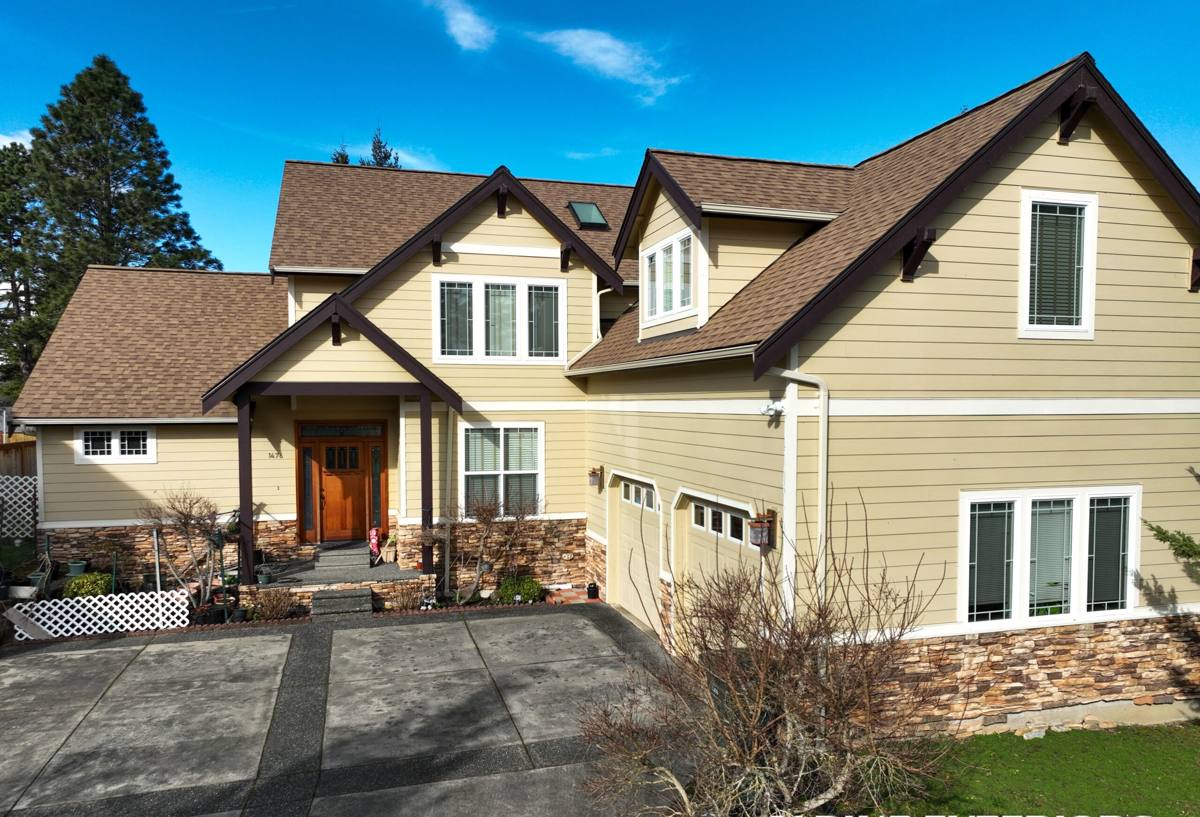
Board and batten looks best as either the full field siding on a simple, boxy elevation, or as an accent — gables, dormers, a front entry feature wall — paired with horizontal lap siding on the rest of the house. Mixing the two is one of the more popular exterior treatments we install in Whatcom County right now, because it breaks up a large wall visually without turning the whole house into a single busy pattern.
Why Board and Batten Suits Ferndale's Architecture
Ferndale has a real mix of housing stock — older farmhouses on acreage outside town, newer developments closer to the Nooksack River corridor, and a fair number of craftsman and modern-farmhouse builds from the last fifteen years. Board and batten fits naturally into most of that. It has enough history here to look at home on an older property, and enough clean-line appeal to work on a newer build without looking dated in five years.
It also does something practical: strong vertical lines tend to make tall, simple gable ends look more intentional rather than just "big and flat," which is a common shape on homes built to shed our rain load efficiently.
The Material Question: Why We Only Install This in Fiber Cement
Board and batten has a weak point that shows up faster in our climate than in drier parts of the country: the seams. Every vertical joint and every batten strip is a place where water can get behind the siding if the material moves, cups, or the caulk joint fails. In wood, that movement is constant — boards expand and contract with humidity, and Whatcom County doesn't have a dry season long enough to let that wood fully stabilize. In vinyl, the panels can't hold a crisp batten profile without looking flat and plasticky, and the material itself isn't dimensionally stable enough for tight vertical joints over a long wall run.
That's why we install James Hardie fiber cement exclusively for this profile. Fiber cement doesn't expand and contract with moisture the way wood does, so the seams stay tight and the caulk joints don't get worked loose season after season. It also holds a crisp, flat panel face, which is what makes the shadow lines in a board and batten pattern actually look sharp instead of wavy.
Salt Air and Driving Rain
Ferndale sits close enough to the Salish Sea that salt-laden air is a real factor on exterior materials, on top of the driving, wind-blown rain that comes through Whatcom County for a good chunk of the year. Salt air accelerates corrosion on fasteners and hardware and speeds up the breakdown of some paint systems. Fiber cement itself is inert to salt — it doesn't corrode — but it matters that the fasteners, flashing, and factory finish used with it are rated for coastal exposure, which is part of why installation quality matters as much as the material choice.
Moss Season
Anyone who's owned a home here for more than a winter knows what "moss season" means — long stretches of damp, low-light weather where anything that holds moisture against a surface becomes a growth medium. Wood board and batten is particularly susceptible because the batten strips create narrow, shaded pockets that stay wet longer than a flat wall. Fiber cement doesn't feed moss or algae the way wood or wood-based products can, and a factory-baked finish resists the kind of surface breakdown that gives spores something to grip.
James Hardie's Board and Batten Product Options
Hardie makes this profile a few different ways, and which one fits your house depends on the look you're after and the wall it's going on.
| Product | How It's Built | Best For |
|---|---|---|
| HardiePanel Vertical Siding | Large flat panels installed with separate batten strips over the seams | Full-elevation board and batten, classic or farmhouse look |
| Artisan Vertical Siding | Thicker, deeper-textured panel and batten system with a more dimensional shadow line | Feature walls, entries, higher-end custom builds |
| HardieTrim Batten Boards | Dedicated trim boards used as the batten strip over panel or engineered board seams | Matching batten reveal and paint finish across a project |
For most Ferndale homes doing a full re-side, HardiePanel Vertical with matching HardieTrim battens is the standard, cost-effective route. Artisan gets used more often on accent walls or gable features where the extra depth and shadow line are worth the added cost.
ColorPlus Finish and Choosing a Color for This Climate
Board and batten lives or dies visually on how crisp the shadow lines stay over time, which is a finish question as much as a design one. James Hardie's ColorPlus finish is baked onto the panel in a controlled factory process, rather than sprayed on site, which gives more consistent coverage on a profile with a lot of edges and reveals. It also carries its own finish warranty separate from the substrate warranty, which matters on a siding style where touch-up painting around dozens of batten edges is genuinely tedious to do well.
On color, board and batten tends to look best in solid, confident tones rather than busy or heavily variegated colors — the vertical pattern already does the visual work, so a clean color reads better than a color trying to do more. Deeper charcoals, greens, and navy tones are popular for full-elevation board and batten in this area, often paired with a lighter trim color, while a soft white or warm gray board and batten accent wall works well against a horizontal lap field in a contrasting tone.
What Correct Installation Actually Involves
Board and batten hides installation shortcuts less forgivingly than lap siding, because every seam is visible and every batten line is straight enough that a mistake shows immediately. A few things separate a correct install from a problem waiting to happen:
- Proper water-resistive barrier and flashing behind every panel joint, not just caulk at the surface
- Correct fastener type and spacing for coastal/high-wind exposure, driven to manufacturer specification (not overdriven, which cracks the panel edge)
- A minimum clearance gap at grade, decks, and roof lines so the bottom of the siding isn't sitting in standing water or snow
- Batten strips installed with consistent spacing and reveal across the whole elevation, planned around window and door openings before the first panel goes up
- Factory-cut and factory-primed panel edges used wherever possible, since field-cut edges need to be sealed correctly to maintain the warranty
- Rain-screen or proper back-ventilation detailing on walls with heavy rain exposure, which is common practice for board and batten in this region
Most of the failures we get called out to look at on other installers' board and batten work trace back to one of these steps being skipped — usually flashing or clearance, because they're invisible once the siding is up.
Cost Factors to Plan Around
Board and batten generally costs somewhat more than standard lap siding in the same material, mainly due to the extra labor of installing and aligning batten strips, and more cutting around openings on a vertical pattern. Exact pricing depends on your specific project, but the main variables are:
| Factor | Why It Affects Cost |
|---|---|
| Full elevation vs. accent area | Full-house board and batten involves more material and labor than a gable or entry feature |
| Panel product (HardiePanel vs. Artisan) | Artisan's added depth and detailing carries a higher material and install cost |
| Wall complexity | Dormers, multiple gables, and window-heavy walls require more precise layout and cutting |
| Existing siding removal | Tear-off of old wood, vinyl, or damaged siding adds labor beyond a straightforward re-side |
| Color and trim package | ColorPlus custom color matching and trim coordination affect material cost |
Maintenance in a Whatcom County Climate
One of the practical reasons homeowners move to fiber cement board and batten is how little upkeep it needs compared to a wood version of the same look. There's no annual repainting cycle, no re-caulking battens every couple of years, and no watching for rot at the bottom edges after a wet winter. A rinse-down once or twice a year to knock off pollen, road film, or the beginnings of moss growth is generally all it needs. Gutters and downspouts still matter — keeping water moving away from the wall base is good practice regardless of siding material — but the siding itself isn't the maintenance liability that wood board and batten becomes after a few Ferndale winters.
Getting It Right the First Time
Board and batten is a style where the difference between a sharp, long-lasting exterior and a recurring maintenance headache comes down almost entirely to material choice and installation detail. It's why we standardized on James Hardie for this profile rather than offering it in wood or vinyl — the pattern simply performs better in a fiber cement system built for it.
If you're considering board and batten for a full re-side, an accent wall, or a gable feature, we're happy to walk your property, talk through panel options and color, and put together a straightforward, no-pressure estimate using the form below.