 Ferndale Siding
 Fairhaven's Coastal Climate Is Hard on Decks
Homes near Fairhaven sit close enough to the water that salt-laden air is a daily fact of life, not an occasional nuisance. Combine that with Whatcom County's long wet season and the moss that takes over anything shaded and damp, and a deck here works harder than the same structure would fifty miles inland. Salt air accelerates corrosion in fasteners and hardware, driving rain gets under boards and into end grain, and moss holds moisture against wood and composite surfaces for months at a time. None of this means a deck is doomed — it means it has to be built and maintained with that environment in mind from the start.
A lot of deck failures we see in this area aren't from bad luck. They're from a deck built to a generic spec that ignores what salt air, standing moisture, and moss actually do over ten or fifteen years. Replacing a deck the right way here means choosing materials and connection details that are rated for this specific combination of conditions, not just "outdoor use."
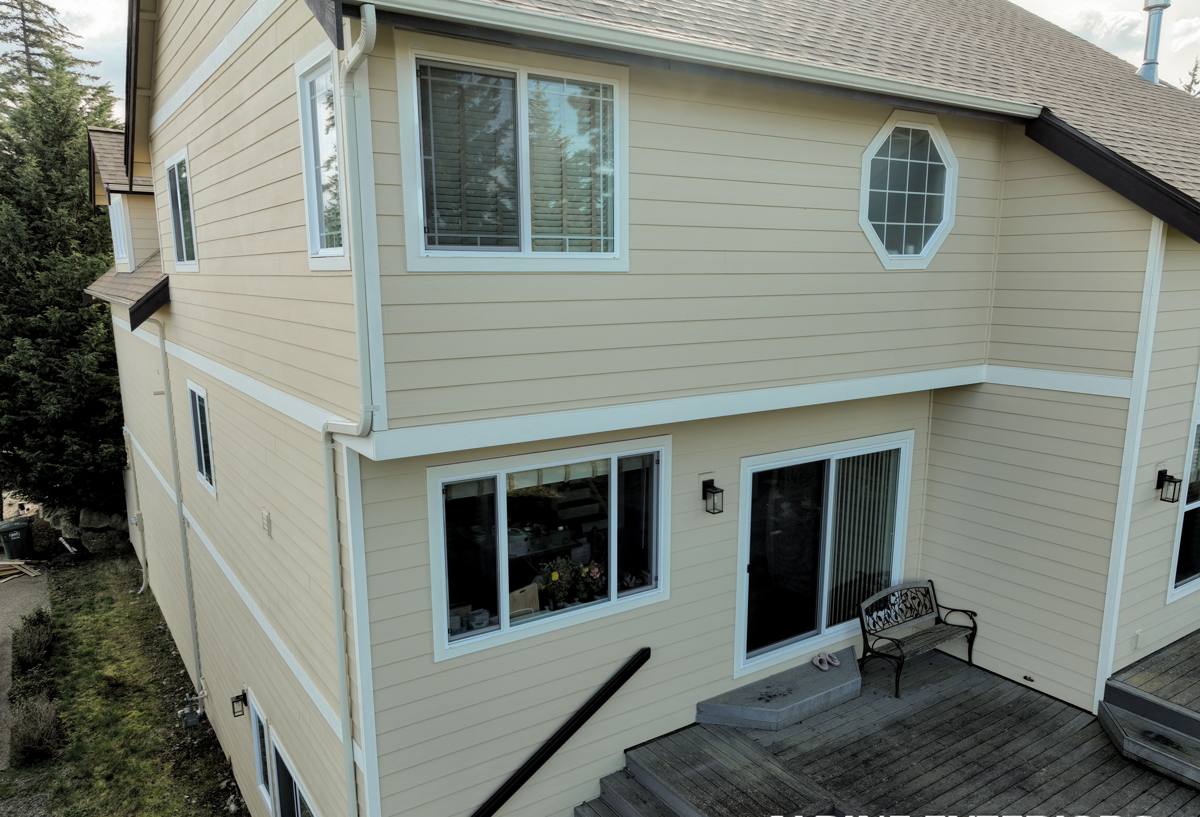
Repair or Replace? Signs It's Time
Not every tired deck needs to come out. But there's a point where patching boards or re-staining stops being worth it, and putting money into a full replacement makes more sense than sinking it into a structure that's failing underneath. Watch for:
- Soft or spongy spots in the decking, especially near the house or under planters
- Rust streaks or corrosion around fastener heads and structural hardware
- Persistent moss or algae growth that returns within weeks of cleaning
- Gaps opening between boards, or boards cupping and splitting
- Wobble or movement in railings, stairs, or the ledger connection to the house
- Visible rot at the ledger board, posts, or where the deck meets grade
If you're seeing two or three of these at once, it usually means the framing underneath has been absorbing moisture for a while, not just the surface boards. That's a replacement conversation, not a repair one.
What a Proper Deck Replacement Includes
A deck replacement isn't just swapping old boards for new ones. Done correctly, it means evaluating and rebuilding everything from the ledger to the railings so the whole structure is sound for the next couple of decades, not just the top layer.
Framing and Footings
We check post spacing, joist sizing, and footing condition against current code rather than just matching what was there before. Older decks in this region were sometimes built with framing that's undersized by today's standards, or footings that were never poured deep enough to stay stable through a wet winter.
Ledger Attachment and Flashing
The ledger board — where the deck bolts to the house — is the single most common failure point on any deck, and it's especially unforgiving in a climate with this much driving rain. Proper flashing that sheds water away from the house band board, combined with correctly spaced structural lag bolts or through-bolts, is non-negotiable. This is the detail that separates a deck that lasts from one that rots the house behind it.
Decking Material and Fasteners
Board selection and fastener choice both matter more here than in a drier climate. We'll cover material trade-offs below, but the short version is: whatever surface material you choose, it needs hardware rated for coastal and treated-lumber corrosion, not standard interior-grade fasteners.
Railings and Stairs
Railings and stair stringers see the same moisture and salt exposure as the deck surface, often with less airflow to dry out. We rebuild these to the same standard as the deck itself rather than treating them as an afterthought.
Choosing the Right Decking Material for Salt Air and Moss
There's no single "best" decking material for every home — it depends on budget, how much upkeep you want to do, and how exposed the deck is to sun, shade, and moisture. Here's how the common options actually perform in a salt-air, high-moss environment:
| Material | Moisture & Moss Behavior | Maintenance | Typical Lifespan Here |
|---|---|---|---|
| Pressure-treated lumber | Resists rot when properly sealed; still holds surface moisture and grows moss in shaded areas | Needs re-sealing every 1-2 years | 10-15 years with upkeep |
| Cedar | Naturally rot-resistant but softer surface; can gray and hold moisture without regular oiling | Annual cleaning and oiling recommended | 12-18 years with upkeep |
| Composite decking | Doesn't absorb water like wood, but moss and algae can still grow on the surface film in shaded, damp spots | Periodic washing, no sealing or staining | 20-25+ years, varies by product line |
| PVC decking | Fully moisture-resistant surface; least hospitable to moss growth of the common options | Occasional washing | 25+ years |
We'll walk through these trade-offs during your estimate rather than push one product line. A shaded, north-facing deck near the water has different needs than a sunny one, and the right call often changes based on where on the property the deck sits.
Permits and Code Considerations
Most deck replacements in Whatcom County require a building permit, especially when framing, footings, or the ledger connection are being replaced rather than just the surface boards. Permit requirements typically hinge on deck height, whether it's attached to the house, and whether guardrails or stairs are involved. We handle the permit process as part of the job rather than leaving it to the homeowner, and we build to current guardrail height, baluster spacing, and stair code — not just to match what was there before, which may predate current requirements.
Our Deck Replacement Process
- On-site assessment — We look at the existing deck's framing, ledger, footings, and surface condition, not just what's visible from the top.
- Honest scope and estimate — You get a clear breakdown of what needs to be replaced, material options with real trade-offs, and a written estimate before any work starts.
- Permit and code review — We pull permits where required and confirm the plan meets current guardrail, stair, and structural code.
- Demolition and disposal — Old decking, framing, and hardware are removed and hauled off; we check what's underneath before rebuilding on top of it.
- Rebuild from the ground up — Footings, framing, ledger flashing, decking, and railings are installed to spec, with fasteners and hardware matched to the material and the site's exposure.
- Final walkthrough — We go over the finished deck with you, including what maintenance it needs and when.
What Affects the Cost of a Deck Replacement
Every deck is different, but the same handful of factors drive most of the cost variation we see:
| Factor | Why It Matters |
|---|---|
| Deck size and shape | More square footage and more corners, angles, or level changes both add material and labor |
| Decking material | Composite and PVC cost more upfront than pressure-treated wood but reduce ongoing maintenance |
| Framing and footing condition | If footings need to be re-poured or framing is undersized for current code, that adds work below the surface |
| Height and stairs | Taller decks and multi-flight stairs require more structural work and code compliance detail |
| Railings | Railing style and material vary widely in cost, from basic wood to cable or composite systems |
| Site access | Difficult access for equipment and material delivery can add labor time |
We'd rather walk your specific deck and give you real numbers than quote a generic range that doesn't hold up once we see the site.
Protecting Your New Deck
A well-built deck still needs some seasonal attention in this climate to get its full lifespan. A simple maintenance routine goes a long way:
- Sweep off leaves and debris regularly, especially in fall, so moisture and organic matter don't sit against the boards
- Wash off moss and algae as soon as it appears rather than letting it establish
- Check and re-seal or re-stain wood decking on the schedule recommended for that product
- Inspect fastener heads and hardware yearly for early corrosion, especially near the ledger
- Keep gutters and downspouts near the deck clear so runoff isn't draining directly onto or under it
- Trim back vegetation that's shading the deck and keeping it damp longer than it needs to be
Why Local Experience in Fairhaven Matters
A deck built to a spec sheet from a drier climate doesn't hold up the same way here. Crews who work regularly in the Fairhaven area already know how salt air treats different hardware finishes, which spots on a property hold moisture and grow moss fastest, and how driving rain off the water finds its way into a poorly flashed ledger. That's the kind of judgment that comes from doing this work in Whatcom County's conditions repeatedly, not from a generalized deck-building checklist.
If your deck is showing its age, we're happy to take a look and give you a straight assessment of whether it needs repair or replacement, along with a free, no-pressure estimate. There's a form below — reach out and we'll set up a time to walk the property.