 Ferndale Siding
 Roofing in a Salt Air, Driving Rain Climate
Homes in and around the Fairhaven area sit close enough to the water and open exposure that roofs take a different kind of beating than they would further inland. It's not just rain volume — it's the combination of salt-laden air, wind-driven rain that gets pushed sideways under standard flashing details, and a moss season that runs long into the year because things simply don't dry out. A roof that would hold up fine in a drier climate can fail early here if it wasn't built with these specific conditions in mind.
That's the core of what a good roof replacement in this area needs to solve: keep water out even when it's not falling straight down, resist corrosion and material breakdown from salt exposure, and stay ahead of moss and algae rather than fighting an already-established problem. A roof replacement is also a chance to fix the underlying issues — ventilation, flashing, decking condition — that a simple reshingle job would just cover up.
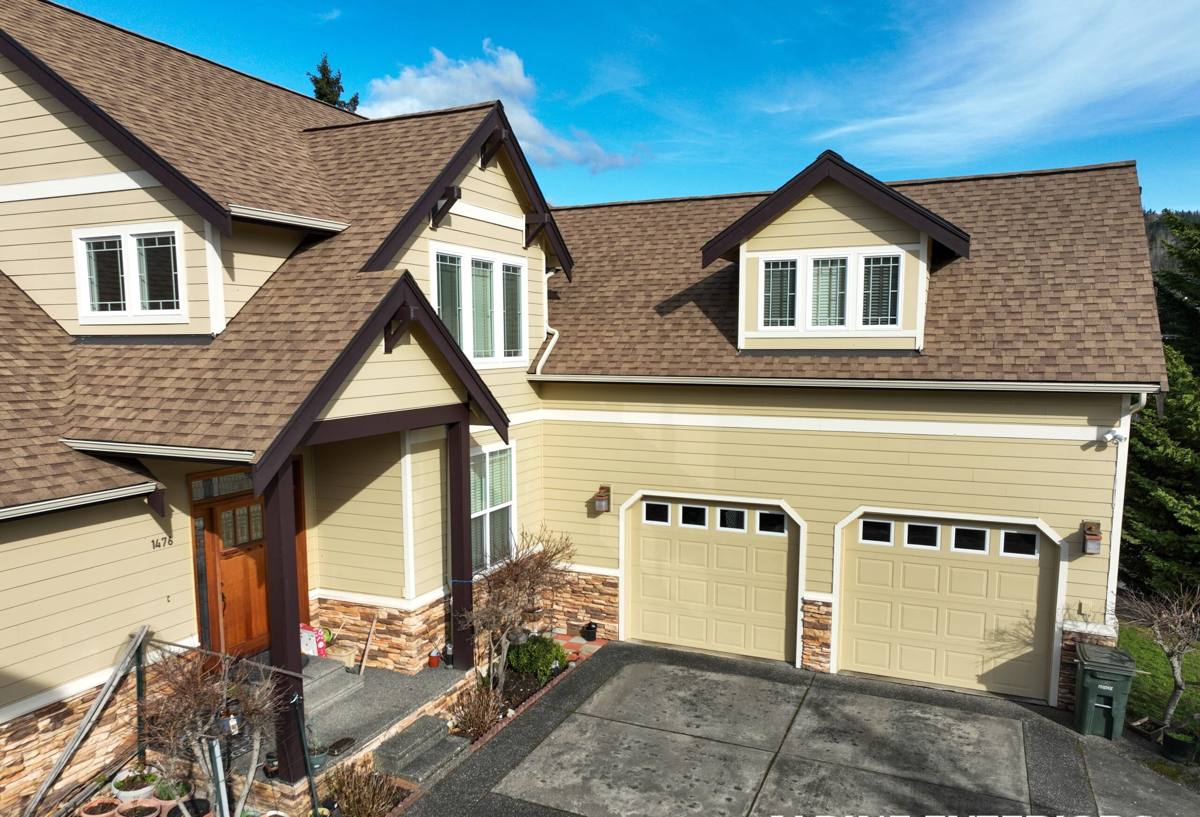
Signs Your Roof Needs Replacement, Not Another Repair
Whatcom County homeowners often ask whether they really need a full replacement or just another round of patching. A few signs tend to separate the two:
- Granule loss heavy enough that you're finding shingle grit in gutters and downspouts regularly
- Shingles that are curling, cupping, or cracking across large sections rather than one isolated spot
- Moss or algae staining that keeps coming back within a season or two of cleaning, even after treatment
- Soft spots, sagging, or visible daylight in the attic where there shouldn't be any
- Repeated leaks around valleys, chimneys, or roof-wall intersections despite prior flashing repairs
- A roof already past 18-20 years old for asphalt shingle, especially if it's never had a ventilation upgrade
One or two of these on their own might still be repairable. Several at once, especially on an older roof, usually means the underlying materials and details are failing broadly — and repeated repairs start costing more over a few years than a properly done replacement would have.
How Different Roofing Materials Hold Up Locally
Material choice matters more here than in a milder climate, because salt air and near-constant moisture exposure will find the weak point in whatever you install. Here's how the common options compare for this specific environment:
| Material | Moisture & Rain Behavior | Salt Air / Corrosion | Moss Resistance | Typical Lifespan Here |
|---|---|---|---|---|
| Architectural asphalt shingle | Good when paired with proper underlayment; weak point is fastener and flashing detail | Minimal metal exposure, low concern | Moderate — benefits from algae-resistant granules | 20-25 years |
| Standing seam metal | Excellent shedding of wind-driven rain | Needs a marine-grade or coated finish near salt exposure to avoid premature corrosion | Very good — sheds moisture fast, little for moss to grip | 40-50+ years |
| Cedar shake | Requires careful ventilation; traps moisture if not detailed correctly | Not a corrosion concern, but salt-humid air accelerates weathering | Poor without regular maintenance — high moss/algae risk | 20-30 years with upkeep |
| Composite/synthetic shingle | Good, engineered for wet climates | Low concern | Good, often treated for algae resistance | 30-40 years |
We don't push one material as universally "best" — the right choice depends on your home's exposure, roof pitch, budget, and how much long-term maintenance you want to take on. What we will tell you honestly is that cedar shake in a high-moisture, salt-air setting requires a real maintenance commitment, and if that's not something you want to keep up with, a composite or architectural shingle with algae-resistant granules is usually the more practical call.
Managing a Long Moss Season
Whatcom County's moss season isn't a short annoyance — shaded, north-facing, and low-slope sections of roof can stay damp for a large part of the year, which is exactly what moss needs to establish. Once moss takes hold, it does more than look bad: it lifts shingle edges, holds moisture against the roof deck, and accelerates granule loss. Left unaddressed through multiple seasons, it turns into decking rot underneath.
A replacement is the right time to build in moss resistance rather than treat it after the fact:
- Zinc or copper strips at the ridge, which release trace metal ions that inhibit moss growth as rain washes over them
- Algae-resistant shingle granules on new asphalt or composite roofing
- Improved attic ventilation to reduce the temperature differential that keeps shaded sections damp longer
- Trimming back overhanging branches where practical to increase sun and airflow on shaded slopes
None of these eliminate the need for occasional roof cleaning, but they meaningfully slow how fast moss re-establishes — which matters when your roof spends a good chunk of the year damp regardless of what you do.
What a Correct Roof Replacement Actually Involves
A roof replacement done right in this climate goes well beyond stripping old shingles and nailing down new ones. The details that don't show once the job is finished are the ones that determine whether it holds up:
Tear-Off and Deck Inspection
Full tear-off lets us see the actual condition of the roof deck — soft spots, rot, or delamination that's invisible from above. Any damaged sheathing gets replaced before anything new goes down. Skipping this step and roofing over a compromised deck is one of the most common ways a "new" roof fails early.
Underlayment Built for Wind-Driven Rain
Standard felt underlayment isn't enough where rain regularly comes in at an angle. We use synthetic underlayment rated for high-wind, high-moisture exposure, with ice-and-water shield membrane at the eaves, valleys, and any roof-wall intersections — the spots where wind-driven rain is most likely to work its way underneath standard shingle coverage.
Flashing at Every Transition
Chimneys, skylights, vent pipes, and wall intersections are where most leaks actually start, not in the open field of shingles. Correctly formed and properly lapped flashing at each of these points matters more to long-term water-tightness than almost anything else in the job.
Ventilation That Matches the Climate
Balanced intake (soffit) and exhaust (ridge) ventilation keeps the attic space closer to outdoor temperature and humidity, which reduces condensation, extends shingle life, and slows moss growth on shaded slopes. A lot of older roofs in this region were under-ventilated to begin with — a replacement is the opportunity to correct that.
Our Process, Start to Finish
- On-site assessment — we inspect the current roof, attic ventilation, decking condition where accessible, and any problem areas you've already noticed.
- Material and scope walkthrough — we go over material options honestly, including trade-offs in cost, maintenance, and lifespan for your specific roof and exposure.
- Written estimate — clear scope of work, materials, and pricing before any commitment.
- Site protection — landscaping, siding, and gutters are protected before tear-off begins.
- Tear-off and deck repair — full removal of old roofing, deck inspected and repaired as needed.
- Underlayment, flashing, and ventilation installed — the details covered above, done to spec rather than shortcut.
- New roofing installed to manufacturer specifications, including proper nailing pattern and exposure.
- Cleanup and final inspection — magnetic sweep for stray fasteners, debris removal, and a walkthrough with you before we consider the job done.
Why a Crew That Already Works This Area Matters
Roofing in Fairhaven and the surrounding Ferndale area isn't identical to roofing somewhere inland. A crew that's already familiar with local exposure conditions knows which slopes typically hold moisture longest, which flashing details tend to fail first in this weather pattern, and how to sequence a tear-off around the rain windows this area actually gets — rather than learning that on your roof. Local familiarity also means faster response if a storm causes damage between the estimate and the scheduled work, and a better sense of realistic timelines given regional weather patterns rather than generic scheduling assumptions.
Whatcom County building requirements and inspection expectations are also something a local crew handles routinely rather than researching for the first time on your job.
Before You Hire — A Practical Checklist
- Confirm the contractor is licensed and insured in Washington, and ask to see current proof
- Ask specifically what underlayment and ice-and-water shield they use, and where it's installed
- Ask how they handle attic ventilation as part of a replacement, not as an afterthought
- Get the scope of work and material specifications in writing, not just a total price
- Ask about their approach to moss and algae resistance for shaded or low-slope sections
- Confirm what the workmanship warranty covers and for how long, separate from the manufacturer's material warranty
Getting Started
If your roof is showing wear, has recurring moss or leak issues, or you're simply due for a straightforward assessment of where it stands, we're glad to take a look. We'll give you an honest read on repair versus replacement, walk through material options that fit your home and budget, and provide a clear, no-pressure estimate — with the free estimate form below whenever you're ready.