 Ferndale Siding
 Siding Built for Cordata's Corner of Whatcom County
Cordata sits in that stretch of Whatcom County where marine weather off the Salish Sea meets the everyday grind of a Pacific Northwest winter. Homes here don't get hit with hurricanes or hailstorms. What they get instead is slower and more persistent: months of damp air, wind-driven rain that finds every gap in a wall system, and a moss season that seems to start earlier and end later every year. Siding in this part of Ferndale's service area isn't tested by any single dramatic event. It's tested by exposure, day after day, for decades.
That's the lens we use when we talk to homeowners in Cordata about their exterior. It's not about picking a product that looks good on the day it's installed. It's about picking one that still looks and performs the same way after fifteen winters of the kind of weather this region specializes in.
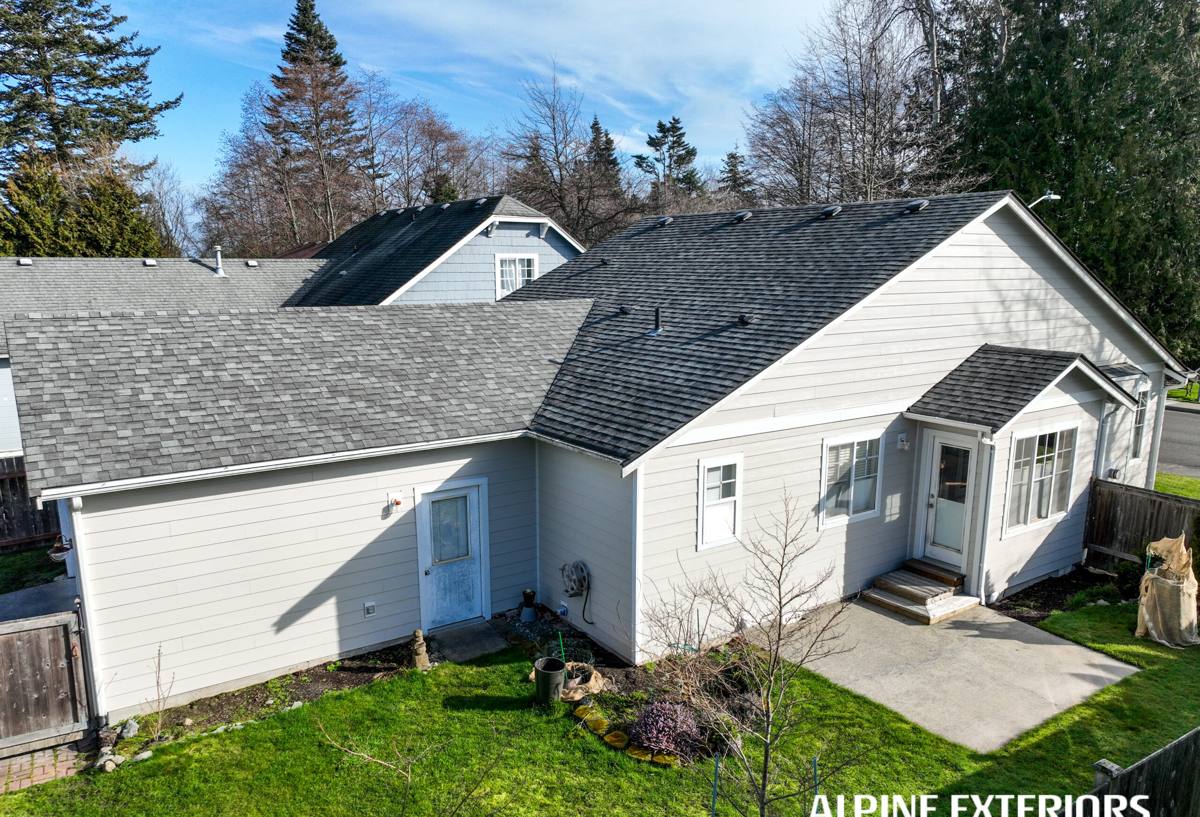
What the Local Climate Actually Does to a House
Salt Air and Moisture Load
Proximity to the water means the air carries salt and moisture even on days without rain. Over time, that moisture load works against paint film, fasteners, and any siding material that isn't dimensionally stable. Materials that swell and shrink with humidity changes are especially vulnerable — repeated movement stresses seams, caulk lines, and paint adhesion.
Driving Rain
Rain in this region rarely falls straight down. Wind off the water pushes it sideways, which means it hits vertical wall surfaces, not just roofs. Lap siding, trim, and butt joints all take more direct water exposure here than they would in a drier, calmer climate. Any weakness in the water-management details — flashing, caulking, panel gaps — shows up faster under driving rain than it would under a gentle straight-down shower.
Moss, Algae, and Shade
Cordata has plenty of mature trees and shaded lots, which is great for curb appeal and terrible for anything that holds moisture against a wall. Moss and algae growth on siding isn't just cosmetic — it holds water against the surface for extended periods, which accelerates rot in wood-based products and can degrade paint and coatings on less durable materials.
Temperature Swings and UV
Even with mild temperatures overall, the shift between wet winters and drier, sunnier summer stretches puts cyclical stress on siding. Materials expand and contract, and UV exposure during summer months breaks down lower-quality paint and coatings faster than homeowners expect.
Why We Standardized on James Hardie
We install James Hardie fiber cement siding exclusively. Not because it's the only decent product on the market, but because after years of doing exterior work in this exact climate, it's the one we're willing to put our name behind and warranty with confidence.
- Non-combustible: Fiber cement doesn't burn, rot, or provide a food source for insects — a meaningful difference from wood-based siding products.
- Climate-engineered lines: Hardie's HZ10 formulation is engineered specifically for damp, cooler climates like ours, which matters more here than a generic all-climate spec.
- Factory-applied ColorPlus finish: The color is baked on in a controlled factory environment rather than field-painted, which gives more consistent coverage and better long-term color retention than job-site painting.
- Dimensional stability: Fiber cement doesn't swell and shrink with moisture the way wood and some composite products do, which reduces the seam and joint stress that this climate is so good at finding.
- Strong transferable warranty: A meaningful, documented warranty backs the product when it's installed to manufacturer spec.
We're upfront that this is a deliberate business decision, not a claim that every alternative product is worthless. Vinyl, LP SmartSide, primed wood, and other fiber cement brands all have their place in the market. We simply concluded, after enough call-backs and enough years watching how different products age in this specific climate, that Hardie gives our customers the best combination of durability, appearance, and long-term value for what this region throws at a house.
How the Process Works for a Cordata Home
1. On-Site Assessment
We start with a walk-around of the home, looking at current siding condition, trim and flashing details, moisture staining, moss buildup patterns, and anything specific to the lot — shade coverage, drainage, wind exposure. This tells us whether we're dealing with a straightforward re-side or whether there's underlying sheathing or moisture damage that needs to be addressed first.
2. Tear-Off and Substrate Check
Once old siding comes off, we inspect the sheathing and framing underneath. This is often where hidden problems from years of moisture intrusion show up — soft spots, staining, or rot that wasn't visible from outside. Catching this now, before new siding goes on, is the difference between a repair that lasts and one that just covers up a problem.
3. Water-Resistive Barrier and Flashing
Correct installation starts underneath the siding, not with the siding itself. A proper water-resistive barrier, correctly lapped and sealed, along with properly integrated window and door flashing, is what actually keeps driving rain out of the wall assembly. This step matters more in a climate like Cordata's than almost anywhere else.
4. Hardie Installation to Manufacturer Spec
James Hardie has specific requirements for fastener spacing, clearances, caulking, and panel gaps. Installing to spec isn't optional if you want the warranty to mean anything — it's also what actually gives the siding the performance it's engineered for. We follow those specs on every job, not just the ones where someone's watching.
5. Trim, Caulking, and Final Detail Work
The small details — corner trim, butt joint treatment, caulk lines around penetrations — are usually where a siding job either holds up for decades or starts failing early. This is where driving rain finds weak points first, so we don't rush it.
Beyond Siding: Roofing, Windows, and Decks
Siding doesn't work in isolation. A roof with failing flashing will send water down behind even perfectly installed siding. Old windows are one of the most common sources of hidden wall moisture. And a deck built without attention to ledger flashing can rot out the wall it's attached to. Because we handle roofing, windows, and decks as well as siding, we can look at a Cordata home as one connected exterior system rather than a set of unrelated projects — and flag issues in one area before they become expensive problems in another.
Comparing Siding Options for This Climate
| Material | Moisture Behavior | Maintenance | Longevity Here |
|---|---|---|---|
| James Hardie Fiber Cement | Dimensionally stable, engineered for damp climates | Occasional wash; factory finish resists fading | Decades with correct install |
| Vinyl | Doesn't rot, but can warp/gap over time | Low, but fading and brittleness are long-term issues | Moderate; seams and edges are vulnerable points |
| Primed Wood/Cedar | Absorbs moisture; prone to rot in shaded, damp areas | High — repainting and sealant checks needed regularly | Shorter unless meticulously maintained |
| LP SmartSide (engineered wood) | Better than raw wood but still moisture-sensitive at cut edges | Moderate; edge sealing is critical | Depends heavily on installation and upkeep |
This table reflects general material behavior, not a claim that every alternative product fails in this climate. Plenty of homes around Whatcom County have other siding types that are holding up fine. Our point is narrower: for the specific combination of salt air, driving rain, and moss season that Cordata deals with, fiber cement gives the most consistent, lowest-maintenance long-term result — which is why it's the only thing we put on a wall.
Signs a Cordata Home May Need Siding Attention
- Visible moss or algae growth that keeps returning after cleaning
- Paint that's peeling, bubbling, or chalking, especially on north- or shade-facing walls
- Soft spots or slight give when you press on siding near the bottom of walls
- Persistent staining or dark streaking below window sills or roof lines
- Warped, cupped, or separating boards, particularly at butt joints
- Higher-than-expected heating bills, which can point to a compromised wall system
None of these are emergencies on their own, but they're worth a professional look before winter rains make small problems bigger.
Why a Local Crew Matters
A crew that works throughout Ferndale and the surrounding Whatcom County communities sees the same failure patterns repeatedly — the same shaded lots holding moisture, the same wind exposure on certain streets, the same flashing mistakes on homes built a certain era. That pattern recognition is hard to replicate if you're not doing this work locally, year-round, in this specific climate. It shapes how we sequence a project around weather windows, how we detail flashing for driving rain, and which trouble spots we check first on an older home.
What to Expect From the Investment
Costs for a full siding replacement vary based on the size of the home, the condition of the substrate underneath, trim complexity, and how much repair work is needed before new siding goes on. Rather than quote a number that won't apply to your specific house, we walk every property in person and give a detailed, honest estimate based on what we actually find — not a generic square-footage guess.
If you're in Cordata or elsewhere in the Ferndale service area and want a straight answer about what your home's exterior needs — whether that's a full re-side, a roofing or window tie-in, or just an honest assessment of what's holding up and what isn't — we're happy to come take a look. The estimate is free, there's no pressure, and you'll get a clear explanation of what we see and why we recommend what we recommend.