 Ferndale Siding
 Why Metal Roofing Makes Sense in Fairhaven
Fairhaven sits close enough to Bellingham Bay that homes here deal with a version of the coast most inland Whatcom County properties don't see: salty, moisture-laden air, wind-driven rain that hits siding and roof edges sideways instead of straight down, and a wet season that stretches long enough to grow moss on almost anything that holds shade and dampness. A roof in this neighborhood isn't just shedding water — it's fighting corrosion, fungal growth, and repeated wet-dry cycling for most of the year. Metal roofing holds up to that combination better than most other roofing materials, which is why we see steady interest in it from homeowners in this specific pocket of the county.
This page is about metal roofing installed correctly for Fairhaven conditions specifically — not a general overview of metal roofing everywhere. The material choices, detailing, and maintenance habits that work in a drier inland climate aren't automatically the right call a few blocks from saltwater.
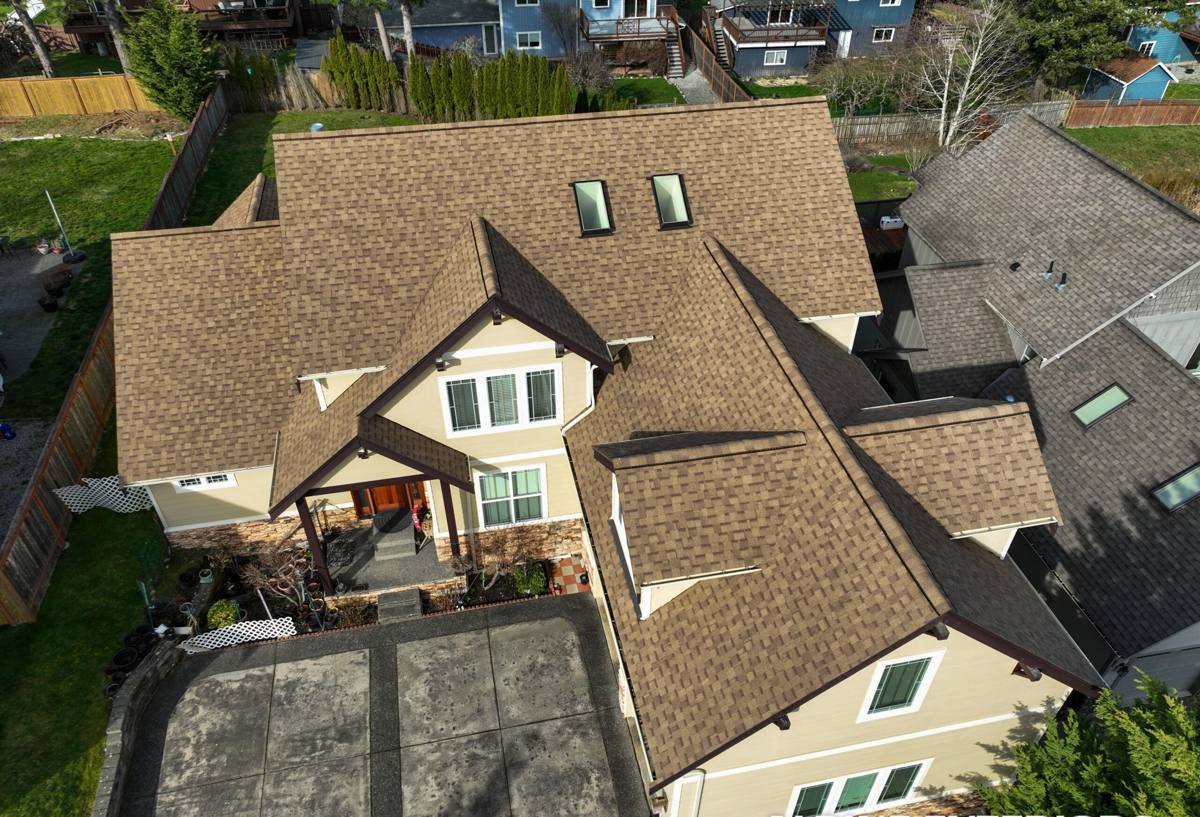
What Salt Air, Rain, and Moss Actually Do to a Roof
Salt Air and Corrosion
Airborne salt is corrosive to exposed metal, especially at fasteners, cut edges, and any spot where a protective coating has been scratched or worn through during installation. A metal roof that isn't specified or installed with coastal exposure in mind can start showing surface corrosion years before it should. This is a coating and fastener selection issue as much as it is a metal issue — the wrong screw or an unsealed cut edge will corrode long before the panel itself fails.
Driving Rain and Wind-Blown Water
Wind off the water pushes rain sideways into roof-wall intersections, valleys, and anywhere a chimney, vent, or dormer breaks the roof plane. These are the places where roofs actually fail — not the open field of the roof, but the transitions. A metal roof's real weather resistance lives in its flashing details, not just the panel itself.
Moss and Prolonged Moisture
Whatcom County's wet season gives moss and algae months of steady moisture and shaded, north-facing roof areas to take hold. On asphalt shingles, moss roots into the granule surface and lifts it, shortening the roof's life. Metal doesn't give moss the same foothold, but debris, needles, and organic buildup can still collect in valleys and at panel laps if a roof isn't detailed and pitched to shed that material — and trapped moisture against any roofing material, metal included, is never a good long-term situation.
Choosing the Right Metal Roofing System
Not all metal roofing is the same product wearing different colors. The panel style, metal type, and coating all affect how a roof performs specifically in a salt-air, high-rainfall environment like Fairhaven.
| System | Best For | Coastal Considerations |
|---|---|---|
| Standing seam (concealed fastener) | Most Fairhaven homes, especially anything within a mile or two of the water | No exposed screw heads to corrode; fewer penetration points; higher material cost, longest service life |
| Exposed-fastener panel | Budget-conscious projects, outbuildings, shops | Lower upfront cost, but fastener gaskets and screw coatings need to be rated for coastal exposure and re-checked over time |
| Steel with premium coating | Most residential coastal applications | Coating quality matters more than the base metal for salt resistance |
| Aluminum | Properties closest to the water or with the heaviest salt exposure | Naturally corrosion-resistant even if a coating is compromised; higher material cost than coated steel |
For most Fairhaven-area homes we point people toward standing seam in a coastal-rated coating, because it minimizes the exposed metal and fastener points that salt air attacks first. That said, the right system also depends on roof pitch, budget, and how the home is oriented to prevailing wind and rain — we'll walk through the actual trade-offs for your roof rather than defaulting to one answer.
Fastener and Trim Hardware
On any exposed-fastener system, or at any trim and flashing point, the hardware needs to match the coastal environment — corrosion-resistant fastener coatings, proper gaskets, and correctly matched metals so you're not pairing dissimilar metals that accelerate corrosion where they touch. This is a detail that's invisible once the roof is finished but determines how the roof ages over the next 15-20 years.
What a Correct Installation Actually Involves
A metal roof is only as good as what's underneath it and how the details are executed. Skipping any of the following is how a good material ends up performing like a cheap one.
- Underlayment: A synthetic, high-temperature-rated underlayment suited to metal roofing — not a leftover felt product meant for shingles.
- Ice-and-water or self-adhered membrane at eaves, valleys, and roof-wall intersections, where wind-driven rain concentrates.
- Correct fastener spacing and torque so panels can expand and contract with temperature changes without over-tightening (which cracks coatings and invites corrosion) or under-tightening (which causes leaks).
- Properly formed and sealed flashing at every penetration, valley, and wall intersection — the majority of roof leaks trace back to flashing, not panel failure.
- Ventilation that matches the roof assembly so moisture from inside the home isn't trapped against the underside of the metal, which can cause condensation problems independent of any exterior weather exposure.
- Clean cut edges that are sealed or coated rather than left as bare exposed metal, which is where corrosion typically starts first on a coastal roof.
Our Process
1. On-Site Assessment
We look at your existing roof structure, pitch, current material, ventilation, and how the home is exposed to wind and rain off the bay. Salt exposure and shade patterns (which drive moss risk) both factor into the recommendation.
2. System Recommendation and Estimate
We'll walk you through panel style, coating, and color options with honest trade-offs — including where a lower-cost option is genuinely fine for your situation and where it isn't. No pressure, no inflated urgency.
3. Tear-Off and Deck Inspection
Once the old roofing is off, we inspect the deck for rot or moisture damage before anything new goes down — this is especially common to find under older roofing in homes that have seen years of coastal moisture.
4. Underlayment, Flashing, and Panel Installation
Installed in the sequence and with the detailing described above, with particular attention to valleys, wall intersections, and any roof penetrations.
5. Final Walkthrough
We review the finished roof with you, including what routine maintenance (if any) it needs going forward.
Cost Factors
Metal roofing costs more upfront than asphalt shingles, but the comparison isn't just sticker price — it's price against expected service life and maintenance.
| Factor | Impact on Cost |
|---|---|
| Panel system (exposed-fastener vs. standing seam) | Standing seam typically costs more per square due to labor and material |
| Metal type and coating | Coastal-rated coatings and aluminum cost more than base-tier steel finishes |
| Roof complexity | More valleys, dormers, and penetrations mean more flashing labor |
| Existing deck condition | Rot or damage found during tear-off adds repair cost before new roofing goes on |
| Tear-off vs. overlay | We generally don't recommend overlaying metal over old roofing in this climate — trapped moisture is a real risk |
We give real numbers during the on-site estimate rather than a phone quote, since roof condition and complexity vary a lot even between similar-looking Fairhaven homes.
Maintenance Homeowners Can Actually Do
- Rinse off accumulated debris and salt residue from valleys and low-slope sections once or twice a year, especially after storm season.
- Keep gutters and downspouts clear so water isn't backing up against roof edges and trim.
- Trim back overhanging branches that shade the roof and keep moss-prone areas damp longer than they need to be.
- Have flashing and sealant points checked periodically rather than waiting for a visible leak — flashing wear is usually the first sign of trouble, not the panels themselves.
- Avoid pressure washing directly against seams and fasteners; use a gentle rinse instead.
Why a Crew That Already Works in This Area Matters
Metal roofing done right depends on details that don't show up in a brochure — how a crew flashes a valley in a house exposed to wind off the water, what fastener coatings actually hold up locally, where moss tends to build up given the tree cover and shade patterns common in this part of Whatcom County. A crew that's worked roofs in and around Ferndale and Fairhaven has already seen how these homes age in this specific climate, and that experience shows up in fewer callbacks and a roof that performs the way it's supposed to for its full service life.
Get a Free Estimate
If you're weighing metal roofing for a home in Fairhaven, we're glad to come take a look, walk you through what your roof actually needs, and give you a straight answer — no pressure, no upsell. Use the form below to request a free estimate.