 Ferndale Siding
 The Appeal of Cedar Siding Is Real
We understand why cedar keeps coming up in conversations with Ferndale homeowners. It's a beautiful, natural material with a warm grain and texture that manufactured products spend a lot of money trying to imitate. It's been used on Pacific Northwest homes for generations, and there's a genuine tradition behind it. When a cedar installation is done well and maintained religiously, it can look outstanding for years. None of that is in dispute.
The problem isn't that cedar is a bad material in the abstract. The problem is what Whatcom County's climate does to it over time, and what that means for the homeowner who has to live with the upkeep. We stopped installing cedar siding because, on job after job, we watched the gap grow between what cedar promises on day one and what it actually costs a homeowner in labor, money, and repair over ten or twenty years.
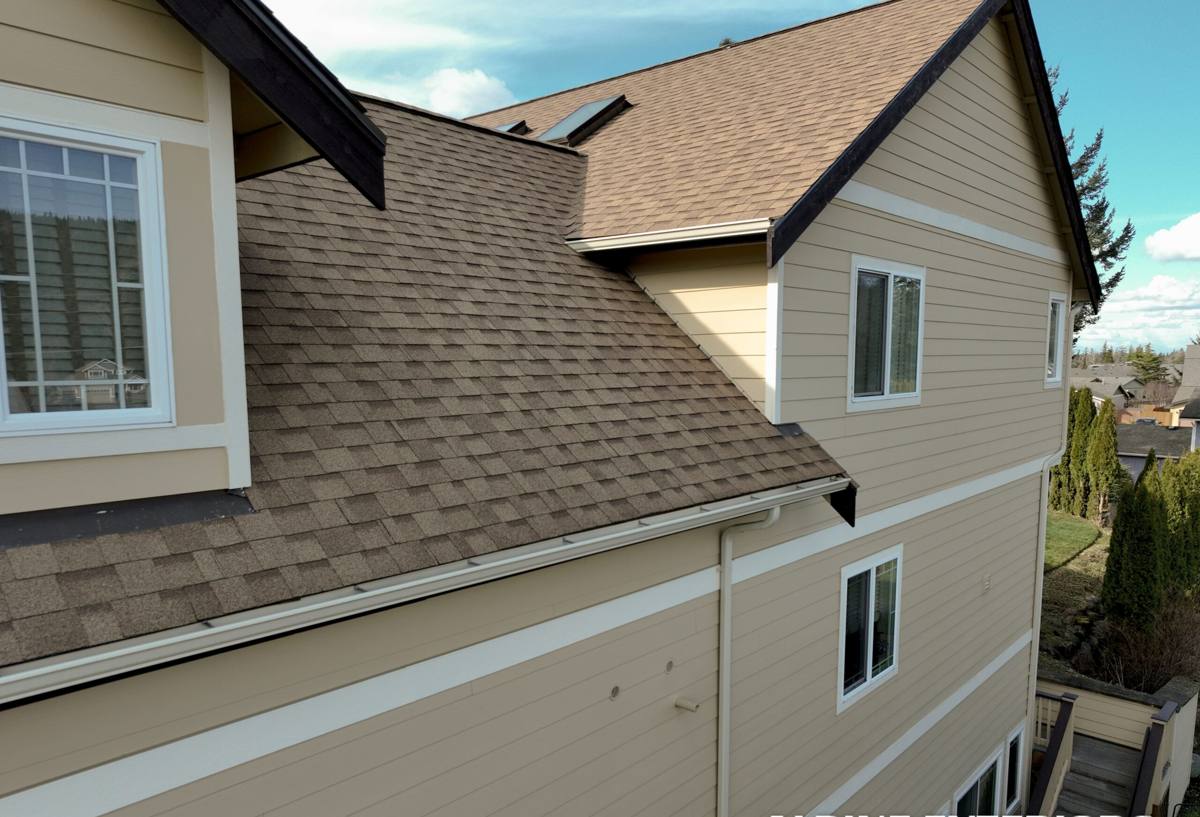
What Cedar Siding Actually Requires Long-Term
The Refinishing Cycle Never Really Stops
Cedar is wood, and wood needs a protective finish — stain, paint, or sealant — to keep moisture from getting into the fibers. That finish breaks down under UV exposure and weather, typically needing to be redone every three to seven years depending on the finish type, sun exposure, and how exposed the wall is to wind-driven rain. Skip a cycle or two and you're not just touching up color; you're often dealing with a board that has already started absorbing water it shouldn't.
Moisture, Rot, and the Parts You Can't See
The real risk with cedar isn't the visible surface — it's what happens behind and inside the board when moisture gets past the finish. Cedar is naturally more rot-resistant than most softwoods, but "more resistant" is not "immune." Once water works into a seam, a nail hole, or an end cut that wasn't properly sealed, rot can spread quietly behind the siding for a long time before it shows up as a soft spot or a stain on the interior wall. By the time it's visible, the repair is usually bigger than a homeowner expected.
Ferndale's Climate Is Working Against Cedar Every Day
Ferndale sits close enough to Bellingham Bay and the Strait of Georgia that salt-laden air is a routine part of the weather, not an occasional event. Combine that with Whatcom County's long stretch of driving rain in the fall and winter, and cedar siding here is fighting a two-front battle: salt air accelerates the breakdown of finishes and fasteners, while wind-driven rain finds every gap in a wood siding system and pushes moisture where it shouldn't go.
Then there's moss. Our moss season isn't a minor cosmetic issue — it's months of damp, shaded conditions on north- and west-facing walls that let moss and algae get a foothold on wood surfaces. Moss holds moisture directly against the siding, which is exactly the wrong thing for a material that depends on staying dry to last. Homeowners end up power-washing or treating cedar walls just to keep growth in check, and aggressive cleaning has its own way of wearing down a finish faster than sun exposure alone would.
None of this means cedar "fails" here. It means cedar in Ferndale needs more attention, more often, than the same board would need in a drier, less coastal climate — and that ongoing attention is the part that rarely gets mentioned when cedar siding is being sold on curb appeal alone.
What This Actually Costs Over Time
Homeowners usually compare siding materials on installed price alone, which tells you the least useful number for a twenty- or thirty-year decision. The table below reflects general, honest patterns we've seen — not manufacturer marketing claims — for how cedar and James Hardie fiber cement tend to behave over time in a climate like ours.
| Factor | Cedar Siding | James Hardie Fiber Cement |
|---|---|---|
| Refinishing cycle | Every 3-7 years | ColorPlus factory finish typically holds 15+ years before repainting is needed |
| Moisture sensitivity | High — wood swells, cups, and can rot if finish fails | Low — engineered to resist moisture-related warping and rot |
| Moss and algae resistance | Requires regular cleaning and treatment | Less hospitable surface; still benefits from periodic washing |
| Fire performance | Combustible | Non-combustible fiber cement |
| Salt air durability | Accelerated finish breakdown near the coast | Formulated to hold up in coastal climates |
| Warranty structure | Varies by installer; finish warranties are typically short | Manufacturer-backed, transferable warranty on product and finish |
Installed cost for cedar can sometimes come in lower up front, especially for a smaller wall area. But when you add up refinishing labor, cleaning, and the likelihood of localized repairs over two decades, the total cost of ownership for cedar in this climate frequently overtakes fiber cement — and that's before accounting for the homeowner's own time and hassle.
Where Cedar Still Makes Sense
We're not going to pretend cedar has no place. It can be a reasonable choice for a covered porch ceiling, an accent gable that's protected from direct weather, or a homeowner who genuinely enjoys the maintenance ritual and has the budget to stay ahead of it. If that's your situation and you want cedar specifically for an accent feature, we'd rather point you to a contractor who specializes in it than pretend we're the right fit for that job.
Where cedar becomes a harder sell is as the primary siding material on full wall exposures in a Whatcom County coastal climate — the situation most Ferndale homeowners are actually asking us about.
Why We Standardized on James Hardie Fiber Cement
We made a decision a while back to install one siding system and install it well, rather than offer five products and be mediocre at all of them. James Hardie fiber cement is what we chose, for reasons that map directly to the problems cedar runs into here:
- It's non-combustible, which matters for both safety and, increasingly, insurance considerations.
- The ColorPlus factory finish is baked on under controlled conditions, so it holds color and resists fading far longer than a field-applied stain or paint job on wood.
- Hardie's HZ5 product line is engineered for regions with more moisture and freeze-thaw exposure, which fits Whatcom County's weather pattern better than a general-purpose product.
- The material doesn't swell, cup, or absorb water the way wood fibers do, so it holds up better against our driving rain and long damp seasons.
- It carries a strong, transferable manufacturer warranty, which matters if you sell the home before the siding's functional life is up.
This isn't a claim that fiber cement is maintenance-free — no exterior siding is. It still needs periodic washing and the caulking needs to be checked. But the maintenance burden is dramatically lower than cedar's, and the failure modes we see most often with wood siding in this climate — finish breakdown, moisture intrusion, moss-driven rot — are the specific problems fiber cement was engineered to resist.
What Correct Installation Actually Involves
Part of why we're comfortable standing behind one product is that we know exactly how it needs to go on the wall. Fiber cement siding is only as good as its installation — gaps, wrong fastener patterns, or skipped flashing details will undermine even the best product. Our approach includes proper weather-resistive barrier and flashing details behind the siding, correct fastener spacing and type per Hardie's specifications, proper clearances at grade and at trim, and sealed, factory-primed cut ends wherever a board is field-cut. These aren't optional extras — they're the difference between a siding job that performs for decades and one that creates moisture problems years down the road, regardless of what material is on the wall.
Questions Worth Asking Before You Choose a Siding Material
Whether you end up going with us or another contractor, these are the questions we think every Ferndale homeowner should be asking before committing to a siding material or a crew:
- How does this material perform specifically in a coastal, high-rainfall climate — not just in general marketing claims?
- What's the realistic refinishing or recoating schedule, and what does that cost over 15-20 years?
- Is the manufacturer's warranty transferable if I sell the home?
- What flashing and moisture-barrier details will be used behind the siding, and can the contractor explain them clearly?
- Does the installer specialize in this material, or is it one of several they install without deep familiarity with its quirks?
- How will the material and finish hold up against moss and algae growth on shaded, north-facing walls?
If a contractor can't answer these clearly and specifically for your home's exposure, that's worth noticing before you sign a contract.
Getting a Straight Answer for Your Home
Every home in Ferndale sits differently — some are more exposed to salt air off the bay, some sit in more shade and deal with heavier moss, some have more wind-driven rain hitting one side of the house than another. We'd rather walk your property, look at your specific exposure, and give you a straightforward answer about what will actually hold up than sell you on a material because it looks good in a showroom. If you're weighing cedar against fiber cement, or just want an honest read on what your current siding is telling you, reach out for a free, no-pressure estimate — we'll tell you what we'd do if it were our own house.