 Ferndale Siding
 Siding Built for Sumas' Corner of Whatcom County
Sumas sits at the northern edge of Whatcom County, tucked against the Nooksack River valley and the Canadian border. It's a small community, but the exterior of a home here works about as hard as anywhere in the Pacific Northwest. Valley fog settles in for days at a time, rain moves through steadily for much of the year, and the surrounding farmland and low-lying terrain keep humidity high even between storms. That combination is exactly what siding, roofing, and trim are designed to handle — and exactly where a lot of lower-grade materials start to show their age early.
Homes in and around Sumas tend to see three things wear on their exteriors faster than homeowners expect: sustained moisture exposure, a long moss and algae season on north-facing and shaded walls, and repeated wet-dry cycling that stresses paint, caulk, and seams. None of that is unusual for Whatcom County. It's just the baseline, and it's why the siding choice on a Sumas home matters more than it would somewhere drier.
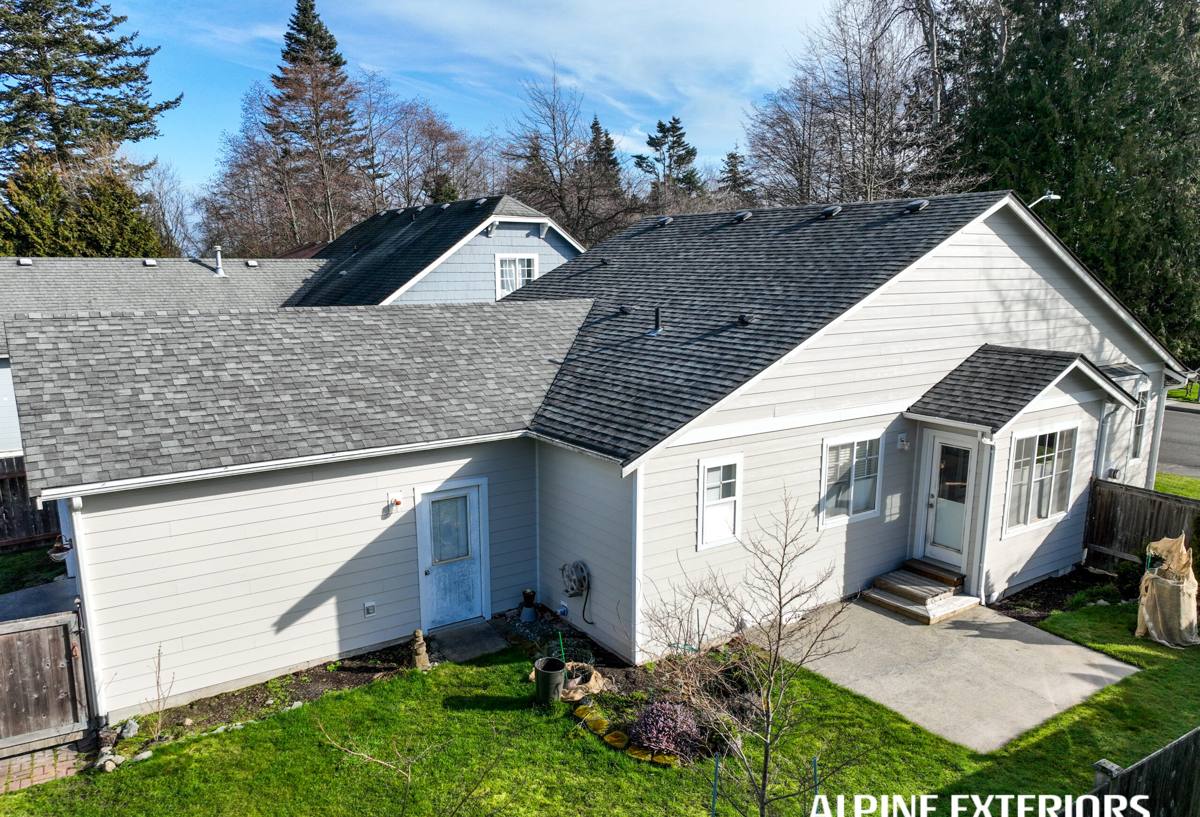
Why We Install Only James Hardie Fiber Cement
We made a deliberate decision as a company to install James Hardie fiber cement siding exclusively. We don't install vinyl, LP SmartSide, Cemplank, Allura, primed spruce, or cedar. That's not a marketing line — it's a standard we hold to because of what we've seen these products do over a full Pacific Northwest weather cycle, year after year.
Vinyl is inexpensive and low-maintenance, but it's a petroleum-based product that expands and contracts with temperature swings, can warp or crack in cold snaps, and offers essentially no fire resistance. Engineered wood products like LP SmartSide perform reasonably well when installed and maintained to spec, but they rely on a wood-fiber core that is vulnerable if water gets behind the panel through a missed seal or damaged edge — a real risk in a climate where wall assemblies stay damp for long stretches. Cedar is a beautiful, honest material, but it demands ongoing refinishing and is genuinely difficult to protect from moss and rot in a valley environment without diligent upkeep. Other fiber cement brands compete on price but don't always match Hardie's factory-applied ColorPlus finish or its regional engineering.
James Hardie fiber cement is non-combustible, holds a factory-baked finish that resists fading and chipping far longer than field-applied paint, and is engineered in HZ5 and HZ10 formulations specifically for moisture-heavy, high-humidity climates like ours. It doesn't feed mold or moss the way wood fiber can, and it carries a strong transferable warranty when installed to Hardie's specifications. For a Sumas home dealing with valley fog and long wet seasons, that's the material we're willing to stand behind.
What We Give Up by Refusing Other Products
Being a Hardie-only contractor means we sometimes aren't the cheapest bid on a project, and we turn down jobs where a homeowner wants a product we won't install. We think that trade-off is worth it. A siding job is a 30-to-50-year decision on most homes, and we'd rather lose a bid than install something we don't believe will hold up through a Whatcom County winter after winter.
What a Local Crew Actually Adds
Sumas is small enough that it doesn't always get the same attention from larger regional contractors based farther south. A crew that already works throughout Whatcom County — including Ferndale, the surrounding valley communities, and the border area — shows up already familiar with how homes here are built and what the local climate does to them over time. That matters for practical reasons:
- We know which wall orientations in this area collect moss first and plan detailing accordingly.
- We're used to working around wet-season scheduling and don't treat rain delays as unusual.
- We can get back out for a warranty check or a minor repair without a long drive eating the whole visit.
- We understand the flashing and drainage details that matter most in a high-humidity valley, not just a generic install spec.
A local crew also means the person who quotes the job is likely to be the person who stands behind it later. That continuity is worth something when you're trusting an exterior to hold up for decades.
Beyond Siding: Roofing, Windows, and Decks
Siding rarely fails in isolation. A home's roof, windows, and decking all share the same job — keeping water out and managing moisture — and in a valley climate like Sumas', they age together. We handle all four so a homeowner isn't coordinating separate contractors and separate warranties for what is really one connected system.
A roof with failing flashing will push water down behind siding no matter how well the siding itself is installed. Windows with degraded seals let moisture into the wall cavity from the inside out. Decks, especially ledger connections where a deck attaches to the house, are one of the most common places we find hidden rot during siding replacement. Looking at the whole exterior at once, rather than one component at a time, catches problems before they become larger repairs.
Comparing Your Siding Options
| Material | Moisture Resistance | Maintenance | Fire Resistance | Typical Lifespan |
|---|---|---|---|---|
| James Hardie Fiber Cement | Excellent, HZ formulations for wet climates | Low — factory finish, occasional wash | Non-combustible | 30-50+ years |
| Vinyl | Fair — can trap moisture behind panels | Low, but limited repair options | Poor — melts/warps under heat | 20-30 years |
| Engineered Wood (LP SmartSide) | Good if sealed correctly, vulnerable if compromised | Moderate — seams need monitoring | Moderate | 20-30 years |
| Cedar | Fair to good with diligent upkeep | High — regular refinishing needed | Poor untreated | 15-30 years, upkeep-dependent |
These are general performance patterns, not guarantees — actual results depend heavily on installation quality, home orientation, and how consistently a homeowner keeps up with maintenance.
How We Install Hardie Siding
Assessment and Prep
We start by inspecting the existing wall assembly for hidden moisture damage, checking window and door flashing, and confirming the sheathing underneath is sound. In a valley climate, this step catches problems that a surface-level look would miss.
Water Management First
Before a single piece of siding goes up, we install a proper water-resistive barrier and correct flashing details around every penetration — windows, doors, hose bibs, vents. Fiber cement siding performs as well as its warranty promises only when the water management behind it is done right. This is the step that separates a durable install from one that looks fine for a few years and then doesn't.
Installation to Manufacturer Spec
We install following James Hardie's fastening, clearance, and caulking specifications, which is what keeps the manufacturer's warranty valid. Proper clearance from grade, decks, and roof lines is especially important in a wet climate where standing moisture at the base of a wall is a common failure point.
Finish and Walkthrough
Once installed, we walk the exterior with the homeowner, review the finish, and go over basic care so the siding performs the way it's designed to for decades.
Signs a Sumas Home May Need New Siding
A few warning signs come up often in this area, and catching them early usually means a smaller repair instead of a larger one:
- Persistent moss or algae growth that returns quickly after cleaning
- Soft spots or visible warping, especially near ground level or under windows
- Paint that's peeling, bubbling, or chalking faster than expected
- Visible gaps at seams, corners, or trim that weren't there before
- A musty smell or discoloration on interior walls that share an exterior wall
- Siding that feels damp or spongy to the touch after a dry stretch
Any one of these on its own might be minor. Several together, especially on a home more than 20 years old, usually means it's worth a professional look before winter.
Living with a Wet-Climate Exterior
No siding material eliminates maintenance entirely, but Hardie's factory finish cuts down what's needed substantially compared to painted wood or engineered products. A periodic soft wash to keep moss from establishing, an annual look at caulking around windows and trim, and keeping gutters clear so water isn't dumping directly onto walls are the main things that keep a fiber cement exterior performing well through Whatcom County's long wet seasons. Homeowners who stay on top of those small habits tend to get the most out of their siding's expected lifespan.
If you're noticing any of the signs above, or you're simply due for an honest look at your home's exterior, we're happy to come out to Sumas, walk the property, and give you a straightforward assessment. There's no pressure and no obligation — just a clear picture of where things stand and what your options are. You can request a free estimate using the form below.