 Ferndale Siding
 Why This Comparison Comes Up So Often in Ferndale
Almost every homeowner we talk to in Ferndale has narrowed their siding decision down to two finalists: vinyl and James Hardie fiber cement. That makes sense — they're the two most common options quoted by contractors in Whatcom County, and they sit at very different price points, which naturally invites comparison. This page lays out the real differences between them, without the sales pitch. We only install James Hardie siding, so you should know that going in. But the goal here is to give you an honest, specific picture of both products so you can understand why we made that call, not to tell you vinyl is junk. It isn't junk. It's just a different product with different trade-offs, and some of those trade-offs matter more here than they would in a drier, calmer climate.
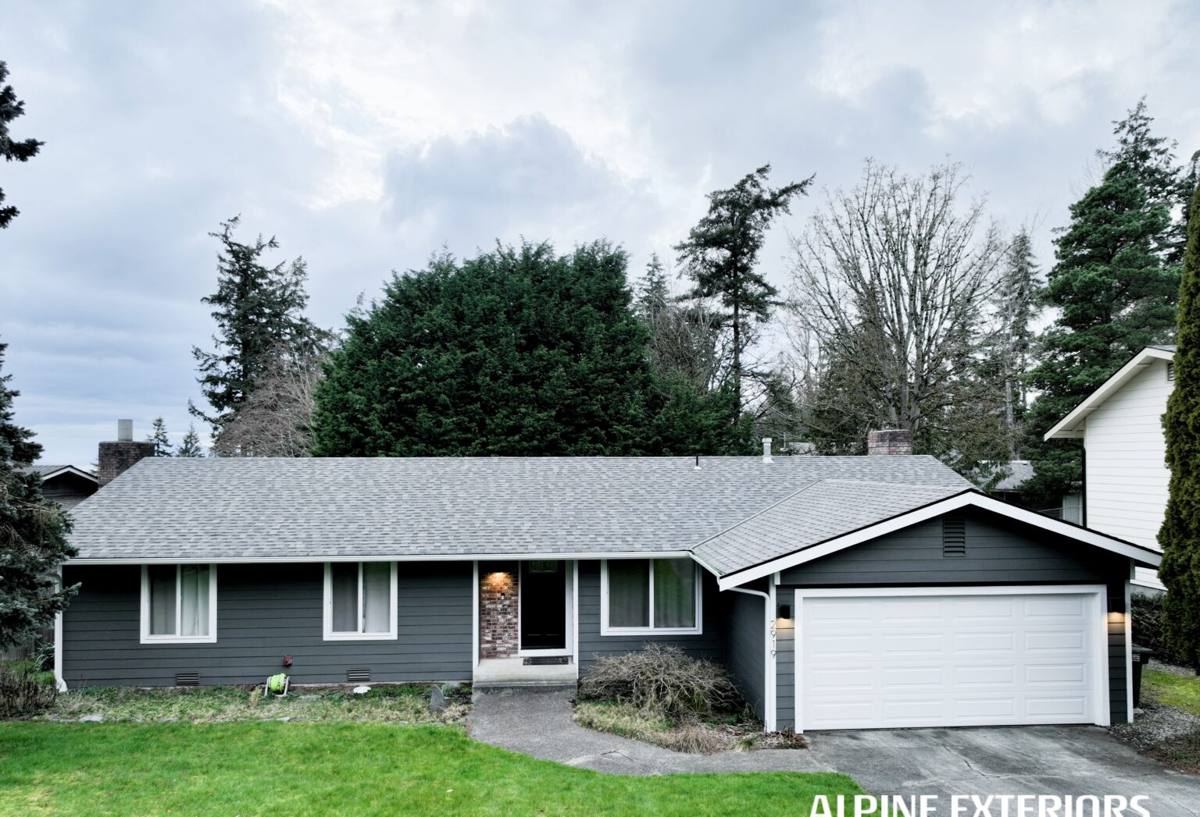
What Ferndale's Climate Actually Does to Siding
Ferndale sits close enough to Bellingham Bay and the Strait of Georgia that salt-laden air is a real factor on many homes, especially those west of the freeway or up on exposed lots. Combine that with Whatcom County's long, wet fall-through-spring stretch of driving rain and low, filtered light, and you get conditions that are tough on any exterior material in three specific ways: moisture intrusion at seams and fasteners, moss and algae growth on north- and west-facing walls, and slow material fatigue from constant wet-dry cycling. None of this is exotic — it's just persistent. A siding product that performs fine in a dry climate can behave very differently after a decade of Ferndale winters.
How the Two Materials Are Actually Built
Vinyl Siding
Vinyl siding is extruded PVC plastic, colored throughout the panel, formed into interlocking panels that hang on the wall rather than being fully fastened flat. That hanging installation is intentional — vinyl expands and contracts significantly with temperature, so panels need room to move. It's lightweight, relatively inexpensive, and doesn't rot, but it's still plastic: it softens in heat, gets brittle in cold, and its rigidity depends entirely on the gauge (thickness) of the panel.
James Hardie Fiber Cement
James Hardie siding is made from cement, sand, and cellulose fiber, cured into a dense, rigid board. It's engineered specifically for regional conditions — Hardie's "HZ5" product line is formulated for climates with freeze-thaw cycles and sustained moisture exposure, which is exactly what Whatcom County sees. The boards are nailed flat to the wall like traditional lap siding, factory-primed or finished with Hardie's ColorPlus baked-on coating, and don't expand and contract the way vinyl does.
How Each One Handles Ferndale's Moisture and Moss Season
This is where the two products diverge the most in practice. Vinyl doesn't rot, which sounds like an advantage, but vinyl siding isn't a water barrier by itself — it's a rain screen that relies on the water-resistive barrier and flashing behind it to actually stop moisture. Because vinyl panels overlap loosely and aren't caulked at every joint, wind-driven rain can get behind them, and in a climate with as much driving rain as Ferndale gets, that matters. Fiber cement is denser and holds its shape tightly against the wall with sealed, caulked joints, which gives wind-driven rain less of a path inward.
On moss and algae, neither product is immune — anything on a shaded, damp wall in this county will need occasional washing. But vinyl's slightly textured, porous-feeling surface tends to hold organic growth a bit more readily than Hardie's factory-baked ColorPlus finish, which is smoother and more resistant to staining. Neither difference is dramatic, but over 15-20 years it adds up in how much power-washing and touch-up a homeowner ends up doing.
Fire Resistance: The One Non-Negotiable Difference
This is the clearest, least debatable difference between the two products. Vinyl is a combustible plastic. James Hardie fiber cement is non-combustible — it will not ignite and contribute fuel to a fire. In Whatcom County, wildfire smoke has become a recurring late-summer reality even though we're not in a high fire-hazard zone the way parts of Eastern Washington are, and many insurers now ask about exterior material when underwriting or renewing homeowners policies. For us, this is the single biggest reason we standardized on Hardie: it's not a marginal upgrade, it's a fundamentally different material class when it comes to fire behavior.
Appearance and How Long the Finish Actually Lasts
Vinyl siding is colored all the way through the panel, so scratches don't show a different color underneath, and it never needs painting — but its color is also fixed for life and tends to fade unevenly with UV exposure over the years, especially on south-facing walls. It also has a well-known failure mode in cold weather: because it's rigid plastic hung loosely, it can crack on impact, and darker vinyl colors can warp or buckle in direct sun due to heat absorption.
James Hardie's ColorPlus finish is a baked-on, factory-applied coating engineered to resist fading and chipping far longer than field-applied paint, and it's backed by its own separate finish warranty. It can be repainted down the road if a homeowner wants a different color, which vinyl cannot. The trade-off is that Hardie costs more upfront and, unlike vinyl, needs to be primed and painted at any cut edges during installation — which is exactly the kind of step that separates a correctly installed Hardie job from a problem one.
Installation Sensitivity: Different Products, Different Risks
Both products are installation-sensitive, just in different ways. Vinyl siding installed too tightly, without allowing for thermal expansion, will buckle and wave within a few seasons — it's one of the most common vinyl complaints, and it's purely an installation error, not a product defect. Hardie siding installed without proper fastener spacing, clearance from grade, or sealed cut edges can allow moisture to wick into the board over time, which is why Hardie publishes detailed installation specifications and why using a contractor unfamiliar with them is a real risk. Neither product forgives careless installation. That's part of why we only work with one system — it lets our crews build deep, repeatable expertise in Hardie's specific requirements rather than splitting attention across multiple product lines with different rules.
Questions Worth Asking Any Siding Contractor
- Are you factory-certified or specifically trained on this exact product line?
- What fastener pattern and clearance from grade do you use, and why?
- How do you flash and seal window and door transitions on this wall assembly?
- What does the manufacturer's warranty actually cover, and does it transfer if I sell the home?
- Can you explain, in plain terms, how this material performs in wind-driven rain?
Cost Comparison
Vinyl is almost always the lower upfront cost of the two, and that's a legitimate factor for a lot of homeowners — we're not going to pretend otherwise. The honest way to compare them is to look past the install-day number and consider the full picture.
| Factor | Vinyl Siding | James Hardie Fiber Cement |
|---|---|---|
| Upfront material + install cost | Lower | Higher |
| Typical lifespan | 20-30 years, condition-dependent | 30-50+ years when installed to spec |
| Fire behavior | Combustible | Non-combustible |
| Repainting needed | Never (but color is fixed) | Optional, decades out |
| Impact/cold-weather cracking | More prone | More resistant |
| Resale/appraisal perception | Standard | Often viewed as an upgrade |
Warranty Structure
Vinyl warranties vary widely by manufacturer and grade, and many are prorated — meaning the payout shrinks the longer you've owned the product, and coverage can be tied to the original purchaser rather than transferring cleanly to a new owner. James Hardie's warranty is a non-prorated, transferable warranty on the siding substrate, with a separate finish warranty covering the ColorPlus coating. Transferability matters more than people expect: if you sell your home within the coverage period, a strong transferable warranty is something a buyer's inspector and agent will actually notice.
Why We Only Install James Hardie
We used to get asked why we don't offer vinyl as a lower-cost option, and the honest answer is that we'd rather stand behind one product we know inside and out than offer a menu of products we can only install adequately. James Hardie's non-combustible material, factory finish, climate-specific HZ5 formulation, and transferable warranty line up with what we think holds up best against Ferndale's salt air, driving rain, and moss season over the long haul. That's a professional standard we've chosen, not a claim that vinyl can't be installed well by someone else — it's simply not the product we put our name behind.
If you're weighing siding options for a home in Ferndale or elsewhere in Whatcom County, we're happy to walk your property, look at your exposure and existing siding condition, and give you a straightforward, no-pressure estimate for James Hardie siding — use the form below to get started.