 Ferndale Siding
 Siding for Blaine: A Whatcom County Coastal Climate That Doesn't Forgive Shortcuts
Blaine sits about as close to the water and the international border as a Whatcom County home can get, and that setting shapes what happens to exterior siding here more than most homeowners realize until they're dealing with it firsthand. Marine air moves through the area constantly, rain tends to come in sideways rather than straight down, and the long, mild, wet stretch of fall through spring gives moss and mildew months at a time to establish themselves on anything that stays damp and shaded. None of that is unusual for this part of the county, but it does mean siding decisions that work fine in a drier inland climate can fail early on a Blaine home.
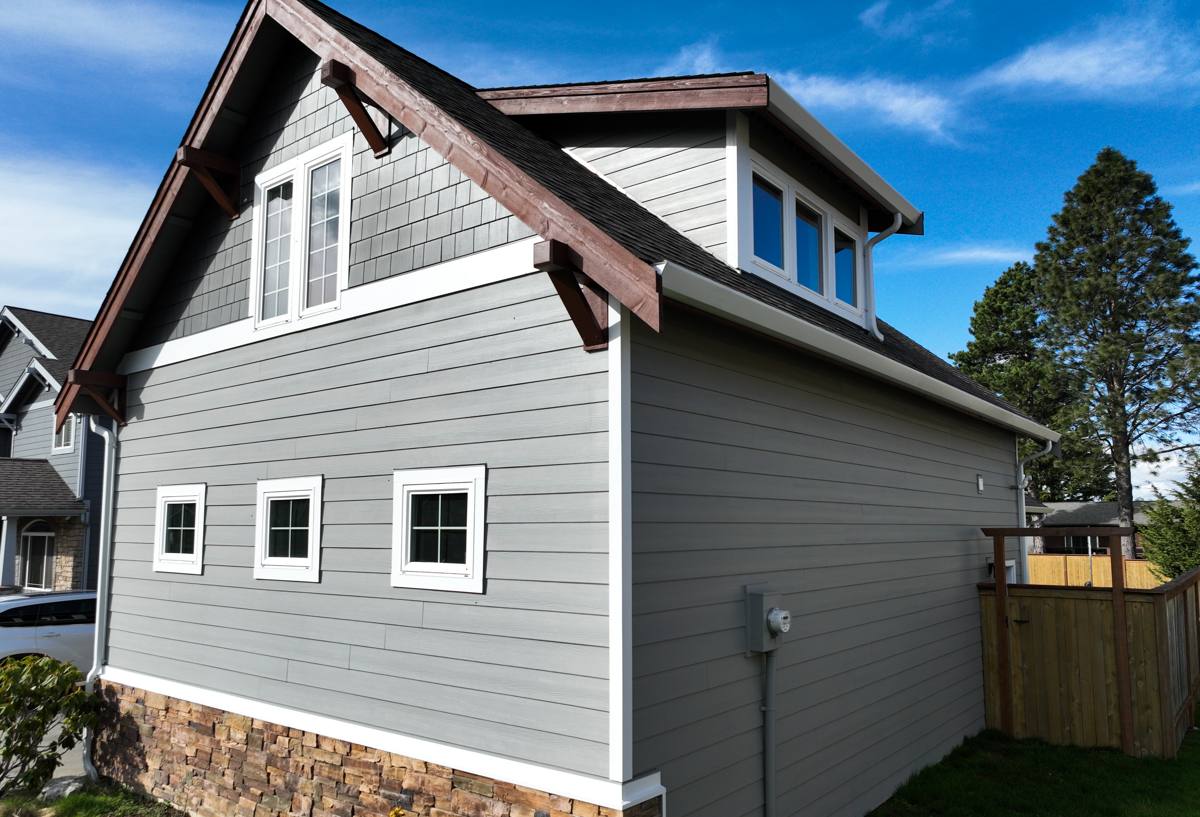
We serve Blaine as part of our broader Whatcom County service area alongside Ferndale and the surrounding communities, and we install James Hardie fiber cement siding exclusively — not vinyl, not engineered wood, not other fiber cement brands. That's a standard we settled on after seeing which products actually hold up under this specific mix of salt air, driving rain, and a long moss season, and which ones tend to need attention again within a handful of years.
What Blaine's Climate Does to Siding
Salt Air and Coastal Exposure
Being this close to the water means a steady, low-level dose of salt-laden air on siding, trim, and fasteners even on homes set back a few blocks from the shoreline. Salt speeds up corrosion in exposed metal and can break down lower-grade paints and coatings faster than the same materials would wear in a drier, more inland setting. It's a slow, cumulative problem rather than a dramatic one, which is exactly why it gets overlooked until trim or fasteners are visibly rusting.
Wind-Driven Rain
Rain around Blaine rarely falls straight down for long. Wind off the water pushes it sideways into lap joints, trim intersections, and fastener penetrations that would stay dry in a calmer rain event. A siding system that only has to shed vertical water doesn't get a fair test in this climate — the real question is what happens at every joint and seam when rain is coming in at an angle.
Moss, Mildew, and a Long Wet Season
Whatcom County's wet season runs long, and Blaine's proximity to the water keeps humidity and dampness lingering on shaded and north-facing walls well after a storm has passed. That's ideal growing conditions for moss and mildew, which don't just look bad — sustained organic growth holds moisture against a wall surface and can accelerate deterioration in materials that aren't built to handle it. Homes with heavy tree cover or limited sun exposure on one side tend to see this first.
Temperature Swings and Moisture Cycling
This isn't a climate with dramatic freeze-thaw extremes, but Blaine does see enough cold snaps combined with near-constant dampness that siding materials are frequently cycling between wet and dry, warm and cool. Materials that absorb moisture don't always get a full chance to dry out before the next rain moves through, which is a real factor in how different siding products age here.
Why We Install Only James Hardie Fiber Cement
We get asked fairly often why we don't offer vinyl or engineered wood siding, since both are common around Whatcom County. The honest answer is that we made a standardization decision based on what performs best under the conditions described above, and we'd rather do one product exceptionally well than spread our crews across several products we can't fully stand behind.
Vinyl Siding
Vinyl is inexpensive and low-maintenance, and plenty of it is installed around this region. But it's a hung product rather than a rigid, mechanically fastened one, which is part of its designed tolerance for expansion and contraction — and that same characteristic makes it more prone to rattling loose, warping, or cracking under sustained coastal wind than a stiffer material. It also doesn't offer the fire resistance that a growing number of Whatcom County homeowners are asking about.
Engineered Wood (LP SmartSide and Similar)
Engineered wood siding has genuine fans and a real track record when it's installed and maintained correctly. But it's still a wood-fiber product at its core, and in a climate where surfaces rarely get a long stretch to fully dry out, any break in the factory edge seal — an unsealed field cut, a cracked fastener point, a joint that opens over time — creates a spot where the wood core can wick moisture and swell. That's a product that punishes gaps in maintenance, and Blaine's climate doesn't give much room for those gaps.
Other Fiber Cement Brands
Not all fiber cement is engineered the same way. We standardized on James Hardie specifically because of its HZ5 formulation, built for regions with heavy moisture exposure and freeze-thaw cycling — a good match for coastal Whatcom County — plus its factory-applied ColorPlus finish, which resists the fading and chalking that plain field-painted siding shows over time, and the depth of its installation documentation and transferable warranty. It's also non-combustible, which matters to more homeowners in this region every year.
Comparing Siding Options for a Blaine Home
| Factor | Vinyl | Engineered Wood | James Hardie Fiber Cement |
|---|---|---|---|
| Performance in sustained coastal wind | Can rattle, warp, or crack over time | Solid when properly fastened and sealed | Rigid, mechanically fastened, engineered for wind exposure |
| Behavior in a wet, low-sun climate | Doesn't rot, but traps moisture behind it | Wood-fiber core can swell if edge seal is compromised | Non-organic, doesn't rot or swell |
| Moss and mildew resistance | Surface growth possible, doesn't damage material | Growth can hold moisture against wood core | Surface growth is a cleaning issue, not a structural one |
| Salt air exposure | Generally stable; fasteners can corrode | Generally stable; fasteners can corrode | Generally stable; fastener spec matters |
| Combustibility | Can melt or deform in high heat | Combustible (wood-based) | Non-combustible |
How the Work Happens in Blaine
Every project starts with a walk of the exterior to see what's actually happening under the existing siding, not just what's visible from the street. On older homes, that usually means checking for soft spots near windows, doors, and the bottom courses, looking at flashing where the roof meets the wall, and paying attention to how water has historically drained around the foundation. Blaine's mix of long-established homes and newer construction means we see everything from decades-old original siding to homes that have already been through a prior re-siding with a different product.
Once we know what we're dealing with, installation follows James Hardie's published fastening, clearance, and joint-treatment specifications closely. That's not a formality — it's the difference between fiber cement that performs for decades and fiber cement that develops the same problems as a poorly installed product. That means correct clearance from grade, decks, and roof lines, the right fastener type and spacing for coastal wind exposure, and properly lapped, sealed joints and flashing at every window, door, and penetration.
Because Blaine sees a real moss and mildew season, we also pay attention to how a home's siding plan handles shaded, low-airflow walls — sometimes that's a matter of product finish, sometimes it's about trim details that let a wall dry out faster after rain instead of holding water against it.
Roofing, Windows, and Decks Alongside Your Siding
Siding problems rarely show up in isolation. A roof valley that's leaking, a window that isn't flashed correctly, or a deck ledger board trapping moisture against the house can all surface as siding damage even when the siding itself isn't the actual source of the problem. Because we handle roofing, windows, and decks in addition to siding, we can look at a Blaine home as one connected exterior system rather than diagnosing a wall in isolation and missing where the water is really getting in.
This matters especially on coastal homes, where a small gap in flashing at a window or roofline can let wind-driven rain travel further into a wall assembly than it would in a calmer climate. Catching that kind of issue during a siding project — rather than after it's caused hidden damage — is one of the practical advantages of working with a crew that handles the whole exterior.
Signs Your Blaine Home May Need New Siding
- Paint that's chalking, fading unevenly, or peeling faster on weather-facing walls
- Soft or spongy spots when pressing on siding near windows, doors, or the bottom courses
- Persistent moss, mildew, or dark streaking on shaded or north-facing walls
- Visible gaps, warping, or buckling in siding panels, especially after a windy winter
- Rust streaks or corrosion around fasteners and trim
- Musty odors or staining on interior walls that back up to exterior siding
- Siding that's noticeably older than 20-25 years with no documented replacement history
None of these signs mean a home needs full replacement right away, but they're worth a professional look before the next wet season sets in rather than after water has already worked its way into the sheathing.
What to Expect From an Estimate
An honest estimate starts with an inspection, not a sales pitch. We'll look at your current siding's condition, check for hidden moisture or structural issues, walk through which James Hardie product line fits your home and budget, and give you a straightforward number rather than a low figure that grows once work is underway. Cost depends on home size, existing condition, number of stories, and how much trim and detail work is involved — factors we'll walk through specifically rather than leaving you guessing.
If you're in Blaine and thinking about siding, roofing, windows, or decks — whether you're dealing with a specific problem or planning ahead of the next wet season — we're happy to take a look and give you a straightforward, no-pressure estimate using the form below.