 Ferndale Siding
 Fairhaven's Climate Is Harder on Siding Than It Looks
Homes in and around Fairhaven deal with a combination of conditions that most siding products were never really designed for: salt-laden air rolling in off the water, wind-driven rain that hits walls sideways instead of falling straight down, and a moss season that can stretch for most of the year on shaded or north-facing walls. None of these factors are dramatic on their own. Together, over years, they're exactly what wears out the wrong siding material faster than a homeowner expects.
This page is about one service, in one area: fiber cement siding for Fairhaven homes. We're not going to give you a generic rundown of siding options. We're going to walk through what this specific climate does to a wall assembly, what a correctly installed fiber cement system needs to include to hold up here, and why the crew you hire matters as much as the material you choose.
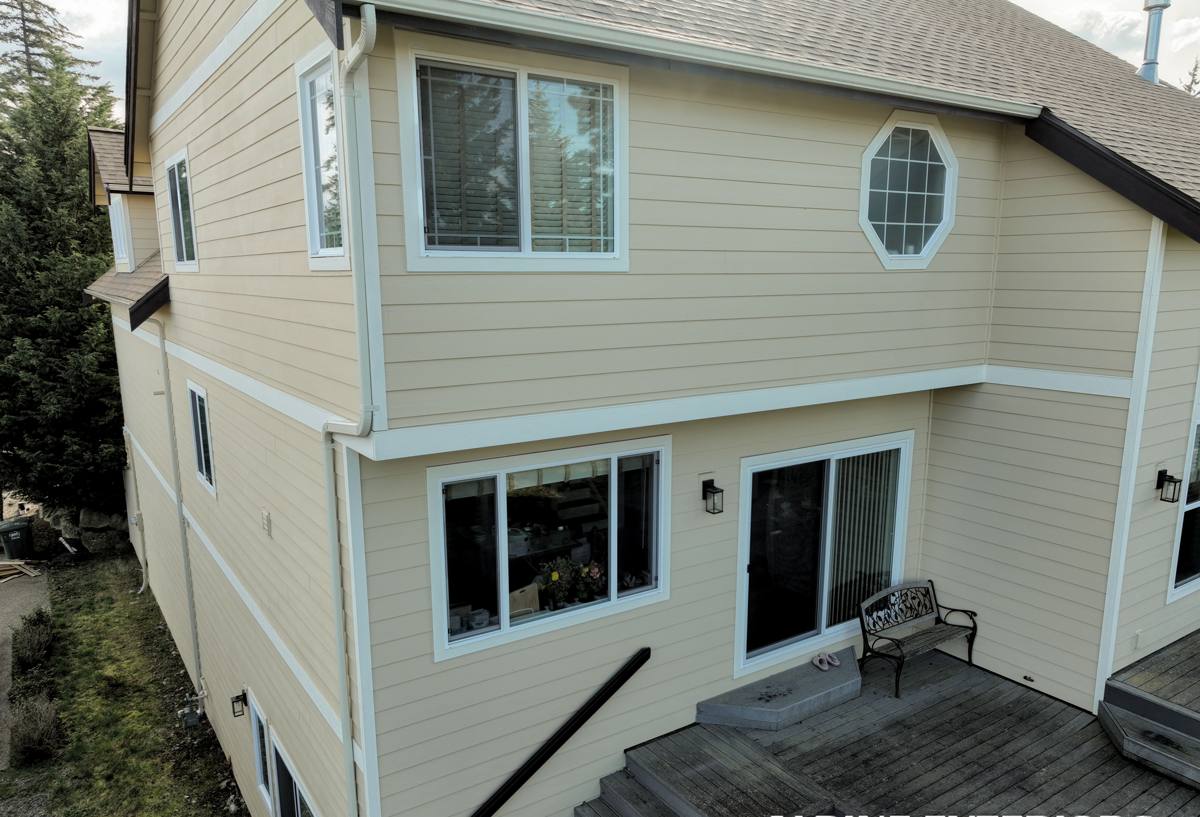
What Salt Air, Rain, and Moss Actually Do to a Wall
Salt Air and Fasteners
Homes closer to the water pick up airborne salt that settles on every exterior surface, including the fasteners, flashing, and trim holding your siding on. Over time, salt exposure accelerates corrosion on anything that isn't rated for it — steel nails rust, uncoated trim fasteners bleed, and cheap flashing pits and fails years before it should. It's rarely the siding panel itself that fails first in a coastal environment; it's the small metal parts that were an afterthought.
Driving Rain and Wall Assemblies
Whatcom County storms don't always drop rain straight down. When wind pushes rain sideways into a wall, water finds every gap, lap, and penetration — window trim, hose bibs, light fixtures, deck ledgers. A siding product that's only rated to shed water in calm conditions will eventually let moisture behind it during a real Pacific Northwest storm. What matters more than the siding's face is what's happening behind it: the water-resistive barrier, the flashing details, and whether there's a drainage plane for water that does get past the surface.
Moss and Trapped Moisture
Shaded elevations, tree cover, and the region's long damp season all favor moss and algae growth. Moss itself doesn't destroy fiber cement the way it can degrade wood or some composite products, but a wall that stays damp longer because moss and organic buildup are holding moisture against it is a wall that's working harder than it should. Siding that dries out quickly between rain events holds up better than siding that stays saturated.
Why Fiber Cement Is the Right Answer for This Climate
Fiber cement is a mix of cement, sand, and cellulose fiber, cured into a rigid board. It doesn't rot, it isn't a food source for moss or mildew the way untreated wood is, it doesn't swell and delaminate when it gets wet the way some engineered wood products can, and it's non-combustible. For a home dealing with salt air, driving rain, and a long moss season, those properties matter more than they would in a drier, milder climate.
But "fiber cement" isn't one product — quality, formulation, and factory finishing vary a lot between manufacturers. That's the reason we don't install every fiber cement brand on the market.
Why We Only Install James Hardie
We install James Hardie fiber cement siding exclusively. We don't install LP SmartSide, vinyl, Cemplank, Allura, primed spruce, or cedar, and we're upfront with homeowners about why. It isn't brand loyalty — it's that Hardie is the product we've found holds up best against the specific stresses this region puts on a wall, and it's backed by a warranty structure and factory finish system that matches how we build.
Climate-Engineered Product Lines
Hardie manufactures its lap siding, panels, and trim in different formulations rated for different climate zones — including an HZ5 line engineered for regions with more moisture and freeze-thaw exposure, closer to what Western Washington sees. That's a meaningful difference from a one-size-fits-all fiber cement product sold nationally without regard to whether it's going on a house in the desert Southwest or on a wall thirty feet from salt water.
ColorPlus Factory Finish
Hardie's ColorPlus finish is baked on at the factory under controlled conditions, not brushed on at the job site. That matters directly for salt air and driving rain exposure: a factory-cured finish resists fading and moisture intrusion at the surface far better than field-applied paint, which is more porous and more likely to need recoating within a few years in a wet climate.
Warranty and Longevity
Hardie backs its siding with a strong, transferable limited warranty, which matters to homeowners who may sell before they've fully amortized the cost of a re-side. Warranty terms and coverage vary by product line, so we go over the specifics for your project during the estimate rather than quoting numbers that don't apply to your home.
What a Correct Fiber Cement Installation Involves
The siding material is only part of the system. Most fiber cement failures we get called out to inspect aren't a product problem — they're an installation problem. On a Fairhaven home, a correct installation includes:
- A properly lapped and sealed water-resistive barrier behind the siding, not just wrapped loosely
- Correct flashing at every window, door, and roof-to-wall intersection, installed to shed water outward rather than trap it
- Fasteners and trim hardware rated for coastal or high-moisture exposure, not standard interior-grade fasteners
- Proper nailing patterns and clearances per Hardie's published installation specifications — not shortcuts that void the warranty
- Correct gaps and sealant at butt joints and terminations, sized for the material's expansion and contraction
- Ground clearance and drainage detailing so siding doesn't sit in standing water or wick moisture from grade
Skip any one of these and you can end up with moisture problems behind siding that looks fine from the curb — which is exactly the kind of failure that's expensive to diagnose after the fact, because the damage is hidden.
Matching Hardie Products to Different Parts of the Home
Not every part of a house needs the same product. Part of doing this correctly in Fairhaven's climate is choosing the right Hardie product for each application, not just running one board type everywhere.
| Hardie Product | Typical Use | Why It Matters in This Climate |
|---|---|---|
| HardiePlank Lap Siding | Main wall surfaces | Primary defense against wind-driven rain; needs correct lap and fastening to shed water |
| HardiePanel | Accent walls, gable ends, board-and-batten sections | Rigid, large-format coverage with fewer seams for water to find |
| HardieTrim | Corners, window and door casings, fascia | Trim takes the most direct rain exposure and needs corrosion-resistant fastening |
| HardieSoffit | Eaves and overhangs | Ventilated soffit panels help manage moisture and reduce conditions that favor moss and mildew |
Our Process, Start to Finish
The process for a Fairhaven fiber cement project follows the same core steps as any siding job, but each stage gets adjusted for the site conditions we find.
Inspection and Assessment
We look at what's actually happening on your walls now — moisture staining, soft spots, failed caulk, corroded fasteners, moss buildup on shaded sides — before quoting anything. This tells us whether there's hidden water damage under the existing siding that needs to be addressed before new siding goes on.
Water Management Plan
Before a single piece of Hardie board goes up, we plan the water-resistive barrier, flashing, and drainage details for your specific walls, including any known problem areas like exposed western or southern elevations that take the brunt of storm winds.
Installation to Manufacturer Spec
We install to Hardie's published specifications — fastener type and spacing, clearances, joint treatment — because that's what keeps the manufacturer's warranty intact and what actually performs in this climate. This isn't the step where shortcuts are worth the time saved.
Final Walkthrough
We walk the finished job with you, covering what maintenance (if any) is expected, and what the warranty covers going forward.
What Fiber Cement Siding Costs in Fairhaven
Costs vary by home size, wall complexity, and existing conditions, but a few factors move the price more than homeowners expect.
| Cost Factor | Why It Affects Price |
|---|---|
| Tear-off of existing siding | Removing old material, and repairing any sheathing damage found underneath, adds labor before new siding can start |
| Number of stories and access | Second- and third-story walls, steep grades, or limited access add setup time and equipment cost |
| Trim and detail complexity | Homes with more corners, windows, gables, and architectural detail take more trim work per square foot |
| ColorPlus vs. field-painted finish | Factory-finished ColorPlus boards cost more upfront but avoid a repaint cycle in a wet climate |
| Hidden moisture repair | If tear-off reveals rotted sheathing or framing, that repair is priced separately from the siding install |
We give exact numbers after a walkthrough of your specific home — broad averages don't account for what's actually on your walls.
Maintenance in a Salt Air and Moss Environment
Fiber cement is low-maintenance compared to wood, but "low-maintenance" isn't "no-maintenance," especially this close to the water. A simple annual routine keeps a Hardie installation performing the way it's designed to:
- Rinse siding annually to remove salt residue and airborne grime, especially on walls facing prevailing wind and weather
- Check caulking at trim joints, window edges, and penetrations for cracking or gaps, and have it resealed before gaps let water in
- Keep gutters and downspouts clear so overflow doesn't run down the siding face repeatedly
- Watch shaded, north-facing, or tree-covered walls for moss and algae buildup and have it gently removed before it thickens
- Trim back vegetation and landscaping that keeps a wall section shaded and damp longer than the rest of the house
- Have fasteners and flashing spot-checked periodically, particularly on homes with more direct salt air exposure
Why Hiring a Crew That Already Works in Fairhaven Matters
Fiber cement siding is only as good as its installation, and installation quality depends heavily on whether the crew understands the conditions they're building for. A crew that mostly works drier inland areas may not default to coastal-rated fasteners, may not think through wind-driven rain detailing at every penetration, and may not recognize early moss and moisture patterns that are specific to this part of Whatcom County. A crew that already works Fairhaven and the surrounding Ferndale area builds those details in as standard practice, not as an afterthought when something goes wrong later.
That local familiarity is also why we standardized on one manufacturer instead of installing whatever product a homeowner asks for. It lets us install to one consistent spec, get warranty and product questions answered quickly, and stand behind a system we know performs in this exact climate — rather than juggling installation requirements across several brands with different tolerances and finish qualities.
If you're weighing siding options for a home in the Fairhaven area, we're happy to walk your property, point out what your walls are actually dealing with, and give you a straightforward, no-pressure estimate for a James Hardie fiber cement installation built for this climate. Use the form below to get started.