 Ferndale Siding
 Why Fairhaven-Area Homes Need a Different Approach to Siding
Homes in and around the Fairhaven area near Ferndale sit close enough to the water that salt-laden air is a daily fact of life, not an occasional nuisance. Combine that with Whatcom County's long, wet shoulder seasons — driving rain off the Salish Sea, low winter sun angles, and stretches of shade that keep north- and west-facing walls damp for days at a time — and you get a climate that is genuinely hard on exterior materials. Add a moss season that can run from early fall through late spring, and it's easy to see why siding that performs fine in a drier inland climate can struggle here.
None of this means siding installation in Fairhaven has to be complicated. It means it has to be done with the right material and the right technique, by a crew that understands what this specific stretch of coastline does to a wall system over ten, twenty, and thirty years — not just what it looks like on install day.
What Salt Air, Rain, and Moss Actually Do to a Wall System
Salt Air
Airborne salt is corrosive to metal fasteners, flashing, and trim, and it accelerates the breakdown of some paints and coatings faster than plain moisture alone. Over years, a siding product with a weak factory finish will chalk, fade, or crack in a salt environment noticeably faster than the same product would inland.
Driving Rain
Wind-driven rain doesn't just fall on a wall — it gets pushed sideways into laps, seams, and penetrations. A siding system is only as good as its ability to shed that water back out before it reaches the sheathing. Gaps, poor flashing details, or the wrong caulk in the wrong place are where driving-rain climates find every weakness in an installation.
Moss and Sustained Moisture
Moss doesn't grow on siding because the siding is dirty — it grows where moisture sits. Shaded walls, areas with poor airflow behind the cladding, and surfaces that stay damp for extended periods are moss magnets. Left unmanaged, sustained dampness behind or on siding leads to soft trim, stained finishes, and eventually rot in the substrate underneath.
What Correct Siding Installation Must Account For Here
A siding installation built for this climate isn't just about nailing boards to a wall. It's a system, and every part of that system matters:
- Drainage plane and rainscreen gap — a code-compliant water-resistive barrier plus an air gap behind the siding lets any moisture that gets past the cladding drain and dry out, rather than sitting against the sheathing.
- Flashing at every penetration — windows, doors, hose bibs, light fixtures, and deck ledgers all need proper flashing and correct shingling order so water is directed out, not trapped in.
- Fastener placement and spacing — manufacturer-specified nailing patterns and fastener types matter more in a wet, salty climate, where the wrong fastener corrodes and the wrong placement causes buckling.
- Clearances above grade, decks, and roofs — siding installed too close to the ground, a deck surface, or a roofline stays wet longer and is the single most common cause of premature rot we see on coastal homes.
- Caulking discipline — sealant belongs at specific joints, not as a substitute for proper flashing. Over-caulking traps water in just as often as it keeps it out.
Why We Install James Hardie Fiber Cement — and Only Hardie
We made a deliberate decision to install James Hardie fiber cement siding exclusively, and we don't install vinyl, LP SmartSide, Cemplank, Allura, or unfinished wood siding like primed spruce or cedar. That's not a marketing position — it's a standard we hold because of what we've seen play out on homes in this exact climate over time.
Vinyl can warp and become brittle under UV exposure and temperature swings, and its seams and J-channels give wind-driven rain more opportunities to work moisture behind the cladding. Wood siding — cedar or primed spruce — looks great on day one but demands an ongoing maintenance commitment (recoating, caulking, moisture monitoring) that most homeowners underestimate, and it's naturally more vulnerable to the rot and moss issues that come with sustained dampness. Other fiber cement brands, including LP SmartSide (an engineered wood product, not fiber cement), Cemplank, and Allura, each have their own strengths, but none combine James Hardie's factory-applied ColorPlus finish, climate-specific engineering, and long transferable warranty in a package we're willing to put our name behind.
James Hardie fiber cement is non-combustible, dimensionally stable in wet-dry cycling, and engineered specifically for wet climates through its HZ5 product line — which is exactly what this region calls for. That's why it's the only product we install.
The James Hardie Product Line We Use in This Climate
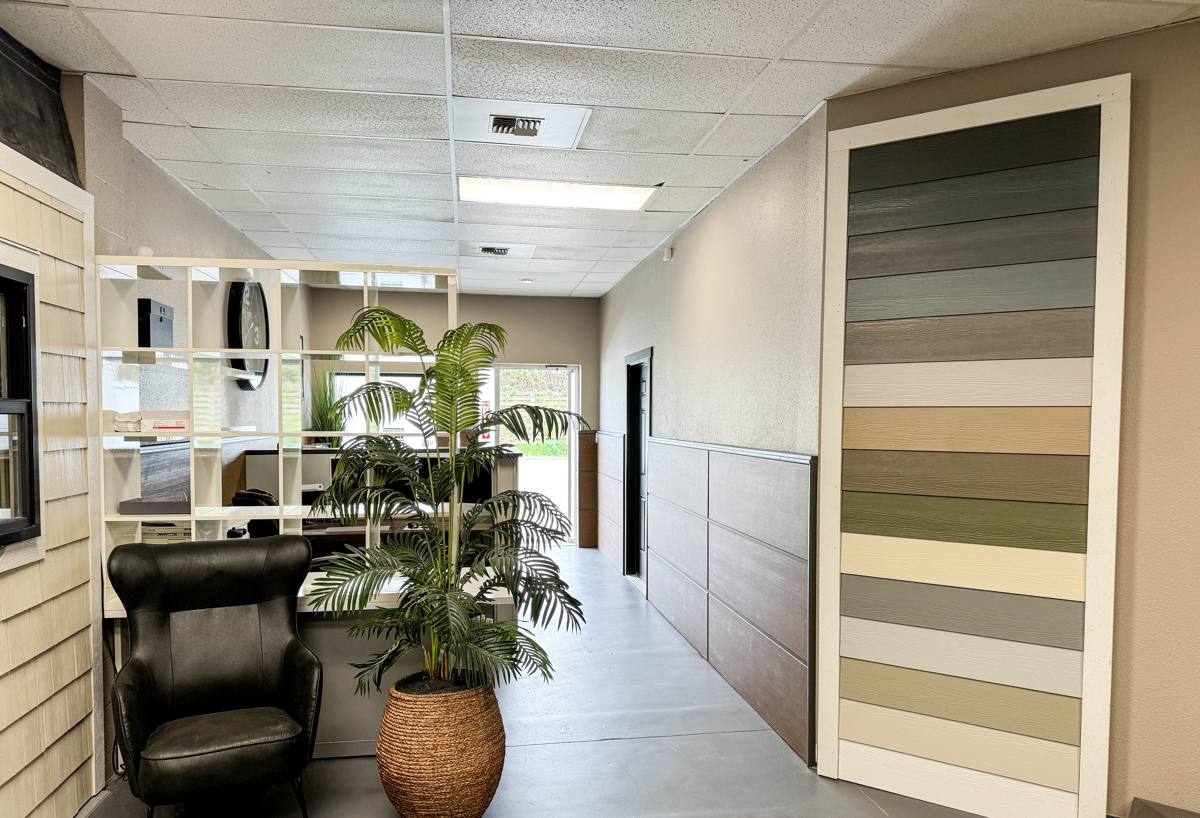
James Hardie makes region-specific formulations, and everything we install for Fairhaven-area homes is specified for HZ5 (wet, temperate climates like the Pacific Northwest) rather than the HZ10 formulation built for hot, dry regions. The table below breaks down what that means in practice.
| Feature | What It Does | Why It Matters Here |
|---|---|---|
| HZ5 engineered formulation | Fiber cement mix tuned for wet, temperate climates | Resists moisture-related warping and swelling better than a dry-climate formulation |
| ColorPlus factory finish | Baked-on, multi-coat color applied under controlled conditions | Outperforms field-applied paint against fading, chalking, and salt-air breakdown |
| Non-combustible core | Fiber cement does not support flame spread | A meaningful safety advantage over vinyl or wood claddings |
| Dimensional stability | Minimal expansion and contraction with moisture cycling | Reduces the seam gaps and buckling that let driving rain in |
| Transferable limited warranty | Manufacturer-backed coverage tied to correct installation | Protects the investment if the home changes hands |
Our Installation Process, Step by Step
Every Fairhaven-area installation follows the same disciplined sequence — skipping steps is where coastal siding jobs fail early.
- On-site assessment — we evaluate existing siding, sheathing condition, moisture exposure by elevation, and any signs of past water intrusion before quoting anything.
- Removal and substrate inspection — old siding comes off and the sheathing is inspected for soft spots or hidden rot before anything new goes up.
- Water-resistive barrier installation — a code-compliant weather barrier is installed and lapped correctly at every seam.
- Rainscreen furring — a drainage gap is created behind the siding so any incidental moisture can drain and the wall can breathe and dry.
- Flashing at all penetrations — windows, doors, and other openings are flashed in the correct shingled order before siding goes on around them.
- James Hardie installation to manufacturer spec — correct fastener type, spacing, and clearances above grade, roofs, and decks, following James Hardie's published installation guidelines.
- Trim, caulking, and touch-up — sealant applied only where specified, ColorPlus touch-up used at cut edges and fastener heads.
- Final walkthrough — we review the finished work with the homeowner and flag anything worth watching over the first year.
Common Mistakes We See on Coastal Whatcom County Homes
A lot of the siding problems we get called out to inspect trace back to a handful of recurring issues:
- Siding installed tight to grade, decking, or roofing with no clearance for water to escape
- Missing or reversed flashing at window and door penetrations
- Caulk used to seal a gap that should have been flashed instead
- Fasteners driven too shallow, too deep, or in the wrong pattern for the panel size
- No drainage gap behind the cladding, trapping incidental moisture against the sheathing
- Field-cut edges left unsealed, exposing raw fiber cement to moisture
Every one of these is preventable with correct technique — none of them are inherent flaws in the siding material itself.
What Siding Installation Typically Costs, and What Drives the Price
We don't post fixed pricing because every home is different, but the factors below are the real drivers of cost on a typical Fairhaven-area installation.
| Cost Factor | Why It Moves the Price |
|---|---|
| Home size and wall complexity | More square footage and more corners, gables, and cutouts mean more labor and material |
| Existing siding removal | Tear-off and disposal of old siding adds time versus installing over new construction sheathing |
| Substrate repair | Any rot or soft sheathing found during removal needs to be repaired before new siding goes on |
| Siding profile and accessories | Lap width, shingle-style panels, and trim details affect both material cost and install time |
| Access and site conditions | Steep grades, tight setbacks, or multi-story walls affect scaffolding and staging needs |
| Color selection | Standard ColorPlus colors versus custom or premium selections can affect material pricing |
An accurate number only comes from a walk-through of the actual home — anything else is a guess.
Maintaining Your Siding After Installation
James Hardie siding is low-maintenance compared to wood or vinyl, but "low-maintenance" isn't "no-maintenance," especially in a climate with a long moss season. A short annual routine keeps it performing the way it's designed to:
- Rinse siding annually with a garden hose and soft brush to clear pollen, salt residue, and early moss growth
- Trim back vegetation and tree limbs that keep any wall shaded and damp longer than necessary
- Check and clear gutters so overflow isn't running down the face of the siding
- Inspect caulked joints yearly and have any cracked or failing sealant redone promptly
- Watch for staining or soft trim near grade, decks, and roof intersections — early signs of a clearance or flashing issue
Why Hiring a Crew That Already Works Fairhaven Matters
Siding installation isn't a one-size-fits-all trade. A crew that mostly works drier, inland climates may do technically fine work and still miss the details that matter here — the extra clearance a coastal wall needs, the flashing sequence that accounts for driving rain, or the drainage gap that keeps a shaded, moss-prone elevation dry. A crew that regularly works Fairhaven and the surrounding Ferndale area has already seen how this specific coastline treats a wall system over time, and builds every installation around that reality rather than a generic checklist.
If you're planning a siding project for a Fairhaven-area home, we're happy to walk the property, look at what your walls are dealing with, and put together a straightforward, no-pressure estimate using the form below.