 Ferndale Siding
 Fiber Cement Siding That Holds Up to Sumas' Wet Season
Homes in Sumas deal with a specific combination of weather that wears down siding faster than most homeowners expect: long stretches of driving rain, damp shoulder seasons that never fully dry out, and a moss season that can run from fall through spring. Add in the salt-tinged air that moves through this part of Whatcom County, and you have conditions that punish anything less than a genuinely weather-resistant siding system. We install fiber cement siding on homes throughout this area because it is one of the few products built to take that kind of sustained moisture exposure without warping, rotting, or breaking down at the seams.
This page is specifically about fiber cement siding installed correctly for Sumas conditions — not a general overview of siding options. If you own a home here, or you're planning a remodel, this is what you need to know about the material, the installation details that matter in this climate, and how we handle the job from first estimate to final walkthrough.
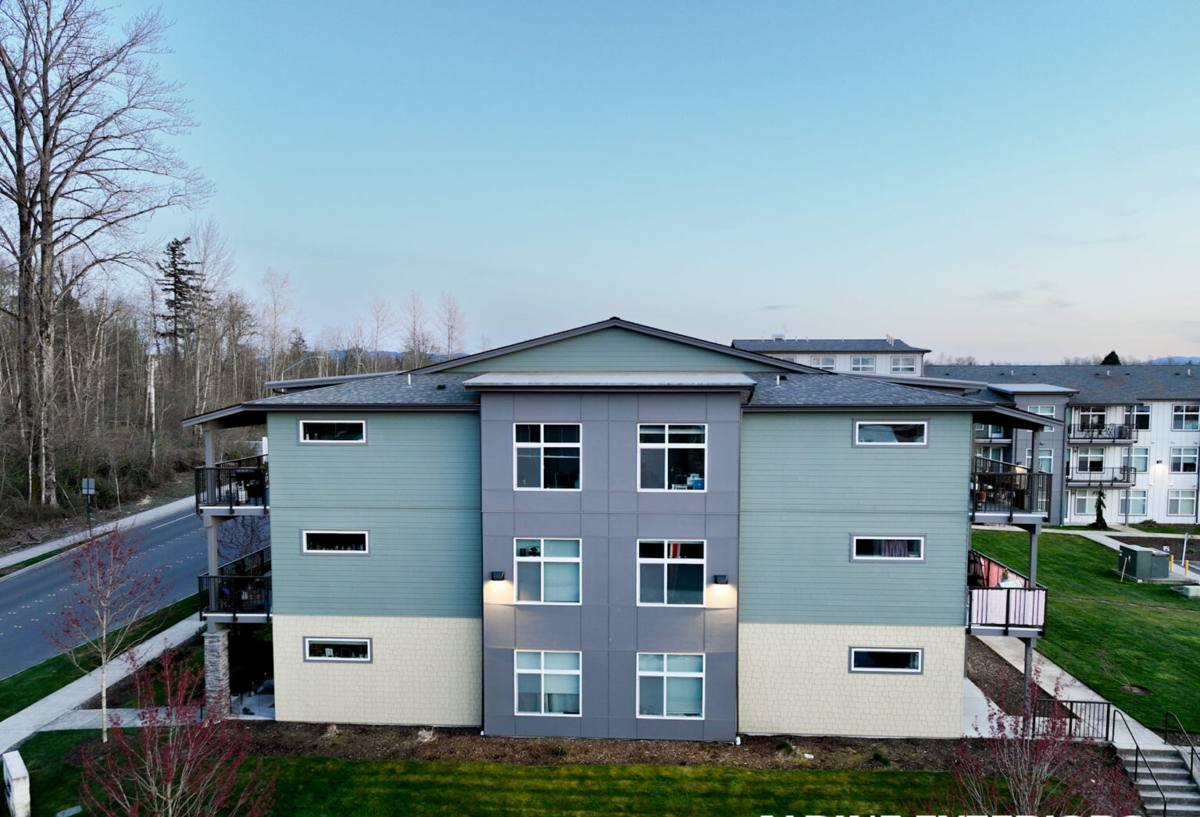
Why Whatcom County's Climate Is Hard on Siding
Moisture is the enemy of almost every siding failure we see. In a climate where rain is frequent and humidity lingers, siding doesn't need a single catastrophic event to fail — it just needs enough repeated wetting and drying cycles over enough years. Wood-based products swell and shrink. Seams that were tight when installed open up. Paint that looked fine at year three starts failing by year seven. And where moss and algae get a foothold, they hold moisture directly against the siding surface, which accelerates whatever damage is already happening underneath.
Fiber cement doesn't eliminate every risk that comes with a wet regional climate, but it changes the equation. It's dimensionally stable, meaning it doesn't expand and contract the way wood does with moisture changes. It doesn't rot. And because James Hardie's factory-applied ColorPlus finish is baked on rather than field-painted, it holds up to UV and moisture exposure far longer than a typical field-applied paint job — which matters when your siding spends a good part of the year damp.
What "Moss Season" Actually Does to a Home
Moss itself doesn't eat through siding, but it changes the microclimate right at the wall surface. A mossy patch stays wet longer than bare siding nearby, keeps that section of wall shaded and cool, and can trap organic debris against seams and fastener points. On wood-based or engineered wood products, that's exactly the kind of prolonged, localized moisture exposure that leads to soft spots and edge swelling. On fiber cement, moss is mostly a cosmetic and maintenance issue rather than a structural one — but it still needs to be addressed, because moss buildup at trim lines and butt joints can interfere with proper drainage if left unchecked for years.
What Correct Fiber Cement Installation Actually Involves
Fiber cement siding is a durable material, but its long-term performance depends heavily on installation quality. A rushed or careless install can undercut most of the advantages the product offers. Here's what we treat as non-negotiable on every job.
Drainage Plane and Weather-Resistive Barrier
Before a single piece of siding goes up, the wall needs a properly lapped weather-resistive barrier and, in most cases, a drainage gap that lets any moisture that does get behind the siding drain and dry out rather than sit against the sheathing. In a climate this wet, skipping or shortcutting this step is one of the most common causes of hidden moisture damage — and it's invisible once the siding is on, which is exactly why it has to be done right the first time.
Fastening and Clearances
James Hardie publishes specific fastener spacing, nailing patterns, and minimum clearance requirements — siding-to-grade, siding-to-roofline, siding-to-deck — and those clearances exist for a reason. Too little clearance at grade or at a roofline means splash-back and standing water sit against the bottom edge of the siding far more often than they should. We follow manufacturer clearance specs on every job, not just where it's convenient given the existing framing.
Caulking, Flashing, and Butt Joints
Butt joints, window and door transitions, and any place where siding meets trim or flashing are the most common failure points on any siding job, fiber cement included. These need correctly installed flashing above windows and doors, proper sealant at butt joints (or gapped and back-primed installation, depending on the detail), and careful attention at inside and outside corners where water naturally concentrates. Get these details wrong and you can have a technically "installed" fiber cement job that still lets water in.
Painting and Touch-Up
Even with a factory ColorPlus finish, field-cut edges need to be sealed and touched up correctly, and any field-painted trim needs a paint system rated for this climate. We don't leave raw cut edges exposed, and we don't treat touch-up as an afterthought.
Our Process, Start to Finish
Every fiber cement job we do in Sumas follows the same basic sequence, though the details vary by house.
- Walkthrough and assessment. We look at existing siding condition, sheathing access points, trim details, and any moisture damage already present before quoting anything.
- Estimate and product selection. We walk you through James Hardie's plank, panel, and shingle-style options and help you pick a profile and color that fits the home.
- Prep and tear-off. Old siding comes off, sheathing is inspected and repaired where needed, and any hidden moisture damage is addressed before it gets covered back up.
- Weather barrier and drainage plane installation. This step happens before siding, not as an afterthought.
- Siding installation to manufacturer spec. Correct fastening, clearances, and joint treatment throughout.
- Trim, flashing, and caulking detail work. The parts of the job that determine whether water actually stays out.
- Final walkthrough. We go over the finished job with you before we consider it done.
James Hardie Product Lines We Install
We install James Hardie exclusively — we don't carry vinyl, LP SmartSide, Cemplank, Allura, or unfinished wood siding. That's a deliberate standard, not a limitation on options. Within the Hardie lineup, there's still real variety in style and performance:
| Product Line | Style | Best Suited For |
|---|---|---|
| HardiePlank Lap Siding | Traditional horizontal lap | Most home styles; the most common choice we install |
| HardieShingle | Staggered or straight-edge shingle look | Accent areas, gables, craftsman-style homes |
| HardiePanel | Vertical panel siding | Modern designs, board-and-batten look, accent walls |
| HardieTrim | Trim boards | Window, door, and corner trim to match the siding system |
All of these come with the ColorPlus factory finish system in a range of colors, which matters directly for this climate: factory-baked finishes resist fading and moisture intrusion far better than a finish applied on-site after installation, especially through repeated wet-dry cycles.
Cost Factors for a Sumas Fiber Cement Project
We don't publish flat per-square-foot pricing because it depends on real conditions at your house, but these are the factors that actually move the number:
| Factor | Why It Matters |
|---|---|
| Tear-off and sheathing condition | Hidden moisture damage from old siding adds repair scope before new siding can go on |
| Home size and wall complexity | Cut-heavy elevations with lots of corners, dormers, or gables take more labor per square foot |
| Product mix | Combining lap siding with shingle accents or panel sections costs more than a single uniform product |
| Trim and detail work | Full trim replacement adds cost but improves long-term water management |
| Access and site conditions | Multi-story sections, tight lot lines, or landscaping obstacles affect labor time |
The only way to get an accurate number is a walkthrough of your specific house — which is what our estimate covers.
Maintaining Fiber Cement Siding in a Moss-Heavy Climate
Fiber cement is low-maintenance compared to wood, but "low-maintenance" doesn't mean "no maintenance," especially given the moss and algae pressure common in this region. A simple annual routine keeps a fiber cement job performing the way it's supposed to for decades:
- Rinse siding annually with a garden hose or low-pressure wash — avoid high-pressure washers, which can force water behind joints and trim
- Check and clear moss or algae buildup at shaded, north-facing walls and anywhere tree cover keeps siding damp longer
- Inspect caulking at butt joints, window trim, and corner boards yearly and re-caulk any cracked or separated joints
- Keep gutters clean and downspouts directed away from the wall to reduce splash-back at the base of the siding
- Trim back landscaping and tree branches that keep siding shaded and slow drying after rain
- Touch up any field-cut edges or chipped paint promptly rather than letting exposed material sit
Why It Matters to Hire a Crew That Already Works in Sumas
Fiber cement installed to spec performs well almost anywhere. Fiber cement installed by a crew that doesn't account for local conditions is a different story. A contractor who works regularly in Whatcom County already knows how to size clearances for a climate where grade-level moisture and standing water are a real concern, how aggressively to plan for moss and algae exposure on shaded elevations, and which trim and flashing details actually hold up through a full wet season rather than just looking finished on install day.
That local experience shows up in the details that aren't visible on the surface: where extra flashing gets added even though the plans didn't call for it, which butt joints get extra attention because that wall faces the weather, and where drainage gaps get prioritized instead of skipped to save time. Those are the choices that separate a fiber cement job that looks good for five years from one that performs correctly for thirty.
Ready to Talk About Your Sumas Home?
If you're weighing siding options for a home in Sumas or elsewhere in Whatcom County, we're happy to walk the property, look at what's there now, and give you a straight answer on what fiber cement siding would involve and cost for your specific house. Fill out the form below for a free, no-pressure estimate.