 Ferndale Siding
 Metal Roofing Built for Sumas' Climate
Sumas sits inland in the Nooksack River valley, close to the foothills and the border, which gives it a slightly different weather pattern than the coastal parts of Whatcom County. Homes here see less direct salt air than properties closer to Bellingham Bay or the Strait, but they make up for it with heavier valley moisture, more shaded tree cover, and colder overnight temperatures in winter. That combination is hard on a roof in its own way. Moss takes hold fast in the damp, shaded pockets common to this area, driving rain finds every gap in aging flashing, and repeated freeze-thaw cycles work loose fasteners and stress seams that weren't installed correctly the first time.
Metal roofing, done right, handles all of that better than most alternatives. But "done right" is doing a lot of work in that sentence. A metal roof is only as good as its underlayment, fastening pattern, flashing details, and ventilation plan. Get any of those wrong and you trade one set of problems for another.
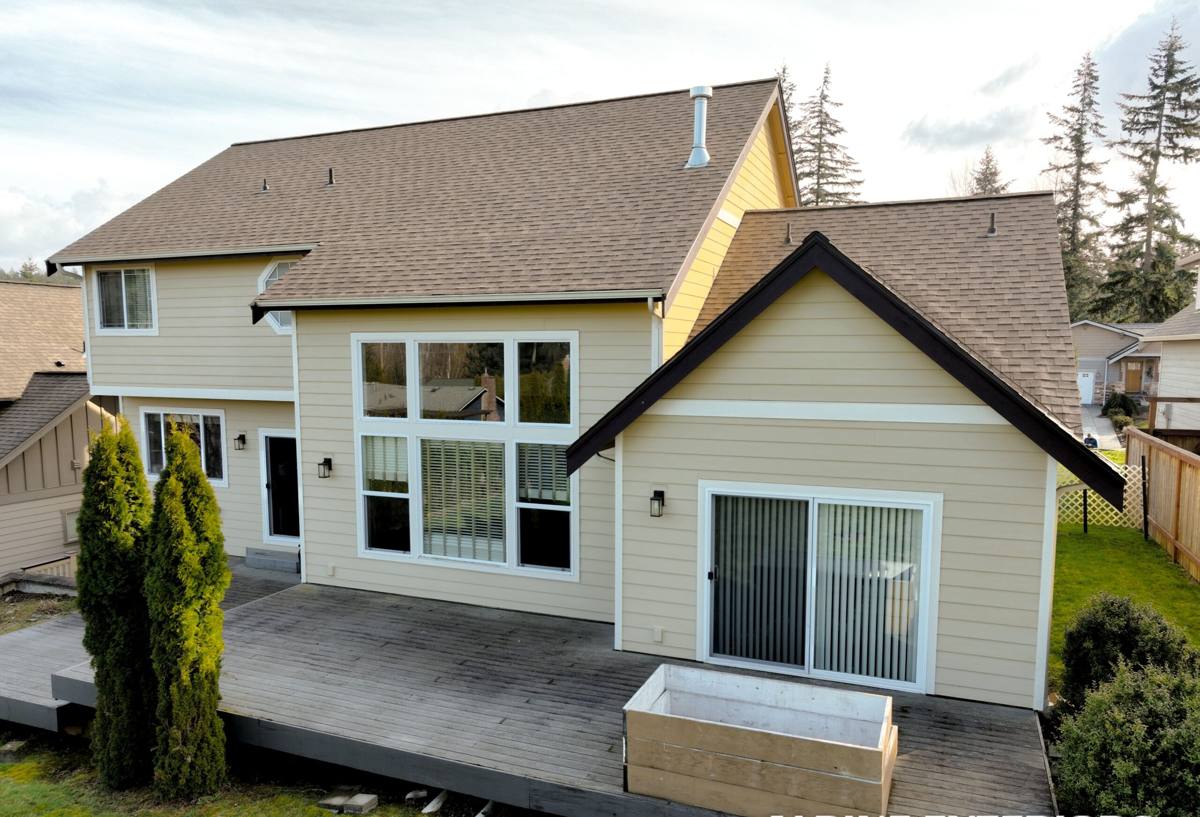
What Sumas Homes Actually Need From a Metal Roof
Moisture Management First
The biggest mistake we see on older or poorly-installed metal roofs in this area isn't the panel itself — it's what's underneath it. Metal sheds water fast, but if the underlayment and flashing aren't sealing correctly at valleys, penetrations, and eave edges, that water finds its way into the roof deck anyway. In a valley climate with long stretches of steady rain rather than short intense storms, a slow, hidden leak can go unnoticed for a season or more before it shows up as a stain on a ceiling.
Moss and Debris Control
Shaded lots and tree-lined properties around Sumas hold onto moisture longer than open, sun-exposed roofs. Moss doesn't just look bad on a roof — on shingles it lifts material and holds water against the surface. Metal roofing doesn't give moss the same foothold, but panels still need clean drip edges and gutters that aren't blocked by needles and debris, or water backs up under the metal at the eaves regardless of what the roof surface is made of.
Freeze-Thaw Durability
Sumas gets colder overnight lows than the coastal parts of the county, especially in winter cold snaps that settle into the valley. Fasteners, sealants, and flashing all expand and contract with those swings. A correctly installed metal roof uses fastening systems and sealants rated for that movement; a rushed install often doesn't, and that's where you see fastener backout and small leaks develop within a few years instead of a few decades.
What a Correct Metal Roof Installation Involves
There's no shortcut version of this that holds up long-term. A proper install includes:
- Tear-off and deck inspection — replacing any rotted or soft sheathing before anything goes back down
- A synthetic or self-adhered underlayment suited to metal, not a generic felt that wasn't designed for it
- Ice-and-water shield at eaves, valleys, and around every penetration
- Correct fastener type and spacing for the panel profile and local wind/snow load
- Properly formed and sealed flashing at all transitions — walls, chimneys, vents, skylights
- Balanced intake and exhaust ventilation so moisture doesn't get trapped against the deck
Skipping any one of these doesn't usually show up on day one. It shows up in year three or four, as a leak at a valley, rust starting at a fastener head, or moisture damage in the attic that nobody notices until it's expensive.
Panel Types We Install and How They Compare
Not every metal roof is the same product. The right choice depends on the home's roof pitch, budget, and how long the owner plans to stay in the house.
| Panel Type | Best For | Trade-offs |
|---|---|---|
| Standing seam | Homeowners who want the longest service life and cleanest look, hidden fasteners | Higher upfront cost; installation is more labor-intensive to get right |
| Exposed-fastener panels | Budget-conscious projects, outbuildings, simpler rooflines | Fasteners are visible and need re-torquing or replacement over the years as gaskets age |
| Stone-coated steel | Homeowners who want a shake or tile look with metal's durability | Costs more than exposed-fastener panels; heavier system, so deck condition matters more |
We'll walk through which profile fits your roof during the estimate rather than pushing one option — pitch, existing structure, and what you want it to look like all factor in.
Our Process for a Sumas Metal Roofing Project
1. On-Site Assessment
We look at the current roof, the deck underneath where accessible, attic ventilation, and drainage — gutters, downspouts, and how water currently moves off the roof. This tells us whether a full tear-off is needed or whether conditions allow other options.
2. Straight Answer on Tear-Off vs. Overlay
Metal can sometimes go over an existing roof if the deck and structure support it, but we won't recommend that if it means covering up damage or trapping moisture. If your existing roof has any sign of deck rot or trapped moisture, we'll tell you that up front rather than finding out halfway through the job.
3. Installation
Deck repair as needed, underlayment, flashing details, panel installation, and ventilation — done in that order, with each step inspected before the next one covers it up.
4. Cleanup and Walkthrough
Magnetic sweep for stray fasteners, site cleanup, and a walkthrough so you know what maintenance, if any, the new roof needs going forward.
What Affects the Cost
Metal roofing costs more upfront than asphalt shingles, but the range within "metal roofing" itself is wide. These are the main factors that move the number:
| Factor | Why It Matters |
|---|---|
| Panel type and gauge | Standing seam and heavier-gauge steel cost more than exposed-fastener, lighter-gauge panels |
| Roof pitch and complexity | Steep roofs, multiple valleys, and dormers all add labor and flashing work |
| Tear-off vs. overlay | Removing an old roof and repairing deck damage adds cost but avoids covering up problems |
| Ventilation upgrades | Adding or correcting intake/exhaust venting protects the investment long-term |
| Access and site conditions | Steep driveways, tree cover, or limited staging area can affect labor time |
We give straightforward, itemized estimates rather than a single number with no explanation, so you can see exactly what's driving the cost.
Maintenance: What a Metal Roof Actually Needs
One reason metal roofing works well for the moss and moisture common around Sumas is that it needs less ongoing attention than shingles — but "less" isn't "none." A reasonable annual routine:
- Clear gutters and downspouts before the fall rains set in
- Check for debris buildup in valleys, where moisture and organic material collect even on metal
- Look at sealant around penetrations (vents, chimneys) every couple of years — sealant ages faster than the panels themselves
- Watch for any fastener backout on exposed-fastener systems, especially after a hard winter
Why Hiring a Crew That Already Works in Sumas Matters
A lot of roofing problems in this part of Whatcom County trace back to details that only show up when you've worked the local conditions repeatedly — knowing which flashing details fail first in a valley climate, how much ventilation a given attic actually needs given the shade and moisture patterns typical here, and what fastening schedule holds up through repeated freeze-thaw winters rather than just looking fine on installation day. A crew that installs metal roofs across Ferndale and the surrounding Whatcom County communities, including Sumas, has already seen what goes wrong with rushed installs in this exact climate and builds around it rather than finding out the hard way on your roof.
Questions to Ask Before You Hire
- Do you tear off and inspect the deck, or install over the existing roof regardless of condition?
- What underlayment and fastening system do you use, and why that one for this roof?
- How do you handle ventilation — is it assessed, or is it an afterthought?
- What does your workmanship warranty actually cover, separate from the manufacturer's material warranty?
- Can you walk me through the flashing plan for my specific valleys and penetrations?
A contractor who can answer these clearly, without hedging, is telling you something about how they'll handle the parts of the job you won't see once the panels are down.
Get a Straight Answer on Your Roof
If you're weighing metal roofing for a home in Sumas, we're happy to take a look and give you an honest read on what your roof needs — no pressure, no inflated scope. Use the form below to request a free estimate.