 Ferndale Siding
 Window Installation Built for the Sumas Area's Weather
Homes in and around Sumas deal with a specific combination of conditions: salt-tinged marine air moving in off the water, long stretches of driving rain, and a moss season that seems to start earlier and last longer every year. Windows sit right at the front line of all of it. A window that's installed correctly will shrug off decades of this weather. One that's installed even slightly wrong — a missing drip cap, a gap in the flashing, caulk used where flashing tape belonged — will show it within a few wet seasons, usually as a soft spot in the sill or a stain creeping down the interior wall.
This page is about window installation specifically for Sumas-area properties, not a general overview of windows everywhere. The framing, the flashing sequence, and even the product choices we recommend here are shaped by what actually happens to a window over a Whatcom County winter.
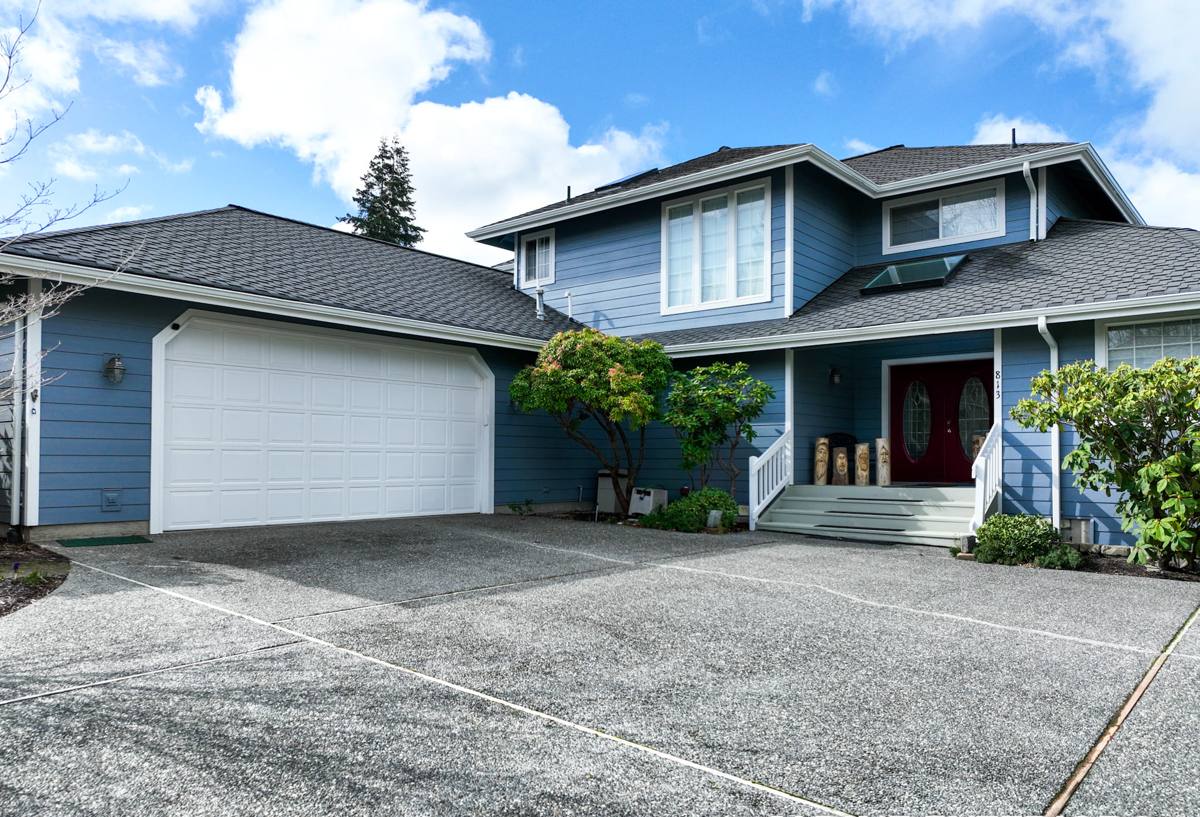
What This Climate Actually Does to a Window Over Time
Salt Air and Metal Fatigue
Salt-laden air corrodes exposed metal faster than most homeowners expect — hinges, screen frames, and especially cheaper aluminum cladding or fasteners. It doesn't happen overnight, but over ten or fifteen years it adds up, especially on the sides of a house that face prevailing wind and weather.
Driving Rain and Wind-Driven Water
Rain here doesn't just fall straight down — wind pushes it sideways into wall assemblies, which is exactly the condition window flashing is designed to handle. The problem is that a lot of older installations, and a fair number of rushed new ones, were flashed for a milder assumption: rain that mostly falls straight and drains straight. Wind-driven rain finds every shortcut in that kind of install.
Moss, Algae, and Trapped Moisture
A long moss season means more organic growth holding moisture against trim, sills, and siding for extended periods. Where that moisture sits against wood trim or an improperly sealed window frame, rot gets a head start. It's less about the moss itself and more about what it traps against the wall for months at a time.
Signs a Sumas-Area Home Needs Window Attention
Most homeowners don't think about their windows until something is visibly wrong, but the early signs are usually quiet. Here's what we look for, and what you can check yourself:
- Soft, spongy, or discolored wood at the sill or bottom corners of the frame
- Fogging or a hazy film between panes of double-glazed glass — a sign the seal has failed
- Noticeable draft or cold spot near the window even when it's closed and locked
- Paint that's bubbling, peeling, or repeatedly failing on the trim around the window
- Difficulty opening, closing, or locking the window smoothly
- Visible gaps between the frame and the siding or trim, or caulk that's cracked and pulling away
- Interior condensation on the glass or frame during cold, wet weeks
- Moss or dark staining building up directly on or below the sill
Any one of these on its own might just need a repair. Several together, especially on an older window, usually mean it's time to talk about replacement before the surrounding wall framing gets involved.
What a Correct Window Installation Actually Involves
Window installation looks simple from the outside — old window out, new window in — but the parts that determine whether it lasts are mostly hidden once the trim goes back on.
Flashing and Water Management
This is the part that matters most for this region's weather. Flashing has to be layered correctly — sill pan first, then side flashing, then head flashing — so water is always directed outward and downward, never trapped behind the window or funneled into the wall cavity. A sill pan under the window is non-negotiable on a home exposed to driving rain; it gives any water that does get past the window a way out instead of a place to pool.
Air Sealing and Insulation
The gap between the window frame and the rough opening needs to be sealed with the right materials — low-expansion foam or backer rod and sealant, not just packed with fiberglass insulation, which does nothing to stop air movement. A poorly sealed gap shows up as a draft in winter and a spike on the heating bill.
Level, Plumb, and Square
A window that's out of square will bind, won't lock properly, and puts uneven stress on the frame that shortens its life. Shimming correctly at the right points takes more time than eyeballing it, but it's the difference between a window that operates smoothly for twenty years and one that starts sticking within a couple of seasons.
Trim, Caulk, and Final Details
Exterior trim and caulking are the last line of defense, not the first — they should never be doing the job that flashing was supposed to do. We use exterior-grade sealant at the right joints and leave designed drainage paths (like weep holes) clear rather than caulking them shut, which is a common mistake that traps water instead of letting it drain.
Choosing Windows That Hold Up in This Climate
Material choice matters less than installation quality, but it's still worth getting right. Here's how the common options compare for a Whatcom County home dealing with salt air, rain, and moss:
| Material | Moisture Behavior | Maintenance | Typical Trade-Off |
|---|---|---|---|
| Vinyl | Doesn't rot or corrode; handles wet climates well | Low — occasional cleaning | Frame color/size options more limited than wood or fiberglass |
| Fiberglass | Very stable, minimal expansion/contraction, resists moisture well | Low | Higher upfront cost than vinyl |
| Wood (unclad) | Attractive but vulnerable to rot without diligent upkeep | High — needs regular painting/sealing | Best suited to sheltered exposures, not driving-rain walls |
| Wood with aluminum or vinyl cladding | Good if cladding and flashing are done right; clad seams can trap moisture if installed poorly | Moderate | Installation quality matters more than with solid vinyl or fiberglass |
| Aluminum-frame | Conducts cold and can corrode faster in salt air | Moderate | Generally not our first recommendation for this area |
For most Sumas-area homes, vinyl or fiberglass frames give the best balance of moisture resistance and low upkeep. Where a homeowner wants the look of wood, cladding can work, but only when it's paired with careful flashing — the cladding itself doesn't fix a bad water management plan underneath it.
Our Installation Process
- On-site assessment. We look at the existing window, the surrounding wall, siding condition, and any signs of past water intrusion before recommending anything.
- Measure and order. Accurate measurements matter more than people expect — an ill-fitting window creates gaps that are hard to seal correctly no matter how good the caulking crew is.
- Careful removal. We remove the old window and inspect the rough opening and sill for hidden rot or damage before anything new goes in. Any framing repairs happen here, not after.
- Sill pan and flashing. Sill pan, side flashing, and head flashing go in, in that order, sequenced so water always sheds outward.
- Set, shim, and seal. The window is set level, plumb, and square, shimmed at the manufacturer's recommended points, and the gap is sealed with low-expansion foam or backer rod.
- Exterior and interior trim. Trim goes back on with proper sealant at the joints, leaving any designed drainage paths open.
- Final check. We test operation, locking, and look for any daylight or air movement around the frame before calling the job done.
Cost Factors to Expect
Costs vary quite a bit based on size, window count, material, and whether there's hidden framing damage to address, so we won't quote a number that doesn't mean anything until we've seen the job. What generally moves the price:
| Factor | Effect on Cost |
|---|---|
| Window size and number of windows | Larger openings and more windows increase material and labor cost proportionally |
| Material (vinyl vs. fiberglass vs. clad wood) | Vinyl is typically the most affordable; fiberglass and clad wood cost more upfront |
| Hidden rot or framing damage | Discovered during removal, this adds repair time before the new window can go in |
| Access and height | Second-story or hard-to-reach windows take more time and equipment |
| Full-frame vs. insert replacement | Full-frame replacement (removing trim and flashing entirely) costs more than an insert but gives us a chance to fix water management issues an insert can't reach |
Broadly, homeowners in this area should expect anywhere from several hundred to a few thousand dollars per window depending on these factors — we'll give you an exact number after we've actually looked at the openings.
Why a Crew That Already Works the Sumas Area Matters
Window installation isn't a one-size-fits-all trade. A crew that's used to installing in a drier climate, or one that mostly does new-construction work where everything is built to spec, isn't necessarily thinking about wind-driven rain and long moss seasons by default. Working in and around Ferndale and the rest of Whatcom County means we're already flashing for that reality on every job, not treating it as a special case. We also know what older homes in this area tend to have going on behind the trim — the kind of framing quirks and past-repair shortcuts you only learn by opening up a lot of these walls over time.
That local familiarity shows up in small decisions: which side of the house gets extra attention on flashing, when a sill pan is worth the added step, and how to sequence a job around a wet forecast instead of fighting it.
Get a Straightforward Estimate
If your windows are showing any of the wear signs above, or you're planning ahead for a replacement, we're happy to take a look and give you an honest read on what's needed — no pressure, no upsell. Use the form below to request a free estimate for your Sumas-area home.