 Ferndale Siding
 Deck Repair for Sumas Homes Near Ferndale
Sumas sits out toward the Nooksack Valley and the Canadian border, close enough to Ferndale that we treat it as part of our regular service area rather than a special trip. The decks we get called out to here take a beating in ways that are easy to underestimate from the porch. Whatcom County weather doesn't just rain on a deck — it soaks it, dries it out in fits and starts, coats it in shade-grown moss for half the year, and repeats that cycle for a decade or two until something finally gives. When it does, the damage is rarely just cosmetic.
This page is specifically about repairing decks in and around Sumas — not a general "we do decks" pitch. If you're looking at soft boards, a wobbly rail, or a deck that just feels tired, the information below should help you figure out what's actually going on and what a proper fix looks like.
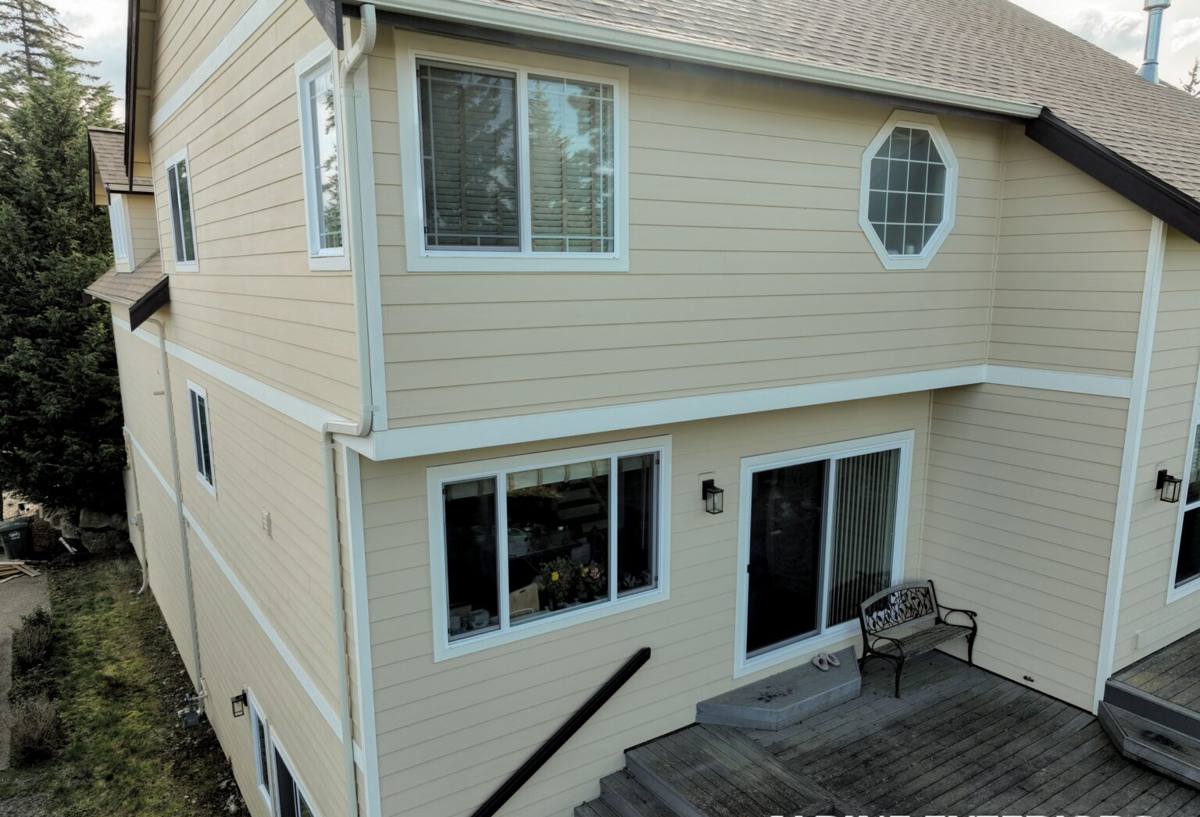
What Sumas's Climate Does to a Deck
Whatcom County gets a long, wet season, and Sumas's inland, valley-adjacent location means moisture tends to linger — morning fog off the river bottoms, shaded yards ringed by trees, and long stretches where a deck surface simply doesn't get enough sun to dry out between storms. Add in the driving rain that blows through on Pacific storm systems, and you get water finding its way into every joint, screw hole, and end-grain cut on a deck that isn't detailed correctly.
A few things we see consistently on Sumas-area decks:
- Moss and algae buildup on shaded boards and north-facing stairs, which holds moisture against the wood far longer than open sun exposure would.
- Ledger board and rim joist rot where the deck attaches to the house — often hidden until flashing is pulled back or a board is removed.
- Fastener failure from decades of wet-dry cycling, especially on older decks built with standard (non-coated) screws or nails that were never rated for ground contact or high-moisture framing.
- Soft or spongy decking on older wood decks, usually starting at butt joints, around post bases, or wherever water pools instead of shedding.
- Rail post rot at the base, which is a safety issue, not just an appearance one — a rail that looks fine can still be rotted through where the post meets the framing.
None of this is unique to Sumas, but the combination of driving rain, shade, and a long moss season is a regional reality across this part of Whatcom County, and it's why "just pressure wash it" is rarely a real fix once a deck is more than about ten years old.
Signs a Deck Needs Repair, Not Just Cleaning
A lot of homeowners call us thinking they need a full deck replacement when the actual problem is contained to a few areas. Others think a wash and re-stain will solve something that's structural. Here's how to tell the difference before you call anyone:
| What You're Seeing | Likely Cause | Usually Repair or Replace? |
|---|---|---|
| Gray, weathered boards that are still solid underfoot | UV and moisture exposure to the wood surface | Clean and refinish, not a repair |
| Green or black film on stair treads and shaded boards | Moss/algae from prolonged moisture and low sun exposure | Cleaning, plus a look at drainage and drying |
| Boards that flex, feel spongy, or sound hollow when tapped | Wood rot working through the board or joist below it | Repair — targeted board/joist replacement |
| Rail that moves or feels loose at the top | Post rot at the base or failed post-to-frame connection | Repair, treated as a safety priority |
| Deck separating slightly from the house, or a gap at the ledger | Ledger board rot or flashing failure | Repair — often the most important fix on the deck |
| Widespread rot across most framing members | Long-term water intrusion with no maintenance | Full or near-full rebuild |
The honest answer is that most decks we look at in the Sumas area fall in the middle of that table — solid structure with a handful of real problem areas — not the two extremes.
What a Correct Repair Actually Involves
It starts underneath, not on top
Anyone can screw a new board over a soft spot. The board on top isn't the problem — it's a symptom. A real repair means pulling decking in the affected area, checking the joists and ledger underneath, and confirming the framing is sound before anything new goes back down. If the framing is compromised, replacing the decking alone just buys a year or two before the same spot fails again.
Flashing and ledger connection
Where the deck ties into the house is the single most important detail on the whole structure, and it's the one homeowners can see the least of. Proper flashing directs water away from the ledger board and the house's wall assembly. When that flashing was installed poorly — or wasn't installed at all, which is common on older decks — water works its way in slowly, and by the time it shows up as a soft spot or a stain on the siding, there's already been years of hidden damage.
Fasteners and hardware matched to the exposure
We replace failed fasteners with hardware rated for the moisture and treated-wood contact involved — not whatever was on hand. Mixing incompatible metals or using interior-grade screws on an exterior deck is one of the most common shortcuts we see undone within a few years, and it's not a place to cut corners twice.
Post bases and structural connections
Post bases that sit in standing water or direct soil contact rot from the bottom up, often while the visible post above looks fine. A correct repair lifts the post, inspects the base and footing, and re-sets the connection with proper standoff hardware so the wood isn't sitting in moisture again next season.
Matching Materials to the Repair
Repairs on an existing deck usually mean matching what's already there, but it's worth knowing the trade-offs, especially if you're deciding whether to repair a section or start planning for an eventual full replacement.
| Material | Where It Fits in a Repair | Honest Trade-Off |
|---|---|---|
| Pressure-treated lumber | Framing, joists, ledger repairs, and matching existing wood decking | Affordable and strong, but needs regular sealing to handle this climate long-term |
| Cedar | Matching older, higher-end wood decks or rail systems | Attractive and naturally moisture-resistant, but softer and needs consistent maintenance to hold up to moss and rain |
| Composite decking | Full board replacement or resurfacing over sound framing | Low maintenance and consistent, but a higher upfront cost than wood-for-wood repair |
| Structural hardware (joist hangers, post bases, flashing) | Every repair, regardless of decking material | Not visible once finished, but it's the part that determines whether the repair actually lasts |
We'll always tell you plainly if a section is a good candidate for a wood-matched repair versus a spot where switching to composite for just that area makes more long-term sense. There's no single right answer — it depends on the deck's age, how much of it is actually failing, and what you're trying to get out of the next repair.
Our Process, Start to Finish
- On-site inspection. We walk the whole deck, not just the spot you called about — check boards, rails, stairs, ledger, and framing where accessible.
- Straight assessment. We tell you what's cosmetic, what's a real repair, and what (if anything) is a safety concern that shouldn't wait.
- Written estimate. Scope, materials, and price laid out clearly, with repair and (if relevant) replacement options broken out separately.
- The repair itself. Remove and replace only what needs it, correct any flashing or fastener issues found along the way, and confirm everything underneath is dry and sound before closing it back up.
- Final walkthrough. We show you what was done and what to expect from it, including any maintenance that will help it last.
Protecting the Deck After the Repair
A repair is only as good as the maintenance that follows it, especially in a climate that gives moss and moisture every advantage. A short seasonal routine goes a long way:
- Sweep leaves and debris off the deck regularly in fall — trapped organic matter is what feeds moss and holds moisture against the wood.
- Clean shaded boards and stairs before moss gets established, rather than after it's already gripped the wood grain.
- Check the ledger area and any spots where the deck meets the house once a year for gaps, staining, or soft spots.
- Reseal or re-stain wood decking on the schedule the product actually calls for, not just when it looks faded — moss and rot damage often start before the surface looks bad.
- Keep gutters and downspouts near the deck clear so runoff isn't dumping extra water directly onto it.
- Have loose rails or soft spots looked at as soon as you notice them — small repairs stay small if they're caught early.
Why Hire a Crew That Already Works in Sumas
A deck repair done by someone unfamiliar with this specific stretch of Whatcom County often misses the details that matter most here — how much shade a given yard actually gets, how long moss has to establish before it's a real problem, and how driving rain finds its way behind ledger boards that were flashed for a drier climate's expectations. We work Ferndale and the surrounding communities regularly, Sumas included, and that means we're not guessing at how this area's weather treats a deck over time — we're seeing the same patterns repeat and building repairs that actually account for them.
It also means straightforward logistics — we're not routing a special trip out to your area, and we're not learning the region's moisture patterns on your project.
Get an Honest Look at Your Deck
If your Sumas-area deck has a soft spot, a loose rail, or just feels like it's due for a real inspection, we're happy to take a look and give you a straight answer — repair, partial rebuild, or otherwise. There's no pressure and no cost to get an estimate; fill out the form below and we'll set up a time to come take a look.