 Ferndale Siding
 Roof Repair Built for Sumas Weather, Not Just Sumas Roofs
Sumas sits out toward the edge of Whatcom County, but the weather doesn't treat it any gentler than the rest of the region. Homes here take on the same driving rain off the Pacific storm systems that soaks Ferndale and Bellingham, the same long stretch of wet months that keeps moss and algae growing on anything with a north-facing slope, and the same moisture-heavy air that works its way into fasteners, flashing, and underlayment over time. A roof repair done for this climate has to account for all of it, not just patch the one spot that's currently dripping.
That's the difference between a repair that lasts a few seasons and one that holds up for years. We've done enough roof work around Whatcom County to know which failure points show up again and again in this weather, and we build every repair to address the cause, not just the symptom.
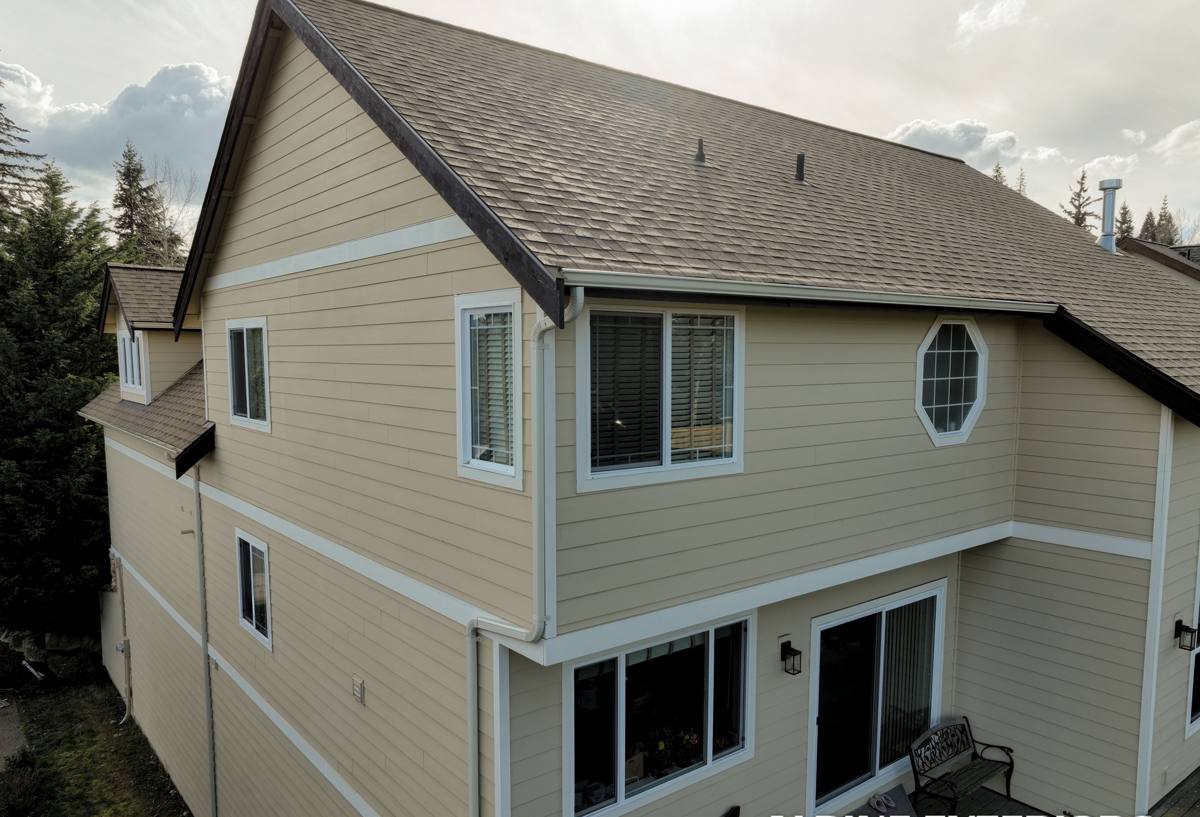
Signs a Sumas Roof Needs Repair — Not a Full Replacement
Most roofs don't fail all at once. They fail in sections, usually starting at a valley, a chimney, a vent boot, or wherever two roof planes meet. Catching those problems early is what keeps a repair job a repair job instead of turning into a replacement.
- Water stains on interior ceilings or in the attic, especially near chimneys, skylights, or where the roof meets a wall
- Shingles that are curling, cracking, or missing after a windstorm
- Granules collecting in gutters or downspouts — a sign the shingle surface is wearing thin
- Moss buildup thick enough to lift shingle edges or hold standing moisture against the roof deck
- Flashing around chimneys, vents, or skylights that's rusted, lifted, or separated from the surface
- Sagging spots on the roofline, which can point to deck damage underneath
- Daylight visible through the roof deck from inside the attic
If you're seeing one or two of these, it's usually a repair. If you're seeing several at once, especially combined with a roof that's already past 20 years old, it's worth an honest conversation about whether repair still makes sense.
What a Correct Roof Repair Actually Involves
Finding the Real Source of the Leak
Water rarely drips straight down from where it enters. It travels along the underlayment or roof deck before showing up as a stain somewhere else in the house. A repair that just patches the ceiling spot, or the shingle directly above it, often misses the actual entry point — which means the leak comes back. Every repair we do starts with tracing the water path from the interior damage back to the source on the roof.
Matching Materials, Not Just Covering the Gap
A patch that doesn't match the surrounding shingle in type, weight, and exposure will weather differently and stand out — and in some cases, create a new weak point where old and new materials meet. We match shingle profile and color as closely as the existing roof allows, and where an exact match isn't available due to product age, we place new material where it blends best.
Flashing and Underlayment Get the Same Attention as Shingles
Most leaks that keep coming back trace to flashing, not shingles — the metal or rubber transitions around chimneys, skylights, vent pipes, and roof-to-wall joints. If we're opening up a section for repair, we check the flashing and underlayment underneath it, not just the shingles on top. Replacing shingles over failed flashing is a common shortcut that leads to a callback within a year or two.
Moss and the Long Wet Season: Whatcom County's Real Maintenance Problem
The moss season in this part of Washington runs long — often eight months or more of conditions damp enough to keep it growing. Left alone, moss does more than look bad. It holds moisture against the shingle surface, works its way under shingle edges as it grows, and can lift tabs enough to let wind-driven rain in underneath. Once moss has been established for a season or two, the shingles beneath it are often already degraded, even if the roof looks intact from the ground.
Removing moss the right way matters as much as removing it at all. Scraping or pressure-washing it off can strip granules and shorten the life of the shingles further. We remove moss by hand where it's established, treat the roof to slow regrowth, and — where a roof has zinc or copper strips already in place — check that they're still doing their job. If they're not present and the roof's slope and layout make sense for them, we'll talk through whether adding them is worth it for the long-term maintenance load.
A Quick Note on Salt-Tinged Air
Even away from open water, the moist air that moves through Whatcom County carries enough salt content to accelerate corrosion on exposed metal — nail heads, flashing edges, gutter fasteners. It's a slower process than moss damage, but it's part of why we use corrosion-resistant fasteners and flashing on repair work rather than whatever happens to be on the shelf.
Repair vs. Replacement: How We Help You Decide
Not every damaged roof needs to come off. But a repair on a roof that's already at the end of its service life is money that doesn't carry forward. Here's roughly how we walk homeowners through that decision:
| Factor | Leans Toward Repair | Leans Toward Replacement |
|---|---|---|
| Roof age | Under 15–18 years | Approaching or past manufacturer lifespan |
| Damage extent | Isolated to one section or feature | Spread across multiple slopes |
| Deck condition | Solid, no soft spots | Soft, rotted, or repeatedly patched decking |
| Leak history | First occurrence or single recurring spot | Multiple leak locations over recent years |
| Shingle wear | Localized curling or granule loss | Widespread brittleness across the roof |
We'll always give a straight answer on which side of that line your roof falls on. If a repair is the honest recommendation, that's what we'll quote — we don't push replacements on roofs that don't need them.
Our Roof Repair Process
1. Inspection
We get on the roof — not just look at it from the ground — and check the specific area of concern plus the rest of the roof for related issues, since one leak often points to a broader maintenance gap.
2. Written Estimate
You get a clear, itemized estimate before any work starts: what's being repaired, what materials we're using, and what it costs. No surprise add-ons once we're up there.
3. The Repair Itself
We work the section methodically — pull back what needs to come up, address the deck and flashing underneath, install matched materials, and seal every transition point properly. Debris and old materials are cleared as we go.
4. Cleanup and Walkthrough
Before we leave, we walk the repair with you, clear the yard and gutters of debris from the work, and make sure you know what to watch for going forward.
Why Hiring a Crew That Already Works in Sumas Matters
Roofing crews that mainly work in drier climates or unfamiliar regions sometimes miss the details that matter here — how far to run ice-and-water shield under a valley given our rain patterns, how aggressive moss growth gets on a north-facing slope shaded by trees, or which flashing details tend to fail first on this style of roof after a decade of Whatcom County winters. A crew that's already doing this work around Sumas and greater Ferndale isn't guessing at any of that.
There's also a practical side: local response time. A leak that shows up during a storm doesn't wait for a crew to drive in from out of the area. Working this region regularly means we can get eyes on a problem faster, and we're not learning the local permitting or inspection process for the first time on your project.
Common Roofing Materials on Sumas Homes — Repair Considerations
Asphalt Composition Shingles
The most common roofing material in the area, and generally the most straightforward to repair section-by-section, provided replacement shingles reasonably match the existing color and profile. Older roofs with discontinued shingle lines sometimes require a slightly larger repair area to keep the blend consistent.
Metal Roofing
Repairs on metal roofing are less about replacing panels and more about resealing seams, fasteners, and penetrations — the points where most metal roof leaks originate. We match fastener type and sealant to the existing system rather than mixing hardware.
Cedar Shake
Cedar offers a distinct look but carries a higher maintenance burden in a climate this wet — it's more moisture-sensitive and more prone to moss and rot than composition shingle if it isn't kept up with regularly. Where we're repairing cedar, we're honest about that maintenance load so you can weigh it against other options down the line; it's a matter of trade-offs, not a knock on the material itself.
Get a Straight Answer on Your Sumas Roof
If you're dealing with a leak, storm damage, or a roof that's showing its age, we're happy to take a look and give you a clear, no-pressure estimate — repair or otherwise. Fill out the form below and we'll get back to you to schedule a time.