 Ferndale Siding
 Deck Replacement Built for Sumas' Wet, Mossy Climate
Decks in Sumas take a beating that decks in drier parts of the country never have to deal with. Whatcom County's long, wet stretches of fall and winter weather keep wood surfaces damp for weeks at a time, and the moisture-laden marine air that moves through the region doesn't do bare or aging wood any favors either. Add in a moss season that can run from October through April, and you've got a structure that's fighting rot, slip hazards, and slow structural decay almost year-round.
A lot of decks in this area don't fail because the homeowner neglected them. They fail because they were built for a milder climate than the one Sumas actually has, or because a repair patched the visible problem while the real damage kept spreading underneath. Deck replacement done right accounts for how this specific climate attacks a structure — not just what the deck looks like from the yard.
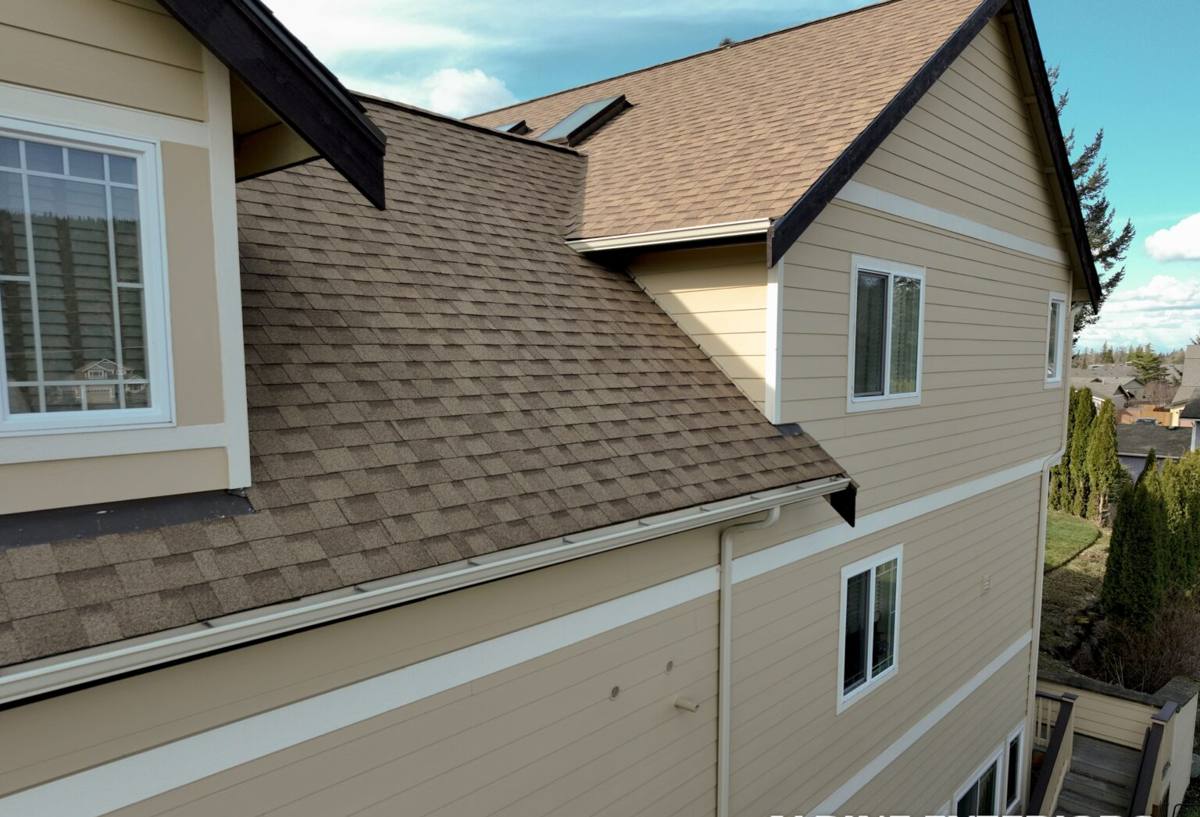
Signs Your Sumas Deck Needs Replacing, Not Just Repair
Repair makes sense when the damage is isolated. Replacement makes sense when the problems are systemic — when the framing, ledger connection, or footings have absorbed years of driving rain and freeze-thaw cycling. Here's what tells us which situation we're looking at:
- Soft, spongy, or spring-back decking boards, especially near the house or in shaded corners where moss and moisture linger longest
- Visible gaps, rust streaks, or soft wood around the ledger board where the deck attaches to the house
- Wobble or movement in the railing posts when you push on them
- Support posts or footings that sit in standing water after a rain, or show cracking at the base
- Persistent moss or algae growth that comes back within weeks of cleaning, no matter how often it's power-washed
- A deck more than 15-20 years old built with untreated fasteners or without proper flashing at the house connection
- Visible daylight or gaps between boards that have widened noticeably over the past few years
If you're only seeing one or two of these, a repair or partial rebuild might still be reasonable. If you're seeing several at once, especially anything involving the ledger board or footings, that's usually a sign the deck's structural life is closer to the end than the beginning.
What a Proper Deck Replacement Actually Involves
It Starts Below the Boards
The decking surface is the part everyone sees, but it's the least important part of whether a deck lasts. What actually determines the lifespan of a Sumas deck is the framing underneath it: the ledger board connection to the house, the joists, the posts, and the footings. A replacement that just swaps out old boards for new ones on the same tired frame is a repair wearing a replacement's price tag.
Flashing Is Non-Negotiable in This Climate
The single most common failure point we see on older decks in this area is a ledger board that was never properly flashed where it meets the house. Without flashing that directs water away from that seam, rain works its way behind the deck and into the house framing over years — often invisibly, until the wood is already soft. In a climate with as much driving rain as Whatcom County gets, proper ledger flashing isn't an upgrade. It's the baseline for a deck that's actually going to hold up.
Footings and Post Bases
Footings need to sit below the frost line and be sized correctly for the deck's load. Post bases should hold the post up off the concrete, not bury it in standing water every time it rains. This sounds basic, but it's one of the most common shortcuts on older or DIY-built decks, and it's a major reason posts rot from the bottom up.
Choosing the Right Decking Material for Whatcom County Weather
There's no single "best" decking material — there's a best material for how you want to live on the deck and how much upkeep you're willing to do. Given the amount of rain and the length of the moss season here, moisture behavior matters more in Sumas than it does in drier climates.
| Material | Moisture Behavior | Maintenance | Typical Lifespan |
|---|---|---|---|
| Pressure-treated wood | Absorbs and releases moisture; prone to cupping and checking if not sealed regularly | Annual cleaning and re-sealing to resist moss and rot | 10-15 years with upkeep |
| Cedar | Naturally rot-resistant but still absorbs moisture over time | Periodic cleaning and staining to maintain resistance | 15-20 years with upkeep |
| Composite decking | Doesn't absorb water like wood, but can trap surface moisture that feeds moss and algae if not cleaned | Occasional washing, no staining or sealing | 25-30 years |
| PVC/capped polymer | Fully moisture-resistant surface; least hospitable to moss and mildew growth | Low; occasional rinse | 25-30+ years |
We won't tell a homeowner a material is bad — every one of these has a legitimate place. What we will tell you honestly is what it takes to keep each one looking good through a Sumas winter, and where the trade-offs actually show up: wood costs less upfront but asks more of you every year, while composite and PVC cost more upfront and ask almost nothing of you after installation.
Our Deck Replacement Process, Start to Finish
- On-site assessment. We look at the existing deck's framing, footings, and ledger connection, not just the surface, to determine what's actually failing and why.
- Honest scope and estimate. You get a clear picture of what needs full replacement versus what's still sound, along with material options that fit your budget and how you use the space.
- Demo and disposal. The old deck comes down and off the property — we don't leave debris piled in the yard.
- Framing and flashing rebuild. New ledger flashing, properly sized joists, and footings set to code, built for this climate rather than the cheapest version that will pass.
- Decking and railing installation. Installed to manufacturer spacing and fastening specs, which matters more than people expect for how the deck handles seasonal moisture and expansion.
- Final walkthrough. We go over the finished deck with you, including what maintenance it needs and on what schedule, before we consider the job done.
Permits and Building Requirements
Deck replacement in Whatcom County generally requires a permit once you're dealing with structural work — new footings, framing changes, or anything attached to the house. Requirements can vary depending on the deck's height, size, and whether it's attached or freestanding, so this isn't something to assume your way through. Part of hiring a crew that's done this work in the area is that permitting and inspection isn't a surprise partway through the project — it's built into the plan from the estimate forward.
Cost Factors in a Sumas Deck Replacement
Every deck is different, so we won't quote a number without seeing the site, but the factors that move the price are consistent from project to project:
| Factor | Why It Affects Cost |
|---|---|
| Deck size and shape | More square footage and complex angles or multiple levels mean more material and labor |
| Decking material chosen | Pressure-treated wood costs less upfront than composite or PVC, but the gap narrows over time with maintenance |
| Framing and footing condition | If footings or posts need to be replaced or resized, not just the surface, that adds structural work |
| Height and access | Elevated decks or decks with limited yard access take more labor and equipment |
| Railing style | Cable, glass, and composite railing systems cost more than standard wood or metal balusters |
| Permit and inspection requirements | Structural changes typically require permitting, which adds time and a modest fee to the project |
We'll walk through these factors with you during the estimate so you know exactly what's driving the number, rather than getting a lump sum with no explanation behind it.
Why Hire a Crew That Already Works in Sumas
A deck built by someone unfamiliar with this climate often looks fine for the first year or two, then starts showing the same problems we see on older decks all over the area: soft ledger connections, moss that won't stay gone, footings that were never really adequate for how wet this ground gets. A crew that already works in Sumas and across Whatcom County has already seen which shortcuts don't survive the local weather — because we've been called out to fix the results.
That local experience shows up in small decisions that matter: how much flashing overlap is enough for this amount of driving rain, which fastener coatings actually hold up instead of streaking with rust after two winters, and how to grade the ground under a deck so water doesn't pool against the posts. None of that is exotic knowledge, but it's the difference between a deck that needs replacing again in ten years and one that doesn't.
Maintaining Your New Deck Through the Whatcom County Seasons
Even a well-built deck needs some seasonal attention here, and what it needs depends on the material:
- Clear leaves, needles, and debris from between boards regularly — trapped organic matter is what feeds moss growth
- Keep gutters and downspouts near the deck clear so runoff isn't draining directly onto or under it
- Wash the surface at least once or twice a year to knock back moss and algae before it takes hold
- For wood decks, plan on re-sealing or staining on the schedule your material calls for — skipping a year in this climate shows up fast
- Check railings and stair connections annually for movement, since freeze-thaw cycling can loosen hardware over time
We go over a maintenance schedule specific to your material and site with every replacement, so you're not guessing at what your new deck actually needs.
If your deck is showing its age, or you're just not sure whether it needs a repair or a full replacement, we're happy to take a look and give you a straight answer. Use the form below to request a free, no-pressure estimate.