 Ferndale Siding
 Building Decks for Sumas Homes Near Ferndale
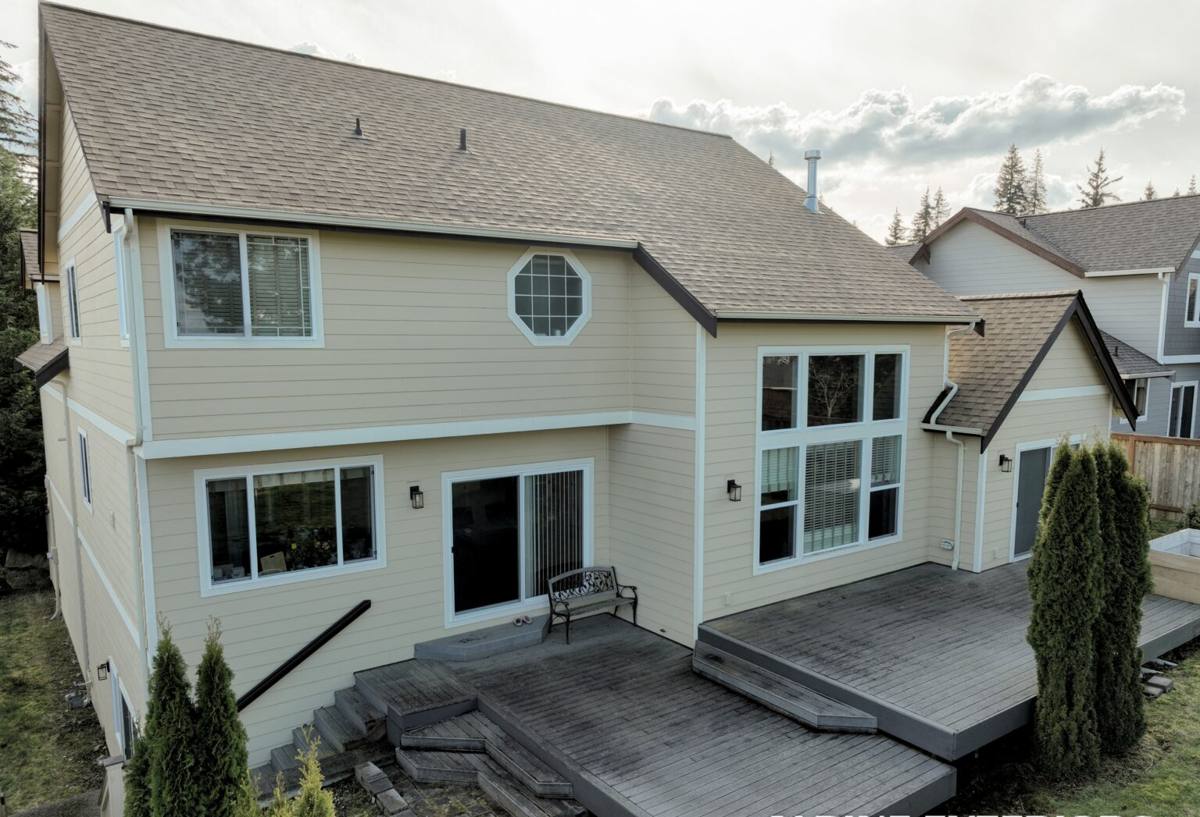
Sumas sits in one of the wetter corners of Whatcom County, tucked up near the Canadian border where marine air off the Sound mixes with cooler inland weather. Homes here deal with a longer stretch of damp, gray months than most of Washington, and a deck built without that in mind will show it within a few seasons — soft spots at the ledger, green film on the boards, hardware bleeding rust down the face of a rail. We build custom decks for this specific stretch of Whatcom County, and the difference between a deck that lasts fifteen-plus years and one that needs major repair by year six almost always comes down to decisions made before the first board is ever cut.
This page is about one thing: custom deck construction for Sumas-area properties near Ferndale, and what actually holds up against salt-tinged rain, driving wind-blown moisture, and a moss season that can run from October well into April.
What This Climate Actually Does to a Deck Over Time
Coastal Whatcom County weather isn't just "rainy" — it's a specific combination of factors that stresses a deck in more than one way at once.
Driving rain and wind-blown moisture
Storms coming off the water don't just fall straight down; wind pushes rain sideways under railings, into fastener heads, and along the underside of ledger boards where they meet the house. Any gap or unsealed joint becomes an entry point for water that never fully dries out between storms.
Salt air and corrosion
Proximity to the Sound means airborne salt travels further inland than people expect, especially on windier days. Salt accelerates corrosion in cheap or coated fasteners, bolts, and hidden fastener clips. Once a screw head starts rusting, it weakens, stains the surrounding wood or composite, and eventually fails structurally — not just cosmetically.
The long moss and algae season
Shaded decks, north-facing decks, and anything under mature trees pick up moss and algae growth for a good chunk of the year. Moss holds moisture against the deck surface far longer than open air would, which is exactly the condition that rots wood and stains composite decking.
Freeze-thaw at the footings
Whatcom County doesn't get deep, sustained freezes most winters, but it does get enough freeze-thaw cycling that shallow or undersized footings can shift slightly over several years. That movement shows up later as a deck that feels slightly springy or a rail post that's no longer plumb.
Choosing the Right Decking Material for Sumas Conditions
There's no single "best" decking material — there's a best fit for how a homeowner wants to use the deck and how much maintenance they're honestly willing to do. Here's how the common options compare for this specific climate.
| Material | How It Handles This Climate | Maintenance Reality |
|---|---|---|
| Pressure-treated lumber | Affordable, structurally solid when detailed correctly, but absorbs moisture readily and is the most prone to moss growth in shaded spots | Needs re-staining/sealing every 2-3 years to perform well long-term |
| Cedar | Naturally more rot-resistant and handsome, but softer — more sensitive to standing moisture and moss than composite | Regular sealing and periodic cleaning; ages gracefully if maintained |
| Composite decking | Doesn't absorb water like wood, resists rot, but can still grow surface algae/moss in shaded, damp spots if not cleaned | Occasional washing; no staining or sealing required |
| PVC/capped composite | Best moisture resistance of the group, holds up well to salt air and driving rain | Lowest maintenance, but higher upfront material cost |
For a lot of Sumas homeowners, composite or capped composite earns its higher price tag simply by removing the moss-and-mildew maintenance cycle that wood requires in this climate. That said, we still build plenty of quality cedar and treated-lumber decks — it comes down to budget, style preference, and how the deck sits relative to sun and shade.
Fasteners and Hardware Matter as Much as the Decking
We use stainless steel or high-grade coated fasteners and structural hardware rated for coastal/marine exposure on every deck we build in this area. It costs more than standard galvanized hardware, but standard hardware is exactly what shows up rust-streaked and weakened five years into a Sumas winter.
The Structural Work Nobody Sees — Until It Fails
A deck's surface material gets all the attention, but the framing underneath decides whether the deck is actually safe and long-lived. This is where corners get cut on lower-quality builds.
- Footings sized for real frost depth — not guessed at, so posts don't shift over freeze-thaw cycles
- Proper ledger board flashing where the deck attaches to the house, so wind-driven rain can't work its way behind the siding
- Joist tape on top of every joist to keep standing water from soaking into end grain and starting rot from the inside out
- Correct joist spacing for the decking material chosen — composite and PVC often need tighter spacing than lumber
- Positive drainage slope built into the frame so water sheds away from the house instead of pooling
None of this is visible once the deck is finished, which is exactly why it's worth asking a contractor to walk you through it before work starts, not after.
Drainage, Airflow, and Moss Prevention by Design
Given how long the wet season runs here, we treat drainage and airflow as part of the design, not an afterthought.
Under-deck airflow
Low decks with little clearance to the ground trap humidity underneath, which feeds moss and mildew growth on the underside of boards. Where grading allows, we build in enough clearance and, where needed, skirting with ventilation gaps rather than solid, sealed-off skirting.
Gaps and spacing
Board spacing is set to let water drain through rather than sheet across the surface, which matters more in a climate that gets this much rain relative to sun-drying time.
Shade and orientation
We'll flag it honestly if a deck's location is going to sit in near-constant shade — it's not a reason to skip the project, but it does change which material and cleaning schedule make sense.
Our Process, Start to Finish
- On-site visit — we look at grade, sun exposure, existing structure (if replacing a deck), and how the space will actually be used
- Design and material selection — sized and detailed for the site, with material options laid out honestly by cost and maintenance
- Permitting — we handle the paperwork for the applicable jurisdiction so the deck is built to code, not just to look right
- Footings and framing — the structural work described above, inspected before it's covered up
- Decking, railings, and finish work — installed to manufacturer spec, which matters for warranty coverage on composite and PVC products
- Final walkthrough — so you know how to maintain the specific materials on your deck
Maintenance a Sumas Homeowner Should Actually Plan For
Even the best-built deck needs some upkeep in this climate. What that upkeep looks like depends heavily on the material chosen, but a few things apply across the board.
- Clear leaves and debris from between boards before they trap moisture through the fall and winter
- Rinse or gently wash shaded areas at least once a season to knock back early moss and algae growth
- Check railing posts and stair stringers annually for looseness — an early sign of fastener corrosion or footing movement
- Re-seal or re-stain wood decking on a schedule, not just when it visibly needs it
- Keep gutters and downspouts near the deck clear so runoff isn't dumping extra water directly onto or under it
Why a Crew That Already Works in Sumas Makes a Difference
A lot of deck problems in this area trace back to a build that was designed for a drier climate and just happened to get installed here. Flashing details, fastener grade, and drainage planning that work fine in a dry inland region don't hold up the same way against Ferndale and Whatcom County's rain and salt air. Working with a crew that builds decks specifically in this region — and has seen how local decks age over five, ten, and fifteen years — means those lessons are already built into the framing before you ever notice a problem.
If you're planning a new deck or replacing a tired one in the Sumas area, we're happy to come take a look and walk through options with you. There's no pressure and no cost to get an estimate — just a straight conversation about what your property needs and what it would take to build it right.