 Ferndale Siding
 Building Decks for the Sumas Area's Wet, Mossy Climate
Homes in and around Sumas deal with a version of the same weather that shapes construction decisions across Whatcom County: long stretches of wind-driven rain, heavy winter humidity, and a moss season that can run from October well into spring. A deck out here isn't just an outdoor living space — it's a structure that sits exposed to moisture nearly every day of the year, and it either sheds that moisture correctly or it starts failing from the framing up. We've built and repaired enough decks in this part of the county to know exactly where that failure usually starts, and we design around it from the first footing.
This page is about one thing: what it actually takes to build a deck that holds up in this specific climate, in this specific area, and why the details matter more here than they would in a drier region.
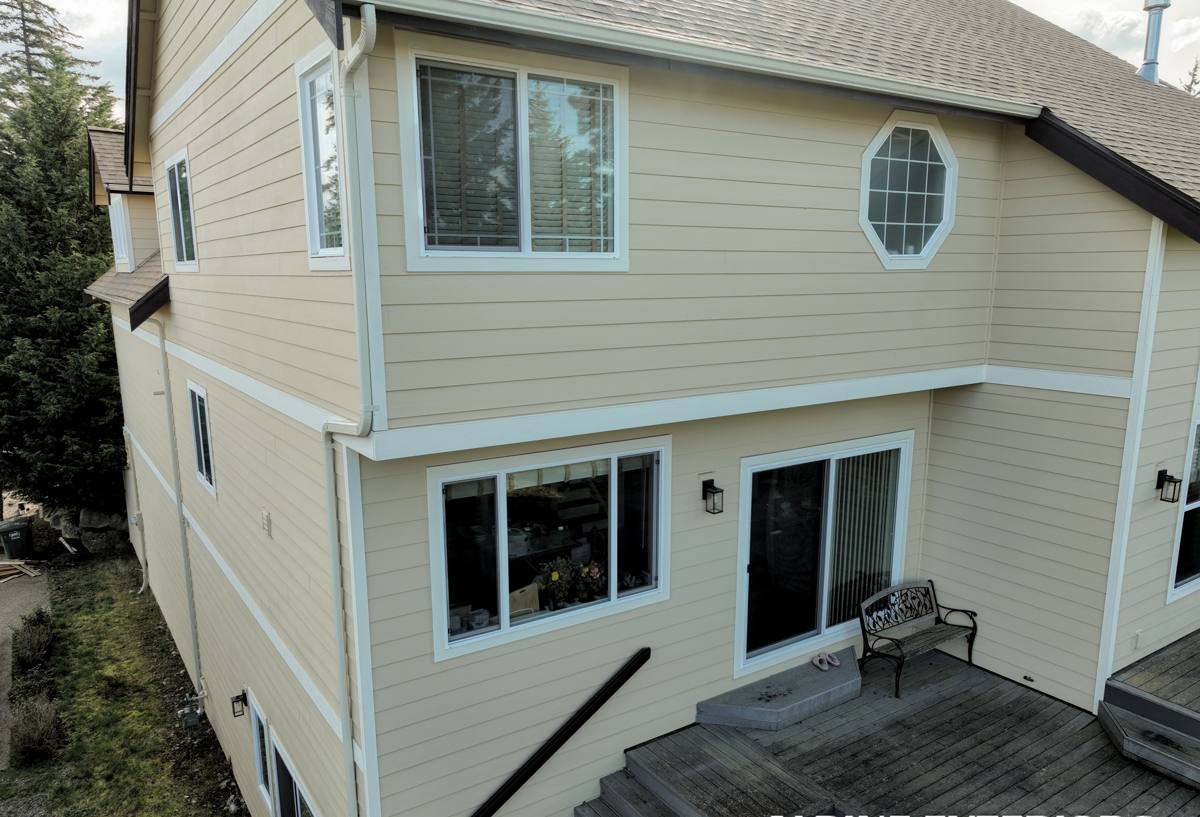
What the Regional Climate Actually Does to a Deck
Driving rain doesn't just fall straight down — in this part of Washington it comes in sideways often enough that it gets up under railings, into ledger board connections, and behind fascia trim that wasn't flashed correctly. Combine that with cooler, damp air that lingers under a deck's surface, and you get the conditions moss and mildew need to take hold. Left alone, moss doesn't just look bad — it holds moisture against the decking surface and framing, which accelerates rot in untreated or poorly finished wood and can make composite surfaces slick and stained.
The practical result: any deck built here needs to be designed for drainage and airflow from day one, not patched for it later. That means proper board spacing, ledger flashing that actually sheds water away from the house, joist protection where end grain is exposed, and fasteners that won't corrode and streak the surface within a few wet seasons.
Why This Matters More for Sumas-Area Properties
Properties in this part of Whatcom County often sit on lots with more open exposure to wind and weather than tighter, more sheltered residential blocks closer to town. That means more direct rain exposure on elevated decks, more moss pressure on north- and east-facing surfaces that don't get much sun to dry out, and more strain on railings and fasteners that are constantly cycling between wet and dry. A deck design that works fine in a sheltered spot can underperform quickly on a more exposed site if it wasn't built with that exposure in mind.
What a Correct Deck Build Involves
A deck is only as good as what's underneath it. Most of the problems we get called out to fix — soft spots, wobble, rot at the ledger, sagging stairs — trace back to shortcuts taken in the parts homeowners never see once the decking boards go down.
- Footings set below frost depth and sized correctly for the load, not just poured to "what's always been done."
- Proper ledger board attachment and flashing where the deck meets the house — this is the single most common source of hidden water damage on attached decks.
- Joist spacing matched to the decking material — composite and wood have different span requirements, and using wood-spec spacing under composite decking leads to bounce and premature sagging.
- Corrosion-resistant fasteners and hardware throughout — coated or stainless screws and structural connectors, not standard hardware that will streak and weaken over a few wet winters.
- Airflow and drainage underneath so moisture doesn't sit trapped against framing, which is one of the biggest moss and rot accelerants in this climate.
- Guardrails and stair framing built to code height and spacing, not just "close enough."
Decking Material Choices for This Climate
There's no single right answer for every homeowner — budget, maintenance appetite, and how the deck will be used all matter. What we won't do is recommend a product or install method just because it's cheaper up front if it means setting a homeowner up for maintenance headaches or moisture problems within a few years. Here's how the common options actually compare in a climate like this one:
| Material | How It Handles Local Moisture/Moss | Maintenance Load | Typical Lifespan Here |
|---|---|---|---|
| Pressure-treated wood | Needs sealing/staining on a regular cycle or it grays, checks, and grows moss faster | Higher — annual inspection, periodic re-sealing | 10-15 years with upkeep |
| Cedar | Naturally more rot-resistant but still needs finish maintenance to fight moss and graying | Moderate to high | 15-20 years with upkeep |
| Composite decking | Resists rot well; can still get slick with moss/algae film if not cleaned periodically | Lower — occasional washing, no staining | 20-25+ years, varies by brand/warranty |
| PVC/capped composite | Best moisture resistance of the group; least susceptible to moss taking hold in the material itself | Lowest | 25+ years, varies by brand/warranty |
Whatever material a homeowner chooses, the framing underneath needs to be built to that material's spec — this is where we see the most corner-cutting from less careful builds, and it's the part that causes problems years down the road rather than immediately.
Moss and Moisture Management Isn't Optional Here
Even a well-built deck needs some ongoing attention in this climate, and we tell homeowners this upfront rather than let them find out the hard way. Moss doesn't mean the deck was built wrong — it means the deck exists in a wet climate and needs periodic maintenance like anything else exposed to Whatcom County weather.
A Practical Seasonal Checklist
- Sweep debris off the deck surface regularly, especially in fall when leaves and needles trap moisture against boards.
- Check gaps between boards periodically — if they're packed with debris, moisture sits instead of draining.
- Look underneath the deck once or twice a year for standing moisture, moss growth on framing, or soft spots in support posts.
- Wash moss and algae off the surface before it builds up a slick film, using a deck-safe cleaner rather than aggressive pressure washing that can damage the surface.
- Inspect ledger flashing and railing post connections for any sign of water staining or movement.
- Re-seal or re-stain wood decking on the schedule appropriate to the product — don't wait until it's visibly failing.
Permits, Setbacks, and Code Requirements
Deck construction in Whatcom County typically requires a permit once a deck exceeds a certain height or size, and inspections check things like footing depth, guardrail height, stair rise/run consistency, and ledger attachment. Skipping the permit process might save time upfront, but it creates real problems at resale and can mean redoing work if it doesn't meet code. A crew that regularly pulls permits in this county knows the inspection points that get flagged most often and builds to pass the first time, not the third.
Our Process for a Sumas-Area Deck Project
- On-site assessment — we look at grade, drainage, sun/shade exposure, and how the deck will connect to the existing structure.
- Material and layout discussion — honest trade-offs on wood versus composite versus capped composite based on budget and maintenance preference, not upsell.
- Permitting — we handle the paperwork and coordinate inspections so the homeowner doesn't have to chase it down.
- Footings and framing — built to span and load requirements for the chosen decking material, with corrosion-resistant hardware throughout.
- Flashing and drainage detailing — the step most commonly shortcut elsewhere, and the one that determines whether the deck stays dry at the house connection for the next 20 years.
- Decking, railing, and finish work — installed to manufacturer spec so warranties stay valid.
- Final walkthrough — including basic maintenance guidance specific to the material chosen, so the homeowner knows what upkeep to expect in this climate.
Why Hire a Crew That Already Works This Area
A deck built by a crew unfamiliar with Whatcom County's rain patterns, permitting process, and moss pressure often looks fine the first summer and starts showing problems by the second or third wet season. We're not guessing at how salt-laden coastal air, sustained rain, and shaded, damp ground affect a deck's framing and hardware over time — it's what we deal with on every job in this region. That familiarity shows up in details homeowners don't think to ask about: how flashing is lapped, what fastener coating actually holds up, where drainage needs a little extra slope, and which inspection points local building officials check closely.
If you're planning a new deck or need an honest look at one that's showing its age, we're happy to come take a look. Reach out for a free, no-pressure estimate — we'll walk the site with you, talk through material options, and give you a straight answer on what the job actually needs.