 Ferndale Siding
 Siding Repair in Cordata: What Local Homes Are Up Against
Cordata sits in a stretch of Whatcom County where the weather doesn't do anything by half measures. Homes here take on salt-laden air moving in off the Strait of Georgia and Bellingham Bay, long stretches of driving rain through fall and winter, and a moss season that can run six months or longer on shaded north-facing walls. None of that is dramatic on its own, but stacked together year after year, it's exactly the kind of slow, cumulative exposure that finds every weak point in a home's exterior. Siding repair in this area isn't about fixing storm damage after a single bad night — it's about catching the slow failures before they turn into rot, mold, or a full re-side.
We work on homes throughout Cordata and the surrounding Ferndale area regularly enough to know which failure patterns show up where. That local pattern recognition is a big part of what makes a repair actually hold — not just patch over a symptom.
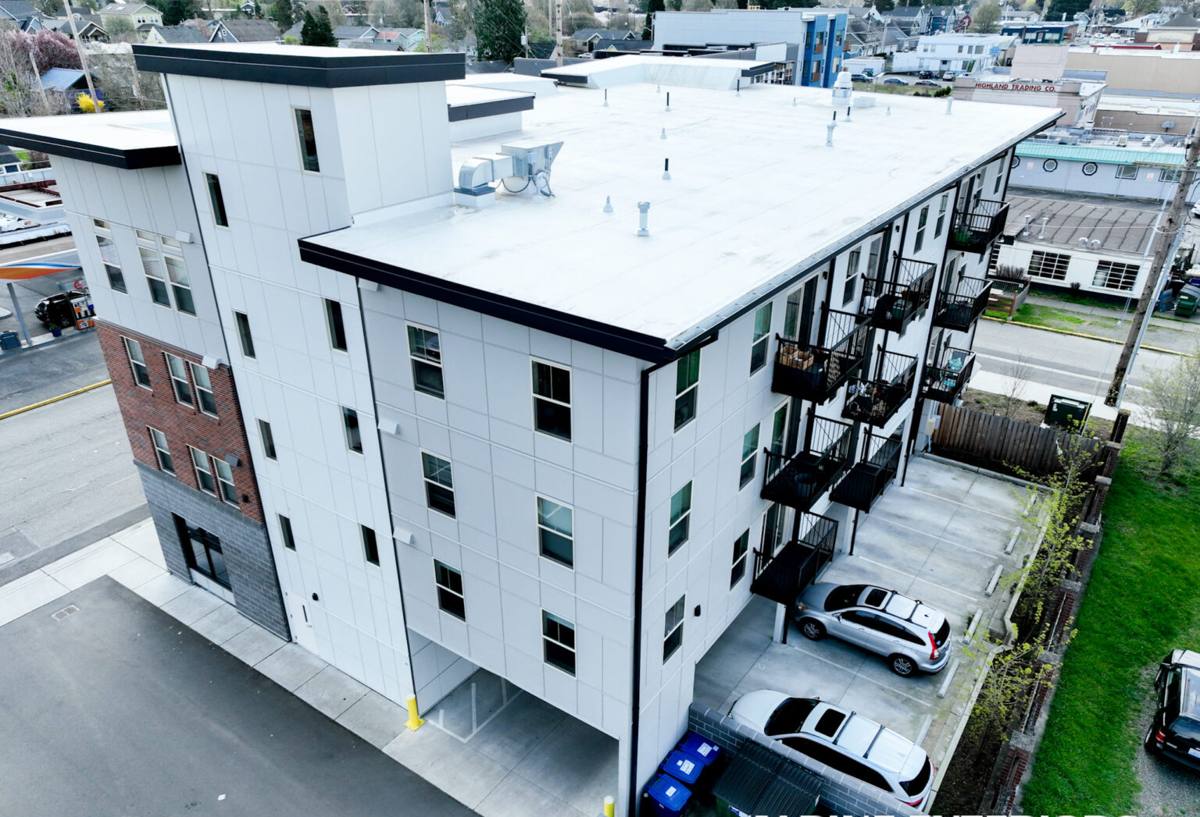
Signs Your Siding Needs Repair, Not Just a Look
Most siding problems don't announce themselves. They show up as small cues that are easy to write off as cosmetic. Worth taking seriously if you notice:
- Soft or spongy spots when you press on the siding, especially near the bottom courses or around window trim
- Persistent dark streaking or moss growth that comes back within weeks of cleaning
- Visible gaps, cracks, or separation at seams, corners, or butt joints
- Paint that's bubbling, peeling, or failing faster in one section than the rest of the house
- Warping, bowing, or panels that no longer sit flat against the wall
- A musty smell in an adjacent interior room, which can point to moisture already past the siding
- Woodpecker holes or insect activity, which often means the wood behind the siding has already softened
Any one of these on its own might be minor. Two or three together, especially on the same wall, usually means water has been getting behind the siding for a while.
Why Cordata's Climate Makes This Worse
Salt air is corrosive to fasteners and metal flashing long before it visibly affects the siding face itself. A nail or staple that's corroding under the surface loses its grip, and siding that's no longer fastened tight is siding that flexes, gaps, and lets water in. Combine that with Whatcom County's driving, wind-blown rain — which hits siding at an angle instead of falling straight down — and water finds its way into laps, seams, and trim joints that would stay dry in a calmer climate. Then moss and algae move in on anything that stays damp and shaded, holding moisture against the surface even longer. It's a compounding cycle, and it's the main reason siding here ages differently than siding fifty miles inland.
What a Correct Siding Repair Actually Involves
A repair that just covers the visible damage and calls it done is a repair that fails again in a year or two. Doing it right means treating the visible problem as a symptom and checking what's underneath it.
Assessment Before Anything Gets Touched
We start by identifying whether the damage is isolated or a sign of a broader moisture problem. That means checking the condition of the house wrap or building paper behind the siding, looking at flashing around windows, doors, and any wall penetrations, and probing surrounding areas — not just the spot that looks bad — for hidden softness.
Addressing the Cause, Not Just the Symptom
If failed flashing or a gap in the water-resistive barrier caused the damage, replacing the siding panel without fixing that underlying issue just resets the clock on the same failure. Correct repair work fixes the water path first, then replaces or restores the siding itself.
Matching Materials and Finish
A patch that doesn't match the surrounding siding in profile, reveal, or color sticks out and can also perform differently — different expansion rates, different moisture behavior. Where we're replacing sections of existing siding, we match as closely as the original product allows; where a section needs to come out entirely and start over, we talk with the homeowner about what goes back up in its place.
Repair or Replace: How to Think About the Decision
Not every problem area needs a full re-side, and not every localized repair is the right long-term call either. The table below covers the factors we walk through with homeowners.
| Factor | Leans toward repair | Leans toward replacement |
|---|---|---|
| Extent of damage | Isolated to one wall or small area | Recurring across multiple walls or elevations |
| Underlying cause | One identifiable, fixable source (flashing, a gap, impact damage) | Systemic moisture intrusion or widespread material failure |
| Siding material | Newer material still within its service life | Original material aging out or already discontinued |
| Structural condition | Sheathing and framing underneath are sound | Rot has reached sheathing or framing |
| Cosmetic match | Repair section will blend acceptably | Product is faded, discontinued, or won't match |
When damage is contained and the cause is fixable, a targeted repair is the honest recommendation — we're not going to push a full replacement a homeowner doesn't need. When the damage points to a bigger pattern, we'll say so plainly and explain why.
Our Repair Process
- On-site inspection. We look at the damaged area and the surrounding siding, checking for softness, gaps, and signs of moisture beyond what's visible.
- Diagnosis. We identify the actual cause — flashing failure, fastener corrosion, a gap in the water barrier, impact damage — and explain it in plain terms.
- Written scope and estimate. You get a clear description of what needs to happen and what it costs before any work starts.
- Repair or section replacement. We fix the underlying issue first, then repair or replace the siding itself, matching material and finish as closely as possible.
- Final check. We confirm the repair is sealed, fastened correctly, and sitting flush before we consider the job done.
Why Material Choice Matters Even for a Repair
When a repair calls for replacing a section of siding outright — rather than patching what's there — the material that goes back up matters as much as the workmanship. This is where we're upfront about our position: we install James Hardie fiber cement siding exclusively. We don't install vinyl, LP SmartSide, Cemplank, Allura, primed spruce, or cedar, and we won't quote a repair using those products even as a patch, because we don't want our name on a repair we don't believe will hold up in this climate.
James Hardie siding is non-combustible fiber cement engineered for damp coastal climates like this one, with HZ5 product lines built specifically for wet, high-moisture regions. Its ColorPlus factory finish resists the fading and peeling that repainted repair sections often suffer within a couple of years, and it carries a strong transferable warranty when installed to manufacturer spec. If a repair on your home means replacing a damaged section, we'll talk through what that looks like using Hardie product — including how well it will blend with what's already on the wall, since that's a legitimate consideration and one we won't gloss over.
If your existing siding is a different material and the damage is limited to something we can genuinely repair — refastening a loose panel, resealing a joint, replacing trim — we'll do that work without pushing a material change you don't need. We draw the line at installing new sections of the products above, not at doing honest repair work on what's already on your home.
Why Hiring a Crew That Already Works Cordata Matters
Siding repair isn't a one-size-fits-all trade. A contractor who mostly works drier inland climates can miss what's actually going on with a coastal Whatcom County home, because the failure patterns are different. Crews familiar with Cordata and the greater Ferndale area know which wall orientations take the worst wind-driven rain, where moss tends to establish first, and how salt exposure shows up in fastener corrosion before it's visible on the surface. That local pattern recognition shortens the diagnosis, and a faster, more accurate diagnosis means less exploratory demolition and a repair that's targeted instead of guessed at.
It also matters for follow-through. A repair crew that works this area regularly is one you can call back if something doesn't look right six months later — not a name from an out-of-town flyer.
A Quick Self-Check Before You Call
Before scheduling an estimate, a short walk around your home's exterior can help you describe the problem clearly:
- Note which wall or walls show the issue, and whether it's on the side that faces prevailing wind and rain
- Press gently on any suspect areas to check for softness — don't force it
- Look at trim and corner boards, not just the siding field, for gaps or separation
- Check if the area stays damp or shaded longer than the rest of the house
- Take note of when you first noticed the issue and whether it's changed recently
That information helps us prioritize what to look at first when we're on-site, and it gives you a baseline to compare against after the repair is done.
Get a Straight Answer on What Your Siding Needs
If you're seeing soft spots, staining, gaps, or anything else that doesn't look right on your Cordata home's exterior, it's worth having it looked at before the next round of Whatcom County rain gets further behind the siding. Request a free, no-pressure estimate below and we'll give you an honest read on whether it's a repair, a section replacement, or something bigger — no upsell, just what your home actually needs.