 Ferndale Siding
 Cordata's Climate Problem: Siding That Actually Has to Work
Cordata sits in a stretch of Whatcom County where the weather doesn't do siding any favors. You get salt-laden air rolling in off the water, long stretches of driving rain that hits walls sideways instead of straight down, and a moss season that can run most of the year in shaded and north-facing spots. None of these things are dramatic on their own. What they do is grind away at siding slowly, year after year, until a homeowner who thought their siding was "fine" discovers soft trim, bubbling paint, or a soggy sheathing layer behind a wall that looked perfectly normal from the driveway.
Siding replacement in this part of Whatcom County isn't just a cosmetic upgrade. It's the point where a house either gets a weather envelope that's built for this specific climate, or gets another version of the same product that struggled the first time. We think about every Cordata job through that lens.
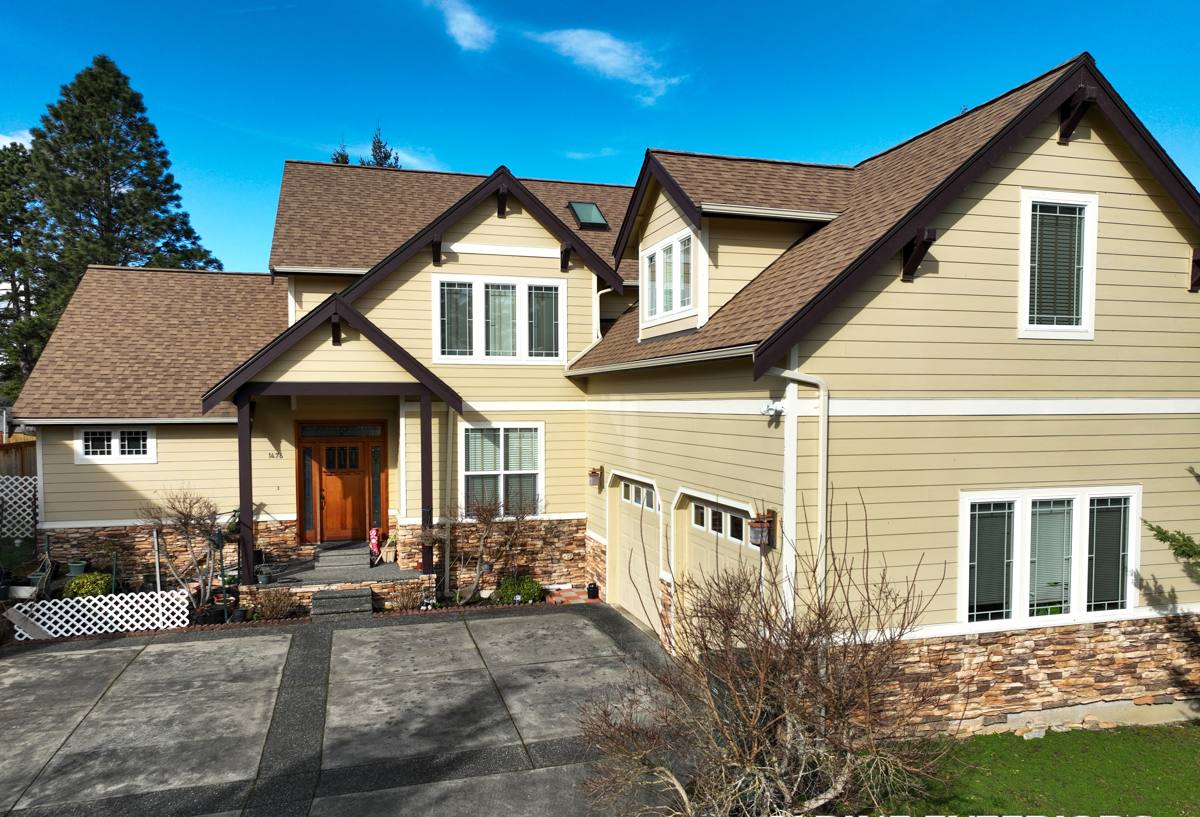
What Correct Siding Replacement Actually Involves
A siding replacement done right is mostly invisible once it's finished — which is exactly why it's easy for a homeowner to underestimate how much of the job happens behind the new boards. The visible siding is maybe a third of the work. The rest is what stops water from getting in and, just as important, what lets any moisture that does get in dry back out.
Moisture Management Behind the Wall
Before a single piece of new siding goes up, the old material comes off and the sheathing underneath gets inspected. In a climate that sees as much sustained rain as Whatcom County, we're looking for soft spots, delaminated OSB, or staining that points to a leak that's been running for a while. Any damaged sheathing gets replaced — covering it up with new siding doesn't fix it, it just hides it for a few more years. Then comes a weather-resistive barrier and, depending on the wall assembly, a rainscreen gap that lets water drain and air circulate behind the siding instead of trapping it against the wall.
Flashing and Trim Details
Most siding failures don't start in the field of the wall — they start at the transitions: window and door openings, roof-to-wall intersections, deck ledgers, and anywhere two planes meet. Flashing at these points has to be layered correctly, with each piece overlapping the one below it so water sheds outward instead of working its way behind the cladding. This is the part of the job that's easy to rush and impossible to inspect once the siding is up, which is why it matters more than almost anything else on the project.
Sealing and Fastening
- Fasteners driven to the manufacturer's spec — not too shallow, not overdriven, which crushes the board and creates a water entry point
- Butt joints and penetrations sealed with a product rated for the material, not just whatever caulk is on the truck
- Correct nailing pattern for the wind exposure of the specific wall (not every wall on a house needs the same fastening schedule)
- Proper clearance between siding and grade, decks, and roof lines so water and debris don't sit against the bottom edge
Why We Only Install James Hardie Fiber Cement
We don't install vinyl, LP SmartSide, Cemplank, Allura, or primed wood siding — not because those products have no legitimate use anywhere, but because after years of doing this work in Whatcom County's climate, we standardized on one system we trust to hold up here: James Hardie fiber cement.
Fiber cement doesn't absorb water the way wood-based products can, which matters directly in a climate with this much sustained moisture exposure. It's non-combustible, which is a real consideration as wildfire smoke seasons have become a more regular part of Pacific Northwest summers. Hardie's ColorPlus finish is baked on at the factory under controlled conditions, rather than field-painted, which gives it better fade and chip resistance than a product painted on-site in variable weather. And Hardie engineers specific product lines — their HZ5 line is built for the wetter, harsher climate zones the Pacific Northwest falls into, versus a version of the product engineered for drier regions.
None of this means other products are junk. LP SmartSide is a legitimate engineered wood product with its own installed base. Vinyl has a place for budget-driven projects. What we're saying is narrower: for the specific combination of rain, salt air, and moss exposure that Cordata homes deal with, and for the standard we hold our own installs to, fiber cement is the product we're willing to put our name on. That's a professional standard, not a knock on every other manufacturer.
Our Replacement Process, Start to Finish
- Free on-site estimate. We walk the exterior, look at the current siding and trim condition, check for moisture problem areas, and talk through what you actually need versus what's optional.
- Written scope and product selection. You'll know exactly which Hardie profile, plank exposure, and color you're getting before any work starts — no vague allowances.
- Tear-off and inspection. Old siding comes off, sheathing gets inspected, and we flag anything that needs repair before moving forward — with photos, not guesswork.
- Weather barrier and flashing. This is the stage that determines how the house performs for the next 30-plus years, and it happens before any new siding is visible.
- Installation to Hardie's fastening and clearance specs. Correct nailing, correct joint treatment, correct gaps at grade, decks, and rooflines.
- Trim, caulking, and final detailing. This is where a job either looks factory-clean or looks like a patch job — we don't rush this stage.
- Final walkthrough. You see the finished work with us before we consider the job done.
Cost Factors for a Cordata Siding Replacement
Every home is different, and we don't quote real numbers without seeing the house, but these are the variables that actually move the price on a project like this:
| Factor | Why It Matters |
|---|---|
| Sheathing condition | Hidden water damage found during tear-off adds repair scope that can't be priced sight-unseen |
| Home size and wall complexity | More corners, gables, and cutouts mean more labor and material waste per square foot |
| Siding profile and exposure | Lap width, panel vs. plank, and trim style all carry different material and install costs |
| Existing moisture barrier | Whether a rainscreen or upgraded barrier system is needed changes labor time |
| Access and site conditions | Steep grades, tight lot lines, or limited equipment access add time |
| Trim and detail work | Window casings, fascia, and corner details are often underestimated in ballpark quotes |
Signs a Cordata Home Needs Siding Replacement, Not Just a Patch
- Soft or spongy spots when you press on the siding, especially near the bottom courses or under windows
- Paint that's bubbling, peeling, or won't hold no matter how many times it's repainted
- Persistent moss or algae growth that comes back within a season of cleaning
- Visible gaps, warping, or cupping in individual boards or panels
- Musty smell or visible staining on interior walls that back up to exterior siding
- Siding that's original to a home built decades ago and has never been fully replaced, only patched
Why Hiring a Crew That Already Works This Area Matters
A siding contractor who works Whatcom County regularly already knows how this climate behaves against a wall — where moss builds up first, which orientations take the worst wind-driven rain, and what a house needs when it sits closer to salt air versus further inland. That's not something you can fully replicate by reading a spec sheet. It shows up in small decisions on the job: where to add extra flashing attention, which details need a rainscreen gap and which don't, how aggressive the moss and mildew resistance needs to be in the product and finish chosen.
It also matters for permitting and code familiarity. Requirements can vary by jurisdiction even within the same county, and a crew that's pulled permits locally knows what inspectors are looking for before the job starts, not after a failed inspection slows everything down.
Keeping New Siding Performing After Installation
Correctly installed fiber cement siding is low-maintenance, but "low-maintenance" isn't "no-maintenance" in a climate like this one. A yearly rinse-down knocks back moss and algae before it gets established, especially on north-facing and shaded walls. Keeping gutters clear and grade sloped away from the foundation protects the bottom courses of siding, which take the most consistent moisture exposure. And a quick annual look at caulking around windows, doors, and trim catches small gaps before they become water intrusion points. None of this is heavy lifting — it's the difference between siding that looks good at year 20 and siding that starts showing problems at year eight.
If your Cordata home's siding is past its useful life, or you're just not sure what condition it's really in underneath the surface, we're happy to take a look. The estimate is free, there's no pressure, and you'll walk away with a straight answer about what your home actually needs — fill out the form below to get started.