 Ferndale Siding
 Building New in Cordata? The Windows Have to Be Right the First Time
Cordata has seen steady new residential construction over the past several years — infill lots, small subdivisions, and new builds going up within the broader Ferndale and north Whatcom County growth corridor. When a house is framed and the windows go in during the build, there's no second chance to get the flashing and water management right without tearing into finished walls. A mistake in a new-construction window opening doesn't show up on move-in day. It shows up two or three wet seasons later, inside a wall cavity, after the damage is already done.
We install new-construction windows on homes in and around Cordata as part of our regular service area, working directly with framers, builders, and homeowners managing their own build. This page covers what a correct new-construction window install actually involves here, why Whatcom County's climate makes some steps non-negotiable, and how our process fits into a build schedule without becoming the reason it slips.
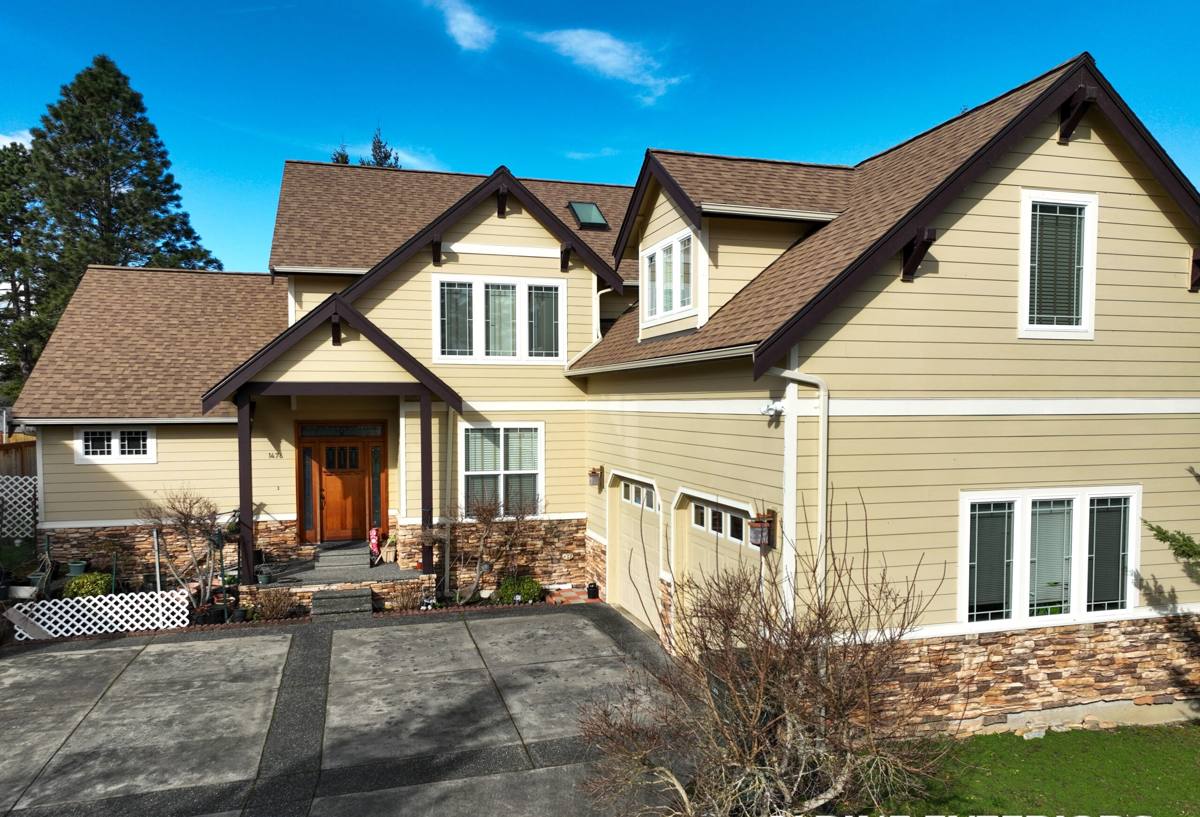
New-Construction Windows vs. Replacement Windows — Not the Same Job
These two jobs get lumped together, but they're built on completely different assumptions.
- New-construction windows have a nailing fin (or flange) around the perimeter and get installed into a rough opening before siding goes on, integrated directly with the house wrap and flashing.
- Replacement windows are usually "pocket" units that go into an existing opening with the old frame still in place, or a full-frame replacement that strips back to the rough opening on a house that's already sided and occupied.
On a new build, the window installer is working with an open wall — no existing siding to protect, no interior finishes to avoid disturbing, but also no room for error, because everything installed now gets sealed behind exterior finish for decades. Get the water management wrong at this stage and it's invisible until it's a problem.
What Whatcom County's Climate Actually Demands From a New Window Opening
Ferndale and the surrounding Whatcom County area sit close enough to the water that salt-laden air is a real factor on hardware and finishes, not just a coastal-town cliché. Combine that with the region's driving, wind-pushed rain — not gentle vertical rainfall, but rain that gets pushed sideways into wall assemblies during winter storms — and a long moss season that keeps roofs, siding, and window sills damp for months at a stretch, and you get a climate that punishes shortcuts in window flashing more than most parts of the country.
Salt Air
Coastal moisture accelerates corrosion on fasteners, hinges, and lower-grade hardware. It also breaks down cheap sealants and finishes faster than inland climates. This is a reason to spec corrosion-resistant fasteners and quality hardware on a new build, not just whatever comes standard.
Driving Rain
Wind-driven rain finds gaps that vertical rain never would. A window flashed correctly for a dry climate can still leak here if the flashing doesn't shed water past the sill and out over the weather-resistive barrier (WRB) below the opening, not just around the sides.
Moss Season
Extended damp periods mean any spot where water can pool — a poorly sloped sill, a flashing lap installed backwards — stays wet longer and grows moss and algae instead of drying out between rain events. On a new build, this is prevented at the sill pan and flashing stage, not fixed later with a pressure washer.
What a Correct New-Construction Window Install Includes
On paper, setting a new-construction window looks simple: fit it in the opening, nail the fin, move on. In practice, the water management sequence around the window is what determines whether the wall stays dry for the next 30 years.
- Rough opening checked for square, level, and correct size before the window ever goes in
- Sloped sill pan flashing installed at the bottom of the opening so any water that gets past the window drains back out, not into the wall
- Self-adhered flashing tape at the sill and jambs, lapped in the correct shingle-style order (bottom first, then sides, then top)
- Window set into the opening, checked for square and plumb, and fastened per the manufacturer's schedule
- Head flashing installed last, lapped over the WRB above the window so water sheds down and over, never behind
- WRB (house wrap) integrated and taped around the full perimeter of the window, tying into the flashing system
- Backer rod and exterior sealant at the trim line, sized and installed per manufacturer spec — not just a bead of caulk
- Interior shim and insulation check so the frame isn't bowed and the window operates correctly once trimmed
Skip or rush any one of those steps and the window itself can be flawless while the opening still leaks. This is why we treat window installation as a flashing and water-management job first, and a "put the window in" job second.
Choosing Window Frame Material for a New Build in This Climate
Builders and homeowners in Cordata typically choose between a few frame materials for new construction. Each has real trade-offs worth understanding before the order goes in, since swapping later means a change order and a delay.
| Frame Material | Moisture / Salt Air Performance | Maintenance | Common Use |
|---|---|---|---|
| Vinyl | Doesn't corrode or rot; performs well in coastal moisture | Low — no painting, occasional cleaning | Most common choice for new-construction homes on a standard budget |
| Fiberglass | Excellent — very stable, resists moisture and salt air well | Low — durable finish, minimal upkeep | Higher-end new builds where long-term stability matters |
| Aluminum-clad wood | Good on the exterior clad face; wood interior needs the seal to stay intact | Moderate — interior wood finish needs occasional attention | Homes prioritizing a wood interior look with an exterior that holds up to weather |
None of these is automatically "wrong" for Whatcom County — the deciding factors are usually budget, the look the homeowner wants from the interior side, and how the window will be installed and flashed, which matters more to long-term performance than the frame material alone.
Performance Ratings Worth Asking About
For a new build in this region, U-factor (how well the window resists heat loss) matters more than solar heat gain coefficient (SHGC), since the Pacific Northwest doesn't deal with the intense summer sun that drives SHGC decisions in hotter climates. A lower U-factor keeps heating costs down through our long wet, cool season. Ask what U-factor is being specified for the build and whether it meets current Washington energy code for the county.
Our Process on a Cordata New-Construction Job
Whether we're working directly for a builder or for a homeowner managing their own build, the sequence matters as much as the workmanship.
1. Coordinate the Timing
Windows go in after the WRB (house wrap) is on and before siding starts. We coordinate with the framing and wrap schedule so we're not showing up too early or holding up the siding crew behind us.
2. Verify Openings Before Install
We check every rough opening for size, square, and level before setting windows. Framing tolerances vary, and catching an out-of-square opening before the window goes in is far cheaper than dealing with an operable window that won't latch correctly after the fact.
3. Flash and Set Per Manufacturer Spec
We follow the window manufacturer's published flashing instructions, since deviating from them can affect the warranty. Sill pan, tape, window, head flashing, WRB integration — in that order, every time.
4. Document as We Go
On new builds, we photograph flashing details before they get covered by siding. If a question ever comes up later about how a window was integrated with the wall assembly, that record exists.
What Affects the Cost of New-Construction Windows
| Factor | Why It Matters |
|---|---|
| Number and size of openings | More windows and larger units mean more material and labor hours |
| Frame material | Vinyl, fiberglass, and clad-wood carry different unit costs |
| Window type | Fixed windows are simpler than operable double-hungs, casements, or sliders |
| Performance package | Upgraded glass packages for better U-factor add cost but lower long-term heating expense |
| Site access and scheduling | Coordinating around other trades on an active job site affects labor efficiency |
We give straightforward, itemized estimates rather than a single lump number, so a builder or homeowner can see where the cost is actually going and make informed trade-offs.
Why a Local Crew Matters for a Cordata Build
A crew that already works new construction around Ferndale and Whatcom County isn't guessing at how to flash for driving rain and a long moss season — it's routine. We know what this climate does to a window opening that's flashed for a drier region's assumptions, and we build accordingly. That also means we're a known, reachable presence if a warranty question comes up years down the road, not a name from an out-of-area crew that did one job and moved on.
For builders, that translates into fewer callbacks. For homeowners managing their own build, it means someone local who will walk the site, explain what's being done and why, and stand behind the work.
Get an Estimate for Your Cordata Build
If you're building new in the Cordata area or working with a builder who needs a window subcontractor who knows how to flash for this climate, we're glad to walk the plans and give you a straightforward, no-pressure estimate. Use the form below to get started.