 Ferndale Siding
 Cordata's Exterior Weather Problem: Salt Air, Driving Rain, and a Long Moss Season
Cordata sits in the Ferndale–Bellingham corridor of Whatcom County, close enough to the water that homes here take on the same coastal weather pattern as the rest of the county: salt-tinged marine air drifting in off the Sound, rain that arrives sideways more often than straight down, and a moss season that can run most of the year on shaded walls and north-facing elevations. None of that is unusual for this part of Washington, but it's a specific, sustained load on exterior materials, and it's the reason siding that performs fine somewhere drier can start failing here within a handful of wet seasons.
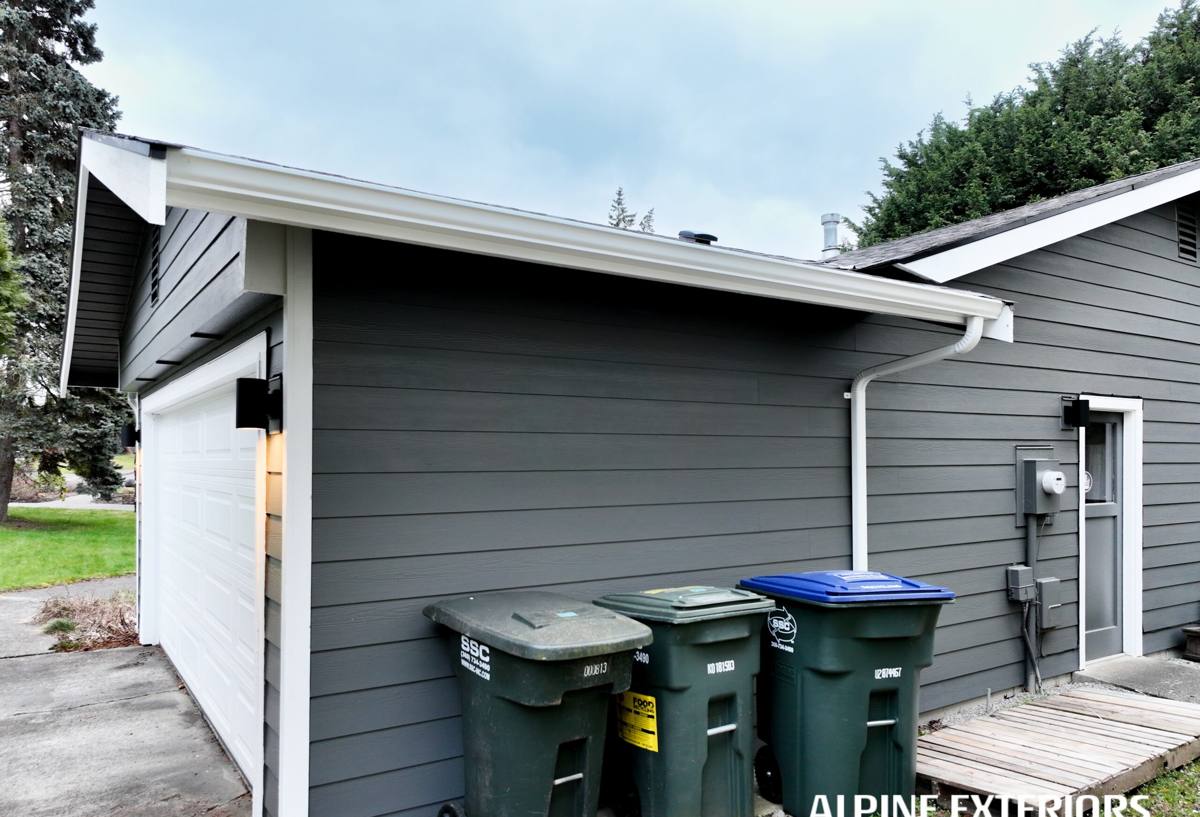
This page is about one thing: James Hardie fiber cement siding on Cordata homes specifically. Not a general overview of every siding option, and not a page about roofing or windows. If you're weighing what to put on the exterior of a Cordata home, or wondering why an existing Hardie installation is or isn't performing the way it should, this is the detail that actually matters.
Why This Climate Is Harder on Siding Than It Looks
Salt Air and Corrosion
Air moving inland off the Sound carries a mild salt content that reaches well past the immediate shoreline, and Cordata is close enough to feel it. Salt accelerates corrosion in fasteners, flashing, and trim hardware, and it breaks down lower-grade finishes faster than the same materials would age in a drier, more inland climate. A siding job that ignores that exposure usually shows it first in rusting fastener heads and a finish that chalks or fades ahead of schedule.
Wind-Driven Rain
Rain in this part of Whatcom County rarely falls straight down. Wind pushes it sideways into wall assemblies, lap joints, and trim details, which is a meaningfully different load than a simple annual rainfall total suggests. A siding system that would hold up fine in a calm, dry climate can still fail here specifically because water finds a way in from the side rather than from above, at seams and terminations that were never built to handle sideways-driven moisture.
A Long Moss and Mildew Season
Mild temperatures, regular shade, and consistent moisture add up to a moss and mildew season that can run for most of the calendar year in Whatcom County. Any siding material that's even slightly porous, or that holds moisture against the substrate instead of shedding it, becomes a growth surface over time. It typically shows up first on north-facing walls and areas shaded by trees or neighboring structures, well before it's visible from the street or from a casual walk-around.
Why We Install Only James Hardie in Cordata
We used to install a wider range of siding products. We narrowed that down after seeing, repeatedly, which materials held up in this exact combination of salt exposure, wind-driven rain, and extended dampness, and which ones quietly developed problems within a handful of years.
- Non-combustible core: Fiber cement doesn't feed a fire the way wood-based siding products can, which matters for household safety and, often, for insurance underwriting.
- Factory-applied ColorPlus finish: The color is baked on under controlled factory conditions rather than brushed on in the field, so it resists fading and moisture damage far longer than field-applied paint holds up against this climate.
- Climate-engineered HZ product lines: Hardie's HZ5 formulation is built for regions with heavy moisture exposure and freeze-thaw cycling, which describes coastal Whatcom County well.
- Dimensional stability: Fiber cement doesn't swell, cup, or warp the way engineered wood siding can after repeated wet-season moisture cycles.
- Strong transferable warranty: Hardie backs correctly installed products with one of the more substantial warranty structures in the siding industry.
We won't install LP SmartSide, vinyl siding, Cemplank, Allura, primed spruce, or cedar. Each of those has a legitimate place in the broader market, and plenty of homeowners elsewhere are satisfied with them. But we made a professional call that in a climate with this much sustained moisture and salt exposure, one system we can fully stand behind is worth more to a Cordata homeowner than a lower-cost option that quietly shifts maintenance risk onto them over the years that follow.
What a Correct Installation Actually Involves
Material choice is only half the equation. Fiber cement only performs the way it's engineered to when the installation follows Hardie's published specifications, and skipping any of the following steps is one of the more common ways a good product ends up with a bad reputation on a home like yours.
Moisture Management Behind the Siding
Everything starts with what's underneath the siding, not the siding itself. Correct house wrap or weather-resistant barrier installation, properly integrated seams, and a drainage plane that actually lets incidental moisture escape rather than trapping it against the sheathing are the foundation of a wall assembly that can handle Cordata's wet-season conditions. Skipping or rushing this layer is invisible on install day and expensive to discover later.
Fastening, Clearances, and Joints
Hardie siding needs the correct fastener type, spacing, and penetration depth to perform as designed, along with proper clearance from grade, roof lines, and decks so the bottom edge of the siding isn't sitting in a wet zone. Lap joints and butt joints need to be correctly overlapped, backed, and sealed, since a poorly detailed joint is one of the most common points where wind-driven rain works its way behind the siding.
Flashing at Every Transition
Windows, doors, roof-to-wall intersections, and any penetration through the siding need flashing that directs water back out rather than into the wall. This is where wind-driven rain does the most damage when it's skipped or done casually, because these transitions are the weak points in an otherwise sound wall assembly. It's also the detail that's hardest for a homeowner to inspect after the fact, which is exactly why it has to be done right the first time.
Choosing the Right Hardie Product Line and Finish
Not every Hardie product is spec'd the same way, and picking the wrong line for this climate can undercut an otherwise solid installation. For Cordata homes, we generally spec Hardie's HZ5 formulation over lines built for hotter, drier regions, since HZ5 is engineered around exactly the kind of sustained moisture and freeze-thaw cycling this area sees. Beyond the base product, the ColorPlus factory finish matters as much as the panel itself: because the color and protective coating are cured in a controlled factory process rather than applied on site, it resists the fading and moisture-related breakdown that field-applied paint struggles with once it's exposed to repeated wet-dry cycling year after year. Panel profile and reveal size are largely an aesthetic choice, but finish and formulation are the decisions that determine how the siding actually performs on your specific wall exposures.
Cost Factors for a Cordata Siding Project
| Factor | What It Affects | Why It Matters in Cordata |
|---|---|---|
| Home size and wall complexity | Total material and labor | More trim, dormers, and corners mean more joints where wind-driven rain can intrude |
| Tear-off vs. overlay | Labor scope and substrate access | Tear-off reveals hidden moisture damage that's common under older siding in this climate |
| Substrate condition | Repair costs before new siding goes on | Years of trapped moisture behind failing siding can rot sheathing and framing before it's visible |
| HZ formulation and finish | Material cost and long-term durability | HZ5 and factory ColorPlus finish cost more upfront but hold up longer against salt air and UV |
| Site access and shade | Labor time and drying conditions during install | Tree-shaded lots common in this area can extend curing and staging time |
Exact numbers depend on the specific home, which is why we walk the property in person before giving a real estimate rather than quoting off a generic price sheet.
How Our Process Works
We start with an on-site walk of the exterior, looking at wall orientation, existing siding condition, shade patterns, and any signs of past moisture intrusion, since those details vary from house to house even within the same neighborhood. From there we put together a clear, written scope and timeline before any work begins, spelling out tear-off versus overlay, the specific HZ line and finish being used, and what happens if we find substrate damage once the old siding comes off. During installation, moisture barrier work, fastening, and flashing are treated as standard practice rather than optional upgrades, and we walk the finished exterior with the homeowner before calling the job done. That written scope matters most on the tear-off jobs, since substrate condition is the one variable that genuinely can't be fully assessed until the old siding is off the wall.
Living With Hardie Siding in This Climate
A correctly installed Hardie system is genuinely low-maintenance compared to wood-based or vinyl alternatives, but "low-maintenance" isn't "no-maintenance" in a climate that sees this much sustained moisture and shade. A little routine attention keeps the siding looking and performing the way it's supposed to for decades rather than years.
- Rinse the exterior periodically to keep salt residue and organic buildup from accumulating, especially on shaded or north-facing walls
- Watch shaded and tree-covered wall sections for early moss or mildew growth, since it establishes there first
- Keep gutters clear and check that downspouts direct water away from the foundation and lower siding courses
- Inspect caulking around windows, doors, and trim annually, since sealant is the first thing to age out even when the siding itself is fine
- Trim back vegetation and tree limbs that keep a wall section shaded and damp longer than the rest of the house
- Have any impact damage or cracked panels repaired promptly rather than waiting, since a compromised panel is a moisture entry point
Why Hiring a Crew That Already Works Cordata Matters
A crew that regularly works this part of Whatcom County has already seen how salt air, wind-driven rain, and moss behave on real houses over a full year, not just how a product performs on a manufacturer's spec sheet. That repeated, local exposure shapes practical decisions on install day: which wall orientations stay wet the longest, where extra flashing attention actually pays off, and which shortcuts show up as callbacks two winters later. It also means a contractor who's already pulled permits and worked with local code requirements in this area, rather than treating every job as a first-time process. That's a meaningful difference from a crew that installs siding occasionally as one of many services, or one that's unfamiliar with how this specific stretch of Whatcom County's weather actually treats a wall over time.
A few practical questions are worth asking any contractor before you hire them for James Hardie work in Cordata:
- Which specific James Hardie product line and finish do you spec for this area, and why
- Are you a current, licensed, and insured Washington contractor
- How do you handle unexpected substrate damage discovered during tear-off
- Can you walk me through your flashing and moisture-barrier detailing before work begins
- Does the warranty transfer if I sell the home, and what does it actually cover
If you're weighing new siding, a repair, or just want an honest read on how an existing installation is holding up on a Cordata home, we're glad to take a look. Reach out using the form below to schedule a free, no-pressure estimate.