 Ferndale Siding
 Windows Built for Cordata's Weather, Not Just Its Openings
Cordata sits close enough to the water and the weather patterns that move through Whatcom County that homeowners here deal with a different set of window problems than someone building in a dry inland climate. Salt-laden air works its way into hardware and finishes over time. Driving rain, pushed sideways by wind off the Sound, tests every seal and flashing detail a window has. And the long stretch of gray, damp months each year gives moss and mildew plenty of time to take hold on anything that stays wet. None of that is exotic - it's just the normal cost of living in this part of Washington. But it means a window that was installed correctly for a drier climate can still fail here if it wasn't built or fitted with these specific conditions in mind.
Custom windows, done right, aren't about fancy shapes or high-end trim packages (though we can do those too). For most Cordata homeowners, "custom" simply means the window is sized, flashed, and detailed to fit your actual opening and your actual exposure - not a generic stock size forced into place with extra caulk to hide the gaps.
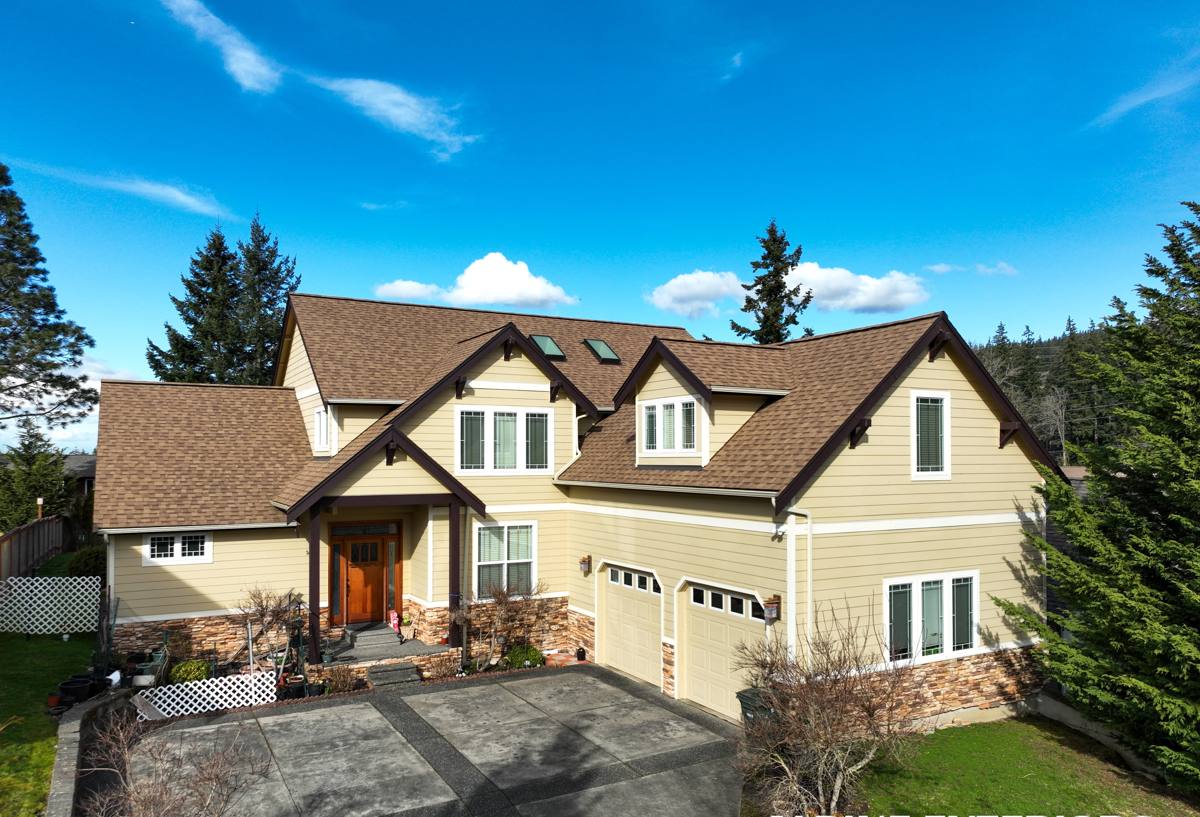
What Actually Goes Wrong With Windows in This Climate
Before talking about solutions, it helps to know what we're actually up against. These are the issues we see repeatedly on homes in and around Cordata:
- Wood sills and jambs that have started to soften or rot from years of moisture sitting at the sill instead of draining out
- Condensation between panes, which usually means a failed seal on an older double-pane unit
- Green or black staining on the exterior trim and lower corners of windows, from moss and mildew that never fully dries out between rain events
- Drafts and water intrusion around the frame, often traced back to flashing that was skipped or installed incorrectly during a past remodel or siding job
- Hardware - locks, cranks, hinges - that's stiffened or corroded faster than it should have, a common effect of persistent salt air on unprotected metal
Most of these aren't really "window problems" in isolation. They're moisture management problems, and the window is just where they show up first.
Getting the Install Right the First Time
Flashing and Moisture Management
This is the part that separates a window that lasts twenty-plus years from one that starts failing in five. Proper flashing directs water that gets behind the siding back out and away from the wall assembly, instead of letting it pool at the window opening. In a driving-rain climate, this detail matters more than the brand of window you choose. We integrate window flashing with the surrounding siding and weather barrier as one continuous system, not as an afterthought once the window is already set.
Sizing and Fit
Older Cordata homes often have openings that have shifted slightly over the decades, or trim details that don't match modern stock sizes. A custom-fit window means we measure your actual opening, account for any settling or irregularity, and either build to that size or modify the opening properly - rather than undersizing the window and packing the gap with foam and hope.
Sealing Without Trapping Moisture
There's a difference between sealing a window and sealing it shut. Good installation practice leaves a path for any moisture that does get behind the wall to escape, rather than sealing it in where it can rot framing from the inside. This is a detail that's easy to get wrong and hard to notice until years later.
Choosing Materials That Hold Up Locally
There's no single "best" window material - each has real tradeoffs, and the right call depends on your home, your budget, and how much upkeep you want to take on. Here's how the common options actually perform under salt air, driving rain, and a long wet season:
| Material | Moisture Resistance | Maintenance | Typical Lifespan |
|---|---|---|---|
| Vinyl | Very good - won't rot, resists salt corrosion | Low - occasional cleaning | 20-30 years |
| Fiberglass | Excellent - dimensionally stable, handles temperature and moisture swings well | Low | 30-40+ years |
| Wood (unclad) | Poor without diligent upkeep - vulnerable to rot in this climate | High - regular painting/sealing | Varies widely with maintenance |
| Wood-clad (exterior aluminum or vinyl cladding) | Good - exterior face is protected, interior stays wood | Moderate | 25-35 years |
| Aluminum | Fair - can corrode over time with salt exposure unless properly finished | Low to moderate | 20-30 years |
We don't push one material on every job. A lot of it comes down to your home's style, your budget, and how much maintenance you actually want to be doing five or ten years from now. What we do steer people away from is unclad wood facing direct weather exposure on this side of the state, unless someone genuinely intends to keep up with the painting and sealing schedule it requires - the moisture behavior just isn't forgiving here.
Full-Frame Replacement vs. Retrofit (Pocket) Replacement
One of the first decisions on a window project is whether to do a full-frame (tear-out) replacement or a retrofit installation into the existing frame. Both have their place.
| Factor | Retrofit (Pocket) | Full-Frame |
|---|---|---|
| Best when | Existing frame is solid, no rot present | Frame shows rot, water damage, or you're changing window size/style |
| Cost | Generally lower | Generally higher |
| Access to check flashing/framing | Limited | Full access - problems get found and fixed |
| Disruption | Minimal, faster install | More involved, may affect interior/exterior trim |
Retrofit installs are a good option when the existing frame and flashing are in solid shape - it's faster and less invasive. But if there's any sign of the moisture issues described above, a full-frame replacement is usually the honest recommendation, because it's the only way to actually inspect and correct what's happening behind the trim. We'll tell you which situation you're in rather than defaulting to whichever is easier for us.
How We Approach a Custom Windows Project
- On-site assessment - we look at the existing windows, sills, and surrounding siding/trim for signs of moisture damage, not just the glass itself
- Measuring and material selection - exact openings, discussion of material tradeoffs for your specific exposure (a north-facing wall that stays damp longer behaves differently than a sheltered south wall)
- Addressing what we find - if there's soft framing or missing flashing, we flag it before installation, not after
- Installation - proper flashing integration, correct fastening, insulation that doesn't trap moisture, and weatherproofing sequenced correctly with any adjacent siding work
- Final check and cleanup - operation, seal, and site cleanup before we call it done
Because we work as a siding contractor first, window flashing and siding integration is something we handle constantly, not as a specialty add-on. A window opening is only as good as how it ties into the wall around it, and that's the part that gets missed most often when window work and siding work are treated as two separate trades.
Maintaining Custom Windows in a Wet Climate
Even the best-installed window benefits from a little seasonal attention in a climate that stays damp for months at a time. A short annual routine goes a long way:
- Clear debris and moss from window sills, tracks, and weep holes so water can actually drain
- Check exterior caulk lines each fall for cracking or gaps before the wet season sets in
- Rinse salt residue off frames and hardware periodically if you're on a wind-exposed side of the property
- Operate locks and hardware a few times through the year so mechanisms don't seize up from disuse and moisture
- Watch for early signs of trouble - sticking sashes, soft spots at the sill, or fogging between panes - and address them before they spread to the surrounding framing
Why Hiring Locally Matters for This Kind of Work
Window performance in Cordata isn't a theoretical question - it's tested every wet season by the same conditions your home has always dealt with. A crew that regularly works in this part of Whatcom County has already seen how these specific issues show up on homes like yours: where moss tends to hold moisture longest, which exposures take the worst of the driving rain, and how salt air affects hardware over time. That's different from general window knowledge - it's familiarity with how this particular climate wears on a house year after year. It also means we're accountable locally; we're not passing through town for a one-off job.
Get a Straight Answer on Your Windows
If you're dealing with drafty windows, foggy glass, soft sills, or you're just planning ahead for a remodel, we're happy to take a look and give you an honest read on what's actually going on - no pressure, no upsell script. Reach out for a free estimate and we'll walk you through your options for your home and your budget.