 Ferndale Siding
 Why Siding Choice Matters More in Cordata
Homes in and around Cordata sit in a stretch of Whatcom County that takes real weather. Salt-tinged air drifts in off the water, driving rain comes sideways more often than most homeowners expect, and a long, damp moss season keeps north-facing walls and shaded siding runs wet for weeks at a stretch. Siding here isn't decorative — it's the first thing standing between that weather and your framing, sheathing, and insulation, year after year.
Cheaper siding systems can look fine going up and still fail early in this kind of climate. Moisture that gets behind a wall doesn't announce itself; it shows up years later as soft trim, stained soffits, or a contractor pulling off a section of wall to find rot nobody saw coming. That's the standard we build to on every Cordata-area job: not just what looks good on install day, but what's still doing its job in fifteen or twenty years.
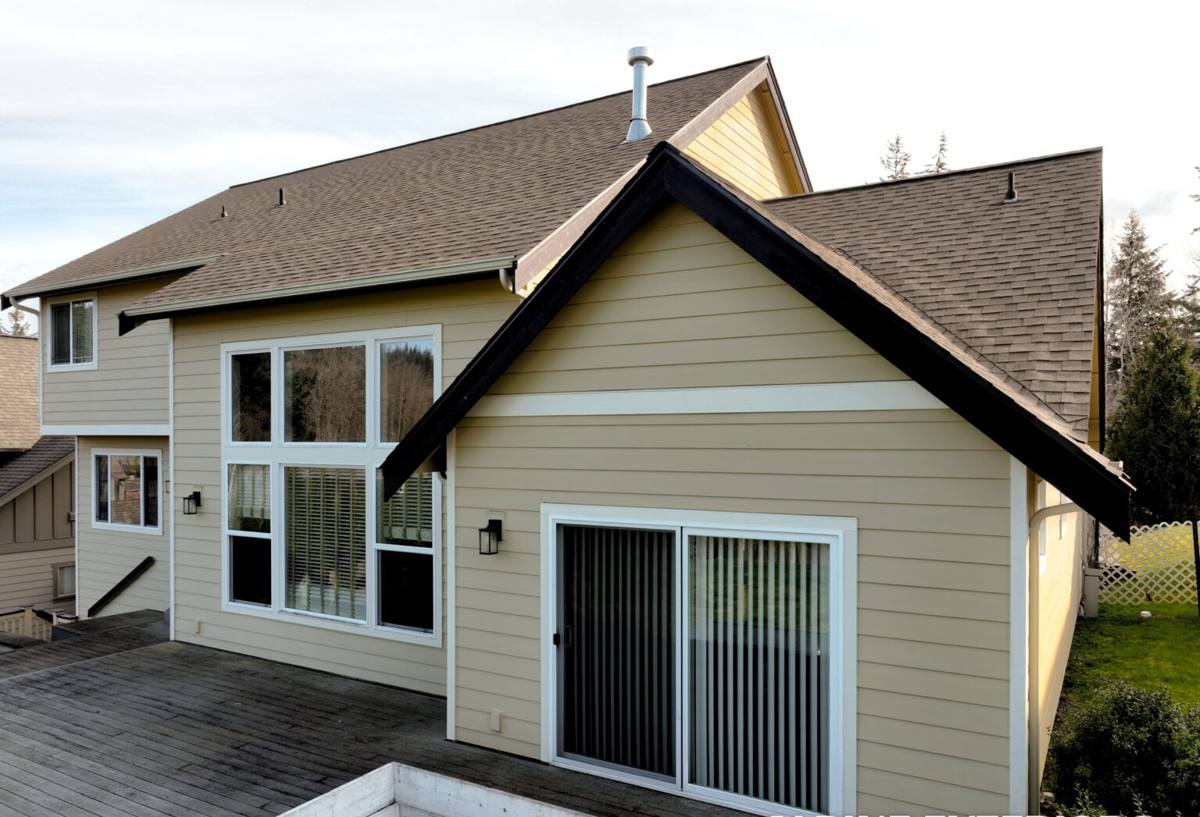
Why We Install Only James Hardie Fiber Cement Siding
We don't install vinyl, LP SmartSide, Cemplank, Allura, primed spruce, or cedar. That's not a marketing line — it's a standard we set after weighing what each of those products asks of a homeowner over time, especially in a marine climate like this one.
Vinyl is affordable and low-maintenance, but it's a thin plastic skin that expands and contracts with temperature swings, can crack in impacts, and fades unevenly over the years — there's no refinishing it, only replacing it. Engineered wood products like LP SmartSide use real wood strand technology and hold paint well when new, but wood-based siding is inherently more vulnerable to moisture intrusion at cut edges and fastener points, which matters in a place that stays wet as long as Cordata does. Cedar and primed spruce are natural materials with real charm, but they need consistent refinishing, are more prone to insect and moisture damage, and are combustible. Other fiber cement brands like Cemplank and Allura are legitimate products, but we've standardized on one manufacturer so our crews install one system, to one spec, with one warranty structure to stand behind — and James Hardie is the one we chose.
James Hardie fiber cement is non-combustible, doesn't rot, resists moisture intrusion far better than wood-based products, and comes factory-finished with ColorPlus Technology — a baked-on finish that's more consistent and longer-lasting than field-applied paint. For a climate that alternates between salt air and long wet stretches, that combination is hard to match.
Engineered for This Climate Zone
James Hardie doesn't make one siding for the whole country. Its HZ5 product line is engineered specifically for regions like the Pacific Northwest that see more moisture, more freeze-thaw cycling, and higher humidity than the drier, warmer regions HZ10 products are built for. That distinction matters — it's the difference between siding that was designed for this weather and siding that merely tolerates it.
What a Correct Fiber Cement Installation Involves
Fiber cement is only as good as the installation behind it. The material can handle Cordata's weather; a rushed or generic install is what actually lets moisture in. A correct job isn't complicated, but it is exacting.
Water Management Comes First
Before a single board goes up, the wall needs a proper water-resistive barrier, correctly lapped and taped, with flashing at every window, door, and horizontal trim transition. Fiber cement is durable, but it's still a rain-screen system — the goal is to shed water at the surface and manage anything that gets past it, not to seal the wall airtight and hope nothing leaks through.
Fastening, Clearances, and Joints
James Hardie publishes specific fastening patterns, minimum clearances from grade, roofing, and decks, and joint treatment requirements — and those specs exist for a reason. Boards fastened too tight or with the wrong nail pattern can crack over time. Siding installed too close to grade or a walking surface stays wet longer and invites the kind of edge damage that shows up years later. Butt joints need to be caulked and, ideally, backed with flashing, not just butted and painted over.
The ColorPlus Finish
Part of what you're paying for with ColorPlus siding is a finish that was baked on in a factory under controlled conditions — it resists fading and chipping better than a coat of paint applied on-site. That advantage only holds if cut edges are treated with matching touch-up product and boards aren't over-driven with fasteners that crack the finish. It's a small detail that separates a careful crew from one that's just trying to get the job done.
Our Process on a Cordata Project
The steps don't change much from house to house, but the details we watch for are shaped by what this climate does to a wall over time.
- Walkthrough and assessment — we look at existing siding condition, trim, flashing, and any moisture staining before quoting anything, so the estimate reflects what your house actually needs.
- Tear-off and sheathing check — once old siding comes off, we inspect the sheathing underneath. Soft or stained sheathing gets flagged and addressed before new siding goes up over it.
- Water-resistive barrier and flashing — this is the layer that does the real work over the next few decades, and it's the one step you won't see again once the siding is on.
- Hardie installation to manufacturer spec — correct fastening, clearances, and joint treatment, following James Hardie's published installation guidelines rather than shortcuts.
- Trim, caulking, and touch-up — cut edges sealed, joints caulked, and a final check for anything that needs matching ColorPlus touch-up.
- Walkthrough and cleanup — we go over the finished work with you and clear the site of debris and packaging.
Fiber Cement vs. Other Siding Options
| Factor | James Hardie Fiber Cement | Vinyl | Wood / Primed Spruce / Cedar |
|---|---|---|---|
| Moisture resistance | Strong — engineered cement composition, doesn't rot | Good on the surface, but seams and gaps can trap moisture behind it | Weaker — natural wood absorbs moisture at cuts and joints |
| Fire resistance | Non-combustible | Combustible plastic | Combustible |
| Finish longevity | Factory ColorPlus finish, resists fading | Molded-in color, can fade and chalk unevenly | Needs repainting or restaining every few years |
| Maintenance | Occasional wash, touch-up caulk | Low, but cracks/warps aren't repairable — only replaceable | Regular refinishing, more vulnerable to pests and rot |
| Typical warranty | Long-term limited warranty, transferable | Varies by brand, often prorated | Manufacturer warranty rarely covers finish or moisture damage |
What Affects the Cost of a Fiber Cement Siding Job
We don't publish flat per-square-foot pricing because it genuinely depends on the house — but these are the factors that move a quote up or down.
| Cost Factor | Why It Matters |
|---|---|
| Tear-off scope | Removing multiple old layers or damaged siding takes more labor than a single clean layer |
| Sheathing condition | Rot or moisture damage found underneath needs repair before new siding goes on |
| Home shape and trim detail | Cut-heavy homes with lots of corners, dormers, and trim take more time than a simple rectangular wall |
| Siding profile | Lap siding, panel siding, and shingle-style Hardie products differ in material and labor cost |
| Access | Steep grades, tight side yards, or multi-story walls affect equipment and labor time |
| Color and finish | Standard ColorPlus colors versus custom field-painted options change material cost |
Living With Fiber Cement Siding in a Marine Climate
Fiber cement is genuinely low-maintenance compared to wood, but "low-maintenance" isn't "no-maintenance," especially with the moss and moisture Cordata sees for a good chunk of the year. A little seasonal attention keeps it performing the way it's supposed to.
- Rinse siding with a garden hose once or twice a year to clear salt residue, pollen, and grime — skip the pressure washer, which can force water behind joints and trim.
- Keep an eye on shaded, north-facing walls where moss and mildew tend to establish first; a soft brush and mild cleaner usually handles it before it spreads.
- Trim back vegetation and shrubs that hold moisture against the wall or block airflow.
- Check caulking at joints, window trim, and penetrations every year or two, and recaulk where it's cracked or pulling away.
- Touch up any cut edges or fastener marks with matching ColorPlus touch-up paint if they're ever exposed.
- Keep gutters and downspouts clear so overflow isn't running down the siding face during heavy rain events.
Why Hiring a Crew That Already Works This Area Matters
A siding crew that mostly works drier inland regions doesn't always think about clearance from grade, extra flashing at grade-level transitions, or how long a shaded wall stays wet after a Whatcom County rain event — because they don't have to. A crew that regularly works Cordata and the surrounding Ferndale area builds those habits in by default, because the consequences of skipping them show up fast around here.
That local familiarity also means straighter answers: what a correct fastening pattern actually looks like on your specific wall assembly, what a realistic timeline is given the wet season, and where a shortcut would cost you more down the line than it saves now. It's the difference between a contractor reciting a spec sheet and one who's watched what happens when that spec sheet gets ignored on a house down the street.
If you're weighing siding options for a Cordata-area home, we're happy to walk the property, look at what's there now, and give you a straight, no-pressure estimate on what correctly installed James Hardie siding would involve for your house. There's no obligation — just a clear look at the options and the reasoning behind them.