 Ferndale Siding
 Why Cordata Roofs Wear Differently
Roofs in the Cordata area take a specific kind of beating that a lot of national roofing guides don't account for. You're close enough to the water that salt-laden air works into fasteners, flashing, and shingle granules year-round. Add Whatcom County's long stretch of driving rain each fall and winter, then the shaded, damp conditions that let moss colonize a north-facing slope almost as soon as it's clean, and you've got a roof environment that ages faster than the manufacturer's warranty paperwork assumes.
None of that means a roof in this area is doomed early — it means the materials, the ventilation, and the installation details all have to be chosen for this climate specifically, not for a generic "Pacific Northwest" spec sheet. A roof replacement done right here should account for salt exposure, sustained wet-season rainfall, and moss pressure from day one, not as an afterthought.
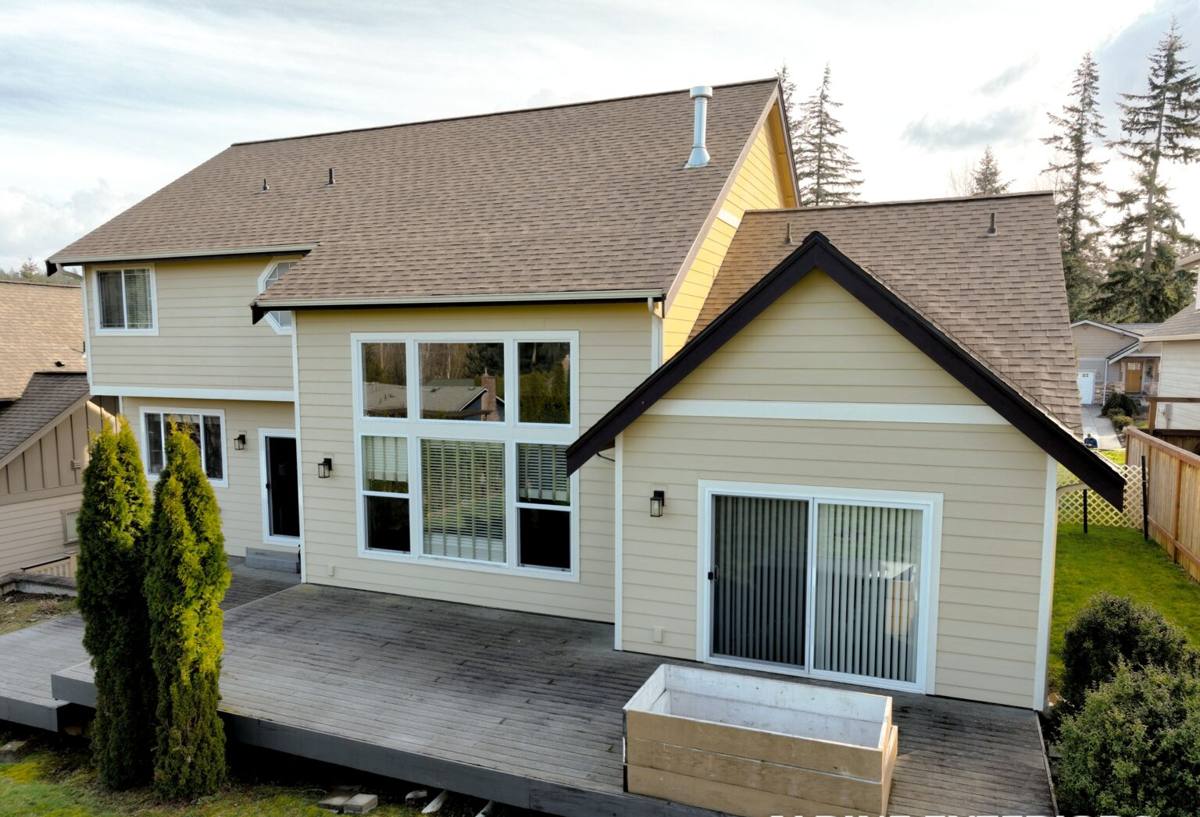
Signs a Cordata Roof Has Reached Replacement, Not Repair
Most roofs give warning signs well before a leak shows up inside the house. The trouble is that a lot of those signs look minor from the ground. Here's what actually tells us a roof is past the point where patching makes sense:
- Granule loss heavy enough that you're finding sand-like debris in gutters or downspouts every time it rains
- Shingles that are cupping, curling at the edges, or cracking when you'd expect them to still be flexible
- Moss or algae that keeps returning within a few months of cleaning, especially on shaded slopes
- Soft or spongy decking felt underfoot during an inspection — a sign moisture has already gotten past the roofing surface
- Daylight visible through the attic roof boards, or water staining on attic sheathing
- A roof that's 20+ years old on standard asphalt shingle, even if it "looks fine" from the street
If you're seeing two or more of these, a replacement estimate is worth getting even if there's no active leak yet. Catching it before a leak means the decking is more likely to be salvageable, which keeps the job — and the cost — more predictable.
What a Correct Replacement Actually Involves
A roof replacement is more than swapping old shingles for new ones. Done properly, especially in a climate this wet, it's a full system rebuild:
Tear-off and deck inspection
Every layer comes off down to the decking, and the decking gets inspected board by board. Any wood that's soft, delaminated, or water-stained gets replaced before anything new goes down — covering damaged decking with new shingles just hides a problem that will resurface as a leak.
Ice and water shield at vulnerable points
Valleys, eaves, and roof-to-wall transitions get a self-adhering waterproof membrane underneath the main underlayment. In a region with sustained rain events rather than short downpours, this is the layer that keeps wind-driven water from working backward under the shingles.
Underlayment across the full deck
A synthetic underlayment goes down over the rest of the roof as a second line of defense. It's not optional insurance — it's what keeps a roof watertight during the weeks between tear-off and the shingles taking their final set, and it backs up the shingle layer for the life of the roof.
Flashing, not just shingles
Flashing around chimneys, skylights, vents, and wall intersections is where most roof leaks actually originate — not in the open field of shingles. New flashing, properly stepped and sealed, goes in as part of the job rather than reusing old pieces to save time.
Ventilation correction
If the existing attic ventilation was undersized or blocked, we address it during the replacement. More on why that matters below.
Choosing a Roofing Material for This Climate
There's no single "best" roofing material — there's the right material for a given roof, budget, and exposure. Here's how the common options stack up specifically against salt air, sustained rain, and moss pressure:
| Material | Moss/moisture behavior | Salt air durability | Typical lifespan |
|---|---|---|---|
| Architectural asphalt shingle | Moss-resistant algae-shield options available; needs periodic cleaning on shaded slopes | Good with quality granules and proper fasteners | 25-30 years |
| Standing seam metal | Sheds moss and standing water very well; minimal maintenance | Excellent with coated/coastal-rated panels and fasteners | 40-50+ years |
| Cedar shake | Highest moisture sensitivity; needs consistent upkeep to resist rot and moss in shaded, damp spots | Fair — salt and moisture accelerate weathering | 20-30 years with diligent maintenance |
| Synthetic composite shingle | Strong moss resistance, doesn't absorb moisture like wood | Good | 30-50 years |
For most Cordata homes, we steer conversations toward architectural asphalt with an algae-resistant rating or standing seam metal, because both hold up to sustained wet-season exposure with a manageable maintenance load. Cedar shake can look great, but its moisture sensitivity means it's a real commitment on a lot with shade and limited airflow — we'll say so plainly rather than sell a homeowner a product that will fight the site conditions for the next twenty years.
Ventilation and Moisture Control: The Part You Don't See
A shingle can only do so much if the attic underneath it is trapping moisture. Warm, damp air rising from the living space needs somewhere to go, and cold outside air needs a path in at the eaves. When that balance is off — usually from blocked soffit vents, insufficient ridge venting, or insulation stuffed against the roof deck — you get condensation building on the underside of the sheathing. Over a wet Whatcom County winter, that condensation does the same damage a roof leak would, just from the inside out, and it also feeds moss and mildew growth that works its way to the surface.
Part of a proper replacement is checking intake and exhaust ventilation ratios and correcting them if they're wrong — not just replacing what was there before, especially if what was there before is part of why the old roof failed early.
Our Process, Start to Finish
- On-site inspection and estimate. We look at the whole system — shingles, decking, flashing, ventilation — not just the surface, and walk you through what we find.
- Material selection. We go over the honest trade-offs of each option for your specific roof pitch, shade exposure, and budget, not just the highest-margin product.
- Scheduling around the weather window. We plan tear-off days with rain forecasts in mind and keep the roof protected if conditions shift mid-project.
- Tear-off, deck repair, and full system install. Old material removed, decking repaired as needed, underlayment, flashing, and ventilation corrections done before the new roofing goes on.
- Final walkthrough and cleanup. Magnetic sweep for nails, debris hauled off, and a walkthrough so you know exactly what was done and why.
What Drives the Cost
Every roof is different, so we won't quote a number without seeing yours, but the main cost factors on a Cordata replacement are usually the same handful of things:
- Roof size and the number of planes, valleys, and penetrations (chimneys, skylights, vents)
- Condition of the existing decking — how much needs to be replaced versus reused
- Roof pitch and accessibility for equipment and material staging
- Material choice, from standard architectural shingle up through standing seam metal
- Ventilation corrections, if the existing attic airflow needs to be reworked
- Layers of old roofing to remove — a second or third tear-off layer adds labor
Broadly, a straightforward asphalt shingle replacement on an average-size home tends to run in the mid five figures, with metal roofing and larger or more complex rooflines running higher. The only way to get a real number is a site visit, which is what the free estimate below is for.
Why Local Experience Matters Here
A roofing crew that's already worked houses in and around Cordata and Ferndale knows what this specific climate does to a roof over time — which slopes hold moss the longest, how a valley behaves in a sustained atmospheric-river-style rain event, and what ventilation setups actually keep pace with the wet season instead of just meeting code on paper. That local pattern recognition shows up in small decisions during the job: where extra ice-and-water shield earns its keep, which flashing details need the most attention, and which materials are worth the upgrade cost for this specific exposure. A crew installing to a generic spec sheet, without that local history, is more likely to make choices that look fine on day one and cause problems in year three.
After the Install: Keeping It Right
A new roof still needs a little seasonal attention, especially given how long moss season runs here. A short annual checklist:
- Clear gutters and downspouts each fall before the heavy rain sets in
- Check shaded, north-facing slopes for early moss growth and treat it before it spreads
- Keep overhanging branches trimmed back to reduce shade and debris buildup
- Walk the attic once a year to check for staining, daylight gaps, or musty odor
- Have flashing around chimneys and skylights checked every few years, since that's where most leaks start
If you're weighing whether your roof needs a repair or a full replacement, or you just want an honest read on where it stands, we're happy to take a look. The estimate is free, there's no pressure attached to it, and you'll get a straight answer either way — use the form below to get started.