 Ferndale Siding
 Siding Installation for Cordata Homes
Cordata is one of the growing residential communities in the broader Ferndale service area of Whatcom County, with a housing mix that ranges from newer subdivisions and townhomes to older single-family homes that have been through a few Pacific Northwest winters already. That mix matters when it comes to siding installation, because a brand-new build, an addition, and a full re-side of an aging home all call for the same underlying discipline even though the starting point looks different. We install siding in Cordata regularly, and the approach doesn't change based on how new the house is — it changes based on what the wall assembly needs to hold up against year after year.
We install James Hardie fiber cement siding exclusively. For a Whatcom County property dealing with salt-laden air, driving rain, and a moss season that runs longer than most homeowners expect, it's the material we stand behind without hesitation.
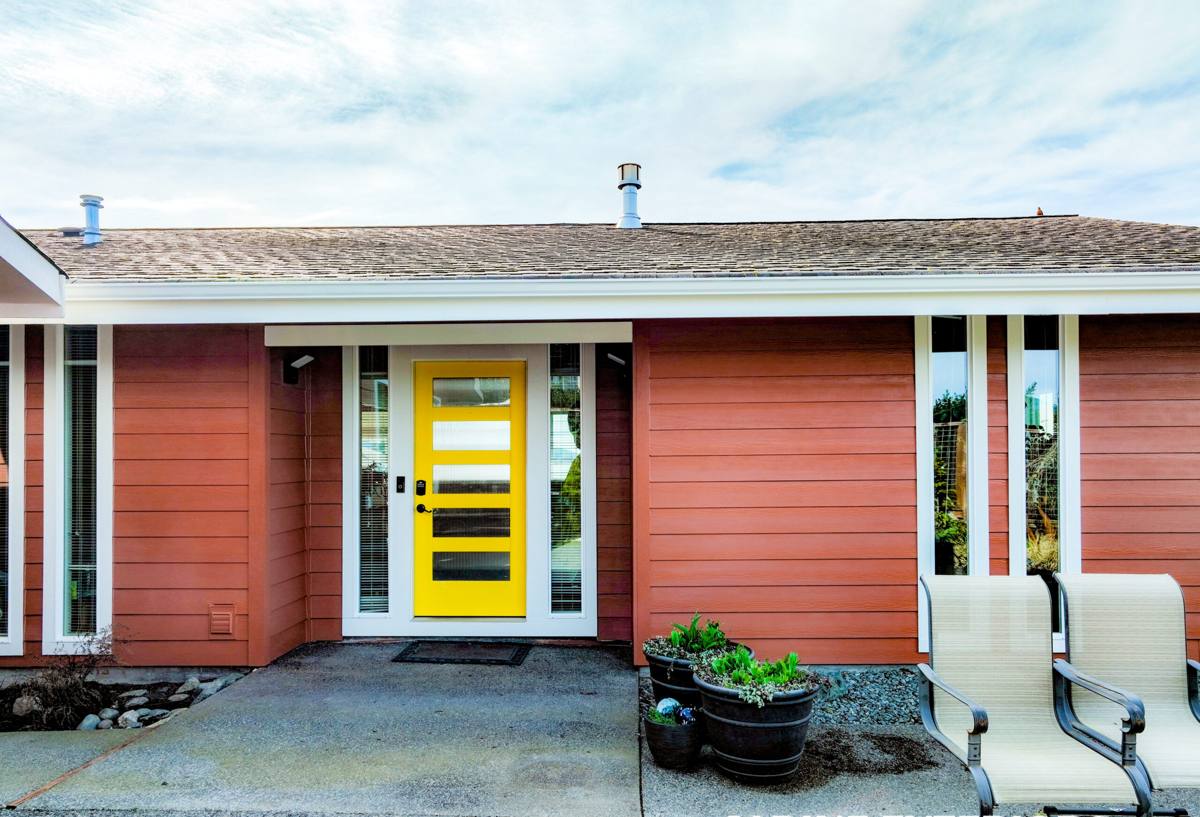
What Cordata's Climate Means for a New Siding Installation
Salt Air Off the Sound
Whatcom County sits along the Salish Sea, and even communities that aren't right on the waterfront get a steady dose of salt-laden air carried inland on the marine wind. Salt air is corrosive to unprotected metal fasteners, trim edges, and any siding surface where the factory finish has been compromised by a bad cut or a missed touch-up. It also draws moisture, which means a wall assembly in this region is dealing with airborne salt and airborne humidity at the same time. Installation details that would be minor elsewhere — an exposed fastener head, a raw cut edge left unsealed — become the first failure points here.
Wind-Driven, Sideways Rain
Storms moving through this part of Whatcom County rarely drop rain straight down. It comes in at an angle, pushed by wind, which means siding has to shed water that's actively being driven into seams, laps, and trim joints rather than just running off a flat surface. A new installation that's only detailed for rain falling straight down will leak at exactly the spots you'd expect — around windows, at butt joints, and anywhere flashing was treated as an afterthought instead of a planned part of the install.
A Long Moss and Mildew Season
Mild temperatures, persistent regional dampness, and mature tree cover on many Cordata lots add up to a moss and mildew season that stretches across most of the year. Shaded, north-facing walls are usually the first to show staining or green growth, and it's not just a cosmetic issue — sustained organic growth holds moisture directly against the siding and the wall behind it, which is exactly the condition that leads to hidden rot if it's left alone. A siding system's resistance to moisture absorption matters as much as its resistance to sun and wind in a climate like this.
What Correct Installation Actually Involves
Choosing the right siding product only gets a Cordata home halfway there. The other half is installation detail, and it's where most of the long-term problems we get called out to fix actually started.
Water-Resistive Barrier and Flashing
A properly lapped house wrap, correctly integrated window and door flashing, and flashing at every horizontal trim transition are what actually keep water out — not the siding surface itself and not a bead of caulk. Caulk is a backup, not a strategy. When flashing is done right, wind-driven rain that gets behind the siding surface still has a planned path back out instead of a path into the sheathing.
Fastening and Clearance
Fastener type, spacing, and depth all affect how well siding performs against wind load and how well it resists the kind of corrosion that salt air accelerates. Clearance from grade, roof lines, and decking also matters — siding installed too close to the ground or to a roof surface stays wet longer and starts absorbing splash-back moisture that a few extra inches of clearance would have prevented entirely.
Joints, Corners, and Trim
Butt joints that aren't backed and sealed correctly, corners that rely on caulk instead of proper flashing, and trim that isn't factory-finished on cut edges are where siding installations quietly fail years before the field material itself would have. On a home in a driving-rain climate, these details aren't optional extras — they're the difference between an installation that lasts decades and one that needs attention again within a few years.
Why James Hardie Is the Only Siding We Install
We narrowed our installation work to one siding system after years of jobs across Whatcom County showed us which materials actually held up to salt air, driving rain, and a long moss season — and which ones quietly became maintenance problems for the homeowner a few years down the road.
- Non-combustible core: Fiber cement doesn't feed a fire the way wood-based or wood-derived siding products can, which matters for household safety and insurance underwriting alike.
- Factory-applied ColorPlus finish: The color is baked on under controlled factory conditions rather than brushed on in the field, so it resists fading, chalking, and moisture intrusion far longer than site-applied paint — a real advantage when salt air and humidity are working against any painted surface.
- Climate-engineered HZ product lines: Hardie builds different formulations for different climate zones, including versions engineered for regions with sustained moisture exposure, which is a real match for a Whatcom County installation.
- Dimensional stability: Fiber cement doesn't swell, cup, or warp the way engineered wood siding can after repeated wet-season moisture cycles, which matters given how long the wet season runs here.
- Strong transferable warranty: Hardie backs its products with a solid warranty structure, provided the installation follows spec, giving homeowners real protection rather than a marketing claim.
We don't install LP SmartSide, vinyl siding, Cemplank, Allura, primed spruce, or cedar. Each of those products has a place in the broader market, and plenty of homeowners elsewhere are satisfied with them. But we made a professional call that one system we trust completely, installed correctly, is worth more to a homeowner than a cheaper option that quietly shifts maintenance risk onto them a few years later — especially in a climate that combines salt air, wind-driven rain, and near-constant dampness.
Matching the Right Hardie Product to a Cordata Home
| Product Line | Best Use | Why It Fits This Area |
|---|---|---|
| HardiePlank lap siding | Most single-family homes and new construction | Traditional lap profile sheds wind-driven rain effectively when installed with proper overlap and flashing |
| HardiePanel vertical siding | Accent walls, gables, and modern or farmhouse-style designs | Clean vertical lines with fewer horizontal laps for water to work into |
| HardieShingle siding | Craftsman-style homes and accent sections | Textured look without the moisture absorption and upkeep of real wood shingle |
| HardieTrim boards | Corners, window and door casing, fascia | Factory-finished trim resists the same salt air and moisture exposure as the field siding |
Color and profile are a matter of the individual home and the homeowner's preference, but the underlying product family and installation approach stay consistent — we spec what actually fits a Cordata property's exposure instead of defaulting to whichever line is easiest to install.
Our Installation Process
- Walk the home and assess the existing wall assembly, or the framing and sheathing on new construction, before any material is ordered.
- Remove old siding and inspect sheathing, framing, and flashing for hidden moisture damage on re-side jobs, repairing anything compromised before new material goes up.
- Install or verify a properly lapped water-resistive barrier and correct flashing at every window, door, and horizontal trim transition.
- Install James Hardie siding to manufacturer fastening specifications, accounting for local wind exposure and proper clearance from grade, roofing, and decking.
- Detail joints, corners, and trim so they're backed and sealed rather than simply butted together and caulked over.
- Walk the finished job with the homeowner and address anything that needs adjustment before calling it complete.
Installation Readiness Checklist
- Existing siding and trim checked for soft spots, staining, or gaps at seams and corners before demo begins
- Sheathing and framing inspected once old siding is off, with any hidden rot repaired before new siding goes up
- Window and door flashing planned and installed before siding closes the wall back up
- Grade, roof, and deck clearances confirmed so new siding isn't set up to wick moisture from day one
- Fastening pattern and material specified for this property's actual wind and moisture exposure, not a generic default
Cost Factors for a Cordata Siding Installation
| Factor | What It Affects | Why It Matters Here |
|---|---|---|
| New construction vs. re-side | Scope of demo and substrate access | Re-side jobs require tear-off and often reveal hidden moisture damage under older siding |
| Substrate condition | Repair costs before new siding goes on | Long-term trapped moisture and salt-air exposure can compromise sheathing and framing over time |
| Home size and wall complexity | Labor time and material quantity | Additional gables, dormers, and trim details add installation time regardless of square footage |
| Product line and profile | Material cost | Lap, panel, and shingle profiles carry different material and labor requirements |
| Site access and staging | Labor time and equipment needs | Lot size, driveway access, and neighboring structures affect how efficiently a crew can work |
Exact costs depend on the specific home and its condition, which is why we walk the property in person before giving a real number instead of quoting off a generic price sheet.
Why a Crew That Already Works Cordata Matters
A crew that installs siding in Cordata and the surrounding Ferndale service area regularly understands how salt air, driving rain, and a long moss season actually behave on real homes here over a full year — not just how a product performs on a spec sheet. That experience shapes practical decisions on install day: which wall orientations stay wet the longest, where extra flashing attention pays off, and which fastening details are worth the added time so a homeowner isn't dealing with a callback after the next winter storm. It also means we're not learning a neighborhood's quirks on your job — we already know what this climate does to an installation that skips a step.
What to Expect When You Call Us
We'll walk the home, give you an honest read on what a proper installation involves for your specific property, and explain clearly why we recommend James Hardie for a home dealing with this kind of exposure. If your Cordata home needs new siding — whether that's a full re-side, an addition, or new construction — reach out using the form below to schedule a free, no-pressure estimate.