 Ferndale Siding
 Decks Near Cordata Take a Different Kind of Beating
Cordata sits close enough to Bellingham Bay and the Ferndale corridor that its weather behaves a lot like the rest of northwest Whatcom County: long wet seasons, salt-tinged air rolling in off the water, and tree cover that keeps a lot of lots shaded and slow to dry. That combination is hard on decks in ways that dry-climate advice doesn't cover. A deck built the same way you'd build one in eastern Washington or the Midwest will not last as long here, because the failure points are different.
Moss is the most visible symptom, but it's not the real problem — it's a signal. Wherever moss is thick enough to hold water against wood or fasteners, that's also where rot, corrosion, and structural softening are quietly working underneath. A deck that looks "just cosmetically rough" from the top can have a compromised ledger board, soft joists, or rusted-out hardware underneath, especially if it's more than 12-15 years old and was never sealed on a regular schedule.
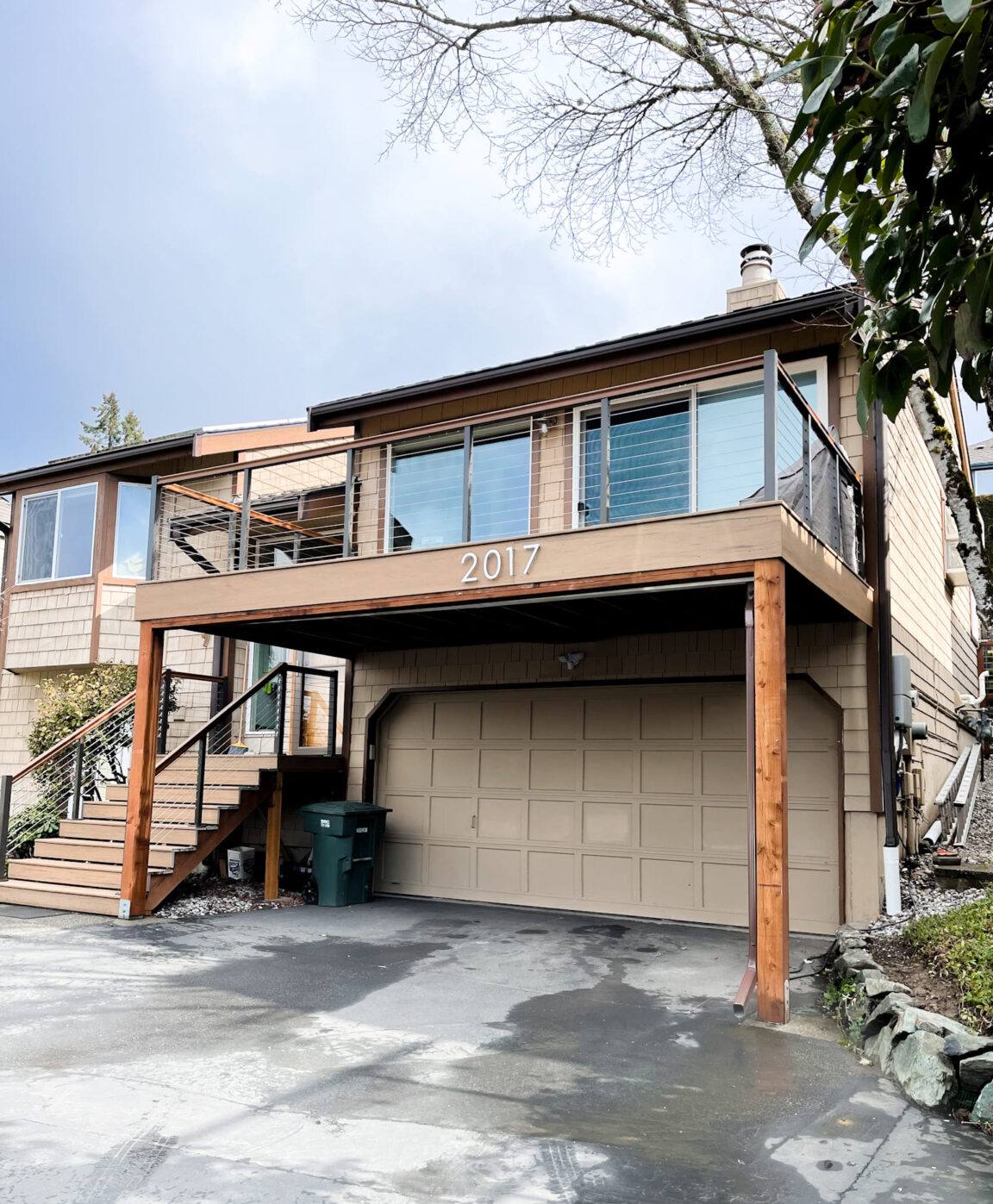
How to Tell a Deck Needs Replacing, Not Just Repair
Not every tired-looking deck needs to come out. But there's a point where patching boards is throwing money at a structure that's already lost its integrity. Knowing the difference saves homeowners from either overpaying for repairs on a doomed deck, or underestimating a job that actually needs a full rebuild.
Signs Visible From the Top
- Boards that feel spongy, spring back slowly, or flex noticeably when walked on
- Persistent moss or algae that regrows within weeks of cleaning
- Nail heads popping up or screws that spin freely without biting
- Gray, splintering wood that catches on bare feet or clothing
- Visible gaps or separation where boards meet the house
Signs You Can't See Without Getting Underneath
The framing is where the real story lives. A screwdriver test — pressing a flathead into the wood at the ledger, joist ends, and post bases — tells you a lot fast. If it sinks in without much resistance, that wood has lost structural strength, even if the deck surface still looks presentable. Rusted joist hangers, a ledger board with no visible flashing, or posts sitting directly in soil rather than on proper footings are all reasons to plan for a full replacement rather than a patch job.
What a Correct Deck Replacement Actually Involves
A deck replacement done right isn't just "old boards off, new boards on." Most of what makes a deck last in this climate happens in the parts nobody sees once it's finished.
Ledger Attachment and Flashing
The ledger board — where the deck bolts to the house — is the single most common failure point in deck framing everywhere, and it's worse here because of how much rain the connection sees over a year. Proper flashing directs water away from the house band board and the wall behind it, which matters as much for protecting your siding and sheathing from hidden water damage as it does for the deck itself. Lag bolts or through-bolts rated for the load, not just nails, are non-negotiable at this connection.
Joist Protection and Fasteners
Even pressure-treated lumber benefits from joist tape or a comparable flashing membrane along the top of each joist — it keeps water from pooling in the screw holes and wicking into the wood grain, which is where most joist rot actually starts. Because treated lumber is chemically corrosive to plain steel, and because salt-tinged coastal air accelerates that corrosion further, we use hot-dip galvanized or stainless hardware and coated or stainless fasteners rather than standard-grade screws.
Footings and Post Bases
Footings need to sit below frost depth and bear on solid, undisturbed soil — not just be poured wherever the old posts happened to be. Post bases should hold the post above the concrete and above standing water, never buried or set flush against wet ground, which is a common shortcut on older or budget decks that leads directly to post-base rot.
Choosing a Decking Material for This Climate
There's no single "best" decking material — it depends on how much maintenance you're willing to do, your budget, and how much shade your lot gets. Here's how the common options compare for a property in this part of Whatcom County.
| Material | Moisture Resistance | Maintenance | Typical Lifespan | Relative Cost |
|---|---|---|---|---|
| Pressure-Treated Lumber | Good if sealed yearly | Annual cleaning and resealing | 10-15 years | Lowest |
| Cedar | Naturally moderate; needs upkeep | Cleaning, sealing, occasional board replacement | 12-18 years | Mid-range |
| Capped Composite | Excellent; won't rot or absorb water | Occasional washing, no sealing | 25-30+ years | Highest upfront |
In a shaded, damp neighborhood, capped composite tends to earn its higher upfront cost back in avoided maintenance — it doesn't hold moisture the way wood fibers do, so it doesn't feed moss and mildew the same way. That said, a well-maintained pressure-treated deck is a perfectly reasonable choice for homeowners who don't mind an annual cleaning and reseal, and it remains the most budget-friendly option for a full replacement.
Permits and Code Requirements
Deck replacement in this area typically requires a building permit, since it involves structural framing, footings, and guardrails — not just a cosmetic resurface. Permit requirements and inspection steps are set by the local building jurisdiction, so the exact process depends on whether the property falls under city or county authority; we handle that determination and the permit paperwork as part of the job rather than leaving it on the homeowner.
Common Code Points We Build To
- Guardrails required on any deck surface roughly 30 inches or more above grade, typically 36-42 inches tall
- Baluster spacing that won't allow a 4-inch sphere to pass through
- Stair rise and run within code tolerance, with graspable handrails on longer stair runs
- Ledger attachment methods that meet current structural standards, not legacy nail-only connections
- Footing depth appropriate for local frost and soil conditions
These aren't bureaucratic hoops — they're the difference between a deck that holds up under a full house's worth of people during a gathering and one that doesn't. Skipping the permit might save a little time up front, but it can create real problems at resale, when a home inspector or buyer's lender flags unpermitted structural work.
Our Deck Replacement Process
- On-site assessment — we inspect the existing deck top to bottom, including the ledger connection, framing, and footings, and give you an honest read on what's salvageable versus what isn't
- Scope and material selection — we walk through material options and cost trade-offs so the decision fits your budget and how you actually use the space
- Permit submission — we handle the permit application and any required plan details before demolition starts
- Tear-off and structural check — full removal of the old deck, with a close look at the house band board and rim joist behind the ledger for hidden water damage before anything new goes up
- Framing and flashing — new ledger flashing, joists, joist protection tape, and corrosion-resistant hardware installed to current structural standards
- Decking, railing, and stairs — surface material, guardrails, and stairs installed to code
- Final inspection and walkthrough — we coordinate the required inspection and walk the finished deck with you before calling the job done
Keeping a New Deck in Good Shape Through Whatcom County Winters
A properly built deck still needs some seasonal attention, especially with the amount of rain and shade common on lots in this area. None of this is difficult, but skipping it is how a 25-year composite deck or a 15-year wood deck starts losing years off its life.
- Sweep leaves and debris off the surface regularly, especially in fall — trapped organic matter is what feeds moss and mildew
- Keep gaps between boards clear so water drains through instead of pooling
- Check gutters and downspouts near the deck; water dumping directly onto or under the deck accelerates wear
- For wood decking, plan on cleaning and resealing on roughly a yearly cycle
- Walk the underside once a year and look at the ledger flashing, joist hangers, and post bases for rust or softening
- Re-tighten or replace any fasteners that have backed out or show corrosion
Why It Matters That We Already Work in This Area
A deck built for a dry inland climate and a deck built for a shaded, damp lot near Ferndale and the Cordata area shouldn't be framed the same way, even though they might look identical from the street. A crew that works this part of Whatcom County regularly already knows which framing shortcuts fail here — the un-flashed ledger, the buried post base, the standard hardware that rusts out early in salt-tinged air — because we've seen what those shortcuts turn into a decade later. That's not a marketing point, it's just what comes from building and repairing decks in the same conditions your home sits in, year after year.
Being local also means faster response for the practical stuff: getting out for an on-site assessment, pulling permits through the right jurisdiction without guesswork, and being reachable afterward if a question comes up once the deck has been through its first real wet season.
What Affects the Cost of a Deck Replacement
Every deck is different, so we don't quote sight-unseen, but the main variables that move the price are consistent from job to job:
| Cost Factor | Why It Matters |
|---|---|
| Deck size and shape | More square footage and complex angles mean more material and labor |
| Framing condition | Rotted ledger, joists, or footings add structural repair beyond a simple resurface |
| Decking material | Pressure-treated, cedar, and composite carry different material costs and install labor |
| Height and stairs | Taller decks and multi-flight stairs add framing, railing, and code complexity |
| Tear-off and disposal | Removing and hauling the old deck is part of the job, not an add-on |
| Permit and inspection fees | Set by the local jurisdiction, separate from labor and material cost |
If you're weighing whether your deck needs a full replacement or can be repaired, we're glad to take a look and give you a straight answer either way — including telling you if repair is the more sensible option. Reach out for a free, no-pressure estimate using the form below, and we'll walk the deck with you and talk through what it actually needs.