 Ferndale Siding
 Sandy Point Roofs Work Harder Than Most
If you own a home in Sandy Point, you already know your roof doesn't get an easy life. Sitting close to the water puts every roof in this community under a steady load of salt-laden air, wind-driven rain coming in almost sideways off the Strait, and long stretches of gray, wet weather that never really lets a roof dry out completely. Add in Whatcom County's moss season — which here can run most of the fall through spring — and you have a roofing environment that punishes shortcuts. A patch job that might hold up fine somewhere inland can fail fast on a shoreline roof exposed to this combination of salt, wind, and moisture.
That's the backdrop for every storm damage repair we do in this neighborhood. We're not just fixing what a storm broke; we're fixing it in a way that accounts for what the next six months of Sandy Point weather will do to that repair.
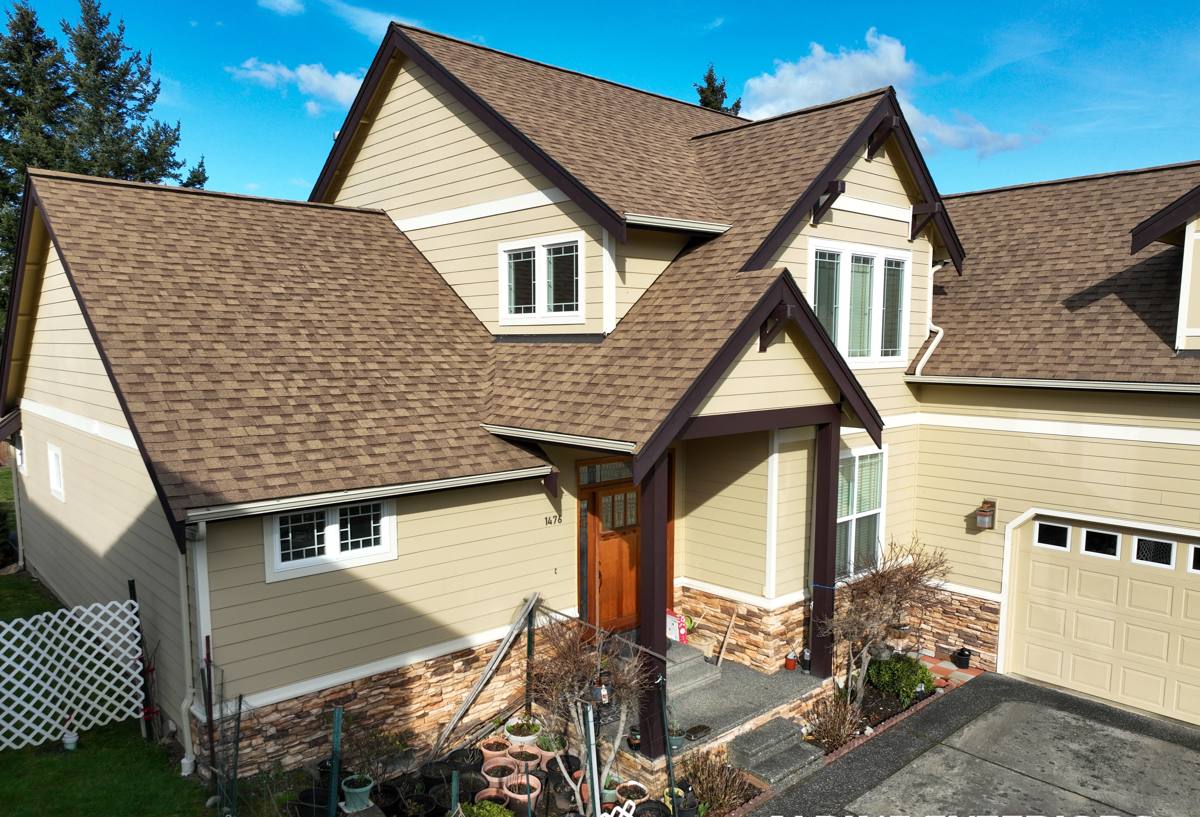
What Storm Damage Actually Looks Like Here
Storm damage on a Sandy Point roof rarely shows up as one dramatic problem. More often it's a handful of smaller issues that add up, especially after a windstorm rolls through with gusts coming straight off the water.
Wind-related damage
Shingles that got lifted, creased, or torn loose at the edges are the most common issue we see after a windstorm. Sometimes the shingle itself looks intact from the ground but the seal underneath has broken, which means it will lift again in the next blow unless it's re-secured correctly. Ridge caps and roof edges — the areas that take the most direct wind pressure — are usually the first to show damage.
Water intrusion
Driving rain doesn't need a big hole to get into a house. It only needs a lifted shingle tab, a gap in flashing around a chimney or vent pipe, or a seam that's opened up slightly. Because Sandy Point gets rain coming in at an angle off the water, flashing details that would be fine in a calmer inland location can leak here if they're even slightly out of spec.
Granule loss and surface wear
Salt air accelerates the breakdown of asphalt shingle granules faster than it would inland. After a storm, we often find bare or thinning spots where granules have washed away, exposing the asphalt mat underneath to UV and moisture. This isn't dramatic damage, but it's the kind of thing that turns into a leak within a year or two if it's ignored.
Moss-related rot
Moss itself doesn't blow in during a storm, but storm damage and moss problems compound each other. A section of roof with moss buildup holds moisture longer, and if a storm lifts or cracks a shingle in that same area, the wood decking underneath can start to soften before anyone notices. We check for this every time we're up on a roof after storm damage, because it's easy to miss from the ground.
What a Correct Repair Actually Involves
A lot of storm repair work amounts to sealing down a lifted shingle and calling it done. That can look fine for a season, but in a marine environment like Sandy Point, it tends to fail again at the first hard blow. A repair that's actually built to last here involves a few extra steps.
- Inspecting not just the visible damage but the surrounding field of shingles, since wind damage often extends past the spot that's obviously broken
- Checking the underlayment and decking underneath any lifted or missing shingles for moisture staining or soft spots before covering anything back up
- Re-sealing or replacing shingle tabs with proper adhesive rated for cooler, damp conditions — cold-weather sealant behaves differently than what's used in warmer climates
- Confirming flashing around penetrations (vents, chimneys, skylights) is intact and properly lapped, not just caulked over
- Matching replacement shingles as closely as possible in type, weight, and where feasible, color and wear
- Clearing moss and debris from the repair area so the new work isn't sitting on top of a moisture trap
Skipping any of these steps doesn't always show up right away. It shows up eight or ten months later as a soft spot in the decking or a stain on a ceiling, usually after the next round of storms.
Our Process for Sandy Point Storm Repairs
We keep this process consistent because it's what catches problems before they turn into bigger ones.
1. Ground and roof-level inspection
We start by walking the property and then getting up on the roof itself. Storm damage is often more extensive up close than it looks from the yard, particularly on the side of the roof facing the water and prevailing wind.
2. Documenting the damage
We note what's damaged, what's at risk, and what's still sound. This documentation matters for your own records and is often needed if you're filing an insurance claim.
3. Checking the substrate
Before any shingle goes back down, we check the decking and underlayment underneath for water damage. Covering over a soft or wet deck is one of the most common ways a "repaired" roof ends up leaking again.
4. Repairing to match existing materials
We use materials that match your existing roofing as closely as possible in type and quality, and installation methods suited to a marine, high-moisture climate — not generic repair techniques pulled from a drier region's playbook.
5. Final check and cleanup
We walk the repair with you, explain what we found and what we did, and clear debris — including any moss we removed along the way — so the area drains properly going forward.
Repair or Replace? How We Make That Call
Not every storm-damaged roof needs a full replacement, and not every roof can be patched indefinitely. The right call depends on the roof's age, how widespread the damage is, and what condition the decking is in underneath. Here's how we generally think through it:
| Factor | Leans Toward Repair | Leans Toward Replacement |
|---|---|---|
| Roof age | Under 12–15 years, in otherwise good condition | Near or past its expected service life |
| Extent of damage | Isolated to one or two areas | Spread across multiple slopes or sections |
| Decking condition | Solid, no moisture staining found | Soft spots, rot, or repeated moisture intrusion |
| Shingle condition elsewhere | Rest of roof still holding granules well | Widespread granule loss or brittle, aged shingles |
| History of moss damage | Minor, surface-level growth | Long-term moss buildup with underlying decking wear |
We'll always give you a straight answer on which side of this table your roof falls on, along with the reasoning behind it — not a push toward the more expensive option by default.
Why It Matters That We Already Work in Sandy Point
A crew that mostly works drier, more sheltered parts of Whatcom County can still do competent roofing work, but they may not have a feel for how a shoreline roof behaves differently. Sealant that cures properly on an inland roof can behave differently in the near-constant humidity and salt exposure closer to the water. Flashing that holds up fine against straight-down rain can leak against the wind-driven rain that comes off the Strait. Knowing which parts of a roof take the worst of Sandy Point's weather — usually the water-facing slopes and any north-facing areas that stay damp and shaded longer — changes where we focus our attention during both the inspection and the repair.
Working in this community regularly also means we're familiar with the pace of moss growth here, how quickly salt air ages asphalt shingles compared to other parts of the county, and what kind of storm patterns tend to cause repeat problems on the same roof if the first repair wasn't done right.
After the Repair: Keeping It From Happening Again
A good storm repair should also reduce the odds of the same damage recurring. A few things we recommend to Sandy Point homeowners once repairs are complete:
- Schedule a roof check after any major windstorm, even if nothing looks obviously wrong from the ground
- Keep gutters and valleys clear, since clogged drainage paths are a major contributor to both moss growth and water backing up under shingles
- Address moss buildup before it spreads, rather than waiting until it's covering a large section of roof
- Have flashing around chimneys, vents, and skylights checked every couple of years, since these are common leak points in wind-driven rain
- Keep an eye on attic or ceiling areas for any staining after storms, which can be an early sign of a small leak before it becomes a big one
None of this requires constant attention, but a roof in a marine environment like Sandy Point does better with occasional, proactive checks than with a wait-and-see approach.
What This Means for Your Home
Storm damage repair in Sandy Point isn't just about patching what broke in the last windstorm. It's about understanding why that particular spot failed — wind exposure, water intrusion, moss, salt air, or some combination — and repairing it in a way that holds up under the same conditions going forward. That's the standard we hold every repair to, whether it's a single lifted shingle or a section of roof that took real damage in a storm.
If your roof has come through a recent storm and you're not sure whether what you're seeing needs attention, we're happy to take a look. There's no pressure and no cost to get an honest assessment — just fill out the form below and we'll set up a time to come take a look at your roof.