 Ferndale Siding
 Composite Decking Built for Sandy Point's Coastal Conditions
Sandy Point sits right up against the water, which means every deck out here deals with a version of weather that inland Ferndale homes don't have to think about as much. Salt-laden air, near-constant humidity, driving rain off the Strait, and a moss season that seems to start earlier and end later each year all put real stress on outdoor structures. A deck built with the wrong materials or the wrong details will show it within a couple of seasons — soft spots, algae streaking, warped boards, corroding hardware. A deck built correctly for this specific location can go decades without those problems.
We install composite decking for homeowners throughout Ferndale and Whatcom County, and Sandy Point jobs get their own set of considerations. This page covers what we actually do differently out here, what composite decking involves as a system (not just the boards), and how to think about the investment.
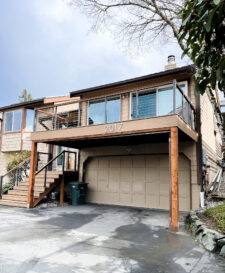
Why Sandy Point Is Harder on a Deck Than Most of Whatcom County
Salt Air and Metal Fasteners
Airborne salt accelerates corrosion on any exposed metal — screws, joist hangers, brackets, railing hardware. On a standard wood deck, this often shows up first as rust streaking down the boards or fasteners that back out and loosen over time. It's one of the most common early failure points we see on decks near the water, and it's entirely avoidable with the right hardware spec from day one.
Moisture That Doesn't Dry Out Quickly
Sandy Point's proximity to the water means higher ambient humidity and less drying time between rain events, especially from fall through spring. Untreated or under-sealed wood substructures stay damp longer, which is exactly the environment rot and fungal growth need. Composite decking boards themselves don't absorb water the way wood does, but the framing underneath still needs to be treated and detailed correctly, because that's where moisture problems actually start.
A Long, Aggressive Moss Season
Shade, moisture, and cool temperatures are moss's favorite combination, and Sandy Point gets a heavy dose of all three for much of the year. Moss and algae on a deck surface aren't just cosmetic — they hold moisture against the board, make the surface slick and dangerous underfoot, and on wood decks accelerate wear on the finish. Board selection and airflow underneath the deck both matter more here than they would on a drier, sunnier lot inland.
What a Correct Composite Deck Install Actually Involves
"Composite decking" gets used to describe just the surface boards, but the surface boards are only one part of a system that has to work together. A deck that fails prematurely almost never fails because the composite boards themselves wore out — it fails because something underneath or around them wasn't detailed for the site conditions.
Substructure and Framing
The joists, beams, and posts under the decking take the structural load and are the part most exposed to trapped moisture. For Sandy Point installs we spec framing lumber rated for ground contact and exterior exposure, and we seal cut ends and drilled holes in the field — a factory-treated board that gets cut on site and never re-sealed at the cut has an untreated, absorbent end grain sitting in a wet environment.
Fasteners and Hardware
This is where salt air does the most damage if it's overlooked. We use stainless steel or coated fasteners rated for coastal/marine exposure rather than standard exterior-grade hardware, and the same goes for joist hangers, post bases, and any structural brackets. It costs more up front and it's the difference between hardware that lasts the life of the deck and hardware you're replacing in five years.
Ledger Attachment and Flashing
Where the deck attaches to the house is the single highest-risk point for water intrusion on any deck, coastal or not. Proper ledger flashing directs water away from the house rim joist instead of letting it wick in behind the siding. On a home that's already dealing with high ambient moisture, a poorly flashed ledger board is a slow, hidden problem that can damage the house structure long before it's visible from outside.
Drainage and Airflow Underneath
Standing water and dead air under a deck are what grow moss and mildew. Correct grading beneath the deck, gapping between boards, and keeping skirting (if used) vented rather than sealed solid all keep air moving and water shedding instead of pooling.
Board Fastening Method
Most quality composite systems use a hidden fastener/clip system rather than face-screwing, which gives a cleaner look and avoids puncturing the board's cap layer, where most of the moisture and stain resistance lives. We match the fastening system to the specific board manufacturer's spec rather than using a generic clip across brands.
Composite vs. Wood vs. PVC: An Honest Comparison for This Location
| Factor | Composite | Pressure-Treated Wood | PVC/Vinyl Decking |
|---|---|---|---|
| Moisture resistance | Strong — cap layer sheds water, doesn't absorb like wood | Moderate — treatment fades, needs reapplication | Very strong — fully synthetic, no organic material |
| Moss/algae resistance | Good, especially with mold-inhibiting cap layers | Poor — organic surface is a food source for growth | Good — smooth surface, but can look slick when wet |
| Maintenance | Occasional wash; no staining or sealing | Annual cleaning, sealing, or staining | Occasional wash; no staining or sealing |
| Upfront cost | Mid-range | Lowest | Highest |
| Appearance | Wide range of wood-look finishes | Natural wood grain, fades over time | More uniform, less wood-like look |
| Coastal suitability | Well-suited with correct hardware/substructure | Requires more upkeep to hold up long-term | Very well-suited, but higher cost |
We install composite decking as our standard recommendation for most Sandy Point homes because it hits the balance point between upkeep, appearance, and cost for this climate. Pressure-treated wood can still be the right call on a tight budget as long as the homeowner understands the maintenance schedule required to keep it performing near salt water. We don't push PVC as a default — it's a legitimate premium option, but the cost difference doesn't make sense for every project.
Our Process for a Sandy Point Deck Project
- On-site assessment — we look at sun/shade exposure, existing drainage, proximity to the water, and the condition of any existing structure being replaced.
- Design and board selection — layout, board color/profile, and railing style, matched to how the deck will actually be used.
- Substructure build or repair — framing, ledger flashing, and hardware installed to coastal-exposure spec, not a generic inland spec.
- Composite board installation — hidden fastener systems installed per manufacturer spec, with proper board spacing for expansion and drainage.
- Railing, stairs, and trim — finished out to match the board system and code requirements for the structure's height and use.
- Final walkthrough — we go over care basics with the homeowner before we consider the job done.
What We Check Before Quoting Any Sandy Point Job
- Distance and direct exposure to prevailing wind/salt spray off the water
- Existing structure condition if this is a replacement or resurfacing job
- Shade pattern from trees or the house itself (drives moss risk)
- Current drainage path under and around the deck footprint
- Ledger board and rim joist condition where the deck meets the house
- Local permit and setback requirements for the specific lot
Cost Factors to Expect
We don't publish flat prices because deck cost depends heavily on size, substructure condition, board selection, and railing complexity — but the main variables worth understanding upfront are:
| Factor | How It Affects Cost |
|---|---|
| Deck size and shape | Larger and more complex footprints (multi-level, angled) increase both material and labor |
| Substructure condition | Full rebuild vs. resurfacing an existing sound frame is a major cost swing |
| Board tier | Composite lines range from entry-level to premium cap-stock, affecting price per square foot |
| Railing and stairs | Cable, glass, or composite railing systems cost more than basic baluster designs |
| Height and access | Elevated decks and difficult site access add labor time |
The honest range for most composite deck projects runs from a straightforward resurface on a sound frame up to a full rebuild with premium railing — which is exactly why we walk every site in person before quoting rather than pricing off square footage alone.
Maintaining a Composite Deck in a Coastal Whatcom County Climate
One of the real advantages of composite decking is how little upkeep it needs compared to wood, but "low maintenance" isn't "no maintenance," especially this close to the water. A periodic wash with a soft-bristle brush and mild soap keeps salt residue and early moss growth from taking hold, particularly on shaded sections of the deck that stay damp longer. Keeping gutters and nearby drainage clear so water isn't sheeting directly onto the deck also goes a long way. Beyond that, there's no staining, sealing, or sanding required — which is the main reason composite has become the default choice for homeowners who are tired of the annual wood-deck maintenance cycle.
Why Hire a Crew That Already Works in Sandy Point
A lot of deck problems we get called to fix didn't come from bad composite boards — they came from a substructure and hardware spec that would have been fine forty miles inland but wasn't right for a lot exposed to salt air and constant moisture. Knowing which fastener grade to use, how to flash a ledger board for this humidity level, and how to grade for drainage on a specific lot comes from having done the work in this exact area, not from a general decking install guide. That local experience is what keeps a deck performing the way it's supposed to for its full lifespan instead of needing hardware replaced or boards re-leveled a few years in.
If you're planning a new composite deck or replacing an aging one in Sandy Point, we're happy to take a look and give you a straight, no-pressure estimate — just fill out the form below and we'll get in touch.