 Ferndale Siding
 Why Windows in Sandy Point Take More Abuse Than Windows Ten Miles Inland
Sandy Point sits right up against the water, and that changes what a window has to survive year after year. Homes a short drive inland in Ferndale deal with normal Whatcom County weather. Homes in Sandy Point deal with that same weather plus salt-laden air blowing straight off the Strait, wind-driven rain that hits window assemblies at an angle instead of falling straight down, and a moss season that runs long and wet. None of that is dramatic on any single day. It's the cumulative effect over ten or fifteen years that shows up as failed seals, soft frames, and a heating bill that keeps creeping up.
When we talk about "energy-efficient windows" for a Sandy Point home, we're not just talking about the glass package. We're talking about a window and installation method built to hold its seal and its shape in a marine environment, because a window that leaks air or moisture doesn't stay efficient for long, no matter what the label says when it's new.
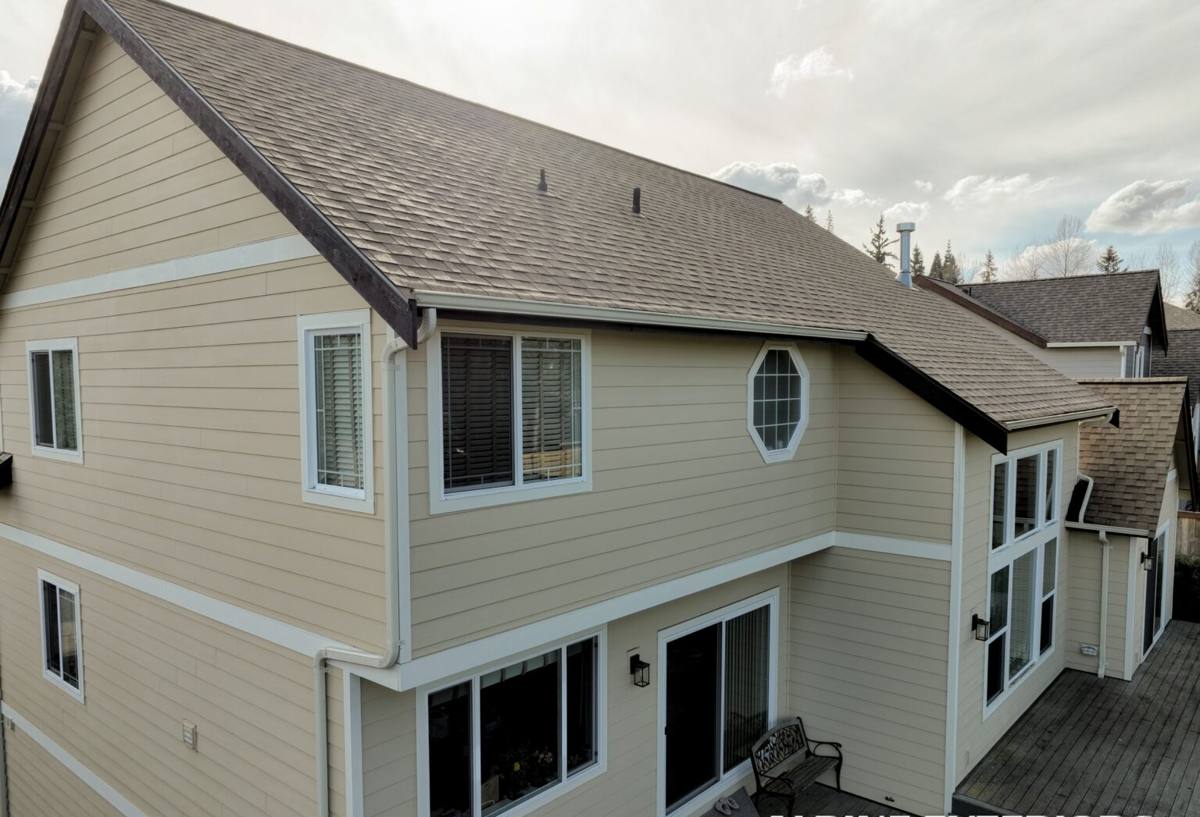
What Salt Air, Driving Rain, and Moss Season Actually Do
Salt air and hardware corrosion
Airborne salt is corrosive to unprotected or lower-grade metal hardware — hinges, cranks, locks, and some cladding fasteners. Once corrosion starts, the mechanical parts of a window bind up, seals stop closing evenly, and small gaps open up that let conditioned air escape.
Driving rain and wind-loaded seals
Wind off open water pushes rain into places it wouldn't reach on a calm day, testing every seal and every piece of flashing around a window opening. A window that's rated for efficiency in a lab test but installed with sloppy flashing will still leak water and air on a windy, wet Whatcom County afternoon.
Moss season and trapped moisture
The long stretch of damp, low-sun months encourages moss and algae growth on north- and west-facing walls and window trim. That growth holds moisture against wood trim and sills longer than it would in a drier climate, which accelerates rot around window openings that aren't properly flashed and sealed.
Signs Your Current Windows Are Already Costing You
Most window failure in this area is gradual, so homeowners often live with it for years before connecting the dots. Watch for these:
- Visible condensation or fog between the panes of a double-pane window (a sign the seal has failed)
- Cold air you can feel near the window frame even when it's fully closed
- Hardware that's stiff, corroded, or won't latch tight anymore
- Soft or spongy trim, sill, or casing when pressed
- Visible moss, algae, or dark streaking on trim around the window
- A noticeable draft or noise increase during windy weather off the water
- Rooms near windows that are harder to keep at a comfortable temperature
Any one of these is worth a look. Two or three together usually mean the window assembly, not just the glass, has reached the end of its useful life.
What "Energy-Efficient" Actually Means for This Climate
Efficiency ratings aren't one-size-fits-all. For a marine, mixed-humidity climate like Whatcom County, the numbers that matter most are:
U-factor
This measures how well the window resists heat transfer — lower is better. In our climate, a strong U-factor keeps heat inside during the long wet winters without needing a heavy, over-built frame.
Solar Heat Gain Coefficient (SHGC)
This measures how much solar heat passes through the glass. Sandy Point doesn't get the intense summer sun some inland areas do, so SHGC is usually a smaller factor here than U-factor, but window orientation still matters on south- and west-facing walls.
Low-E coatings and gas fills
A quality low-E coating and an argon or krypton gas fill between panes both improve insulating performance without changing how the window looks. These are worth paying for; they're a real, measurable upgrade, not a marketing add-on.
The honest trade-off: the best-rated glass package in the country won't perform if the frame material can't handle salt air and wind-driven rain, or if the installation isn't sealed and flashed correctly. All three pieces — glass, frame, and installation — have to work together.
Frame Material: What Holds Up Near the Water and What Doesn't
| Frame Material | Performance in Marine/Salt Air Exposure | Maintenance |
|---|---|---|
| Vinyl | Good corrosion resistance since there's no exposed metal to pit; performance depends on quality of the extrusion and welded corners | Low — occasional cleaning |
| Fiberglass | Very stable in temperature swings and moisture; holds paint and seals well over time | Low |
| Wood or wood-clad | Can perform well if cladding and flashing details are done correctly, but exposed wood or damaged cladding is vulnerable to the moss-season moisture cycle | Higher — periodic inspection and upkeep |
| Aluminum (uncoated or lower-grade) | More prone to corrosion and pitting in salt air over time; also conducts heat, working against efficiency goals | Higher — hardware and finish need monitoring |
We don't rule out any material outright, but for homes with direct water exposure we steer homeowners toward frame options and hardware finishes rated for coastal or marine use, and we're upfront when a material choice is likely to mean more maintenance down the road. That's a conversation we'd rather have before installation than after.
What a Correct Installation Actually Involves
The window itself is maybe half the job. The other half is how it goes into the wall, and this is where marine-climate homes are least forgiving of shortcuts.
- Removing the old window and inspecting the rough opening for hidden rot or moisture damage before anything new goes in
- Correcting any damaged framing or sheathing found during that inspection, not covering it up
- Installing flashing in the correct shingle-lap order so water is directed out and down, never trapped behind the new window
- Using a sealant and housewrap integration suited to wind-driven rain, not just a bead of caulk around the trim
- Shimming and fastening the window square and level so it operates smoothly and seals evenly for years, not just on install day
- Sealing and insulating the gap between the window frame and the rough opening completely, without over-compressing the frame
- Finishing trim and touch-up work so the exterior sheds water the way it's designed to
Skip any one of these steps and you can end up with a window that carries a great efficiency rating on paper but leaks air, water, or both within a few seasons — especially on a wall that takes direct wind off the water.
Our Process, Start to Finish
1. On-site assessment
We walk the property, look at current window condition, note which walls take the most wind and rain exposure, and check for any existing moisture or rot issues around openings.
2. Straightforward recommendation and estimate
We explain what we're seeing, what options make sense for the home's exposure, and what a proper job costs — no pressure, no inflated urgency.
3. Careful removal and opening inspection
Old windows come out carefully so we can inspect the framing underneath before anything new goes in.
4. Correct flashing, sealing, and installation
New windows go in plumb, level, and fully sealed against wind-driven rain, using flashing and sealing methods appropriate to a marine exposure.
5. Final check and cleanup
We test operation, check seals, and leave the site clean. If something isn't right, we fix it before we call the job done.
Cost Factors to Expect
Every home is different, so exact pricing depends on a site visit, but these are the factors that most often move the number:
| Factor | Why It Matters |
|---|---|
| Number and size of window openings | More or larger openings mean more material and labor |
| Frame material selected | Vinyl, fiberglass, and clad options carry different material costs and long-term maintenance needs |
| Condition of existing framing | Hidden rot or moisture damage found during removal adds repair scope before a new window goes in |
| Glass package (Low-E, gas fill, tempered where required) | Higher-performance glass costs more upfront but does more work against heat loss and condensation |
| Wall exposure | Walls facing direct wind and rain off the water may call for extra flashing and sealing detail |
We'd rather walk a homeowner through these factors honestly than quote a number that doesn't hold up once we're actually into the opening.
Why It Matters That We Already Work in Sandy Point
A crew that mostly installs windows on dry, inland lots doesn't always think in terms of wind-driven rain angles, salt-air hardware corrosion, or the moss-season moisture cycle that Whatcom County waterfront properties deal with. Those aren't exotic problems, but they change how flashing gets sequenced, which sealants and hardware finishes make sense, and which frame materials we'd actually put our name behind on a given wall.
Working regularly in Sandy Point and the surrounding Ferndale area means we've seen how these homes age, what fails first, and what tends to hold up. That's not a substitute for a proper site visit — every home and every wall is different — but it means fewer surprises and fewer callbacks.
If your windows are drafty, fogged, hard to operate, or just older than the rest of the house, we're happy to take a look and give you a straight answer about what's going on and what it would take to fix it. Reach out for a free, no-pressure estimate using the form below.