 Ferndale Siding
 New Roof Installation for Sandy Point Homes
Sandy Point sits right on the water west of Ferndale, built out along the Strait of Georgia with a mix of beachfront and canal-front homes. That direct water frontage is part of what makes the neighborhood, but it also makes roofing here a different job than roofing a few miles inland. A roof on a Sandy Point home takes the full, unbroken force of marine weather: salt-laden air blowing straight off the water, driving rain that comes in sideways rather than falling straight down, and a moss season that runs longer here than in much of the rest of Whatcom County because the air rarely dries out for long. A new roof installed here needs to be built for that exposure from the first course of underlayment to the last ridge cap, not adapted from a spec sheet written for a drier, more sheltered lot.
This page covers what a correct new roof installation actually looks like for a Sandy Point property: what the local climate demands, what a proper installation includes, and why it matters that the crew doing the work already understands this stretch of coastline.
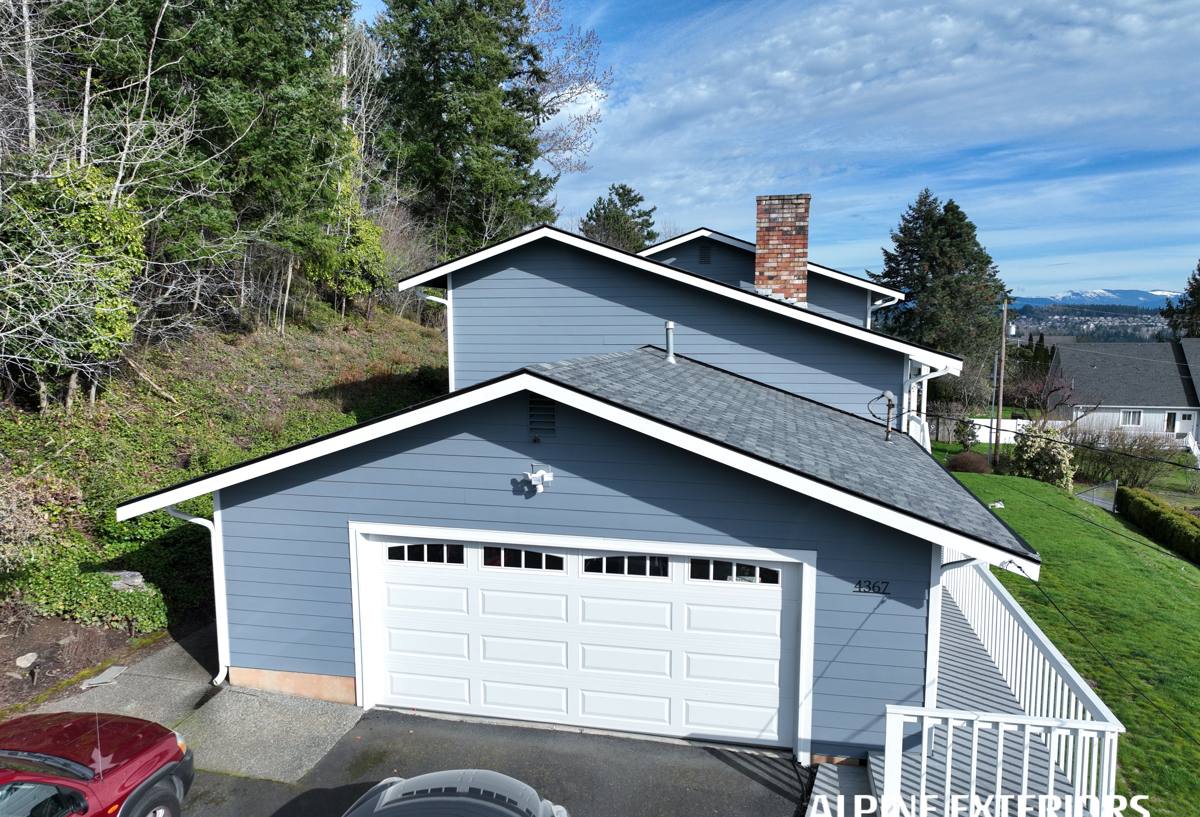
What Sandy Point's Waterfront Exposure Does to a Roof
Salt Air and Corrosion
Homes with direct, unobstructed water frontage take on salt-laden air continuously, not just during storms. That salt works on any exposed metal on a roof — fasteners, flashing, drip edge, vent caps, and ridge vent hardware — corroding standard-grade components years before they'd fail on a roof sitting further inland. A roof built for Sandy Point needs corrosion-resistant metal and fasteners specified from the start, not whatever standard hardware happens to be on the truck that day.
Wind-Driven Rain Off the Water
With nothing to break the wind between the water and the house, rain at Sandy Point routinely comes in at an angle instead of falling straight down. That matters because standard shingle coverage and lap patterns are engineered around rain that falls vertically; wind-driven rain finds its way under shingle edges, into valleys, and around vent penetrations that straight-down rain never would. Underlayment quality and flashing detail carry more of the actual waterproofing load here than they would on a sheltered inland roof.
A Long Moss and Algae Season
The same marine humidity that keeps the air salty also keeps roof surfaces damp for more of the year, and moss and algae take hold anywhere that dampness lingers — north-facing slopes, shaded valleys, and any low-slope section that doesn't get direct sun. Left unchecked, that growth holds moisture against the roofing material and works under shingle tabs, shortening the service life of an otherwise sound roof.
Wind Load and Uplift
Open water frontage also means Sandy Point homes see higher sustained wind and stronger gusts than a comparable inland roof, particularly during winter storm systems moving in off the water. Shingle wind rating, fastening pattern, and starter-course detail all matter more on a roof with this kind of exposure, since uplift failures tend to start at edges, ridges, and hips first.
What a Correct New Roof Installation Includes
A new roof is only as good as what goes on before the finish material, and on a property with this much water exposure, skipping a step underneath the shingles is what turns a twenty-five-year roof into a fifteen-year roof.
Tear-Off and Deck Inspection
We remove the old roofing down to the deck rather than layering over it, because that's the only way to actually see what's happening underneath — soft spots, hidden rot, or prior moisture damage that's common on older roofs this close to the water. Any damaged decking gets replaced before anything new goes on; there's no honest way to stand behind a roof installed over a compromised deck.
Underlayment Built for Sustained Moisture
Given how much of the waterproofing burden falls on the underlayment here, we use products rated for sustained moisture exposure rather than a bare minimum-code underlayment, with ice-and-water shield at eaves, valleys, and any low-slope transitions where wind-driven rain and debris tend to collect.
Flashing at Every Penetration
Valleys, chimneys, vent pipes, skylights, and roof-to-wall transitions all get properly lapped, corrosion-resistant flashing, sealed rather than relying on caulk to bridge a gap. Most roof leaks in this climate start at a flashing detail, not in the open field of the roof, so this step gets the same attention as the shingles themselves.
Corrosion-Resistant Fasteners and Metal
Every exposed fastener, drip edge, and vent component is specified for the salt exposure this property actually sees, not a standard hardware package. It costs a little more upfront and saves a homeowner from premature rust staining and failed fasteners a few years down the road.
Ventilation That Lets Moisture Escape
Balanced intake and exhaust ventilation keeps warm, moist attic air from condensing against the underside of the roof deck, which matters even more in a climate that's damp for most of the year. Poor ventilation quietly accelerates deck rot and moss growth from underneath, in a way a homeowner won't notice until it's already a problem.
Choosing a Roofing Material for a Sandy Point Home
There's no single right material for every home, but the trade-offs matter more on a property with direct water exposure than they would a few miles inland.
| Material | Salt & Moisture Behavior | Typical Maintenance | Realistic Lifespan Here |
|---|---|---|---|
| Architectural asphalt shingle, high wind rating | Performs well with proper ventilation and corrosion-resistant fasteners; algae-resistant granules help against moss | Periodic moss removal and fastener/flashing checks | 20-25 years given the exposure |
| Standing seam metal | Sheds wind-driven rain and moss well; needs marine-grade fasteners and coatings to resist salt corrosion | Low; occasional fastener and sealant inspection | 40+ years with correct hardware |
| Cedar shake | Absorbs moisture readily and needs strong airflow underneath to dry between storms; salt air adds to upkeep | Higher; regular treatment and moss control | 15-25 years with consistent upkeep |
| Composite/synthetic shingle | Resists moisture absorption well; performance depends heavily on product quality and installation | Low to moderate | 30-50 years depending on product |
We'll walk through which option actually fits a specific Sandy Point roof — pitch, sun exposure, how close the home sits to open water — rather than defaulting to whatever's easiest to sell. A beachfront roof with no windbreak at all and a canal-front lot set back from open water don't necessarily call for the same answer.
Our New Roof Installation Process
- In-person inspection: of the existing roof, deck, and ventilation, with photos and an honest read on what we find
- Written estimate: detailing material, underlayment, flashing scope, and fastening approach before any commitment is asked for
- Full tear-off: down to the deck, with any damaged decking repaired or replaced before new roofing goes on
- Underlayment and flashing: installed at every valley, penetration, and transition, with ice-and-water shield where it's needed most
- Roofing installation: with fastening and ventilation detail specified for this property's actual wind and salt exposure
- Final walkthrough: cleanup and a magnetic sweep of the property for stray nails and debris
Weather windows matter on a waterfront job like this, and we build reasonable flexibility into the schedule rather than promising a fixed timeline regardless of what a storm system does that week.
Cost Factors for a Sandy Point Roof Installation
| Factor | What It Affects | Why It Matters at Sandy Point |
|---|---|---|
| Tear-off vs. overlay | Labor scope and ability to inspect the deck | Tear-off reveals hidden moisture damage common on older roofs this close to the water |
| Underlayment and ice-and-water shield | Water resistance under the roofing material | Wind-driven rain off open water demands more underlayment coverage than a sheltered lot |
| Fastener and metal grade | Corrosion resistance and long-term durability | Standard-grade hardware corrodes faster under continuous salt exposure |
| Wind rating of material | Uplift resistance at edges, hips, and ridges | Open water frontage means higher sustained wind and gust exposure than inland lots |
| Roof pitch and access | Labor time, staging, and safety equipment | Waterfront lots can have limited staging space or elevated foundations that add labor time |
| Deck and ventilation repair | Cost of addressing hidden damage found during tear-off | Long-term trapped moisture is more common on older waterfront roofs than inland ones |
Exact costs depend on the specific home, which is why we walk the roof in person before quoting a number instead of pricing off a general estimate.
Signs a Sandy Point Roof Needs Replacing, Not Just Repair
- Moss or algae buildup that returns quickly after cleaning, especially on shaded or north-facing slopes
- Rust staining or corrosion visible on fasteners, flashing, or vent hardware
- Heavy granule loss collecting in gutters or at the base of downspouts
- Curling, cupping, or missing shingles, especially after a winter storm off the water
- Water staining on interior ceilings near exterior walls or around chimneys and vents
- Soft spots or give when the roof deck is walked
- Repeated repairs to the same section without lasting results
Any one of these is worth a professional look. On a property with this much water exposure, problems that start small tend to move faster than they would inland, since salt air and wind-driven rain rarely give a roof much of a break to dry out and recover.
Why a Crew That Already Works in Sandy Point Matters
Roofing a home with direct water frontage isn't the same job as roofing one a few miles inland, even within the same small stretch of coastline. A crew that already works Sandy Point regularly knows which slopes hold moss longest, roughly how far salt corrosion has typically progressed on a roof of a given age here, and which fastening and flashing details are worth the extra time so a homeowner isn't dealing with a callback after the next winter storm. That's a different kind of knowledge than general roofing experience gained somewhere sheltered from the water, and it's worth asking a contractor directly about their specific experience on this stretch of coast before hiring them.
Get a Free, No-Pressure Estimate
If your Sandy Point home needs a new roof, or you're not yet sure whether you're looking at a repair or a full replacement, we're glad to come take a look. We'll walk the roof, explain honestly what we find, and give you a written estimate with no pressure to sign on the spot — just fill out the form below to get started.