 Ferndale Siding
 Why Sandy Point's Waterfront Setting Changes the Siding Equation
Sandy Point sits right up against the water in Whatcom County, and that location does things to a house that inland Ferndale neighborhoods rarely deal with. Homes here take wind straight off the Strait of Georgia, catch salt spray that drifts onto siding and trim, and sit under the same low winter sun angle and heavy shade patterns that keep north- and west-facing walls damp for days after a storm. Siding that performs fine three miles inland can fail early out here — not because it's a bad product everywhere, just because it was never built for this particular combination of salt, wind-driven rain, and moss pressure.
This page is about one job in one place: installing James Hardie fiber cement siding correctly on a Sandy Point home. Not a general overview of Hardie products, and not a generic "siding replacement" pitch — the specifics of what this location demands and how we account for it.
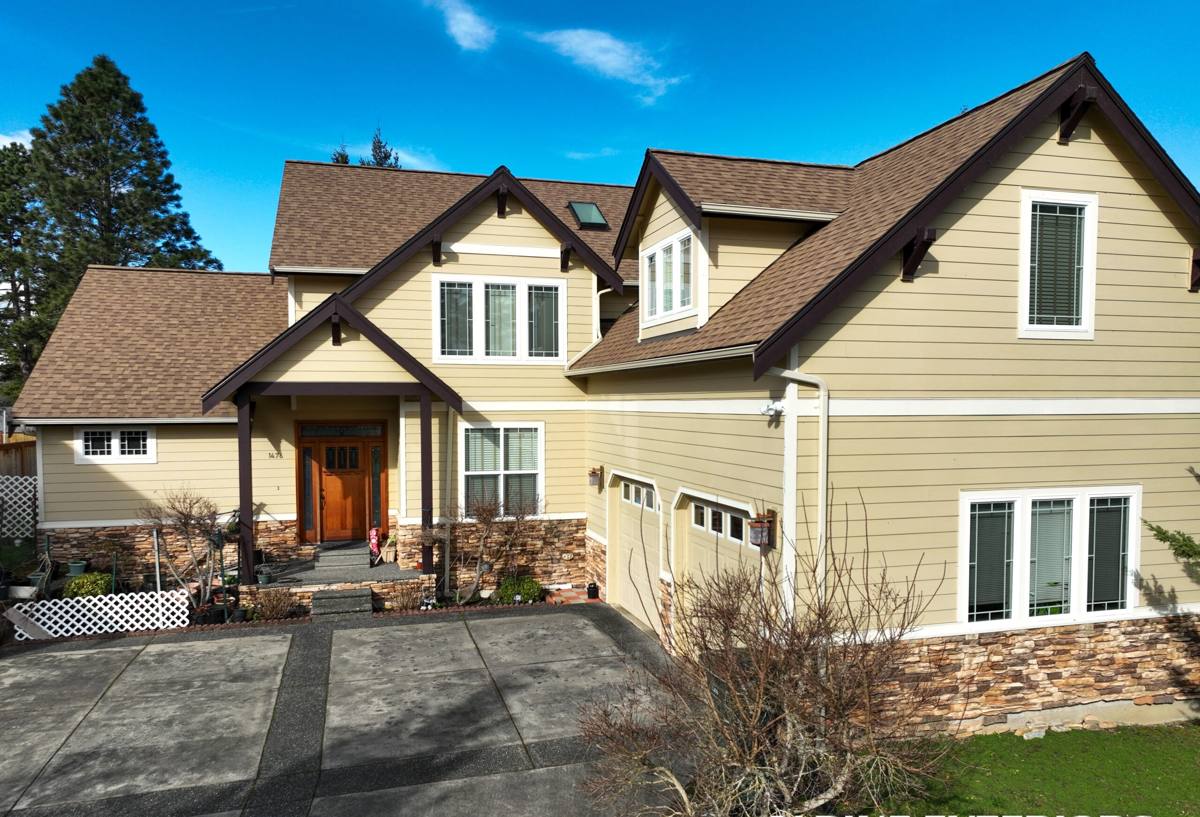
What Salt Air and Driving Rain Actually Do to Siding
Salt-Driven Wear on Fasteners and Finishes
Airborne salt is corrosive to metal and abrasive to painted surfaces. On a waterfront lot, siding fasteners, flashing, and trim hardware are exposed to a slow, constant dose of salt-laden air, especially on walls that face open water or catch prevailing wind. Over years, that accelerates corrosion in anything not rated for coastal exposure and can dull or chalk lower-grade paint finishes faster than a manufacturer's warranty timeline assumes.
Wind-Driven Rain Finds Every Gap
Rain in Whatcom County isn't usually the problem — it's rain pushed sideways by wind off the water. Wind-driven rain gets forced into laps, seams, and fastener penetrations that would stay dry in a calmer inland setting. If the water-resistive barrier, flashing details, and siding overlaps underneath aren't installed with that in mind, moisture works its way behind the cladding long before a homeowner sees any sign of it on the surface.
Moss and Mildew on Shaded, Damp Walls
Whatcom County's long wet season is bad enough for moss growth on its own; a waterfront lot with mature trees or persistent shade extends the window even further. Moss and mildew hold moisture against the siding surface, and on materials that aren't dimensionally stable or properly finished, that sustained dampness is what eventually causes swelling, cracking, or paint failure.
Why James Hardie Fiber Cement Is What We Put on Sandy Point Homes
We install James Hardie exclusively — not LP SmartSide, not vinyl, not Cemplank or Allura, not primed spruce or cedar. That's a deliberate standard, and it matters more on a lot like this than almost anywhere else in Ferndale.
- Non-combustible core — fiber cement doesn't feed a fire the way wood-based or engineered-wood siding can, which matters for insurance and long-term risk regardless of location.
- Dimensionally stable in wet-dry cycling — Hardie's fiber cement doesn't swell, delaminate, or take on water the way engineered wood products can when a seam stays damp for extended periods.
- ColorPlus factory finish — a baked-on finish applied and cured under controlled conditions holds color and resists the fading and chalking that salt air and UV exposure accelerate on field-applied paint.
- Climate-engineered HZ product lines — Hardie manufactures different formulations for different climate zones, so the board specified for a Pacific Northwest coastal job is engineered differently than one built for a dry inland climate.
- A real transferable warranty — backed by product performance data, not just marketing language, and it transfers to a future buyer, which matters on a desirable waterfront property.
None of that means Hardie is magic or maintenance-free. It means that of the products on the market, it's the one whose trade-offs make the most sense to stand behind on a house that's going to take this much weather for the next several decades.
How Siding Materials Actually Hold Up in a Salt-Air, High-Moisture Setting
| Material | Behavior in Salt Air / Driving Rain | Long-Term Concern on a Waterfront Lot |
|---|---|---|
| James Hardie fiber cement | Non-combustible, dimensionally stable, factory finish resists fading and chalking | Requires correct flashing and installation to perform to spec; not a concern with the material itself |
| Vinyl siding | Won't rot, but can become brittle and fade faster under sustained UV and salt exposure; expands/contracts more with temperature swings | Panels can warp or pull loose in sustained wind; color is baked into a thinner material with a shorter practical lifespan |
| LP SmartSide / engineered wood | Wood-based core is vulnerable if moisture gets behind panels or into cut edges | Edge sealing and caulking become critical maintenance items in a wet-dry, salt-air cycle |
| Cedar or primed spruce | Natural wood movement, absorbs moisture readily, needs a maintained paint or stain film to stay protected | Repainting and moisture monitoring on a recurring cycle; highest ongoing maintenance burden of the group |
This isn't a claim that any of these products are unusable — it's why, after weighing those trade-offs against what a Sandy Point home actually goes through year after year, we standardized on one material and stopped installing the others.
What a Correct Installation Involves on a Waterfront Home
Water Management Comes First
Before a single piece of siding goes up, the water-resistive barrier and flashing details around windows, doors, and penetrations have to be right. On a wall that's going to take wind-driven rain regularly, a weak point in the flashing isn't a someday problem — it's a next-storm problem.
A Drainage Gap, Not a Direct Nail-Up
Fiber cement siding performs best with a rainscreen or drainage gap behind it rather than being nailed directly to the barrier. That gap lets any moisture that does get past the outer surface drain and dry out instead of sitting against the wall assembly — a detail that matters more on a shaded, damp, waterfront wall than almost anywhere else in the area.
Fastening Rated for Wind Exposure
Fastener spacing and type need to account for the wind loads a waterfront lot actually sees, and hardware should be corrosion-resistant given the salt content in the air. Under-fastened or under-rated hardware is one of the more common shortcuts that shows up years later as loose boards or streaking corrosion stains.
Factory-Finished Cuts Stay Sealed
Every cut edge on a ColorPlus board needs to be sealed with the correct touch-up product to maintain the factory warranty and keep raw fiber cement from absorbing moisture at the cut line. It's a small step that's easy to skip and easy to catch if a crew doesn't do it as a matter of routine.
Our Process for a Sandy Point Project
The process itself isn't different from any Hardie installation we do — it's the attention paid to the details above that changes based on the lot.
1. On-Site Assessment
We walk the exterior, note which walls take the most weather (usually the ones facing open water or prevailing wind), check existing moisture damage, trim, and flashing conditions, and look at drainage around the foundation.
2. Product and Line Selection
We spec the Hardie product line, plank profile, and ColorPlus color based on the home's exposure, existing architecture, and the homeowner's preferences — not a one-size-fits-all package.
3. Tear-Off and Substrate Check
Old siding comes off and we inspect the sheathing underneath for hidden moisture damage before anything new goes up. On a waterfront home, this step sometimes turns up problems that weren't visible from outside.
4. Barrier, Flashing, and Drainage Gap Installation
This is the step that determines how the whole system performs over the next 20-30 years, and it's not one we compress to save time.
5. Siding Installation and Detail Work
Panels or lap siding go up to spec, with correct fastener spacing, sealed cut edges, and proper caulking at trim and penetrations.
6. Final Walkthrough
We review the finished job with the homeowner, cover basic maintenance expectations for this specific location, and answer questions before we consider the job done.
Realistic Maintenance for a Salt-Air, High-Moss Property
Hardie siding is low-maintenance compared to wood or vinyl, but "low-maintenance" isn't "no-maintenance" — especially on a lot that sees this much salt and shade. A short annual routine keeps a correctly installed job performing the way it's supposed to:
- Rinse salt residue off siding surfaces once or twice a year, particularly on walls facing open water
- Keep gutters and downspouts clear so water isn't overflowing onto siding below
- Trim back vegetation that's shading walls and keeping them damp longer than necessary
- Remove moss buildup gently — soft wash rather than pressure washing directly at siding seams
- Walk the exterior once a year looking for caulking that's cracked or pulled away at trim and penetrations
- Touch up any cut edges or chips in the ColorPlus finish promptly rather than letting raw material sit exposed
Why It Matters That We Already Work Sandy Point
A crew that's worked waterfront lots in this part of Whatcom County knows what to look for before they even get on a ladder — which walls are going to take the brunt of the weather, what shaded areas need extra attention for moss, and how a coastal Ferndale property differs from a job three miles inland. That's not something a crew figures out on their first coastal job; it's something that shows up in the flashing details, the fastener choices, and the drainage gap that a homeowner never sees but will absolutely feel the benefit of in year ten.
If you're weighing a siding replacement or repair on a Sandy Point home, we're happy to take a look, walk the exterior with you, and talk through what your specific walls and exposure actually need — no pressure, no generic package. The estimate is free, and there's a form below to get started.