 Ferndale Siding
 Roofing for Sandy Point's Shoreline Conditions
Sandy Point sits close enough to the water that its homes deal with a different roofing environment than houses a few miles inland in Ferndale or Bellingham. Salt-laden air, wind-driven rain off the Strait, and heavy shade from surrounding trees combine to create conditions that are genuinely harder on a roof than typical Whatcom County exposure. If you own a home out here, you've probably already noticed it: fasteners and flashing that corrode faster, moss that comes back within a season or two of cleaning, and shingles on the north and west slopes that stay damp longer after a storm than shingles on a similar house set back from the shoreline.
None of that means asphalt shingle roofing is a bad choice for Sandy Point. It's still the most practical, cost-effective roofing material for most homes here — but only when it's specified and installed with the local conditions in mind. A roof built to a generic spec, without attention to ventilation, fastener choice, and underlayment detailing, will underperform its warranty in this environment. A roof built correctly for this specific setting will hold up the way it's supposed to.
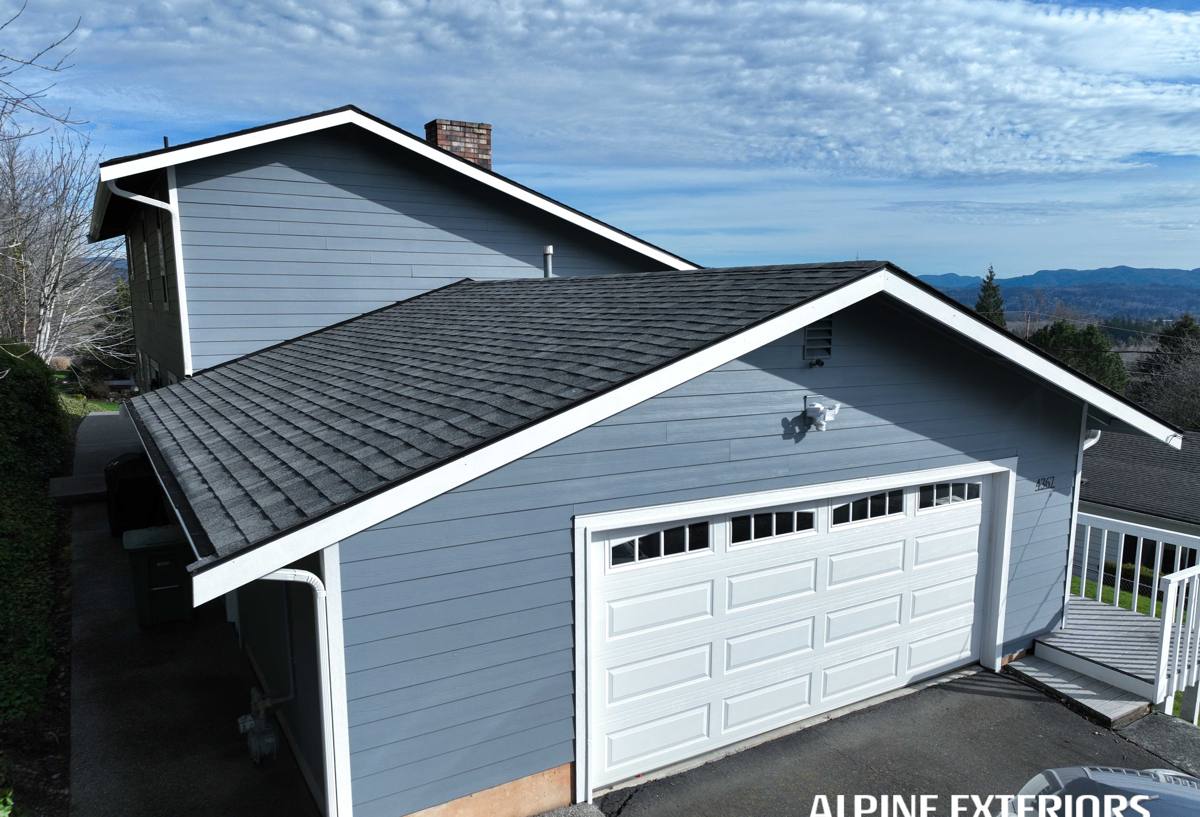
What Salt Air, Driving Rain, and Moss Actually Do to a Roof
Salt air and corrosion
Airborne salt accelerates corrosion on anything metal — nail heads, flashing, drip edge, and the metal components inside roof vents. Standard electro-galvanized fasteners can start showing rust streaks on shingles within a few years in a salt-air exposure like Sandy Point's, well before the shingles themselves are due for replacement. Once a fastener corrodes, its grip on the shingle weakens, and rust staining becomes a cosmetic problem that shows up on every slope facing the weather.
Driving rain and wind-driven water
Rain that comes in sideways off open water behaves differently than rain falling straight down. It gets pushed up under shingle tabs, into exposed nail heads, and into any flashing detail that was cut a little short. Roofs in more sheltered parts of Ferndale can sometimes get away with minimal flashing at valleys, walls, and penetrations. On a wind-exposed lot near the water, those same shortcuts show up as leaks — often not right away, but after a few seasons of repeated wetting.
Moss and prolonged moisture
Whatcom County's long wet season is tough on any roof, but shaded, north-facing slopes near the water tend to dry out even more slowly than average, which is exactly what moss needs to establish. Moss holds moisture against the shingle surface, lifts tabs as it grows under the edges, and works its way into the granule layer over time. A roof that isn't detailed for good airflow and drainage will grow moss back faster than the homeowner can reasonably keep up with manual cleaning.
What a Correctly Installed Shingle Roof Looks Like Here
For Sandy Point specifically, we adjust a standard asphalt shingle installation in a few concrete ways:
- Corrosion-resistant fasteners (stainless steel or high-quality hot-dip galvanized) instead of standard electro-galvanized nails, especially on the weather-facing slopes
- Full ice-and-water shield underlayment at eaves, valleys, and around every penetration — not just the code-minimum coverage
- Metal flashing sized and lapped for wind-driven rain, not just gravity drainage
- Balanced intake and exhaust ventilation so shaded slopes actually dry out between rain events instead of staying damp
- Shingle selection with a track record in coastal exposure, including algae-resistant granules where moss and moisture are a recurring issue
- Careful attention to nailing pattern and fastener count — under-driven or over-driven nails are a common source of early failures in high-wind areas
None of this is exotic. It's standard best practice applied consistently, rather than skipped because "it's just a re-roof." The difference shows up ten years down the road, not on day one.
Shingle Options and How They Hold Up in This Setting
Most Sandy Point homeowners are choosing between a handful of asphalt shingle tiers. Here's how they generally compare for this specific environment:
| Shingle Type | Typical Lifespan | Performance Near Water/Shade | Notes |
|---|---|---|---|
| 3-Tab (economy) | 15-20 years | Lower wind rating, less resistant to lifting in driving rain | Lowest upfront cost; least suited to exposed shoreline lots |
| Architectural / Dimensional | 25-30 years | Better wind rating, heavier profile sheds wind-driven rain more effectively | Best balance of cost and durability for most Sandy Point homes |
| Premium/Designer Architectural | 30+ years | Strongest wind ratings, often available with algae-resistant granules | Higher cost; makes sense on fully exposed or high-visibility roofs |
We don't push homeowners toward the most expensive option by default. For a lot that's sheltered by trees and not directly wind-exposed, a well-installed architectural shingle is usually the right call. For a home with an open water-facing slope, spending more on a higher wind rating and algae-resistant granules is money that actually gets used, not just upsold.
Our Process for Sandy Point Roofs
1. On-site inspection
We walk the roof, check the attic or roof deck for existing moisture or ventilation problems, and look at how the house sits relative to wind and shade — that context changes the spec, so we don't skip it.
2. Honest scope and estimate
We tell you what actually needs to happen: full replacement, deck repair if there's rot, flashing replacement, ventilation upgrades. We don't pad the scope, and we don't leave out things that will cause problems later just to keep the quote low.
3. Tear-off and deck check
Old roofing comes off down to the deck so we can actually see the wood underneath. Any soft or water-damaged decking gets replaced before anything new goes down — covering over a bad deck is how roofs fail early.
4. Underlayment and flashing first
This is the layer that does the real work when wind and rain team up. We install ice-and-water shield and metal flashing according to what the exposure calls for, not the bare code minimum.
5. Shingle installation
Correct nailing pattern, correct fastener material, correct exposure per course. Small details, but they're the difference between a roof that lasts its full rated life and one that doesn't.
6. Final walkthrough
We walk the finished roof with you, cover what maintenance (if any) it needs, and make sure you understand the warranty coverage before we consider the job done.
Why a Crew That Already Works Sandy Point Matters
A roofing crew that mostly works inland jobs in Bellingham or elsewhere in Whatcom County isn't necessarily going to think about fastener corrosion, wind-driven rain flashing details, or shaded-slope ventilation as a default — because most of their jobs don't require it. A crew that regularly works Sandy Point and similar shoreline communities in Ferndale builds those details into the spec automatically, because we've seen what happens when they're skipped.
There's also a practical side to being local: we know how weather windows work on this stretch of coast, we're not driving a long distance for a warranty callback, and we're familiar with the permitting and inspection process for this jurisdiction. That adds up to fewer surprises during the job and faster response if something needs attention afterward.
Maintenance That Actually Matters in This Location
A correctly installed roof still benefits from a little attention in a salt-air, moss-prone setting:
- Keep gutters and valleys clear — trapped debris holds moisture against the shingles and accelerates moss growth
- Have moss treated or gently removed before it establishes heavily, rather than letting it build up over multiple seasons
- Trim back overhanging branches where practical to reduce shade and speed up drying time on north-facing slopes
- After major windstorms, a quick visual check (or a call to us) for lifted or missing shingles is worth the five minutes
- Watch for rust streaking near fasteners or flashing — it's an early sign worth addressing before it becomes a leak
None of this is heavy maintenance. It's the kind of low-effort attention that, combined with a correctly built roof, is what actually gets a shingle roof to its full expected lifespan in a coastal Whatcom County setting.
Cost Factors Specific to Sandy Point Jobs
Pricing for any roofing job depends on size, pitch, and access, but a few things tend to shift cost specifically for Sandy Point homes:
| Factor | Why It Affects Cost |
|---|---|
| Fastener upgrade to corrosion-resistant hardware | Higher material cost than standard fasteners, offset by avoiding early rust-related callbacks |
| Extended ice-and-water shield coverage | More material and labor than code-minimum coverage, but reduces leak risk at vulnerable points |
| Flashing detail work at valleys and walls | More time-intensive than a straightforward field install, especially on complex rooflines |
| Access and site conditions | Tree cover, steep driveways, or limited staging space on some shoreline lots can add setup time |
We break these out clearly in every estimate so you can see exactly what you're paying for and why, rather than getting a single lump-sum number with no explanation.
Get a Straight Answer on Your Roof
If you're not sure whether your current roof needs full replacement, a repair, or just better maintenance, that's a fair question to ask before spending money either way. We offer free, no-pressure estimates for Sandy Point homeowners — we'll walk the roof, tell you honestly what we see, and give you options rather than a single hard sell. Fill out the form below to get started.