 Ferndale Siding
 Roofing on the Water at Sandy Point
Sandy Point sits right up against the Strait of Georgia, and that waterfront location changes what a roof has to deal with compared to a home a few miles inland in Ferndale or Bellingham. The salt air corrodes metal fasteners and flashing faster, the wind off the water drives rain sideways into laps and valleys that were only ever designed to shed water falling straight down, and the shade from mature trees along the shoreline keeps roof surfaces damp long after a storm passes. Add in Whatcom County's long, wet moss season, and a roof out here ages differently than the manufacturer's warranty numbers assume.
This page is about one job: replacing a roof on a Sandy Point home, done in a way that actually accounts for those conditions instead of just following a generic installation manual. It's not a general roofing overview — it's what we've learned putting roofs on homes in this specific stretch of coastline.
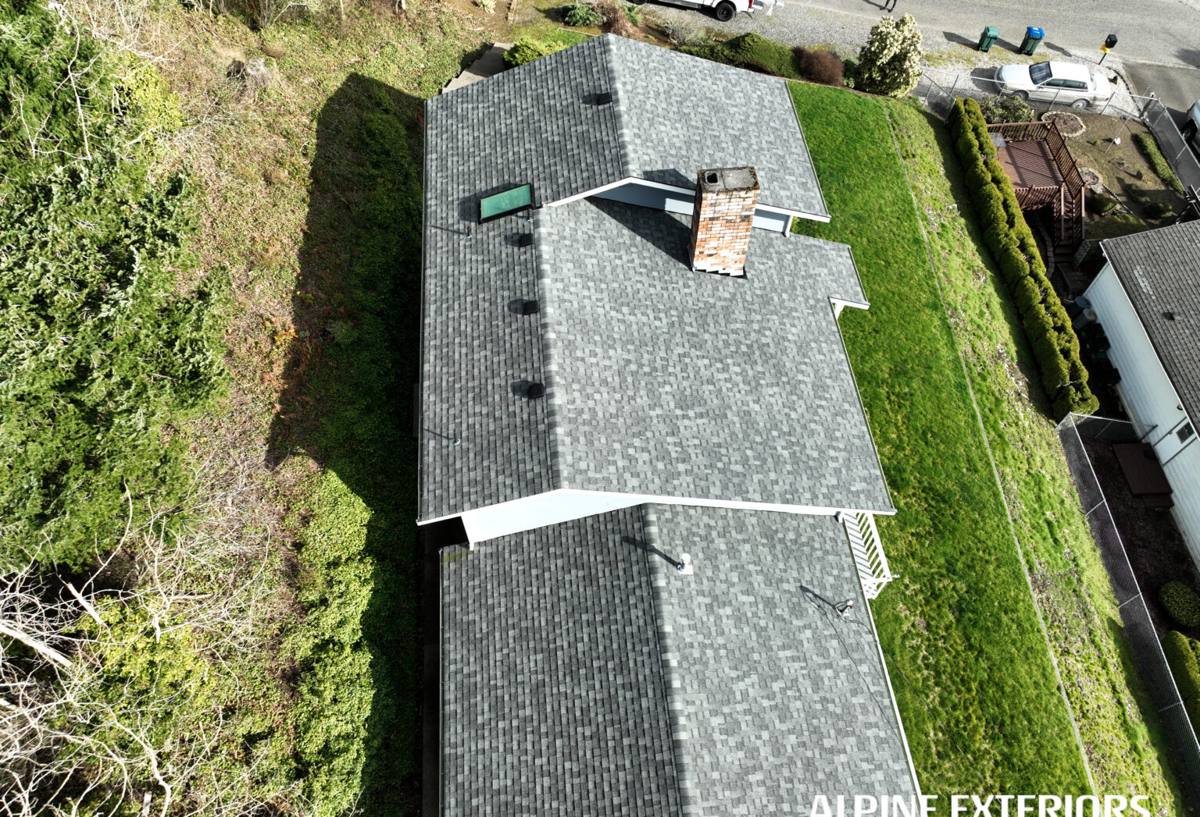
What Salt Air, Wind-Driven Rain, and Moss Actually Do
Salt Air and Metal
Salt-laden air accelerates corrosion on exposed fasteners, drip edge, flashing, and any metal roofing components. Galvanized nails and standard steel flashing that would last for decades a few miles inland can start rusting and staining within a handful of years this close to the water. It's not that the materials are bad — it's that a waterfront install needs corrosion-resistant hardware and flashing from the start, not as an upgrade you add later.
Wind-Driven Rain
Rain that's being pushed sideways by onshore wind doesn't just run off a roof — it gets forced up under shingle tabs, into valleys, and around penetrations like vent pipes and chimneys. A roof built for calmer inland conditions can pass a normal rainstorm fine and still leak during a windy front off the Strait. The fix isn't a different shingle brand; it's more aggressive underlayment coverage, properly lapped and sealed flashing, and attention to details that a mild-climate install often skips.
Moss and Trapped Moisture
Whatcom County's moss season runs long, and shaded, damp roof sections near trees or on north-facing slopes are where it takes hold fastest. Moss holds moisture against the roofing material, works its way under shingle edges, and lifts them over time — which is exactly where wind-driven rain then gets a foothold. Left unaddressed, moss doesn't just look bad; it actively shortens the life of the roof underneath it.
Signs a Sandy Point Roof Needs Replacement, Not Just Repair
Not every roof issue out here means a full tear-off. But there's a point where patching stops making financial sense and starts just delaying the same job at a higher cost. Watch for:
- Granule loss heavy enough that you're finding grit in gutters or downspouts every season
- Curling, cupping, or cracked shingles across large sections rather than one isolated spot
- Persistent moss regrowth in the same areas even after cleaning, which usually means the surface underneath is already degraded
- Soft spots or sagging when walked on, which points to deck damage, not just surface wear
- Rusted or failing flashing around chimneys, vents, and valleys — a common early failure point in salt air
- Interior staining on ceilings or in the attic, especially after windy, wet weather rather than steady rain
- A roof approaching or past its material's expected lifespan, especially if it was installed without waterfront-specific detailing
One or two of these on their own might still be repairable. Several at once, especially combined with the age of the roof, usually means replacement is the more honest recommendation — and we'll tell you that directly rather than stringing out repairs.
Choosing Materials for a Sandy Point Home
There's no single "best" roofing material for waterfront Whatcom County homes — it depends on your home's exposure, roof pitch, budget, and how much upkeep you want to take on. Here's how the common options actually compare in these conditions:
| Material | Salt Air Behavior | Moss Resistance | Maintenance |
|---|---|---|---|
| Architectural asphalt shingle | Good with corrosion-resistant fasteners and flashing | Moderate — benefits from zinc/copper strips or periodic cleaning | Low to moderate |
| Metal (standing seam) | Excellent when properly coated and detailed; watch fastener quality | High — sheds moss growth well due to smooth, sloped surface | Low |
| Wood shake/shingle | Poor without diligent upkeep — absorbs moisture and salt exposure | Low — highly prone to moss and rot in shaded, damp spots | High |
| Composite/synthetic shingle | Good — resists corrosion since it's non-metallic | Moderate to good depending on product | Low |
We don't install wood shake on shoreline homes as a matter of professional standard — not because the product is inherently bad everywhere, but because the moisture retention and maintenance demands it carries are a poor match for constant salt air and a long moss season. It's a maintenance-burden and moisture-behavior tradeoff, and out here that tradeoff usually isn't worth it. For most Sandy Point homes, a quality architectural shingle with proper corrosion-resistant hardware, or a standing seam metal roof, gives the best balance of durability and manageable upkeep.
What a Correct Roof Replacement Includes
A roof replacement done right on the coast involves more steps than it does further inland, because the margin for error with wind-driven rain is smaller. A complete job should cover:
- Full tear-off to the deck — not a layover — so we can inspect and address any hidden deck damage
- Deck repair or replacement of any soft, rotted, or water-damaged sheathing before new material goes down
- Ice-and-water shield or equivalent membrane at eaves, valleys, and around all penetrations, extended further than a standard inland install
- Corrosion-resistant fasteners, flashing, and drip edge throughout — not just at obvious wear points
- Proper ventilation at ridge and soffit to keep moisture from building up in the attic, which matters even more with a long damp season
- Careful flashing work at chimneys, skylights, and any roof-wall intersections, since these are the most common wind-driven leak points
- Cleanup and haul-away of all old material and debris
Skipping any of these to save a day of labor is usually where a "new roof" ends up with a leak inside two or three years — and it's almost always in one of these detail areas, not the field shingles themselves.
Our Process for a Sandy Point Roof Replacement
Inspection and Honest Assessment
We start by walking the roof and the attic, not just looking from the ground. We'll tell you plainly whether you need a full replacement, a targeted repair, or can reasonably wait, and explain what we're seeing so it's not a black box.
Material and Detail Planning
We talk through material options based on your home's exposure to wind and salt, your roof's pitch and shading, and your budget — with the coastal-specific details (flashing grade, fastener type, underlayment coverage) built into the plan from the start, not treated as optional add-ons.
Tear-Off and Deck Inspection
Full removal down to the deck, with any damaged sheathing replaced before anything new goes on. This is the point where hidden moisture damage from years of trapped rain or moss shows up, and it's better to find it now than after the new roof is closed up.
Installation
New underlayment, flashing, and roofing material installed to a standard that accounts for wind-driven rain, not just standard vertical rainfall. Extra attention at valleys, penetrations, and roof-wall junctions.
Final Walkthrough
We walk the finished roof and the property with you, cover care and moss-prevention basics for your specific setup, and make sure debris and old material are fully cleared.
What Affects the Cost
Every roof is different, but the main cost drivers on a Sandy Point replacement are consistent enough to lay out honestly:
| Factor | Why It Matters |
|---|---|
| Roof size and number of stories | More material, more labor, and access equipment for taller homes |
| Pitch and complexity | Steep or cut-up roofs with many valleys and penetrations take longer and need more flashing detail |
| Deck condition | Hidden rot or moisture damage found during tear-off adds repair cost before new roofing goes down |
| Material choice | Standing seam metal and premium shingle lines cost more upfront but can lower long-term maintenance |
| Corrosion-resistant hardware | Coastal-grade fasteners and flashing cost more than standard-grade but are worth it here |
We give a written estimate that breaks these out so you know what you're paying for, not a single lump number with no explanation.
Why It Matters That We Already Work Sandy Point
A roofing crew that mostly works inland Whatcom County jobs can still do competent general roofing — but if they haven't dealt with this stretch of coastline regularly, coastal detailing is easy to under-spec without meaning to. Knowing which flashing grade actually holds up here, where moss tends to take hold first on this type of exposure, and how far the wind-driven rain problem extends up a valley isn't something you get from a manual — it's something you learn from doing the work in this exact area. We're a Ferndale-based crew, and Sandy Point is part of our regular service area, not a special trip.
Get a Free, No-Pressure Estimate
If your roof is showing wear, has ongoing moss issues, or you just want an honest read on how much life it has left, we're happy to take a look. The estimate is free, there's no pressure to book on the spot, and you'll get a straight answer about whether you need a full replacement or something less.